
News
What Federal Agents Can and Cannot Do When They Investigate a Church

Faith Facts
- Federal investigations into churches and ministries typically focus on financial crimes, tax fraud, or criminal activity—not religious beliefs or worship practices.
- The First Amendment protects religious freedom but does not shield churches from lawful criminal investigations when evidence of illegal conduct exists.
- Recent high-profile federal actions against church leaders have raised questions about the scope and limitations of government authority in investigating religious organizations.
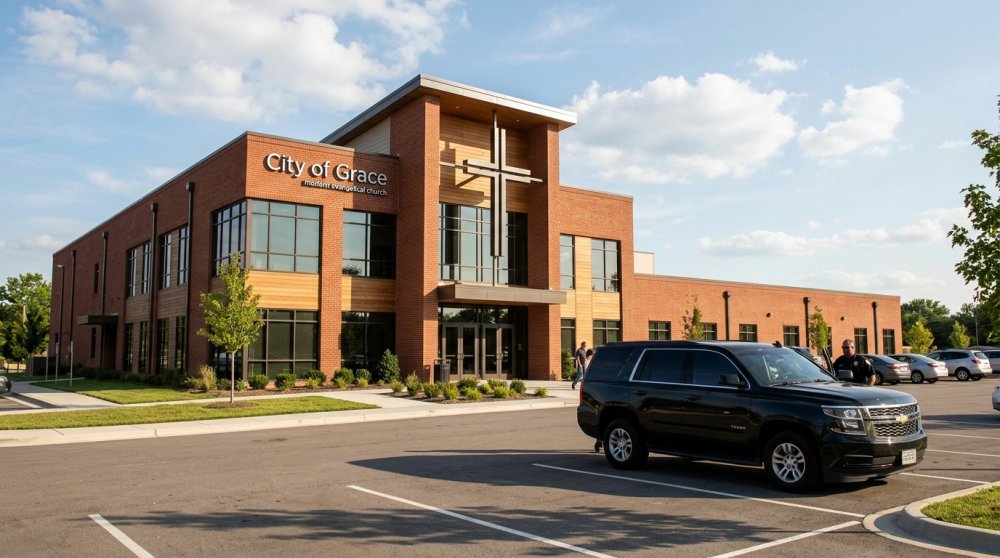
When federal agents conduct investigations into churches and ministries, they operate under strict legal parameters that balance law enforcement duties with constitutional protections for religious freedom. Understanding these boundaries is essential for both church leaders and congregants who want to protect their rights while respecting lawful authority.
Federal investigations of churches and ministries are typically launched for three main reasons: financial crimes, tax-related offenses, or criminal activity unrelated to religious practice. These investigations do not target theology, worship practices, or the content of sermons—areas protected by the First Amendment’s guarantee of religious liberty.
Financial crimes can include fraud, embezzlement, money laundering, or misappropriation of church funds. When church leaders use donated money for unauthorized personal expenses or engage in financial schemes that deceive donors, federal investigators may step in. Tax-related investigations often focus on whether a church or ministry has violated its tax-exempt status through political campaign intervention, excessive private benefit to insiders, or operating primarily for non-religious purposes.
Criminal activity investigations may involve allegations completely separate from church operations—such as human trafficking, child abuse, drug offenses, or other serious crimes that happen to involve church leaders or property. In these cases, the church setting is incidental to the underlying criminal conduct.
The Internal Revenue Service, Federal Bureau of Investigation, and other federal agencies must follow constitutional guidelines when investigating religious organizations. They cannot initiate investigations based solely on religious beliefs, denominational affiliation, or doctrinal positions. Any investigation must be based on credible evidence of actual or potential violations of federal law.
Churches maintain significant constitutional protections. The First Amendment’s Free Exercise Clause prohibits the government from interfering with genuine religious practice and belief. The Establishment Clause prevents the government from favoring or disfavoring particular religions. These protections mean that federal agents cannot attend services undercover simply to monitor religious activities, cannot demand access to pastoral counseling records without proper legal authority, and cannot question church members about their beliefs or worship practices.
However, these protections are not absolute shields against all government scrutiny. When probable cause exists that federal crimes have been committed, law enforcement can obtain warrants to search church property, seize financial records, and interview witnesses—just as they would with any other organization. The key legal requirement is that investigations must target suspected criminal activity, not religious expression.
Tax-exempt status under Section 501(c)(3) of the Internal Revenue Code provides churches with significant financial benefits but also imposes certain limitations. Churches cannot engage in substantial lobbying activities or participate in political campaigns for or against candidates. While pastors retain their First Amendment rights to speak on moral and political issues from a biblical perspective, churches as organizations cannot endorse candidates, make campaign contributions, or dedicate substantial resources to influencing legislation.
Recent years have seen increased attention on the intersection of religious freedom and government oversight. Some church leaders have raised concerns about what they view as government overreach, while law enforcement officials maintain they are simply enforcing laws that apply to all organizations regardless of religious status.
For churches and ministries seeking to maintain both legal compliance and religious integrity, several practices are advisable. Maintaining transparent financial records with proper oversight and accountability protects against both actual wrongdoing and false accusations. Having qualified legal counsel familiar with both tax law and First Amendment protections helps churches navigate complex regulatory requirements. Establishing clear policies that distinguish between permissible issue advocacy and prohibited political campaign intervention keeps churches within legal bounds while preserving their prophetic voice.
Church leaders should also understand their rights if federal investigators make contact. They have the right to consult with an attorney before answering questions or providing documents. They can request to see search warrants and verify the credentials of any agents. While cooperation with lawful investigations is generally advisable, churches are not required to waive their constitutional rights or voluntarily surrender legally protected materials.
The balance between religious freedom and lawful government oversight reflects America’s founding principles. Our constitutional system protects the church from government interference in matters of faith and worship while ensuring that no organization—religious or secular—operates above the law when it comes to criminal conduct. This balance serves both the integrity of religious institutions and the rule of law that protects all citizens.
As debates continue about the proper role of government in relation to religious organizations, Christians should advocate for robust protection of religious liberty while also supporting the legitimate enforcement of laws against genuine criminal activity. The goal is not to shield wrongdoing behind religious claims, but to ensure that faithful churches can operate freely without fear of government harassment or interference with their spiritual mission.
Let us know what you think, please share your thoughts in the comments below.

Faith Facts
- Evangelical alliance presidents from across Ibero-America gathered at Costa Rica’s Legislative Assembly on October 14.
- The leaders met with Christian lawmakers to explore how evangelicals can influence public policy while keeping partisan politics out of the pulpit.
- The discussion focused on maintaining the church’s spiritual mission while allowing biblical values to guide national lawmaking.
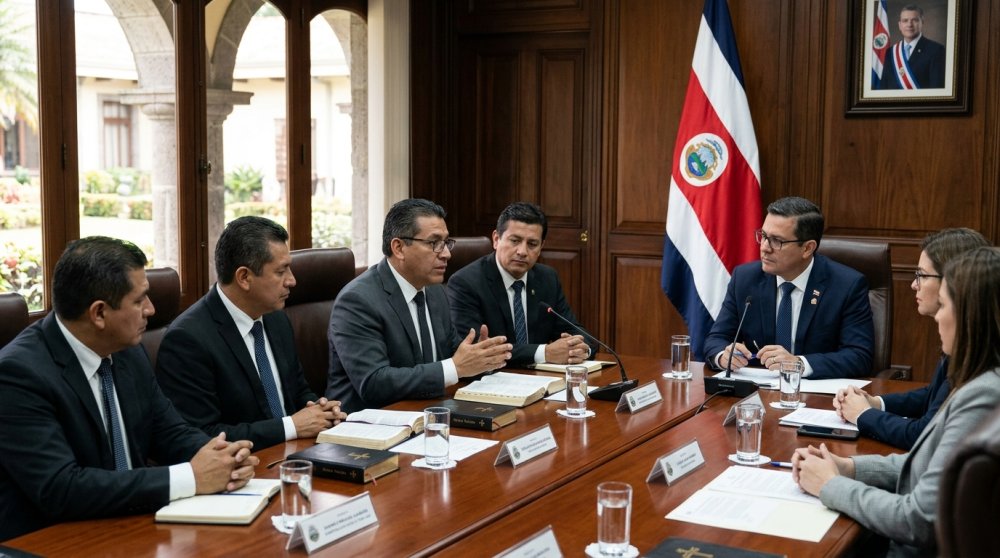
Evangelical alliance presidents from across Ibero-America met with Christian lawmakers at Costa Rica’s Legislative Assembly on Wednesday to discuss the role of faith in shaping public policy. The gathering was organized to explore how evangelicals can participate in the political process without compromising the church’s spiritual mission.
The leaders emphasized the importance of keeping partisan politics out of the pulpit. They agreed that pastors and congregations should remain focused on preaching the Gospel while still encouraging believers to engage with civic life in accordance with biblical principles.
“Our goal is to be salt and light in our nations while protecting the pulpit from becoming a platform for political parties,”
one alliance president stated during the closed-door session. The lawmakers present expressed appreciation for the clarity and unity shown by the evangelical representatives, noting that the discussion provided a helpful model for future collaboration.
The meeting concluded with a shared commitment to continue dialogue on how Christian values can inform legislation on issues such as family, life, and religious freedom. Participants left encouraged that a unified evangelical voice can contribute to the common good without crossing the line into partisan endorsement.
Let us know what you think, please share your thoughts in the comments below.
Faith Facts
- 93% of Protestant pastors say they will not endorse candidates from the pulpit
- The Lifeway Research survey shows this stance remains unchanged even without legal consequences
- The data was collected ahead of the 2026 midterm elections
Despite growing political pressure, the overwhelming majority of Protestant pastors are holding firm against using their pulpits for candidate endorsements.
The latest Lifeway Research survey reveals that 93 percent of these spiritual leaders have no plans to endorse any political candidate, regardless of legal allowances.
Churches across America continue to prioritize spiritual guidance over political activism, even when they could legally speak more freely.
The study underscores a deep commitment among pastors to keep their focus on eternal matters rather than partisan battles.
Let us know what you think, please share your thoughts in the comments below.
Faith Facts
- Andy Stanley is stepping down as senior pastor of North Point Community Church in Georgia next year.
- Stanley has led the congregation for nearly three decades, shaping one of the nation’s largest megachurches.
- The transition raises questions about the future direction of a church long viewed as influential in evangelical circles.
Megachurch Pastor Andy Stanley has announced that he will be stepping down from his role as senior pastor of the Georgia-based North Point Community Church next year.
The decision comes after nearly thirty years of leadership at the multi-campus congregation.
Stanley built North Point into one of the largest churches in the country, known for its modern approach to worship and outreach.
Church members are now preparing for a leadership transition at the start of the new year.
Let us know what you think, please share your thoughts in the comments below.


-

 Self-Reliance2 years ago
Trump’s Bold Move Uncovers Massive Social Security Fraud
-

 Faith2 years ago
New Clues Emerge in Noah’s Ark Mystery
-

 News2 years ago
Governor Walz’s Rhetoric Sparks National Controversy
-

 News2 years ago
Mel Gibson’s ‘The Passion of the Christ’ Sequel Title Announced
-

 Family2 years ago
Texas Lawmaker Targets Furries in Schools
-

 Freedom2 years ago
Maine Lawmaker Challenges Sports Fairness Controversy
-

 Family1 year ago
Canada’s Controversial Policy Sparks Ethical Debate
-
Faith11 months ago
Congress Hears Pleas for Nigerian Christians