
Faith
What Eric Metaxas Just Said About Cultural Attacks on Christianity Will Wake You Up


Faith Facts
- Christian author Eric Metaxas addressed multiple cultural controversies affecting American Christians, including AI-generated imagery and public debates over religious truth
- The discussion touches on the controversial depiction of President Trump in religious iconography and recent theological debates in mainstream media
- Metaxas identifies these controversies as part of a larger pattern of what he calls ‘satanic inversion’ targeting Christian values in American culture
Christian author and radio host Eric Metaxas is sounding the alarm on what he sees as coordinated cultural attacks against biblical Christianity. In his recent commentary, Metaxas tackled several explosive topics that have divided Americans and sparked fierce debate across social media platforms.
The controversies range from AI-generated images depicting President Donald Trump in saint-like poses to Tucker Carlson’s recent statements about Christianity, Islam, and the Bible. For Metaxas, these aren’t isolated incidents but symptoms of a deeper spiritual battle.
The viral image showing Trump in religious iconography has drawn sharp criticism from Christians across denominational lines. Many believers have expressed concern that such depictions cross a dangerous line, mixing political loyalty with religious devotion in ways that Scripture explicitly warns against. The AI-generated nature of the image adds another layer of concern about technology being weaponized to blur sacred boundaries.
Metaxas also addressed the growing conversation around Tucker Carlson’s recent theological commentary. Carlson has made headlines with statements comparing Christianity and Islam, sparking responses from Christian leaders including Franklin Graham. The debate centers on fundamental questions about religious truth, biblical authority, and how Christians should engage with other faith systems.
According to Metaxas, what connects these disparate controversies is what he terms “satanic inversion” — a deliberate effort to turn truth upside down, confuse believers, and undermine the foundations of Christian faith. This concept suggests that cultural forces are actively working to invert biblical values, making good appear evil and evil appear good.
The discussions come at a time when American Christians are increasingly navigating complex cultural terrain. Traditional biblical teachings on morality, gender, family, and religious exclusivity face mounting pressure from secular institutions and even some within church walls.
Metaxas has built a reputation for unflinching commentary on cultural Christianity. His books, including bestselling biographies of Dietrich Bonhoeffer and Martin Luther, have explored how believers maintained faith under hostile conditions. He now applies those historical lessons to contemporary American challenges.
The debate over religious imagery and political figures isn’t new to American Christianity. Throughout history, believers have wrestled with how to honor civic leaders without crossing into idolatry. The Second Commandment’s prohibition against graven images has guided orthodox Christianity for millennia, making AI-generated saint-like depictions of any living person deeply problematic for many believers.
Franklin Graham’s involvement in the Tucker Carlson discussion adds weight to the theological concerns being raised. As the son of Billy Graham and leader of the Billy Graham Evangelistic Association, Graham’s perspective carries significant influence among evangelical Christians who value doctrinal clarity.
The intersection of technology, politics, and faith presents unique challenges for this generation of Christians. AI-generated content can spread faster than ever before, shaping perceptions and potentially leading believers astray if they’re not grounded in Scripture and sound doctrine.
Metaxas emphasizes that Christians must remain vigilant, testing everything against the Word of God. In an era of information overload and technological manipulation, discernment has become more critical than ever for those seeking to follow Christ faithfully.
These controversies ultimately point to fundamental questions: What is truth? Where does authority reside? And how should Christians engage a culture increasingly hostile to biblical values? For Metaxas and many conservative Christians, the answer remains anchored in Scripture, traditional Christian teaching, and unwavering commitment to Gospel truth.
Let us know what you think, please share your thoughts in the comments below.


Faith Facts
- Nearly 100 students at a Christian high school in Colorado have been baptized following athletic events this year.
- Five separate worship gatherings were organized after games, drawing students seeking faith commitments.
- The baptisms reflect a growing movement of young people responding to the Gospel in school settings.
High school athletic events have long been community gatherings, but one Colorado Christian school is seeing those moments turn into something far more eternal.
After five post-game worship services, nearly 100 students stepped forward for baptism, marking a powerful season of spiritual renewal.
School leaders say the response has been both unexpected and deeply encouraging, as students publicly declare their faith in Christ.
“It has been incredible to watch these young people take this step,” one administrator shared.
The gatherings combine prayer, worship, and testimony, creating a space where students feel welcomed to respond to the message of salvation.
Parents and faculty have noted a renewed sense of purpose and unity among the student body as a result.
“We are seeing the Holy Spirit move in powerful ways,” a staff member added.
Christian education advocates view the events as evidence that faith-based environments can shape hearts as well as minds.
The school plans to continue the post-game worship gatherings in the coming seasons, hoping to build on the momentum of spiritual awakening.
Let us know what you think, please share your thoughts in the comments below.
Faith Facts
- Matthew West releases new album titled ‘Jesus Is King’
- Album emphasizes surrender, vulnerability, and Scripture after nearly 30 years in Christian music
- West challenges the culture of self-empowerment with a message of Christ-centered living
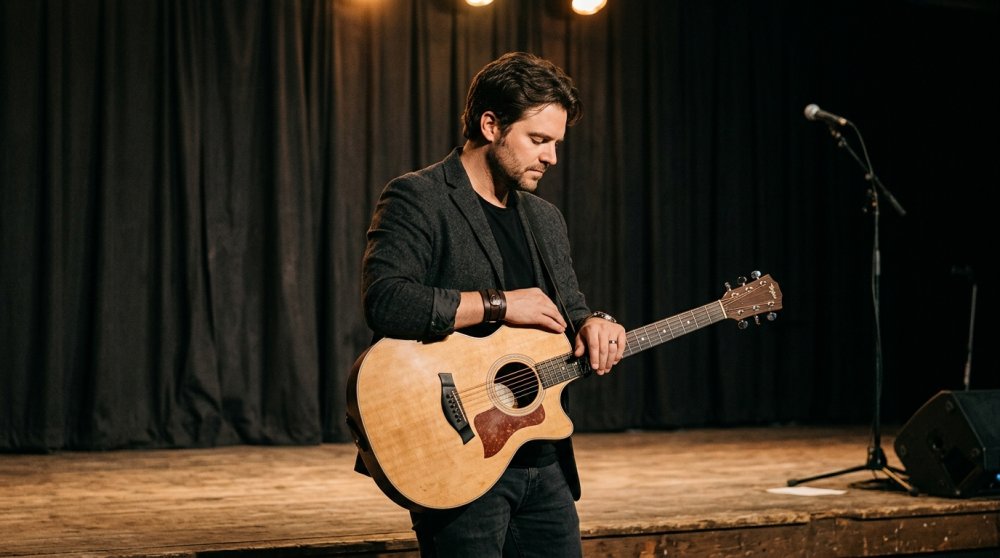
Christian music artist Matthew West is calling believers to place Jesus above self in his latest album, ‘Jesus Is King.’ The project comes after nearly three decades of ministry and reflects a deeper commitment to Scripture and surrender.
West says the album confronts a culture obsessed with self-empowerment by lifting up the lordship of Christ instead. He believes true strength comes from laying down personal control and trusting God’s Word.
"The message of this album is that Jesus is King, and that changes everything."
Through honest lyrics and personal testimony, West hopes listeners will rediscover the power of vulnerability before God. He points to Scripture as the foundation for every song and every season of life.
"After nearly 30 years in Christian music, I am more convinced than ever that surrender is the doorway to real freedom."
Let us know what you think, please share your thoughts in the comments below.

Faith Facts
- Jordan Shipley called on the Lord during a life-threatening accident that left over 20% of his body with third-degree burns.
- More than eight months later, the former NFL wide receiver described his recovery as a miracle.
- Shipley publicly credits his faith in God for sustaining him through the ordeal.
Former NFL wide receiver Jordan Shipley is sharing a powerful testimony of survival and faith. More than eight months ago, Shipley endured a devastating accident on his Texas ranch that left him with third-degree burns across more than 20 percent of his body.
In the midst of the crisis, Shipley says he turned to God with desperate prayers for help. He now describes his recovery as nothing short of miraculous.
“I desperately called on the Lord for help during the life-threatening ordeal and experienced a ‘miracle.'”
Let us know what you think, please share your thoughts in the comments below.


-

 Self-Reliance1 year ago
Trump’s Bold Move Uncovers Massive Social Security Fraud
-

 Faith1 year ago
New Clues Emerge in Noah’s Ark Mystery
-

 News2 years ago
Governor Walz’s Rhetoric Sparks National Controversy
-

 News1 year ago
Mel Gibson’s ‘The Passion of the Christ’ Sequel Title Announced
-

 Family2 years ago
Texas Lawmaker Targets Furries in Schools
-

 Freedom2 years ago
Maine Lawmaker Challenges Sports Fairness Controversy
-

 Family1 year ago
Canada’s Controversial Policy Sparks Ethical Debate
-
Faith10 months ago
Congress Hears Pleas for Nigerian Christians