
Faith
What Does the Bible Really Say About God Taking Sides in War?


Faith Facts
- American political and religious leaders have invoked God’s favor in recent conflicts, raising questions about biblical teaching on warfare
- The Psalms contain violent imagery that some interpret as divine endorsement of military action against enemies
- Biblical scholars warn that God’s support is not automatic for those who worship Him, but conditional on faithfulness to His commands
As tensions with Iran escalate and American leaders invoke divine support for military action, a crucial question emerges: Does God automatically side with those who worship Him? The answer from Scripture may surprise many believers.
Dr. David Instone-Brewer examines the violent references throughout the Psalms—passages where ancient Israel’s poets called down judgment on their enemies. These texts have been used throughout history to justify military campaigns, with leaders claiming God’s blessing on their causes.
However, a closer reading of Scripture reveals a more complex picture. The Bible consistently shows that God’s favor depends not on national identity or religious profession, but on obedience to His commandments and pursuit of justice.
Throughout the Old Testament, God repeatedly disciplined Israel—His chosen people—when they strayed from His ways. The prophets warned that divine protection was conditional, not guaranteed by heritage or ritual worship alone.
This biblical principle carries profound implications for modern believers. Christians must resist the temptation to conflate national interests with God’s will or assume divine endorsement of political agendas.
The Psalms do contain imprecatory prayers—calls for God’s judgment on the wicked. But these must be understood in their proper context as expressions of trust in divine justice, not blanket endorsements of human vengeance.
Jesus transformed this understanding further in the New Testament, calling His followers to love their enemies and pray for those who persecute them. This radical teaching doesn’t negate God’s justice but reframes the believer’s role in executing it.
American Christians face a particular challenge: how to maintain patriotic loyalty while acknowledging that God’s kingdom transcends national boundaries. Faith must inform citizenship, but faith communities must never become mere extensions of political power.
The historical record shows the danger when religious leaders too closely align God’s purposes with state interests. From the Crusades to modern conflicts, claiming divine sanction for military action has often led to tragic consequences.
True biblical faith requires humility—recognizing that our understanding of God’s will remains partial and that claiming His endorsement demands extraordinary caution. Believers should pray for wisdom, justice, and peace rather than presuming God’s automatic support.
As America navigates complex international challenges, Christians must hold fast to Scripture’s teaching: God is sovereign over all nations, and His favor rests on those who pursue righteousness, not those who merely invoke His name.
Let us know what you think, please share your thoughts in the comments below.

Faith Facts
- The Pew Research Center released its Future of World Religions report on 18 November 2026, projecting changes in religious populations over the next fifty years.
- Islam is projected to surpass Christianity as the world’s largest religious group.
- Scripture calls believers to respond with faith rather than fear to shifting global demographics.
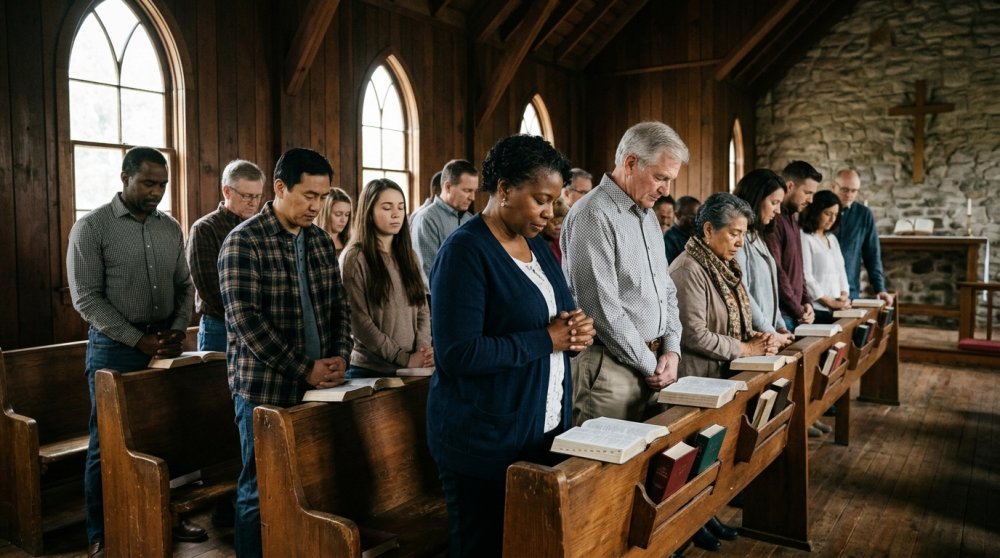
The Pew Research Center’s latest projection on the future of world religions has stirred discussion among believers worldwide. The report released on 18 November 2026 outlines how seven major religious groups are expected to evolve over the coming decades.
Many Christians may feel uneasy at the suggestion that Islam could become the largest religious group globally. Yet scripture reminds us that God’s truth is not determined by numbers or popularity.
“Have I not commanded you? Be strong and courageous. Do not be afraid; do not be discouraged, for the Lord your God will be with you wherever you go.”
Joshua 1:9 offers a clear directive for believers facing uncertain times. The call is not to retreat or despair but to stand firm in faith.
Projections about religious growth should not shake the confidence of those who follow Christ. The mission of the Church remains unchanged regardless of demographic trends.
“And surely I am with you always, to the very end of the age.”
Jesus’ promise in Matthew 28:20 reassures believers that His presence endures beyond any statistical shift. The Great Commission continues to guide Christian witness.
Instead of fear, believers are called to prayer, bold proclamation, and faithful living. The future of the Church rests in God’s hands, not in population charts.
Let us know what you think, please share your thoughts in the comments below.
Faith Facts
- Nigeria and North Korea rank among the world’s top ten nations for severe Christian persecution.
- Believers in these regions face imprisonment, violence, and death for their faith.
- Reports show that many persecuted Christians respond with forgiveness rather than hatred.
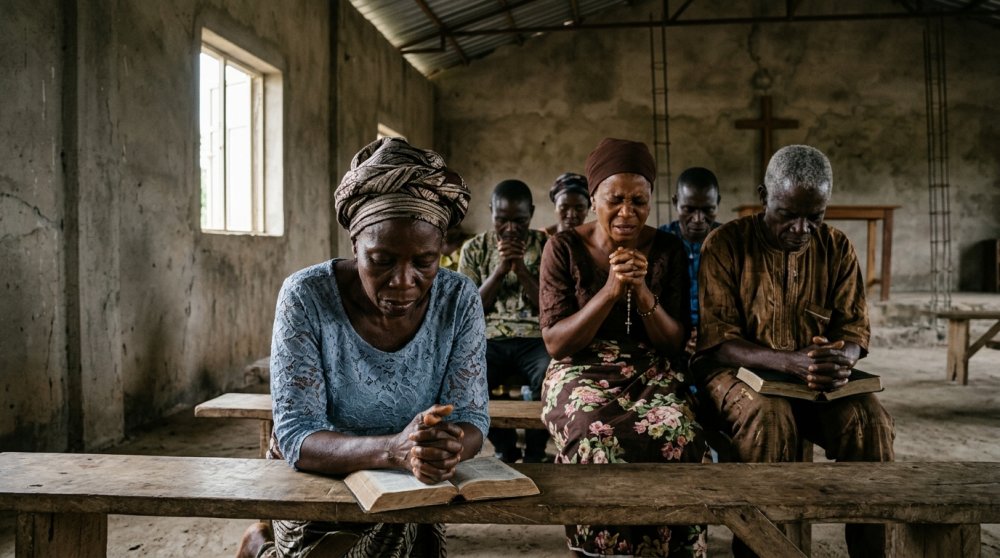
Christian communities around the world continue to face intense persecution for their faith.
Two nations stand out as the most hostile environments for believers today.
In Nigeria and North Korea, followers of Christ endure systematic oppression and violence.
Despite these dangers, many persecuted Christians speak openly about the sustaining power of their faith.
They also testify to the grace that allows them to forgive those who persecute them.
Reports indicate that this response of forgiveness stands in stark contrast to the hatred directed against them.
Let us know what you think, please share your thoughts in the comments below.
Faith Facts
- Scripture teaches that the Holy Spirit intercedes for believers with groanings too deep for words when human language fails.
- Christian tradition holds that God hears the heart’s cry even when spoken prayer seems impossible.
- Believers are encouraged to draw near to God in faith trusting His promises of presence and comfort.
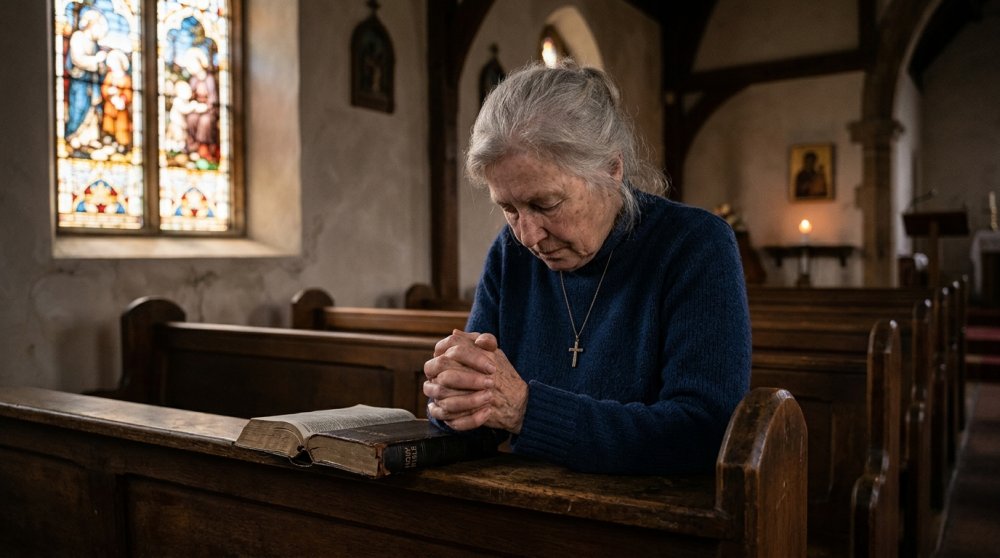
What do you do when you need God and cannot find the words to pray? The question strikes at the core of every believer’s walk with Christ.
Scripture offers both comfort and direction in such moments. Romans 8 reminds us that the Spirit Himself intercedes for us.
“Likewise the Spirit helps us in our weakness. For we do not know what to pray for as we ought, but the Spirit himself intercedes for us with groanings too deep for words.”
This divine intercession assures Christians that their prayers need not be eloquent to reach heaven. God values sincerity over polished phrases.
Many saints throughout history have testified to seasons of wordless communion with the Lord. Their experience echoes the truth that presence often matters more than perfect speech.
“Be still, and know that I am God.”
Psalm 46:10 continues to guide believers who struggle to articulate their needs. Silence before the throne can become its own powerful prayer.
Practical steps include opening the Bible and allowing God’s Word to speak when personal words fail. Reading Scripture slowly can stir the heart toward renewed trust.
Some Christians also find strength by simply repeating the name of Jesus or by offering a single honest sentence such as “Lord have mercy.”
“The Lord is near to all who call on him, to all who call on him in truth.”
Psalm 145:18 reinforces the promise that God draws close to those who seek Him even without polished prayers. His faithfulness does not depend on our eloquence.
Ultimately the answer to wordless seasons lies in resting on God’s character rather than on our own ability to perform. The Father knows what His children need before they ask.
Let us know what you think, please share your thoughts in the comments below.


-

 Self-Reliance2 years ago
Trump’s Bold Move Uncovers Massive Social Security Fraud
-
 Faith2 years ago
New Clues Emerge in Noah’s Ark Mystery
-

 News2 years ago
Governor Walz’s Rhetoric Sparks National Controversy
-

 News2 years ago
Mel Gibson’s ‘The Passion of the Christ’ Sequel Title Announced
-

 Family2 years ago
Texas Lawmaker Targets Furries in Schools
-

 Freedom2 years ago
Maine Lawmaker Challenges Sports Fairness Controversy
-

 Family2 years ago
Canada’s Controversial Policy Sparks Ethical Debate
-
Faith1 year ago
Congress Hears Pleas for Nigerian Christians