
Family
Weaponized Abortion Pills Reveal Deadly Flaw in FDA Policy


Faith Facts
- Multiple cases have emerged of men using mail-ordered abortion pills to poison women without their knowledge or consent
- The FDA’s 2021 decision to allow mail-order abortion pills has made these dangerous drugs easier to obtain for criminal purposes
- Pro-life advocates are calling on the Department of Justice to address this growing pattern of violence against women
A disturbing pattern of violence against women is emerging across America, and it involves a tool the FDA made easier to access: abortion pills. Men are obtaining these dangerous drugs through the mail and using them to poison unsuspecting women, sometimes killing both the woman and her unborn child.
These are not isolated incidents. They represent a predictable consequence of policies that prioritize abortion access over women’s safety.
In multiple states, prosecutors have charged men with using mifepristone and misoprostol—the two-drug abortion pill regimen—to secretly induce miscarriages in women who wanted to keep their babies. Some cases have resulted in the deaths of both mother and child. Yet the Department of Justice has remained largely silent on this pattern of violence.
The FDA’s 2021 decision to permanently allow mail-order abortion pills, followed by the 2023 decision to allow retail pharmacies to dispense them, has made these drugs far more accessible. While abortion advocates celebrated these moves as expanding “reproductive freedom,” they ignored warnings about potential abuse.
Traditional safeguards existed for good reasons. When abortion pills required in-person doctor visits, there were more opportunities to ensure the woman herself was making the choice. The mail-order system eliminates those protections entirely.
Pro-life organizations have repeatedly warned federal authorities about this danger. They have documented cases where abusive partners, controlling family members, or even traffickers could use mail-ordered pills to force abortions on unwilling victims. The evidence continues to mount.
This crisis exposes the fatal flaw in the “telemedicine abortion” model. When pills can be ordered online with minimal verification and shipped to any address, there is no way to ensure they reach the intended recipient—or that the recipient is acting of her own free will.
Women deserve better than policies that make them vulnerable to violence. The unborn children whose lives are ended by these forced abortions deserve justice. And the men who commit these heinous acts deserve prosecution to the fullest extent of the law.
The Department of Justice has vast resources to combat violence against women. It has launched major initiatives on domestic violence, human trafficking, and reproductive coercion. Yet this specific pattern of abuse—men using mail-ordered abortion pills as weapons—has received minimal federal attention.
Congress must demand answers. Why has the DOJ not made this a priority? How many cases have been investigated? What coordination exists between federal prosecutors and state authorities handling these crimes?
The silence is deafening, and it endangers women across the country.
This issue transcends the usual abortion debate. Even those who support legal abortion should oppose policies that enable violent men to force unwanted abortions on women. This is not about choice—it is about coercion, assault, and sometimes murder.
The FDA must reconsider its mail-order abortion policy. At minimum, stronger verification procedures are needed to confirm the identity and consent of the woman requesting the pills. Better yet, the agency should return to requiring in-person medical supervision for these powerful and dangerous drugs.
The Department of Justice must launch a comprehensive investigation into this pattern of violence and develop a coordinated federal response. Women’s lives depend on it.
Policies have consequences. When government agencies prioritize ideological goals over safety, real people suffer. The victims in these cases—women who wanted their babies, children who never got the chance to be born—are paying the price for regulatory negligence.
Americans who value both life and women’s safety must speak out. Contact your representatives in Congress. Demand DOJ action. Support organizations working to expose these crimes and assist victims.
Let us know what you think, please share your thoughts in the comments below.

Family
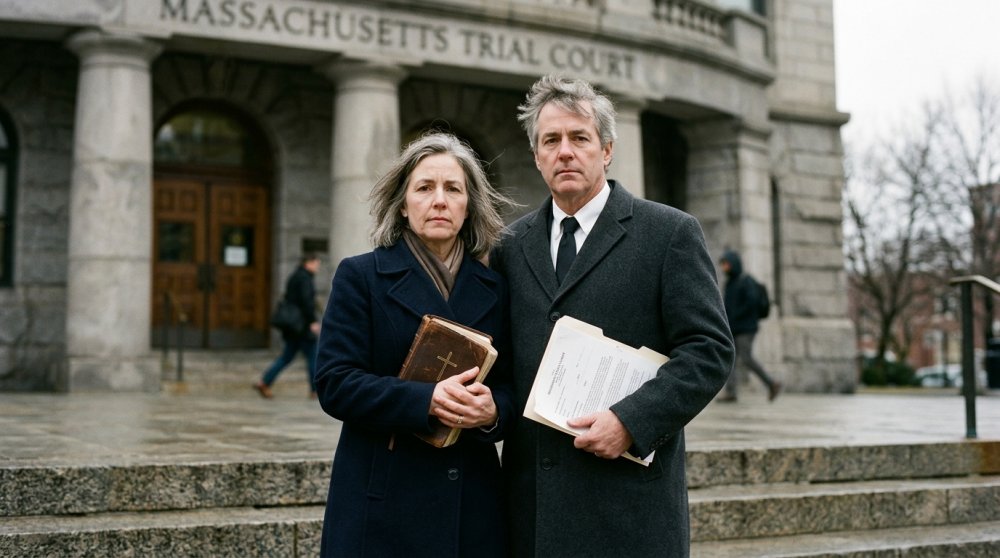
Catholic Parents Battle Massachusetts Over Daughter’s Custody After School Transition Allegations
Faith Facts
- The family is Catholic and is standing on their faith-based parental rights against state interference.
- Parents have a God-given responsibility to raise and protect their children according to biblical principles.
- Public institutions are increasingly challenging traditional family authority and religious convictions.
A Catholic family in Massachusetts is locked in a custody battle with state authorities after accusing a public school of secretly transitioning their daughter without their knowledge or consent. The parents claim the school took it upon itself to affirm the girl’s gender confusion and initiated steps toward medical interventions, prompting legal action to regain control of their child’s well-being.
The case has drawn national attention as it highlights the growing tension between parental rights and government overreach in public education. The family secured a temporary court order halting further medical procedures, including cross-sex hormone therapy, while the custody dispute plays out in the courts.
“We are fighting for our daughter and for the right of every parent to guide their children according to their faith and values,” the parents stated in court documents. “No school should ever bypass a mother’s and father’s authority on matters this serious.”
The allegations have raised serious questions about how public schools handle students struggling with gender dysphoria, especially when religious families are involved. The parents argue that the school acted in direct opposition to their Catholic beliefs and their explicit instructions regarding their daughter’s care.
Christian conservatives across the country are watching the case closely, concerned that similar incidents could occur in their own communities. The family has asked for continued prayer as they navigate the legal system and seek to bring their daughter home.
Let us know what you think, please share your thoughts in the comments below.

Faith Facts
- A prominent rabbi has publicly advised Prince William to withhold forgiveness from Prince Harry, suggesting anger is more comfortable than grace
- Christian teaching clearly distinguishes between forgiveness—a command—and reconciliation, which requires two willing parties
- Biblical principles call believers to forgive even when relationships cannot be restored, protecting our own spiritual health
The ongoing rift between Prince William and Prince Harry has captured global attention, but a recent commentary from Rabbi Jonathan Romain has sparked an important conversation about forgiveness, reconciliation, and what Christian faith actually requires of us in broken relationships.
Rabbi Romain advised Prince William against extending peace to his brother, suggesting it was “cosier” to remain “wrapped in a blanket of anger and victimhood.” While the rabbi’s perspective may resonate with our human nature, it stands in stark contrast to the clear teachings of Scripture.
Emma Fowle, deputy editor of Premier Christianity, offers a different path—one rooted in biblical truth and hard-won personal experience. Drawing from her own family’s painful divisions, Fowle makes a compelling case that forgiveness is not optional for Christians, even when reconciliation remains impossible.
The distinction matters tremendously. Forgiveness is a command from God, given for our own spiritual health and obedience to Christ. Reconciliation, however, requires both parties to participate in healing and restoration.
We can forgive someone who has wounded us deeply while simultaneously maintaining healthy boundaries. We can release bitterness without pretending the hurt never happened. We can obey God’s call to forgive without being required to restore a relationship to its former state.
This is particularly relevant when trust has been shattered repeatedly, when one party refuses to acknowledge wrongdoing, or when reconciliation would require compromising other important relationships or principles. In such cases, forgiveness protects our own hearts from the poison of bitterness while wisdom protects us from further harm.
The world watches how Christians respond to family fractures, betrayal, and public humiliation. Our witness depends not on achieving perfect family harmony, but on demonstrating supernatural grace even in the midst of unresolved pain.
Prince William faces a situation many families understand all too well—a broken relationship with a sibling, complicated by public scrutiny and competing loyalties. The path of forgiveness without full reconciliation may be the wisest course, honoring both biblical truth and practical wisdom.
Remaining “wrapped in a blanket of anger and victimhood,” as the rabbi suggested, may feel temporarily safer, but it ultimately imprisons us. Forgiveness liberates us from that prison, even when the relationship itself cannot be fully restored.
Our faith does not call us to be doormats or to enable destructive behavior. It calls us to forgive as we have been forgiven—freely, completely, and for our own spiritual good as much as for the sake of the one who wronged us.
Let us know what you think, please share your thoughts in the comments below.

Faith Facts
- A survivor of the 9/11 attacks arrived in America in 2001 with only $50 and two suitcases, searching for purpose
- The tragedy became a turning point that eventually led to a divine calling to fight human trafficking
- A cry for help from a trafficking victim revealed God’s purpose for his survival
When the Twin Towers fell on September 11, 2001, one man’s brush with death would become the beginning of an extraordinary journey of faith and purpose. Having arrived in America just months earlier with nothing but hope and determination, he had no idea that surviving one of history’s darkest days would set him on a path to rescue others from darkness.
The survivor recalls arriving on American soil with modest means — just $50 in his pocket and two suitcases containing all his worldly possessions. He came with dreams like so many immigrants before him, but without a clear sense of calling or direction for his life.
“When I arrived in America in 2001 with $50 and two suitcases, I had dreams — but no sense of purpose.”
Then came September 11th. The attacks that shook our nation and took nearly 3,000 innocent lives also marked a turning point in his own story. The trauma and survival would plant seeds that wouldn’t fully bloom for years to come.
“Then 9/11 changed everything, and it would take years, and a cry for help from a trafficking victim, before I understood why I survived.”
In the years following that fateful day, he searched for meaning in his survival. Why had God spared him when so many perished? The answer wouldn’t come immediately, but when it did, it arrived with unmistakable clarity.
The moment of revelation came through the desperate plea of a human trafficking victim. In that cry for help, he finally understood the divine purpose behind his survival — he was meant to be a voice for the voiceless and a defender of the vulnerable.
Human trafficking remains one of the darkest sins plaguing our modern world, with millions trapped in various forms of slavery. It’s an evil that Christians are called to confront, standing firm on biblical principles that affirm the dignity and worth of every human life created in God’s image.
This survivor’s transformation from a man without purpose to a warrior against human trafficking exemplifies how God can redeem even our most traumatic experiences. His story serves as a powerful reminder that our trials often prepare us for our true calling.
The fight against human trafficking requires courage, commitment, and compassion — qualities forged in the fires of adversity. For this 9/11 survivor, those qualities were born from ashes and refined through years of searching for meaning.
His journey demonstrates a fundamental truth that resonates with Christian values: no experience is wasted in God’s economy. Every hardship can become a tool for His purpose, and every survival story can inspire others to action.
As Americans who cherish freedom and human dignity, we must join the fight against modern slavery in all its forms. Whether through prayer, advocacy, or direct action, we each have a role to play in protecting the vulnerable and pursuing justice.
Let us know what you think, please share your thoughts in the comments below.


-

 Self-Reliance1 year ago
Trump’s Bold Move Uncovers Massive Social Security Fraud
-

 Faith1 year ago
New Clues Emerge in Noah’s Ark Mystery
-

 News2 years ago
Governor Walz’s Rhetoric Sparks National Controversy
-

 News1 year ago
Mel Gibson’s ‘The Passion of the Christ’ Sequel Title Announced
-

 Family1 year ago
Texas Lawmaker Targets Furries in Schools
-

 Freedom1 year ago
Maine Lawmaker Challenges Sports Fairness Controversy
-

 Family1 year ago
Canada’s Controversial Policy Sparks Ethical Debate
-
Faith10 months ago
Congress Hears Pleas for Nigerian Christians