
Faith
Virginia School Abortion Claims Disputed

Faith Facts
- A Fairfax County Public Schools teacher alleged that a high school social worker pressured a student to pursue an abortion.
- An interim investigation report found these allegations to be likely false and indicated the teacher violated school policies.
- The claims brought public outrage and a call for state investigation, but the report found no evidence of school staff arranging or funding abortions.
The interim report reveals no proof that a social worker at Centreville High School encouraged or paid for any student’s abortion without parental consent. The investigation instead found that the teacher’s actions originated after being disciplined for purchasing pregnancy tests for a student.
The findings accuse the teacher, Zenaida Perez, of acting unprofessionally by crossing professional and possibly ethical boundaries to support her allegations.
“Mrs. Perez’s allegations appear to be rooted in speculation. It also appears that in her zeal to prove her suspicions true, Mrs. Perez procured statements from students that were false,” the interim report stated.
The examination states that Perez pressured students and guardians into supporting her claims, which were determined to lack factual support.
The Christian worldview calls for integrity and truth, especially concerning matters impacting young lives and families. Christian values remind us to protect children, honor family roles, and insist on moral responsibility within institutions.
Stay informed on the issues shaping faith, family, and freedom in America by standing for truth and praying for all those involved in our nation’s schools.


Faith Facts
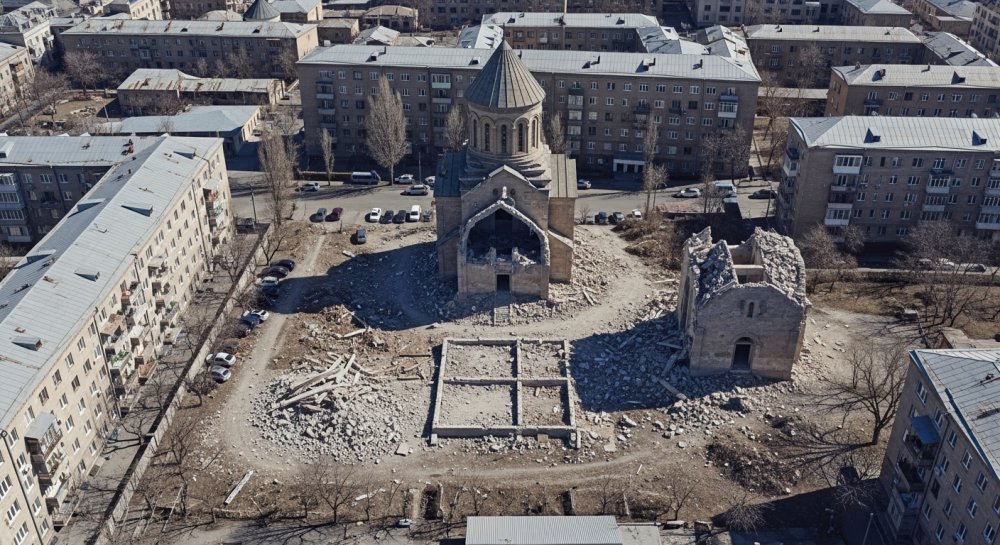
- Satellite imagery confirms Azerbaijan destroyed two historic Christian churches in Stepanakert, the main city of Nagorno-Karabakh
- The demolitions occurred after Azerbaijan seized control of the disputed region in September 2023
- Armenian church authorities describe the destruction as a deliberate campaign to erase Christian heritage from the territory
Satellite imagery has revealed the complete demolition of two historic Christian churches in Stepanakert, the main city in the Nagorno-Karabakh region, following Azerbaijan’s seizure of the disputed territory in September 2023. The destruction has sparked international outcry and renewed concerns about the protection of Christian heritage in the region.
Armenian church authorities have condemned the demolitions as part of a systematic effort to eliminate Armenian religious and cultural landmarks from Nagorno-Karabakh. The churches, which stood as testaments to the area’s Christian history, have been reduced to rubble, according to verified satellite images.
The region of Nagorno-Karabakh, historically inhabited by ethnic Armenians, has been the site of longstanding territorial disputes between Armenia and Azerbaijan. After Azerbaijan’s military operation in September 2023, nearly the entire ethnic Armenian population fled the region, leaving behind churches, monasteries, and other cultural sites.
Religious freedom advocates have raised alarm about what they describe as cultural genocide — the deliberate destruction of a people’s cultural and religious heritage. The demolition of these churches represents not only the loss of physical structures but the erasure of centuries of Christian presence in the region.
International observers have called for accountability and the protection of remaining Christian sites in Azerbaijan-controlled territories. The destruction of religious buildings violates international conventions on the preservation of cultural heritage during conflicts.
The Armenian Apostolic Church, one of the oldest Christian denominations in the world, has maintained a continuous presence in the region since the fourth century. The demolished churches were part of this ancient Christian tradition that predates Islam’s arrival in the Caucasus region by centuries.
Christian communities worldwide have expressed solidarity with Armenian Christians and called for the preservation of remaining sacred sites. The systematic destruction of churches raises serious questions about religious tolerance and minority rights in territories under Azerbaijani control.
Let us know what you think, please share your thoughts in the comments below.

Faith Facts
- The UK’s Terminally Ill Adults Bill has been defeated, blocking government-assisted suicide from entering the healthcare system
- While suicide was decriminalized in Britain in 1961, this bill would have transformed doctors into facilitators of death
- Christian leaders are calling this a crucial moment to reaffirm the sanctity of life and the true purpose of medical care
In a significant victory for the sanctity of life, Britain’s controversial assisted suicide legislation has fallen. The Terminally Ill Adults Bill, which would have enlisted the National Health Service in facilitating death, has been rejected—a decision that offers hope to defenders of life across the Western world.
The defeat of this bill represents more than a legislative setback for euthanasia advocates. It signals a potential turning point in how society views the fundamental purpose of medicine and the value of every human life, particularly those facing terminal illness.
While suicide itself has not been a criminal act in the United Kingdom since 1961, this proposed legislation represented something far more troubling: the systematic involvement of healthcare professionals in ending lives rather than preserving them. The bill would have fundamentally altered the doctor-patient relationship, transforming healers into executioners.
Christian leaders have been vocal in their opposition to assisted suicide, recognizing it as a dangerous erosion of the principle that all life is sacred and worthy of protection. The hospice movement, which has its roots in Christian compassion, offers a compelling alternative: dignified, pain-managed care that honors life until its natural conclusion.
The fallen bill would have placed vulnerable individuals—the elderly, the disabled, and the terminally ill—at increased risk. History shows that once society accepts medical killing as an option, the criteria inevitably expand. What begins as assistance for the terminally ill often extends to the chronically ill, the mentally ill, and even minors, as has occurred in other nations.
Britain’s National Health Service has faced significant challenges in recent years, with long waiting times and resource constraints. The concern among faith communities was that assisted suicide could become not just an option, but an expectation—a “solution” for patients who feel they are burdens on an overstretched system.
The Christian perspective on suffering recognizes it as a profound human experience, but one that can be met with compassion, medical care, and spiritual support. Palliative care advances have made tremendous strides in managing pain and providing comfort to the dying, making assisted suicide medically unnecessary.
Prayer and advocacy from Christian communities played a role in this legislative defeat. Believers understand that every life has intrinsic value, created in the image of God, and that our duty is to accompany the suffering with love—not to hasten their departure from this world.
The fight to protect life is far from over. Advocates for assisted suicide have made clear their intention to reintroduce similar legislation. This requires continued vigilance from people of faith and all who recognize the dangerous precedent such laws establish.
True compassion involves walking alongside those who are suffering, providing excellent medical care, emotional support, and spiritual comfort. It means investing in hospice services and ensuring that no one feels their only option is death.
The rejection of this bill offers an opportunity for society to recommit to the life-saving and life-affirming purposes of healthcare. It allows Britain to choose a path that values every person, regardless of age, ability, or prognosis.
As Christians, we are called to be defenders of the vulnerable and voices for those who cannot speak for themselves. The defeat of the Terminally Ill Adults Bill is a victory worth celebrating, but it must be followed by renewed commitment to ensuring excellent end-of-life care for all.
The culture of life must prevail over the culture of death. Our prayers must continue, both for those facing terminal illness and for lawmakers who will face pressure to revive these dangerous proposals. We must remain steadfast in our conviction that life is precious from conception to natural death.
Let us know what you think, please share your thoughts in the comments below.
Faith Facts
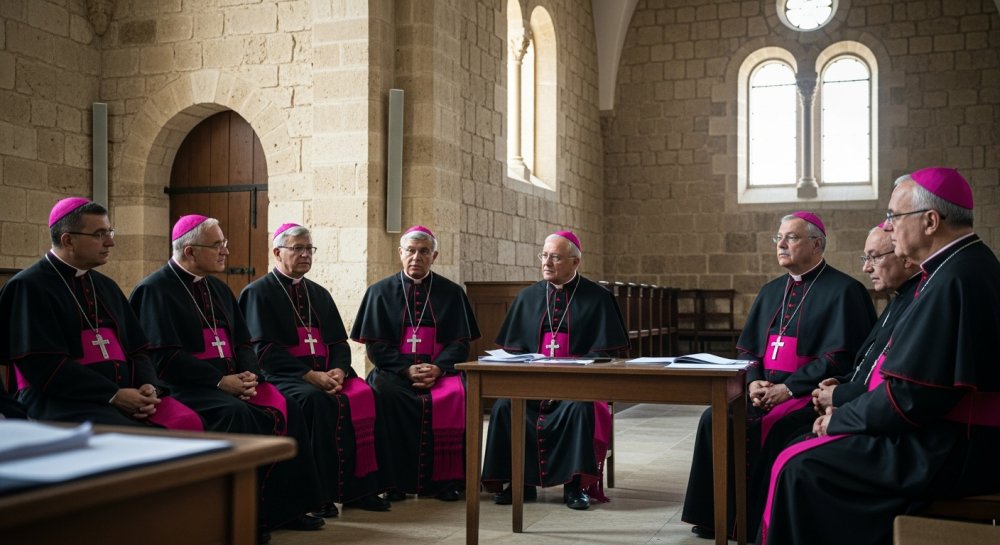
- Catholic bishops from across the European Union convened in Nicosia, Cyprus, to issue a unified call for peace amid global unrest
- Cyprus currently holds the rotating presidency of the EU Council, making it a strategic location for this significant ecclesiastical gathering
- The meeting emphasized the Church’s role in promoting reconciliation and stability across Europe and beyond
Catholic leaders from throughout Europe assembled in Cyprus this week to deliver a powerful message of peace and unity during a time of escalating global tensions. The gathering in Nicosia carries special significance as the island nation currently holds the rotating presidency of the European Union Council.
The bishops’ conference chose Cyprus deliberately, recognizing the island’s unique position as both EU Council president and a nation that has experienced its own painful division. The choice underscores the Church’s commitment to healing and reconciliation even in places marked by decades of conflict.
European Catholic leaders used this platform to address the pressing need for peace initiatives across the continent and beyond. Their message comes at a critical juncture when traditional Christian values of reconciliation and diplomacy are needed more than ever in international affairs.
The Nicosia meeting represents a continuation of the Catholic Church’s longstanding commitment to promoting peace through dialogue and faith-based diplomacy. By gathering in Cyprus, the bishops demonstrated their understanding that true peace requires engagement even in divided places.
Cyprus itself remains a powerful symbol of both division and hope. The island has been split since 1974, yet continues to function as a bridge between cultures and a reminder that peaceful coexistence remains possible through faith and determination.
The timing of this gathering, coinciding with Cyprus’s EU Council presidency, provides Catholic leadership with an amplified platform to influence European policy discussions. This strategic positioning allows the Church to advocate for Christian principles of peace, human dignity, and reconciliation at the highest levels of European governance.
The bishops’ unified statement reflects growing concern among Christian leaders about the erosion of religious freedom, family values, and traditional moral frameworks across Europe. Their call for peace extends beyond geopolitical conflicts to include cultural and spiritual renewal.
As Europe faces mounting challenges—from migration pressures to economic uncertainty to threats against religious liberty—the Catholic Church continues to assert its role as a moral voice advocating for solutions grounded in timeless Christian principles. The Nicosia gathering demonstrates that faith leaders remain committed to engaging actively in the public square.
Let us know what you think, please share your thoughts in the comments below.


-

 Self-Reliance1 year ago
Trump’s Bold Move Uncovers Massive Social Security Fraud
-

 Faith1 year ago
New Clues Emerge in Noah’s Ark Mystery
-

 News1 year ago
Governor Walz’s Rhetoric Sparks National Controversy
-

 News1 year ago
Mel Gibson’s ‘The Passion of the Christ’ Sequel Title Announced
-

 Family1 year ago
Texas Lawmaker Targets Furries in Schools
-

 Freedom1 year ago
Maine Lawmaker Challenges Sports Fairness Controversy
-

 Family11 months ago
Canada’s Controversial Policy Sparks Ethical Debate
-
Faith5 months ago
Congress Hears Pleas for Nigerian Christians