
Faith
Venezuelan Missionaries Find Unexpected Harvest in Spain

Faith Facts
- Venezuelan church planters Pedro and Luisa Andrade relocated to Spain after planting 13 congregations and baptizing 500 people in South America over four decades
- More than 4 million Latin American immigrants now live in Spain, with Venezuelans forming the second-largest group at nearly 600,000 people
- The couple is using Spain’s immigrant communities to reach Spanish-speaking souls for Christ in a new mission field shaped by centuries of reversed migration patterns
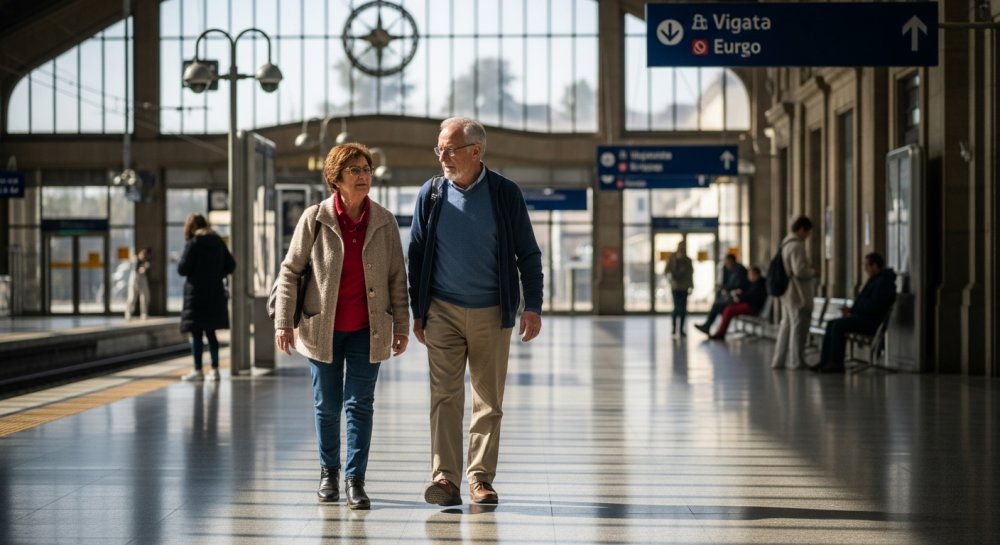
As the train was leaving the station in western Spain, Luisa Andrade saw a man in the aisle with a confused look. She stood up.
Using some kind of sixth cultural sense, she picked him out as a Venezuelan, like her. First, she showed the stranger his seat. Then she got acquainted — hopefully to invite him to worship.
She couldn’t help showing kindness or sharing her faith. Luisa, 73, and her husband Pedro, 72, planted churches for four decades in Venezuela. Now they’ve “crossed the pond,” as Spaniards say, to reach people for Christ on a new continent.
And they can spot fellow Latin American immigrants — more than 4 million people now in Spain were born in Latin America — a mile away.
The couple left South America late last year to take their church-planting skills to a new continent. Pedro counted up 500 people he had baptized as he thought back to the places he’d preached. The couple themselves planted 13 congregations in Venezuela and collaborated in other evangelistic efforts there and on the nearby island of Aruba.
Venezuela has experienced political and economic upheaval for more than two decades, including the forcible removal of Venezuelan president Nicolás Maduro by the U.S. in January 2026. Recently, the nation suffered two powerful earthquakes killing more than 5,500 people.
But the Andrades didn’t leave the South American nation just because of conditions at home, they said.
“When we came here, it was truly from a desire to establish a work,” Pedro explained.
The couple wrapped up their work in Falcón state on the northern coast of Venezuela and began searching for another place to spread the Gospel. The U.S. crossed their mind, or another Latin American nation, or even Mérida, Venezuela, where they had worked before. Then came the chance for a short vacation in Spain to visit relatives.
A Culture They Know
Luisa’s brother has lived about 25 years in Osebe, Galicia, near Santiago de Compostela, the endpoint of the Camino de Santiago, or Way of St. James, a popular pilgrimage route across northern Spain. Osebe is about 50 miles north of Vigo.
Before the trip, the Andrades learned from their younger son, Aaron — also a preacher in Venezuela — that Rut Morillo, a woman the couple brought to Christ years before in the Venezuelan city of Maracay, was living in Vigo. Pedro baptized her when she was 12.
Luisa messaged Morillo on Facebook. Morillo moved to Galicia 20 years ago and works as an importer of Venezuelan cacao. She had struggled to find a Church of Christ.
Reestablishing contact with Morillo struck an emotional chord with the Andrades. Pedro fell in love with Vigo.
“She was like the trigger for us to come to establish a work,” Pedro said.
The Andrades presented their vision for working in Galicia to the New Hope Church of Christ in Edmond, Oklahoma, which had long supported their work in Venezuela.
Paul Ferrell, the New Hope Mission Team’s liaison for the Andrades, said that the committee had been concerned about Pedro and Luisa.
“We were very behind them being somewhere besides Venezuela because of the hardships there,” Ferrell said.
“They really saw what could be,” said fellow missions team member Alan Phillips.
For Phillips, the Andrades’ longing to connect with Latin American immigrants in Spain made sense.
“It’s more natural, probably, for them to have outreach within the culture they know,” he said.
From Conquistadors to Immigrants
In the 15th and 16th centuries, Spaniards crossed the ocean to conquer, extract resources and colonize. In the 19th century, many Spaniards once again left Europe, this time as immigrants in search of work in places such as Cuba and Argentina.
Later the pattern reversed again, with Latin American immigrants seeking economic opportunities in a now thriving Spain.
According to the Spanish government, Latin American immigrants represent 60 percent of the nation’s foreign-born population.
Venezuelans form the second largest group of Latin Americans in Spain, with Colombia providing the biggest population and Ecuador the third largest. Almost 600,000 Venezuelans called Spain home at the start of 2024.
Pedro’s own observations square with the statistics.
“Venezuelans live here, lots of them,” he said, adding Colombians, Peruvians, Guatemalans and others to the list of Latin Americans he’s encountered in Galicia.
Pedro has a plan, one that puts to use the Catholic Church’s parish system that divides the city into zones surrounding a parish church. A map in Pedro’s office highlights an urban core of 30 Vigo parishes.
The Andrades are focusing on the central part of that core. They dream of a congregation in the heart of the city that will serve as a beachhead from which to fan out.
The couple arrived in Vigo in January. The first real estate office they visited showed them a nearby apartment that had just entered the market. It’s tiny, about 215 square feet, but close to the train and bus stations. The Andrades saw the quick, centrally located and newly available rental as providential.
After housing, the Andrades found a space in a commercial building to hold services.
“On Saturday afternoon, nobody’s there. On Sundays, it’s ours alone,” Pedro said.
It was affordable, near the heart of the city, but unfurnished. Pedro saw God at work again.
First Steps … and Seats
The budget was tight.
“We have to buy something, but … we can’t buy anything new,” Pedro told Luisa.
They prayed, then set off on foot for a resale shop run by an evangelical Christian organization. The missionaries bargained for a desk and four unmatched chairs, all the store had that day.
When the delivery truck arrived, the Andrades met another employee, one who had been in Venezuela. They got acquainted. He was able to offer 14 chairs. They were set for worship.
“Why doubt it?” Pedro said. “This is from God.”
Morillo, the woman who decades after Pedro baptized her would lure the couple to Spain, spoke of the influence the Andrades had on her life.
Now living in Redondela, Galicia, about 10 miles northeast of Vigo, Morillo imports Venezuelan cacao. She recalled a request a few years back to use her cacao containers for a smuggling operation.
“I was alone with my daughter at that time,” Morillo said, adding that the payback would have been “very big.”
Her decision about that deal reflected a different one she made long ago.
“The truth is, I didn’t stress out about saying no,” Morillo explained.
Becoming a Christian at an early age, she said, “has saved me from many things … in my process of immigrating.”
“I’ve had a very clean path,” Morillo added. “Not that I don’t make mistakes. I make a lot, a whole lot.”
In Vigo, the Andrades made contact with another Latin American immigrant, Mariano García, a psychoanalyst from Argentina.
García had heard of Churches of Christ back in South America from his uncle, a member. The psychoanalyst went to Catholic schools but never firmly embraced the Christian faith.
During a particularly hard time after moving to Spain, his doubts grew.
“What good is it doing me to believe in God?” he asked himself. “It doesn’t matter — it’s just a lie so I don’t feel alone.”
García started looking for a Church of Christ. The closest was in A Coruña, a city about 100 miles north of Vigo. The preacher told him about the Andrades.
“When I found out that they were here, it was an enormous joy,” García said. “For me it was a gift, a gift from heaven, because literally what I most needed was to meet with Christians.”
After Pedro and García began studying the Bible, García visited his uncle, now living in Alicante, a city all the way across Spain on the Mediterranean coast.
“I got baptized on the beach,” García said.
Convinced that Christians need community, García hopes that Churches of Christ flourish in Galicia.
“Maturity in the faith to me goes hand in hand with a personal relationship, one on one, with God, but that doesn’t exist if it’s not supported by study … with other Christians, by the companionship of other Christians, by sharing the Lord’s Supper with other Christians,” García said. “Your walk is your walk, but on that walk, you can’t do it alone.”
He dreams that the new Vigo church “will not be just any congregation, that it will be a congregation that motivates, pushes, that grows and that makes other congregations grow. And that we’ll know how to use the people God sends us.”
Let us know what you think, please share your thoughts in the comments below.


Faith Facts
- Crieve Hall Church of Christ in Nashville remains committed to a cappella worship, male leadership in preaching and communion, and a statement of faith that affirms “correctly handling His Word without adding to or taking from it.”
- Lipscomb University, four miles away, now welcomes instrumental worship, female speakers, and lecturers from various Christian traditions, reflecting a widening theological gap within Churches of Christ.
- Both the Connect Conference at Crieve Hall and the Lipscomb Faith and Leadership Forum stressed discipleship, biblical faithfulness, and spiritual growth, yet neither event made significant mention of the other.
Two events unfolded just four miles apart in Nashville, yet the theological distance between them felt far greater. One gathering championed what attendees called “sound preaching” rooted in Scripture alone. The other focused on discerning the cultural moment and leading faithfully in changing times.
Crieve Hall Church of Christ hosted its sixth annual Connect Conference, drawing 1,322 believers from more than 300 congregations. Organizers described the three-day meeting as “rooted firmly in Scripture and centered on Christ,” with sessions on evangelism, discipleship, and spiritual growth.
“I love the sound preaching,” said attendee Tonja McRady. “All it means to me is that it comes from the Bible. Are you preaching from the whole Bible, the whole counsel of God?”
Meanwhile, Lipscomb University held its inaugural Faith and Leadership Forum for about 160 ministers and leaders. Sessions addressed faith and politics, ministry burnout, and discipleship in a digitally saturated world. Bible professor Leonard Allen described the two streams as “conservative mainstream” and “moderate mainstream” Churches of Christ.
“With truth becoming loose and malleable in our time, we need more focus on the essentials of the faith,” Allen said. “This was a key theme at the Forum.”
The central question remains: What qualifies as essential? At Connect, speakers repeatedly pointed to “one Lord, one faith, one baptism” from Ephesians 4 and stressed the necessity of baptism and proper biblical leadership.
“What if we just settle on going with what God says, God’s way?” asked minister Hiram Kemp. “God doesn’t want our creativity. He wants our compliance. It’s been revealed to us in Scripture.”
At Lipscomb, participants wrestled with cultural decline and spiritual seeking. Allen noted that 40 million Americans have left the faith in the past quarter-century, yet many young people still search for meaning.
“Is America standing on the edge of spiritual renewal, or are we witnessing the continuing, steady decline of Christian faith in America?” Allen asked. “The old patterns are no longer stable. New patterns have not yet emerged. It seems there is energy but also confusion all around.”
Both gatherings closed with calls for unity, yet each framed it differently. Matt Cook at Connect warned, “Unity without truth is just togetherness.” Carlus Gupton at Lipscomb urged leaders to pursue Holy Spirit-formed leadership that is “calm, steady and deeply rooted in Christ.”
Gupton later reflected, “The proximity of these two conferences actually gives me more reason for hope than concern. Connect seeks to strengthen Christians in biblical faithfulness, discipleship, evangelism and spiritual growth. The Faith and Leadership Forum seeks to equip church leaders for faithful, discerning leadership in a changing culture.”
Let us know what you think, please share your thoughts in the comments below.
Faith Facts
- Christians are called to redeem every tool for God’s glory and the spread of the Gospel.
- Artificial intelligence is a human creation and remains under God’s sovereign authority.
- Believers must approach emerging technologies with wisdom rooted in Scripture.
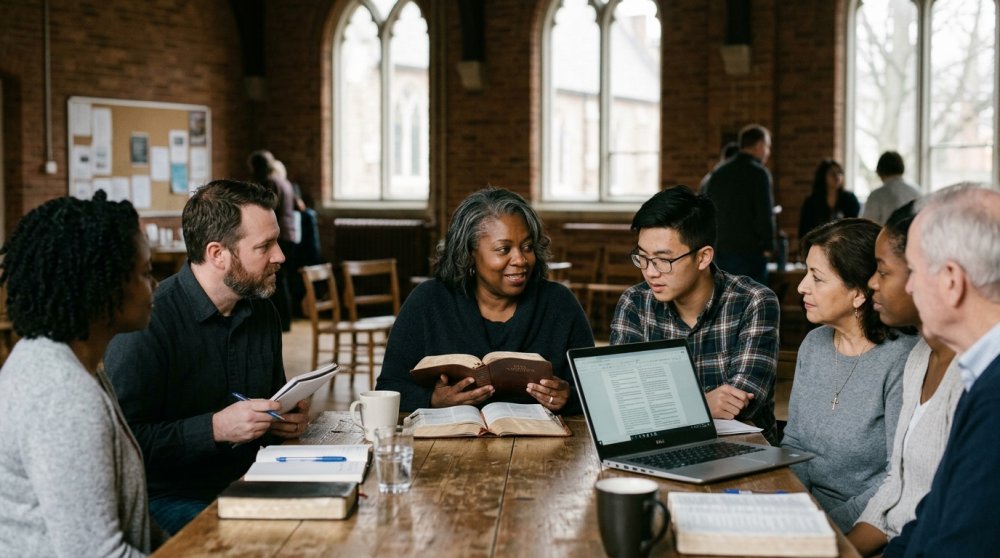
Christians around the world are asking an important question as artificial intelligence grows more powerful. How can this technology be captured for the glory of God and the advancement of the Gospel?
Scripture teaches that every good gift comes from above. Technology itself is not evil, but its use must be directed by truth and righteousness.
AI systems are built by people and trained on data created by people. They reflect human choices and remain limited by the boundaries God has established.
Believers have a responsibility to guide these tools toward purposes that honor Christ and serve others. That includes sharing the Gospel, protecting life, and strengthening families.
“Whether therefore ye eat, or drink, or whatsoever ye do, do all to the glory of God,” 1 Corinthians 10:31 reminds us.
Churches and ministries are already exploring ways to use AI for translation, accessibility, and discipleship resources. These efforts must stay anchored in sound doctrine and prayerful discernment.
At the same time, Christians are right to raise concerns about privacy, truth, and the temptation to place ultimate trust in machines rather than in the Lord.
“Trust in the Lord with all thine heart; and lean not unto thine own understanding,” Proverbs 3:5 declares.
Ultimately, the future belongs to the One who created all things, not to any algorithm or invention of man. AI will never have the final word over humanity.
Let us know what you think, please share your thoughts in the comments below.
Faith Facts
- The little log church has stood along the historic Oregon Trail route, serving as a steadfast reminder of Christian faith amid the rugged American frontier.
- U.S. Highway 191 passes near this enduring structure, connecting modern travelers to the spiritual legacy of pioneer families who settled the West.
- The church continues to bear witness to the traditional values of faith, family, and freedom that shaped our nation’s westward expansion.
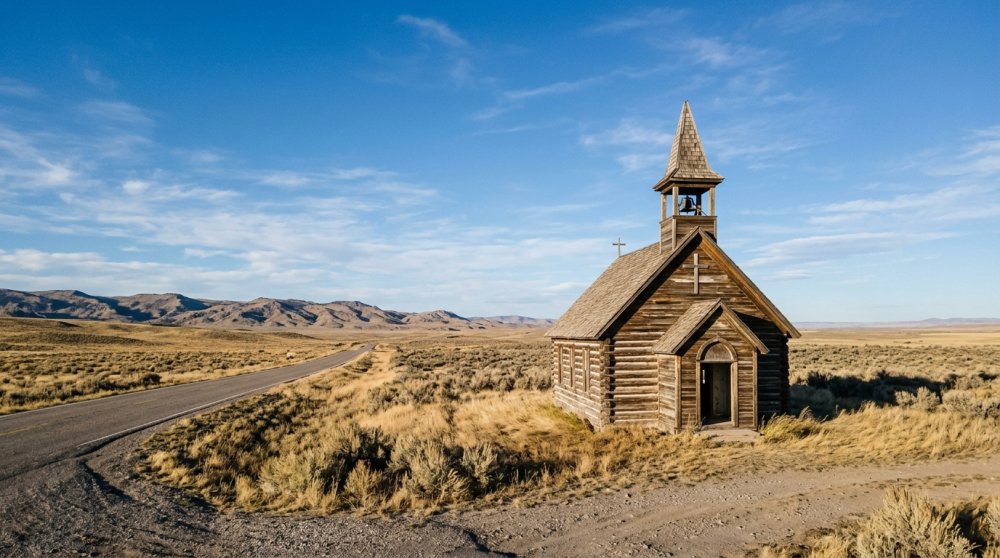
Along U.S. Highway 191 stands a little log church that looks as though it has occupied this windswept landscape since the days of wagon trains.
The humble structure serves as a tangible link to the pioneer families who carried their Bibles and their faith across the plains in search of new beginnings.
Its weathered logs and simple steeple rise against the vast Western sky, a quiet testament to the enduring strength of Christian witness in America.
Travelers passing by are reminded that the values of hard work, self-reliance, and devotion to God helped build this nation from the ground up.
Let us know what you think, please share your thoughts in the comments below.


-

 Self-Reliance1 year ago
Trump’s Bold Move Uncovers Massive Social Security Fraud
-

 Faith1 year ago
New Clues Emerge in Noah’s Ark Mystery
-

 News2 years ago
Governor Walz’s Rhetoric Sparks National Controversy
-

 News1 year ago
Mel Gibson’s ‘The Passion of the Christ’ Sequel Title Announced
-

 Family1 year ago
Texas Lawmaker Targets Furries in Schools
-

 Freedom2 years ago
Maine Lawmaker Challenges Sports Fairness Controversy
-

 Family1 year ago
Canada’s Controversial Policy Sparks Ethical Debate
-
Faith10 months ago
Congress Hears Pleas for Nigerian Christians