
Faith
UK Churches See Rising Interest in Faith

Faith Facts
- Church attendance in the United Kingdom is growing after decades of decline.
- The year ahead is expected to bring greater spiritual openness and more gospel opportunities.
- Bible engagement and interest in Christian community are reaching new highs.
Recent insights from the U.K. Evangelical Alliance reveal a renewed hunger for Jesus in British society. Families and individuals searching for purpose are increasingly turning to Christ and His church.
Phil Knox, Evangelism and missiology senior specialist for the national EA, wrote:
“2025 saw a seismic shift for the church in the U.K.”
“More people are increasingly open to Jesus and are actively exploring faith.”
“More people are being baptised.”
“Churches are growing.”
Research and church leaders point to declining atheism and a surge in Bible sales and church involvement. Parents and the younger generation are especially drawn to faith-based activities and the hope of the gospel.
He added:
“Bible sales have increased by 87% in recent years and the UK’s bestsellers will grow in popularity.”
“In a ‘fake news’, ‘post-truth’ world, younger generations are particularly drawn to good news that is true, profound and beautiful.”
“Churches that keep the substance the same but relate relevantly to culture will flourish.”
“Expect new Christians to cite reading the Bible as pivotal in their journey of exploration and decision moment.”
Churches are encouraged to strengthen discipleship and welcome new believers into loving community and spiritual growth. Compassion ministries continue to provide practical gospel opportunities, connecting faith with acts of service and outreach.
“When people come to faith, research tells us their greatest needs are in helping to establish spiritual disciplines and find new community,”
said Knox.
Now is the time for believers to stand firm on Biblical truth, nurturing faith and inviting others into the hope and freedom found in Christ.



Faith Facts
- 4,000 young Christians gathered at Arise Asia 2026 Congress on July 28 to discuss evangelism in the digital age
- Asian social media influencers described online platforms as mission fields requiring intentional gospel-sharing strategy
- The sessions emphasized that sharing Christ transcends geographical boundaries in today’s connected world
Thousands of young believers were challenged to rethink their approach to evangelism during powerful sessions at a major Christian gathering in Asia. The Arise Asia 2026 Congress brought together approximately 4,000 young Christians on July 28 for back-to-back discussions centered on a pivotal question: what does it mean to share Christ in this generation, and are believers actually doing it?
The sessions approached the challenge of modern evangelism from different angles, each pointing to the same urgent reality. In an era where billions connect through digital platforms daily, the gospel message has unprecedented potential to reach across traditional barriers.
Asian influencers speaking at the congress described the digital landscape as a mission field that demands intentional engagement. They characterized online spaces not as casual entertainment zones, but as spiritual battlegrounds where truth and falsehood compete for hearts and minds.
The speakers emphasized that the Great Commission — Christ’s command to make disciples of all nations — takes on new dimensions in an age of borderless communication. Geographic distance no longer limits who can hear the gospel message, placing fresh responsibility on believers to utilize every available tool for kingdom advancement.
The congress gathering represents a broader movement among young Christians in Asia who are embracing their role in global evangelism. Rather than viewing missions as something distant or reserved for specially called individuals, these believers are recognizing their daily spheres of influence as legitimate mission fields.
The emphasis on personal accountability stood out throughout the sessions. Attendees were not merely encouraged to think about evangelism theoretically, but to examine their actual practices and ask whether their lives demonstrate genuine commitment to sharing their faith.
This approach reflects a return to biblical principles that have always driven authentic Christian witness. The early church expanded rapidly not through professional clergy alone, but through ordinary believers who shared what they had experienced with everyone they encountered.
The digital age amplifies both the opportunity and the urgency of this calling. Social media platforms give individual Christians reach that would have been unimaginable to previous generations, yet many believers remain silent about their faith in these very spaces.
The congress sessions challenged this inconsistency directly. If Christ truly transforms lives and offers the only path to eternal salvation, then remaining silent online while actively posting about trivial matters represents a profound disconnect between professed beliefs and actual priorities.
For young Christians navigating a culture increasingly hostile to traditional Christian values, the message was clear: the gospel has always advanced most powerfully when believers refuse to hide their faith regardless of social cost. The digital realm is no exception to this pattern.
The gathering in Asia demonstrates how Christians worldwide are awakening to both the possibilities and responsibilities of this unique moment in history. Technology has created mission opportunities previous generations could only imagine, and faithful stewardship demands using these tools for eternal purposes.
Let us know what you think, please share your thoughts in the comments below.
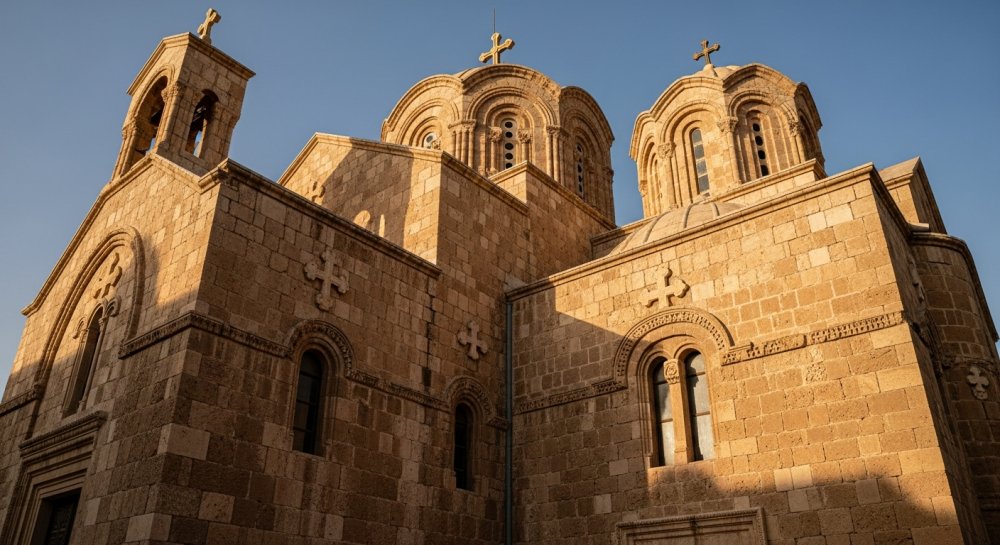
Faith Facts
- Claims that Islam has been ‘very kind’ to Christians throughout history contradict extensive historical documentation of persecution, forced conversions, and systematic oppression.
- Under Islamic rule, Christians were often subjected to dhimmi status, a second-class citizenship requiring payment of jizya tax and adherence to severe restrictions on worship and public life.
- From the early Islamic conquests through the present day, Christian communities in Muslim-majority regions have faced consistent persecution, including destruction of churches, martyrdom, and mass displacement.
A persistent narrative has emerged in recent years suggesting that Islam has historically been “very kind” to Christians. This claim, while appealing to those seeking interfaith harmony, collapses under the weight of historical evidence. Those promoting this revisionist history are either unaware of the facts or deliberately advancing an agenda that obscures the truth.
The historical record tells a far different story than the sanitized version presented in many academic and media circles today. From the very beginning of Islamic expansion in the seventh century, Christian communities across the Middle East, North Africa, and beyond faced subjugation, forced conversion, and persecution.
Under Islamic rule, Christians were designated as dhimmis—protected but inferior subjects required to pay the jizya, a special tax imposed on non-Muslims. This “protection” came at the cost of severe restrictions: Christians could not build new churches, openly display crosses, ring church bells loudly, or testify against Muslims in court. They were required to dress distinctively and show deference to Muslims in public spaces.
These were not isolated policies of rogue caliphs but codified requirements rooted in Islamic law and practice. The Pact of Umar, attributed to the second caliph, formalized many of these discriminatory regulations that would govern Christian life under Islamic rule for centuries.
The conquest of historically Christian lands resulted in the eventual near-extinction of Christian populations in regions where the faith once flourished. North Africa, once home to great theologians like Augustine and Tertullian, saw its Christian population virtually eliminated. The Coptic Christians of Egypt, who had comprised the overwhelming majority, were reduced to a perpetually threatened minority.
Constantinople, the great Christian capital, fell to Islamic conquest in 1453, with the magnificent Hagia Sophia cathedral converted into a mosque. Christian communities throughout the Middle East faced waves of persecution, massacre, and forced conversion that have continued into modern times.
The twentieth and twenty-first centuries have witnessed continued persecution of Christians under Islamic rule. The Armenian Genocide, perpetrated by the Ottoman Empire, resulted in the deaths of 1.5 million Christians. In recent decades, the rise of Islamic extremism has accelerated the exodus of Christians from their ancient homelands.
Iraq’s Christian population has declined from 1.5 million before 2003 to fewer than 250,000 today. In Syria, Christians have faced systematic targeting by Islamic State and other extremist groups. Churches throughout the Muslim world have been bombed, burned, and destroyed, while Christian worshippers have been martyred for their faith.
Even in nations considered “moderate,” Christians face systematic discrimination through blasphemy laws, restrictions on church construction and repair, and legal systems that favor Muslims. Conversion from Islam to Christianity remains punishable by death in several Muslim-majority nations.
This is not to suggest that every Muslim throughout history has persecuted Christians or that peaceful coexistence has never occurred. Individual Muslims have shown kindness to Christian neighbors, and there have been periods of relative tolerance in certain regions. But the broader historical pattern is undeniable: institutionalized discrimination, periodic violence, and steady decline of Christian populations under Islamic rule.
The contemporary push to reframe this history as one of Islamic kindness toward Christians serves multiple purposes. For some, it advances a multiculturalist agenda that prioritizes cultural sensitivity over historical truth. For others, it provides cover for ignoring ongoing persecution of Christians in Muslim-majority nations.
American Christians have a particular obligation to understand this history accurately. Our brothers and sisters in Christ throughout the Muslim world continue to face persecution, displacement, and martyrdom. Accepting false narratives about Islamic-Christian relations dishonors their suffering and undermines efforts to advocate for their protection.
The truth matters, especially when lives hang in the balance. Christians should approach Muslims with love and the hope of sharing the Gospel, but we must not do so by whitewashing history or ignoring present realities. Genuine interfaith understanding requires honesty about the past and present, not convenient fictions.
Those who claim Islam has been “very kind” to Christians throughout history are contradicted by centuries of documentation, the testimony of countless martyrs, and the disappearance of once-thriving Christian communities across the Islamic world. We honor the persecuted church not by denying their suffering but by telling their stories truthfully.
Let us know what you think, please share your thoughts in the comments below.

Faith Facts
- Operation World editor Jason Mandryk told 4,000 young Christians at Arise Asia 2026 that the church is not completing the Great Commission at its current pace
- The conference gathered young believers to address the unfinished task of world evangelization
- Mandryk emphasized that statistical evidence shows the global church must accelerate its missionary efforts
A sobering message echoed through the halls of the Arise Asia 2026 Congress as a leading mission strategist confronted thousands of young believers with hard truths about the state of global evangelization. The numbers, he warned, tell a story the church cannot afford to ignore.
Jason Mandryk, editor of Operation World, addressed approximately 4,000 young Christians gathered at the conference with an urgent assessment of the church’s progress in fulfilling the Great Commission. His message was clear: at the current rate of missionary work, the task Jesus commanded His followers to complete remains far from finished.
The Arise Asia 2026 Congress brought together young believers committed to advancing the gospel throughout Asia and beyond. The gathering represents a new generation seeking to answer Christ’s call to make disciples of all nations — a mandate that has defined Christian mission for two millennia.
Mandryk’s presentation relied heavily on statistical analysis, demonstrating through data what many mission leaders have long suspected: the church’s efforts, while significant, are not keeping pace with the scope of the remaining task. His role as editor of Operation World, a comprehensive guide to the spiritual state of every nation, positions him uniquely to assess global evangelization trends.
Despite the challenging assessment, the conference’s focus remained firmly on hope and action. The title of the event itself — Arise Asia 2026 — reflects a forward-looking vision that calls young Christians not to despair but to participation in God’s redemptive plan.
The gathering underscores a critical reality facing the 21st-century church: while Christianity continues to grow in many regions, vast populations remain unreached with the gospel message. Asia, home to the majority of the world’s population, represents both the greatest challenge and the greatest opportunity for Christian mission.
Young believers at the conference heard a message that combined statistical reality with spiritual conviction — a recognition that while human efforts may fall short, God’s purposes will ultimately prevail. The emphasis on divine sovereignty alongside human responsibility reflects classical Christian mission theology.
The conference title’s reference to “the Lord of the harvest” echoes Jesus’ own words in Matthew 9:38, where He instructed His disciples to pray for the Lord of the harvest to send workers into His harvest field. This biblical framework grounds the modern missionary imperative in Christ’s own teaching.
As the church looks toward 2026 and beyond, gatherings like Arise Asia signal a rising generation’s willingness to engage with the unfinished task of world evangelization. Whether that engagement will translate into the acceleration Mandryk’s statistics suggest is necessary remains to be seen.
Let us know what you think, please share your thoughts in the comments below.


-

 Self-Reliance1 year ago
Trump’s Bold Move Uncovers Massive Social Security Fraud
-

 Faith1 year ago
New Clues Emerge in Noah’s Ark Mystery
-

 News1 year ago
Governor Walz’s Rhetoric Sparks National Controversy
-

 News1 year ago
Mel Gibson’s ‘The Passion of the Christ’ Sequel Title Announced
-

 Family1 year ago
Texas Lawmaker Targets Furries in Schools
-

 Freedom1 year ago
Maine Lawmaker Challenges Sports Fairness Controversy
-

 Family1 year ago
Canada’s Controversial Policy Sparks Ethical Debate
-
Faith8 months ago
Congress Hears Pleas for Nigerian Christians