
Freedom
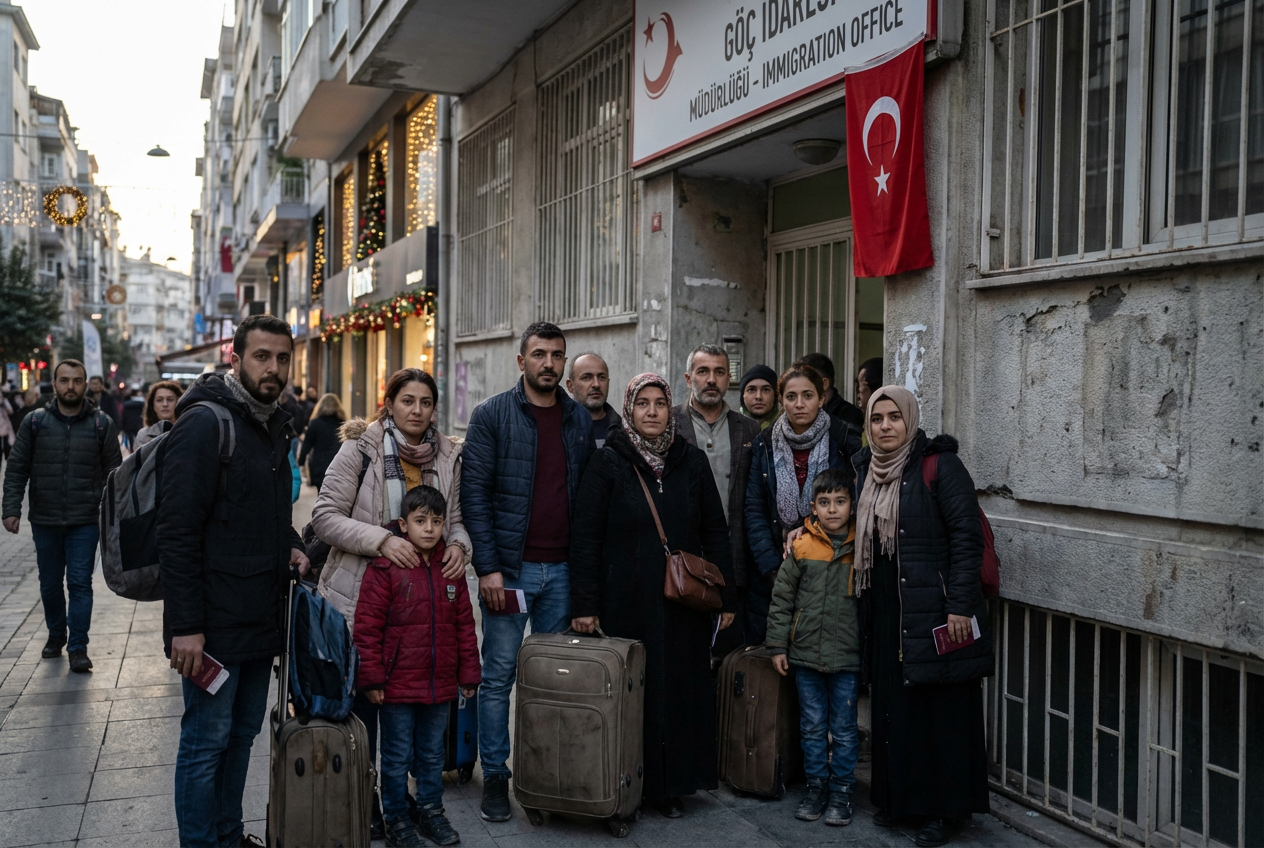
Turkey Faces Scrutiny for Expelling Christians

Faith Facts
- Turkey has expelled or denied entry to at least 300 foreign Christian pastors, missionaries, and their families in recent years.
- European lawmakers have raised serious concerns about Turkey’s actions and called for protection of religious freedom.
- Christian advocates and rights groups are urging Turkish authorities to allow due process and uphold respect for all faiths.
Turkey’s recent decision to expel foreign Christians has drawn attention from the international Christian community, highlighting ongoing challenges to religious liberty in the region. European lawmakers have united in support of religious freedom, defending the right of believers to minister and worship without interference.
The faithful in cities like Izmir continue to celebrate Christmas and gather publicly, reflecting the enduring strength and unity of Christian families. Despite these trials, those affected hold onto their faith, standing as a testament to perseverance rooted in Biblical hope.
During debate in the European Parliament, Tomislav Sokol said,
“These deportations of Christians in Turkey for reasons of national security are one more attack on Christians, the most persecuted religious minority around the world.”
ADF International and other faith-based advocates maintain that many deportees had lawfully resided in Turkey for years with no criminal cases, challenging the practice as inconsistent with religious freedom principles. The Christian community continues to call for prayer and advocacy to safeguard believers across the globe.
As the European Court of Human Rights reviews pending cases, concerned Christians everywhere are encouraged to remain steadfast, praying for justice and the preservation of religious liberty for families affected.
Stand with fellow Christians facing adversity—pray for their strength, spread awareness, and speak up for freedom of faith.

Freedom
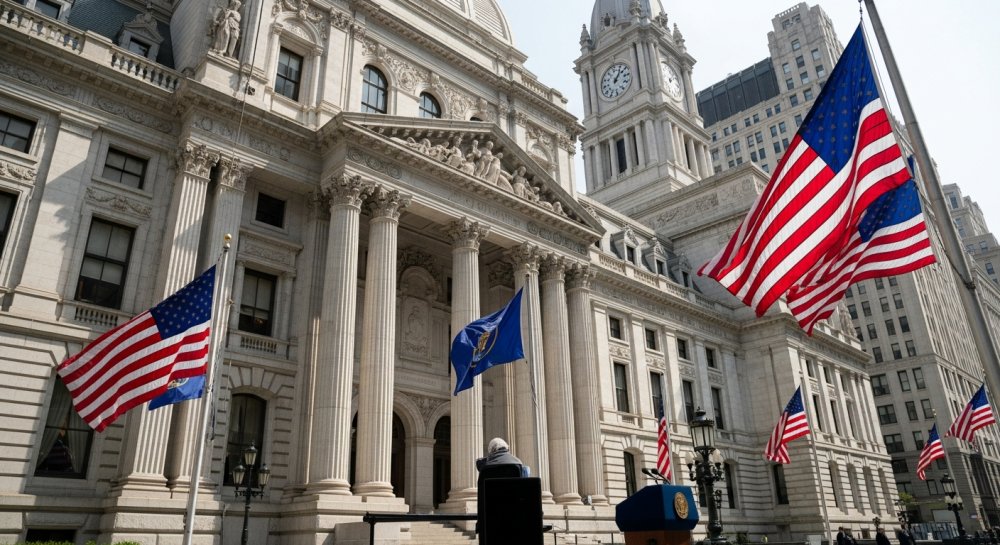
NYC Mayor’s Call to Arrest Foreign Leader Exposes Global Court Threat to American Sovereignty

Faith Facts
- NYC Mayor Zohran Mamdani called on the federal government to enforce an International Criminal Court warrant, despite the U.S. never ratifying the ICC treaty
- The ICC operates without U.S. Senate approval, raising constitutional concerns about foreign tribunals exercising authority over American sovereignty
- Constitutional scholars warn that submitting to unratified international courts undermines American self-government and the rule of law
When New York City Mayor Zohran Mamdani publicly acknowledged he lacked the authority to arrest Israeli Prime Minister Benjamin Netanyahu under an International Criminal Court warrant, he didn’t leave it at that. Instead, he took the extraordinary step of calling on the federal government to carry out the arrest on behalf of a court the United States never joined.
That single comment has ignited a larger debate that transcends one warrant or one world leader. At its core, the question is this: should any international tribunal wield authority over American citizens or on American soil when the U.S. Senate has never ratified the treaty that created it?
For those who believe in constitutional self-government and the sovereignty of the United States, the answer must be a resounding no. America’s founding principles are rooted in the consent of the governed and the rule of law as determined by the American people through their elected representatives. Submitting to the jurisdiction of a global bureaucracy that operates outside the framework of U.S. constitutional authority is not just legally questionable — it’s a direct threat to national independence.
The International Criminal Court was established in 2002 by the Rome Statute, a treaty that the United States signed but never ratified. Without Senate ratification, the ICC has no binding authority over the United States or its citizens. Yet the court has repeatedly attempted to assert jurisdiction over American military personnel and allied nations, raising alarm among defenders of American sovereignty.
Mayor Mamdani’s call for federal enforcement of an ICC warrant represents a troubling willingness to subordinate American law to international authority. It signals a broader ideological shift among some political leaders who view global institutions as superior to national governance. This perspective is fundamentally at odds with the principles that founded this nation and the constitutional protections that safeguard American freedoms.
The implications extend far beyond one controversial warrant. If the United States were to recognize the ICC’s authority, it would set a dangerous precedent. American soldiers, political leaders, and citizens could be subjected to prosecutions by foreign judges operating under standards and procedures that may conflict with U.S. constitutional protections. The very concept of due process, enshrined in the Fifth and Fourteenth Amendments, could be compromised.
Supporters of international courts often argue that global cooperation requires shared legal frameworks. But cooperation does not require capitulation. The United States can and does work with other nations on matters of justice and security without surrendering its constitutional authority to unelected foreign bodies. Treaties must be ratified through the proper constitutional process, ensuring that the American people, through their representatives, have a voice in any commitment that affects their sovereignty.
The Bible speaks to the importance of just governance and the accountability of leaders to their people. Proverbs 29:2 reminds us that “when the righteous are in authority, the people rejoice; but when the wicked beareth rule, the people mourn.” Self-government under God’s principles, not submission to distant tribunals, is the foundation of just authority.
Mayor Mamdani’s statement should serve as a wake-up call. The quiet encroachment of international institutions on American sovereignty is real, and it’s accelerating. From climate agreements to economic regulations to judicial overreach, global bureaucracies are seeking to impose their will on sovereign nations. For Americans who cherish freedom, faith, and constitutional order, this is a line that must not be crossed.
The defense of sovereignty is not isolationism — it is patriotism. It is a recognition that the freedoms we enjoy as Americans were hard-won and must be vigilantly protected. Our Constitution is not a suggestion or a starting point for negotiation with foreign powers. It is the supreme law of the land, and no international body has the right to supersede it.
As this debate continues, Americans must ask themselves what kind of nation they want to leave to their children. Will it be one that governs itself according to its own laws and values, or one that defers to the whims of international courts and foreign officials? The answer will shape the future of freedom in America.
Let us know what you think, please share your thoughts in the comments below.
Faith Facts
- America’s moral foundations are being challenged by forces that have infiltrated trusted institutions including education, media, and government.
- Christian conservatives recognize that cultural decline happens gradually through the erosion of biblical values and traditional family structures.
- Scripture reminds believers that spiritual warfare requires vigilance and that restoration is possible through repentance and return to godly principles.
The question weighing on the hearts of faithful Americans is becoming impossible to ignore: Has our nation drifted so far from its founding principles that recovery seems beyond reach? When we see our values under assault from within, we must ask ourselves how those hostile to our heritage gained such influence.
The answer is sobering. The erosion didn’t happen overnight.
For decades, Christian conservatives have watched as institutions once grounded in biblical truth were slowly compromised. Our schools stopped teaching American exceptionalism and began promoting moral relativism. Our media abandoned objectivity for activism. Our government bureaucracies grew hostile to religious liberty.
Each compromise seemed small at the time. Each concession appeared manageable. But the cumulative effect has been devastating to the spiritual and moral fabric of our republic.
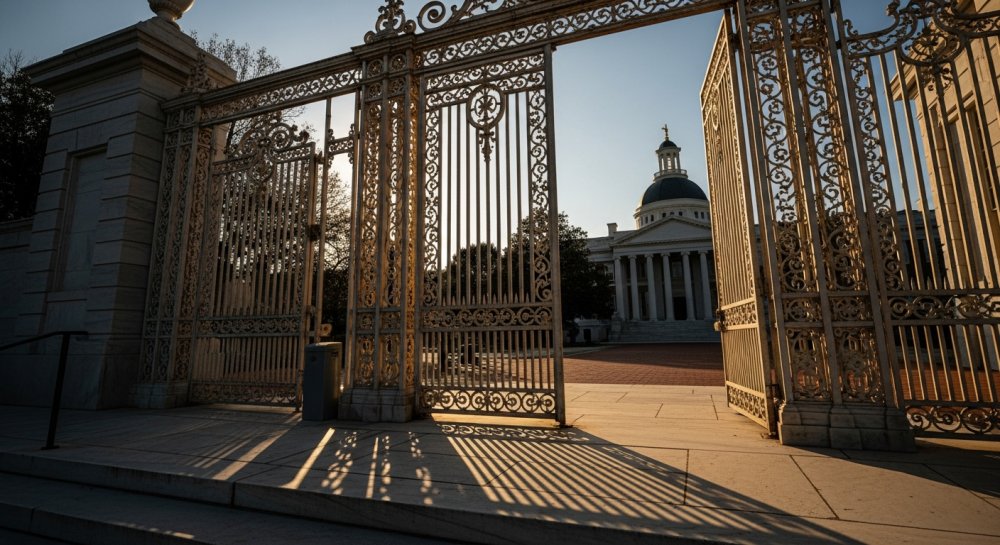
The question isn’t merely academic—it demands action. If the barbarians are already inside the gate, faithful Americans must understand how they entered. Was it through our complacency? Our silence when we should have spoken? Our willingness to prioritize comfort over conviction?
History teaches us that nations fall not primarily from external conquest but from internal decay. When a people abandon the moral foundation that made them great, collapse follows inevitably. Rome didn’t fall to barbarians until Romans had already ceased being Roman in spirit.
Yet Scripture offers hope even in dark times. Throughout the Bible, God demonstrated His willingness to restore nations that turned back to Him. Nineveh repented and was spared. Judah experienced revival under godly kings. America’s fate is not sealed—if we choose to act.
The path forward requires more than political engagement, though that remains important. It demands spiritual renewal. It requires Christian parents to reclaim their children’s education. It calls for believers to build alternative institutions that honor truth. It necessitates bold proclamation of biblical values in the public square.
We cannot afford resignation or despair. The same God who blessed America’s founding can restore her now. But we must be willing to pay the price—in time, treasure, and courage—that restoration demands.
The barbarians gained entry because good people remained silent, passive, and distracted. They will be turned back only when that same people awaken to their calling as salt and light.
Let us know what you think, please share your thoughts in the comments below.

Faith Facts
- Finnish Christian parliamentarian Päivi Räsänen was detained at London’s Heathrow Airport and denied entry to the United Kingdom despite holding a valid visa.
- Räsänen faced years of legal persecution in Finland for sharing biblical teaching on marriage, enduring multiple trials before being fully acquitted by her nation’s Supreme Court.
- British authorities cited her Christian beliefs as the reason for denying entry, demonstrating how religious conviction is increasingly treated as a threat by Western governments.
The detention of a Christian parliamentarian at a British airport has sent shockwaves through the faith community, exposing a troubling reality about the state of religious freedom in the West. What happened to Päivi Räsänen should alarm every American who values the First Amendment.
Räsänen, a member of Finland’s parliament and a medical doctor, was stopped at London’s Heathrow Airport despite possessing proper documentation and a valid visa. Her crime? Publicly affirming biblical teaching on marriage and sexuality—views shared by millions of Christians worldwide for two millennia.
This isn’t just about one woman’s travel inconvenience. It’s about a coordinated effort across Western nations to criminalize Christian orthodoxy. Räsänen endured years of legal battles in her own country, facing potential imprisonment simply for quoting Scripture and expressing her faith-based convictions on marriage.
The Finnish Supreme Court ultimately vindicated her completely, recognizing that her statements were protected expression of religious belief. Yet British authorities apparently decided that Finland’s highest court got it wrong—or more disturbingly, that Christian teaching itself is unwelcome in the United Kingdom.
“I was told my Christian beliefs were the problem,” sources familiar with the incident reported Räsänen explaining.
This development reveals how rapidly the cultural landscape has shifted. A democratically elected official from a NATO ally, fully acquitted by her nation’s Supreme Court, is now treated as a threat at the border—not for any criminal activity, but for her religious convictions.
The implications extend far beyond Britain’s borders. When Western democracies begin excluding citizens from allied nations based solely on their Christian beliefs, we’re witnessing the normalization of religious discrimination at the highest levels of government.
American Christians must recognize this as a warning. The same ideological forces that led to Räsänen’s prosecution in Finland and her exclusion from Britain are active in the United States. They seek to redefine religious freedom as mere private belief while criminalizing its public expression.
What makes this particularly egregious is the selective application of these standards. Räsänen’s views on marriage align with those held by practicing Christians, Jews, and Muslims globally. Yet it’s consistently Christian voices that face the heaviest hand of government censorship and punishment.
The message from British authorities is clear: certain religious beliefs are no longer tolerable in polite society. Traditional Christian teaching on sexuality and marriage has been reclassified from religious doctrine to hate speech, from protected belief to punishable offense.
This isn’t about protecting vulnerable populations—it’s about suppressing dissent from the new sexual orthodoxy. Räsänen’s actual statements were measured, rooted in Scripture, and expressed without malice. Her prosecution and exclusion serve one purpose: intimidation of other believers who might dare to speak biblical truth.
For Americans watching this unfold, the lesson is sobering. Our First Amendment protections, while stronger than anything Europe offers, are under constant assault from those who view traditional Christianity as an obstacle to their agenda.
Every pastor who preaches on biblical sexuality, every parent who teaches their children God’s design for marriage, every Christian business owner who operates according to their convictions—all are potential targets in this new regime. What happened to Räsänen at Heathrow could be a preview of restrictions coming to America if we don’t defend our freedoms vigorously.
The British government’s action also exposes the hollowness of Western claims to champion human rights. How can nations that exclude visitors for their Christian beliefs credibly lecture others about religious freedom? The hypocrisy is staggering.
This incident demands a response from American leaders. Our government should make clear that religious discrimination against Christians—whether in Finland, Britain, or anywhere else—is unacceptable and will affect bilateral relations. Silence in the face of such persecution makes us complicit.
Churches and Christian organizations must also wake up to the reality that cultural accommodation will not protect them. The forces arrayed against biblical Christianity will not be satisfied with our silence—they demand our affirmation or our exclusion from public life.
Räsänen’s courage throughout her ordeal offers a model for believers facing similar persecution. She has not retreated, not compromised, and not apologized for standing on God’s Word. Her steadfastness has inspired Christians globally and exposed the authoritarian impulses of her persecutors.
The question for American Christians is whether we will show similar courage when our turn comes. Because make no mistake—if we don’t reverse course, our turn is coming. The ideology that prosecuted Räsänen in Finland and excluded her from Britain is already deeply embedded in American institutions.
We must recognize this moment for what it is: a test of whether Western civilization will remain free or descend into a new form of religious totalitarianism. The choice Britain made at Heathrow Airport reveals which path it has chosen.
America must choose differently. We must reaffirm that religious freedom means the right to believe, speak, and live according to one’s faith—not just in private, but in the public square. We must resist every effort to categorize biblical teaching as hate speech or exclude believers from participation in society.
The treatment of Päivi Räsänen is a wake-up call. The battle for religious freedom in the West is not theoretical—it’s happening now, at airports and courtrooms, in legislatures and bureaucracies. The outcome will determine whether our children inherit liberty or oppression.
Let us know what you think, please share your thoughts in the comments below.


-

 Self-Reliance1 year ago
Trump’s Bold Move Uncovers Massive Social Security Fraud
-

 Faith1 year ago
New Clues Emerge in Noah’s Ark Mystery
-

 News1 year ago
Governor Walz’s Rhetoric Sparks National Controversy
-

 News1 year ago
Mel Gibson’s ‘The Passion of the Christ’ Sequel Title Announced
-

 Family1 year ago
Texas Lawmaker Targets Furries in Schools
-

 Freedom1 year ago
Maine Lawmaker Challenges Sports Fairness Controversy
-

 Family1 year ago
Canada’s Controversial Policy Sparks Ethical Debate
-
Faith8 months ago
Congress Hears Pleas for Nigerian Christians