
Faith
Trump’s Week: Leadership and Faithful Resolve

Faith Facts
- President Trump met with Asian leaders overseas, promoting America’s interests abroad.
- The administration set a record-low cap on refugee admissions, prioritizing national security.
- White House officials denied reports regarding imminent actions against drug cartels.
President Trump demonstrated steadfast leadership on the global stage, even as domestic challenges intensified.
His administration’s decisions reflect a strong commitment to defending American families and upholding the nation’s values.
Faith and patriotism guide decisions meant to safeguard our borders and communities.
Stay informed and prayerful as we stand together for faith, family, and freedom in America.


Faith Facts
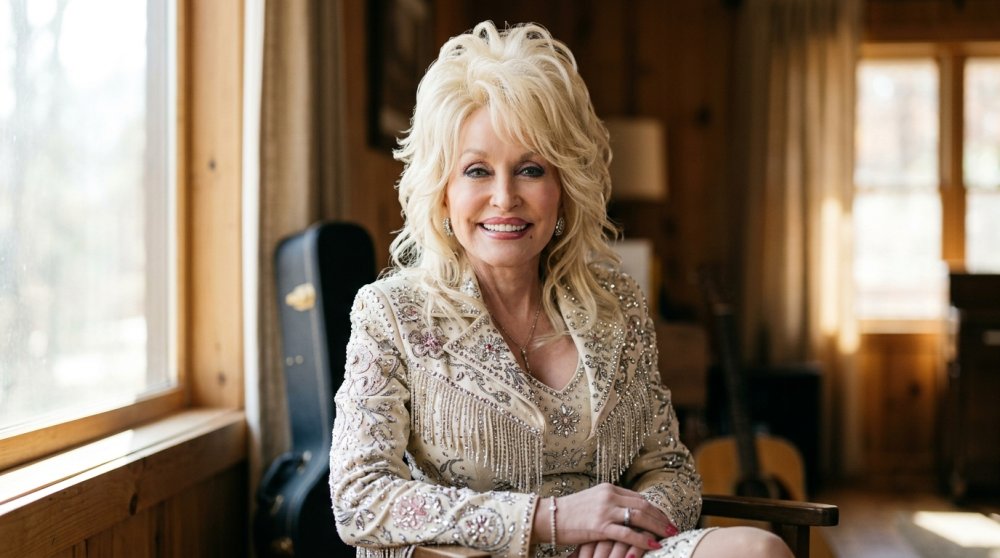
- Dolly Parton passed away Tuesday at age 80, with her family confirming she “is in the arms of Jesus”
- The country music legend openly credited her Christian faith throughout her life, saying “through God all things are possible”
- Parton quietly supported Christian ministries including the Magnolia Foundation, which helps grieving parents
Like Jesus urged his followers to do, Dolly Parton loved her neighbors. But what about loving her enemies, another biblical commandment?
The entertainment icon, whose death Tuesday at age 80 sent shockwaves around the world, likely found that command easier than most. Why?
“The thing about Dolly was that she seemed to have no enemies,” Michael Reneau wrote in a tribute. “Even if you didn’t quite get her, it was impossible not to like her.”
Bill Friskics-Warren described the country music queen as “quintessentially, a uniter of people.” A 2019 story featured this headline: “Is There Anything We Can All Agree On? Yes: Dolly Parton.”
Since Bryan Seaver, Parton’s nephew and head of security, revealed the news that she “is in the arms of Jesus,” countless millions of fans have reflected on her life, her legacy — and yes, her faith.
Many have found themselves listening to songs such as “You Can’t Make Old Friends,” which Parton performed with her old friend Kenny Rogers, who died in 2020 at 81.
In the wake of Parton’s passing, these lyrics require a tissue:
When Saint Peter opens the gate
And you come walking in
I’ll be there just waiting for you
‘Cause you can’t make old friends
Equally poignant is “When I Get Where I’m Going,” Parton’s duet with Brad Paisley:
Yeah, when I get where I’m goin’
There’ll be only happy tears
I’ll shed the sins and struggles
I have carried all these years
And I’ll leave my heart wide open
I will love and have no fear
Yeah when I get where I’m goin’
Don’t cry for me down here
We’ll try not to cry, Dolly. Well, not too much anyway.
One of Parton’s biggest hits — along with classics such as “I Will Always Love You” and “Jolene” — was based directly on Scripture. Brought up “dirt poor” in a large Tennessee family, she based “Coat of Many Colors” on the Bible story her mother told about Joseph:
My coat of many colors
That my momma made for me
Made only from rags
But I wore it so proudly
Although we had no money
I was rich as I could be
In my coat of many colors
My momma made for me
Parton’s Ties to Churches of Christ
Parton’s little-known connection to Churches of Christ emerged from a black-and-white picture of “Mr. and Mrs. Carl Dean” in the 1966 directory of the Radnor Church of Christ in Nashville, Tennessee. Mrs. Carl Dean was, of course, better known as Dolly Parton.
The 75-year-old entertainment icon talked about her little-known — and apparently brief — connection to Churches of Christ in her 2020 book “Dolly Parton, Songteller: My Life in Lyrics.”
“I loved my husband’s mother. She was very sweet, and we were like best friends. Her name was Virginia, but everybody called her Ginny,” Parton wrote concerning her mother-in-law, who died from cancer at age 71 in 1991.
“Carl’s mother was very religious. She was in church every Wednesday and every Sunday morning.”
“The Deans were Church of Christ people. They don’t believe in having any instruments in their church; they just use their voices,” added Parton, who wrote her 1971 song “Lord Hold My Hand” with Ginny Dean.
“Ginny had this big, beautiful, ‘church’ kind of voice. Very proper. It sounded totally different from our ‘Holy Roller’ church back home.”
After Carl Dean’s death last year, Parton talked about relying on her faith:
“I am a person of faith, and I truly believe that I’m going to see him again someday. And I see him every day in my memories and in my heart, and in all the things that we used to do and all the things that we’ve built together. You just kind of have to learn to kind of make new plans — but that’s the hardest part.”
Greg Garrison, a longtime religion writer, reflected on what Parton taught him about faith. He asked her about her Christian faith and whether being a celebrity changed it:
“Well, that faith I had when I was a child has helped me right through everything right now. My grandpa was a preacher, a Pentecostal preacher. My daddy’s people were Baptist. So I’ll have a little chapel in all my places. I have a place where I grew up and I call it the Bapticostal chapel. I just believe that there’s a God. I believe that God helps me, leads me.”
“I talk to Him everyday. I’d prefer to believe in God if there wasn’t one, I’d still believe in God, because I believe we need to believe in something bigger and better than ourselves.”
“It gives us hope. It gives us strength. I know it does me. My faith is very important.”
“I do believe that through God all things are possible. I do believe that Jesus loves me. And I just use that. I’m never ashamed of my family. I’m never ashamed of my religion. I’m not trying to cram it down anyone else’s throat. I just think that everybody’s got to have something to believe in.”
How Parton Helped One Christian Ministry
Parton’s love for her neighbors extended to specific acts of kindness. One example involves Matt and Macy Collins, whose 4-year-old daughter, Hattie Jo, died in a 2020 tornado that battered Cookeville, Tennessee.
In 2024, the couple launched the Magnolia Foundation, a ministry to honor their oldest daughter’s memory and support other parents who lose a child. Here’s what many didn’t know: Parton helped the Magnolia Foundation — as she did countless other causes.
Matt Collins, former youth minister for the Collegeside Church of Christ in Cookeville, shared the details:
“The Magnolia Foundation was less than a year old when, on a Friday afternoon in August, I got a knock on the door. I was getting some mail — the kind you have to sign for. When I opened the envelope up, I was blown away. I was holding a check from Dolly Parton in support of Magnolia.”
“Magnolia was new, and I was still wondering if it was a good idea to quit the real job I had and start this foundation. Dolly’s support wasn’t just financial — it was validation and encouragement to keep going. Dolly, without ever meeting us in person, has proven to be uniquely important to our family. Dollywood has been a place where we celebrate and grieve our daughter, Hattie. We will be there in 2 weeks for Hattie’s 11th birthday. Her support on that August afternoon meant more than the amount on the check. Dolly considered Magnolia a worthy cause to invest in — she cared about us and the people that we have the opportunity to serve.”
“If Magnolia has ever impacted your life or the life of a loved one, I want you to know that, directly or indirectly, Dolly was behind it. If you’ve ever supported Magnolia as we serve families, I want you to know that Dolly stood beside you in that effort.”
“A remarkable life. Thank you, Dolly.”
Yes, thank you, Dolly. For everything.
Let us know what you think, please share your thoughts in the comments below.
Faith Facts
- Contemporary Christian artist Cory Asbury issued an apology after facing backlash for posting a shirtless gym photo on social media
- The incident highlights growing tensions within Christian communities over what constitutes appropriate online conduct and accountability
- Critics argue social media has created an environment where believers confuse personal offense with genuine sin, undermining authentic Christian correction
When a well-known worship leader feels compelled to apologize for sharing a fitness milestone, it raises important questions about how Christians engage with one another in the digital age. Contemporary Christian artist Cory Asbury recently found himself at the center of controversy after posting a shirtless photo from the gym, prompting swift criticism from some corners of the Christian community.
The response to Asbury’s post reveals a troubling pattern in Christian online spaces. Rather than fostering genuine accountability rooted in Scripture and grace, social media has created an environment where believers are quick to call out perceived offenses. The question isn’t whether Christians should hold one another accountable—Scripture clearly calls us to do so—but whether our digital outrage culture has replaced biblical discernment with reactive judgment.
The impossibility of pleasing everyone online has become particularly acute for Christian public figures. Every post, every image, every word can trigger a cascade of responses from people who believe their personal standards should be universally enforced. This creates a climate where fear of offense supersedes authentic Christian witness and fellowship.
Biblical correction has always been part of the Christian life. Jesus himself outlined a clear process for addressing sin within the church in Matthew 18. But this process assumes actual sin has occurred, requires private conversation before public confrontation, and flows from a heart of restoration rather than condemnation. Social media bypasses all of these safeguards, allowing instant public judgment without relationship, context, or grace.
The confusion between personal offense and actual sin represents a significant problem in contemporary Christian culture. Not everything that makes us uncomfortable constitutes moral failure. Scripture gives clear guidance on sin, but it also allows for freedom and diversity in many areas of life. When we elevate our preferences to the level of divine command, we add burdens to believers that God himself has not imposed.
This doesn’t mean Christians should abandon all discretion online. Public figures, including worship leaders and Christian artists, do carry a responsibility to consider how their actions might affect others. Paul’s teaching on Christian freedom in Romans 14 and 1 Corinthians 8 acknowledges that love sometimes means limiting our liberty for the sake of weaker believers. But this principle requires wisdom and context—it cannot be weaponized to control every aspect of how Christians present themselves publicly.
The digital age has amplified voices that previous generations never would have heard. Social media gives everyone a platform and an audience, which can be both blessing and curse. For Christians, it means we’re exposed to the opinions, standards, and judgments of thousands of people with different convictions, backgrounds, and levels of spiritual maturity. The result is a constant pressure to conform to an ever-shifting set of expectations that often have little to do with biblical truth.
Rather than creating stronger Christian community, this environment breeds fear, self-righteousness, and division. Believers become more concerned with avoiding the appearance of evil—as defined by the most vocal critics—than with actually pursuing holiness and loving their neighbors. The focus shifts from internal transformation to external performance, from grace to legalism.
The challenge for Christians navigating social media is learning to distinguish between genuine conviction and cultural preference, between biblical standards and personal taste. This requires humility—the willingness to admit that not everyone who disagrees with us is in sin. It requires wisdom—understanding that not every battle is worth fighting. And it requires grace—extending to others the same mercy we’ve received from Christ.
When we rush to correct, criticize, or condemn other believers online, we should ask ourselves several questions: Is this actually sinful according to Scripture, or does it simply violate my preferences? Have I addressed this person privately, or am I using public shame as my first resort? Am I motivated by genuine concern for their spiritual well-being, or by my own sense of offense? Would I say this to their face, in the presence of other believers who know us both?
Christian accountability works best within the context of genuine relationship and local church community. The anonymity and distance of social media make it easy to forget that there’s a real person on the receiving end of our criticism—someone created in God’s image, someone for whom Christ died. When we treat fellow believers as projects to correct rather than siblings to love, we’ve lost something essential to our faith.
The Asbury incident illustrates how quickly the Christian online space can become a minefield where sincere believers must constantly calculate the potential for offense. This isn’t the freedom Christ purchased for us. While we should absolutely care about how our actions affect others, we cannot live in perpetual fear of violating someone’s sensibilities. That’s not the abundant life Jesus promised.
Moving forward, Christians need to recover a more biblical approach to accountability—one that values relationship over reaction, restoration over reputation, and grace over gotcha moments. We need to recognize the difference between constructive correction offered in love and destructive criticism offered in judgment. And we need to remember that our ultimate standard is God’s Word, not the fluctuating opinions of online commentators.
The body of Christ needs both grace and truth, freedom and accountability, mercy and holiness. Finding that balance requires more wisdom than most social media interactions allow. Before adding to the chorus of criticism aimed at fellow believers, we should pause and ask whether we’re truly speaking truth in love or simply adding noise to an already chaotic digital landscape.
Let us know what you think, please share your thoughts in the comments below.
Faith Facts
- Pastor Samuel Rodriguez has been appointed as an ambassador for Mel Gibson’s upcoming film ‘The Resurrection of the Christ: Part One’
- Gibson’s Icon Productions made the official announcement through El Mensaje Comunicaciones
- This partnership brings together influential evangelical leadership and proven biblical filmmaking experience
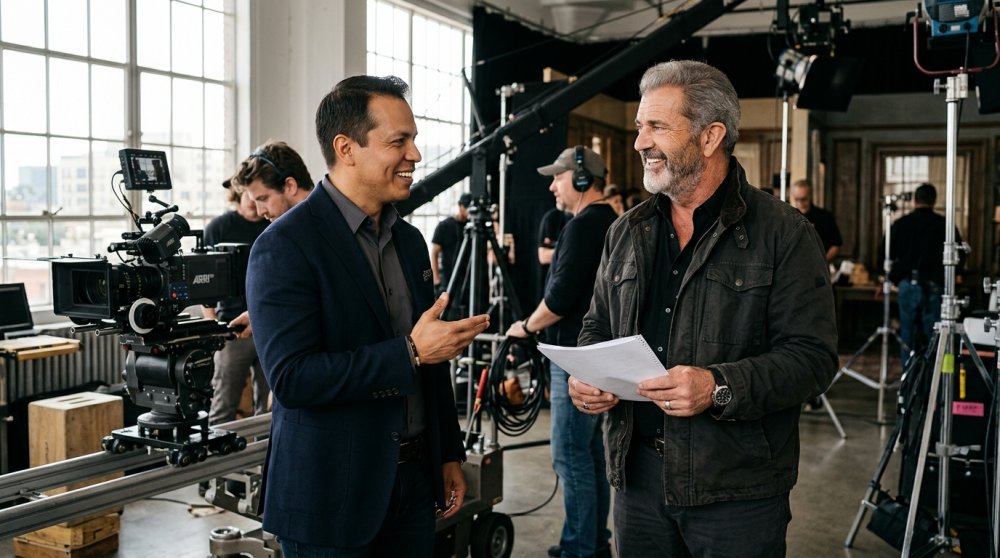
A powerful new collaboration is taking shape in Hollywood as one of America’s most prominent evangelical leaders joins forces with acclaimed director Mel Gibson for a highly anticipated biblical film project. Pastor Samuel Rodriguez has officially been named an ambassador for “The Resurrection of the Christ: Part One,” marking a significant partnership between faith leadership and the entertainment industry.
Icon Productions, Gibson’s production company, made the announcement through El Mensaje Comunicaciones. The appointment signals a strategic effort to bridge the gap between Hollywood and the Christian community for this major biblical production.
Rodriguez, who serves as president of the National Hispanic Christian Leadership Conference, brings substantial influence within evangelical circles. His involvement as an ambassador suggests the film will have strong support among faith-based audiences when it releases.
Gibson previously demonstrated his ability to create compelling biblical cinema with “The Passion of the Christ,” which became a cultural phenomenon and one of the highest-grossing religious films in history. That 2004 film resonated deeply with Christian audiences and sparked nationwide conversations about faith.
The collaboration between Rodriguez and Gibson represents more than just promotional strategy. It reflects a growing recognition in Hollywood that authentic faith stories require genuine input from faith leaders who understand the spiritual significance of biblical narratives.
By appointing Rodriguez as an ambassador, Icon Productions is ensuring that evangelical perspectives are represented throughout the film’s journey to audiences. This approach stands in contrast to Hollywood’s frequent mishandling of religious themes and demonstrates respect for the Christian community.
“The Resurrection of the Christ: Part One” will focus on the most pivotal event in Christian history—the resurrection of Jesus Christ. This subject matter holds eternal significance for believers and represents the cornerstone of Christian faith.
Details about the film’s production timeline and release date have not been fully disclosed. However, the involvement of both Gibson and Rodriguez has already generated considerable interest among Christian communities nationwide.
The partnership also highlights the importance of faith leaders engaging with culture and media. Rodriguez’s ambassadorship provides an opportunity to ensure biblical accuracy and theological integrity in how this sacred story is presented to millions of viewers.
Gibson’s return to biblical filmmaking has been long anticipated by Christian audiences who appreciated his previous work. His commitment to producing “The Resurrection of the Christ” demonstrates that Hollywood can still produce content that honors Scripture and respects Christian beliefs.
Let us know what you think, please share your thoughts in the comments below.


-

 Self-Reliance1 year ago
Trump’s Bold Move Uncovers Massive Social Security Fraud
-

 Faith1 year ago
New Clues Emerge in Noah’s Ark Mystery
-

 News1 year ago
Governor Walz’s Rhetoric Sparks National Controversy
-

 News1 year ago
Mel Gibson’s ‘The Passion of the Christ’ Sequel Title Announced
-

 Family1 year ago
Texas Lawmaker Targets Furries in Schools
-

 Freedom1 year ago
Maine Lawmaker Challenges Sports Fairness Controversy
-

 Family1 year ago
Canada’s Controversial Policy Sparks Ethical Debate
-
Faith9 months ago
Congress Hears Pleas for Nigerian Christians