
News
Trump’s Bold Move to Restore Columbus Day


In a bold move that underscores his commitment to preserving our nation’s cherished traditions, President Donald Trump announced on Sunday his intention to reinstate Columbus Day as a celebrated occasion across the country. This decision comes as a refreshing affirmation of our historical roots and a stand against the growing tide of revisionist history that seeks to erase our past.
While Congress has not officially altered Columbus Day as a federal holiday, some cities, such as Washington, D.C., have opted to observe Indigenous Peoples’ Day instead. This shift has left many Americans feeling as though their history and heritage are under siege.
President Trump, known for his unwavering dedication to American values, took to social media to express his determination to restore Columbus Day to its rightful place of honor.
“They tore down his Statues, and put up nothing but ‘WOKE,’ or even worse, nothing at all! Well, you’ll be happy to know, Christopher is going to make a major comeback,” he declared.
This statement resonates deeply with those who believe in the importance of remembering and celebrating the explorers and pioneers who played pivotal roles in shaping our great nation.
In a time when the very foundations of our society are being challenged, this move by President Trump serves as a reminder of the enduring significance of faith, family, and freedom. It is a call to uphold the values that have guided America since its inception, rooted in the belief that our history should be honored, not erased.
As we look to the future, let us remember the importance of individual responsibility and the principles that have long been the bedrock of our society. By embracing our past and the lessons it holds, we can ensure a brighter, more unified future for generations to come.
Let us know what you think, please share your thoughts in the comments below.



Faith Facts
- The human body contains approximately 30 trillion cells, each carrying chromosomes that determine biological sex as either XX (female) or XY (male)
- Scientific evidence demonstrates that biological sex is written into every cell of the human body and cannot be changed through hormones or surgery
- Christian teaching affirms that God created humanity as male and female, a truth reflected in the biological design of the human body
In an age of confusion and shifting cultural narratives about gender identity, science offers a clear and unchanging answer: biological sex is written into every single cell of the human body.
The human body contains approximately 30 trillion cells. Each one carries the chromosomal signature of biological sex—either XX for female or XY for male.
This cellular reality represents an insurmountable biological fact that no amount of hormone therapy, surgical intervention, or social declaration can alter. Every cell in a person’s body testifies to their God-given design as either male or female.
For Christians who believe God created humanity “male and female” as stated in Genesis, this scientific evidence provides powerful affirmation of Biblical truth. The design is intentional, comprehensive, and permanent.
While compassion for those experiencing gender confusion remains essential, acknowledging biological reality does not diminish human dignity. Rather, it honors the Creator’s design and provides a foundation for helping people find wholeness within the bodies they were given.
The chromosomal evidence found in 30 trillion cells cannot be dismissed or altered by ideology. It stands as testimony to an unchanging truth about human identity—one that predates modern confusion and will outlast it.
As cultural pressure mounts to deny biological reality, Christians must continue to uphold truth with both conviction and compassion. The science is clear, and it aligns perfectly with Scripture’s teaching about God’s creative design.
Let us know what you think, please share your thoughts in the comments below.
Faith Facts
- Internal opposition within Iran appears to be blocking ceasefire negotiations in the Middle East
- The potential for peace in the region faces sabotage from hardline factions resistant to diplomatic solutions
- Christian communities throughout the Middle East continue praying for lasting peace amid ongoing regional instability
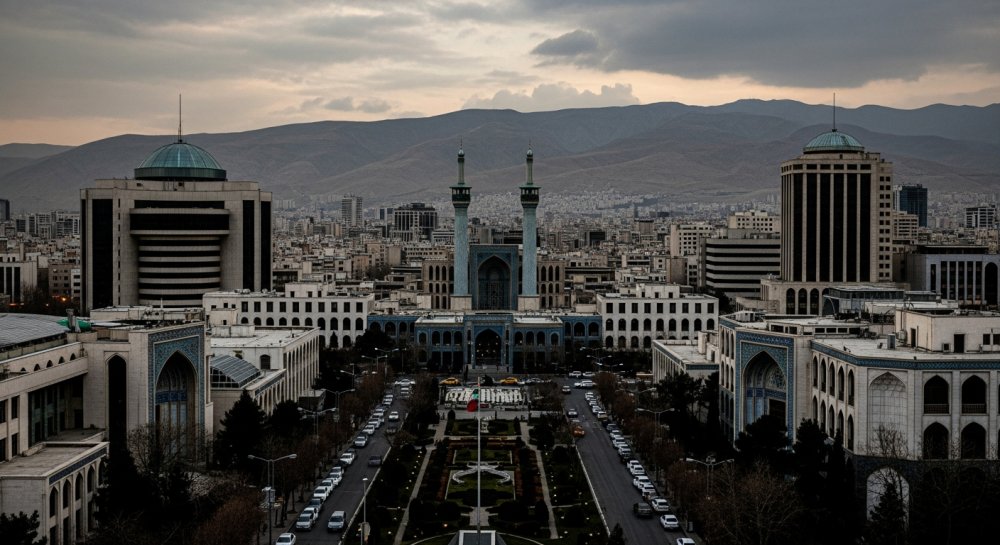
As diplomatic efforts intensify to bring stability to the Middle East, emerging evidence suggests powerful elements within Iran are actively working to prevent a ceasefire agreement from taking hold. This troubling development threatens to prolong suffering for millions and delay the peace that so many families across the region desperately need.
The resistance to peace talks appears rooted in factions that benefit from continued regional conflict and instability. These groups view any diplomatic breakthrough as a threat to their power and influence within Iran’s complex political structure.
For Christian communities throughout the Middle East—some of the world’s oldest and most faithful believers—the prospect of continued conflict represents an ongoing threat to their very existence. These ancient churches have endured persecution and hardship for centuries, and many believers see diplomatic solutions as the best hope for their survival in their ancestral homelands.
The question of who exactly is blocking peace efforts remains partially obscured by Iran’s opaque power structure. However, the pattern of disruption suggests coordination among hardline elements who prioritize ideological confrontation over the welfare of ordinary people throughout the region.
American policymakers and faith leaders alike recognize that lasting peace in the Middle East requires good-faith participation from all parties. When powerful actors deliberately sabotage diplomatic progress, they reveal their true priorities—and those priorities clearly do not include the wellbeing of innocent civilians caught in the crossfire.
The international community, including Christian advocacy organizations, continues to call for transparency and accountability in peace negotiations. The faithful across America pray for wisdom for leaders on all sides and protection for vulnerable religious minorities who have suffered disproportionately during regional conflicts.
As these critical negotiations continue, the hope remains that the forces of peace will ultimately prevail over those who profit from perpetual conflict. The families longing for security, the children deserving of stability, and the ancient Christian communities fighting for survival all depend on leaders choosing diplomacy over destruction.
Let us know what you think, please share your thoughts in the comments below.
Faith Facts
- Israeli authorities have arrested another Palestinian Christian leader, an Evangelical Lutheran accused of promoting terrorist activities
- Christian bishops across denominations are protesting the detention and calling for religious freedom protections in the Holy Land
- The arrest adds to growing concerns among Christian communities about their ability to freely practice and minister in the region
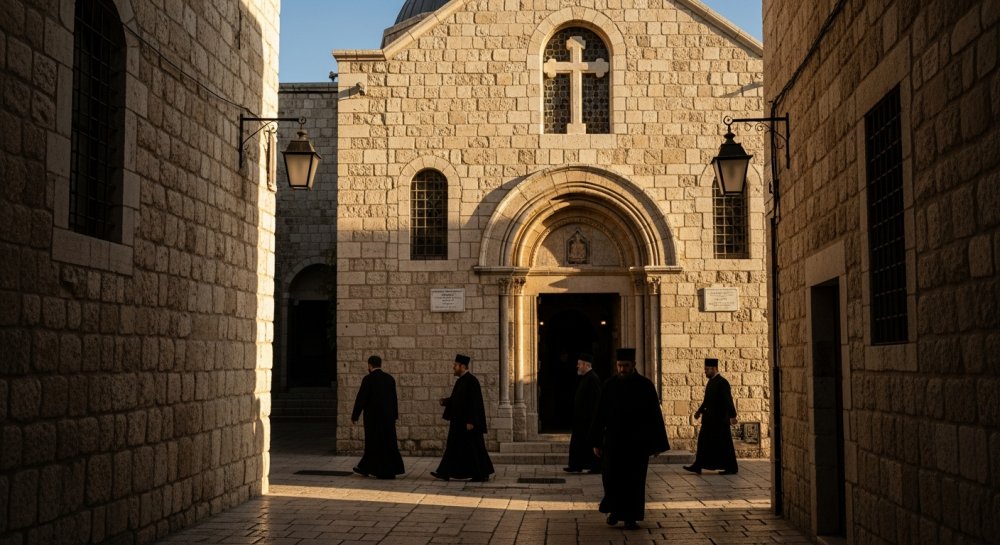
Christian leaders are raising alarm after Israeli authorities detained yet another Palestinian Christian leader, this time an Evangelical Lutheran accused of promoting terrorist activities. The arrest has sparked immediate protest from bishops representing multiple Christian denominations who serve congregations in the Holy Land.
The detention marks the latest incident in what religious freedom advocates describe as an escalating pattern of pressure on Christian communities in the region. Church leaders are calling for transparency in the legal proceedings and demanding that religious freedoms be respected for all believers regardless of their background.
Bishops from various Christian traditions have jointly voiced their concerns, emphasizing that the ability to worship freely and minister to their communities is foundational to the Christian presence that has existed in the Holy Land for two millennia. They argue that arrests of Christian leaders without clear evidence create a chilling effect on religious practice.
The accused Lutheran leader has not been publicly named, but church officials report that he was actively involved in pastoral ministry and community service. Israeli authorities have cited security concerns in justifying the arrest, though specific allegations have not been made public.
Christian communities throughout the Middle East have faced mounting challenges in recent years, with many believers expressing concern about their long-term ability to remain in the lands where Christianity was born. The arrest comes at a time when Christian populations in the region have already declined significantly due to emigration driven by conflict and instability.
Religious freedom organizations are monitoring the case closely and calling on both Israeli authorities and international observers to ensure due process is followed. They emphasize that protecting the rights of Christian minorities is essential to preserving the diverse religious heritage of the Holy Land.
The situation highlights the complex religious and political dynamics that affect Christian communities caught between competing interests in one of the world’s most contested regions. Faith leaders stress that believers of all backgrounds deserve equal protection under the law and freedom to practice their faith without intimidation.
Let us know what you think, please share your thoughts in the comments below.


-

 Self-Reliance1 year ago
Trump’s Bold Move Uncovers Massive Social Security Fraud
-

 Faith1 year ago
New Clues Emerge in Noah’s Ark Mystery
-

 News1 year ago
Governor Walz’s Rhetoric Sparks National Controversy
-

 News1 year ago
Mel Gibson’s ‘The Passion of the Christ’ Sequel Title Announced
-

 Family1 year ago
Texas Lawmaker Targets Furries in Schools
-

 Freedom1 year ago
Maine Lawmaker Challenges Sports Fairness Controversy
-

 Family1 year ago
Canada’s Controversial Policy Sparks Ethical Debate
-
Faith7 months ago
Congress Hears Pleas for Nigerian Christians