
Faith
Three Sermon Red Flags Most Christians Never Notice

Faith Facts
- Spiritual manipulation often occurs subtly through Scripture-twisting, emotional pressure, and isolation tactics that undermine biblical discernment
- Survivors of spiritual abuse commonly lose confidence in their own judgment after prolonged exposure to manipulative teaching
- Biblical literacy and community accountability serve as essential safeguards against pastoral manipulation in Christian churches
Many believers who have experienced spiritual abuse share a troubling reality: their struggle extends beyond distrust of a former church. They’ve lost confidence in their own spiritual discernment entirely.
This erosion of self-trust represents one of the most damaging long-term effects of manipulative preaching. When pastors misuse their authority, congregants can spend years doubting their ability to recognize truth from deception.
The challenge lies in identifying manipulation as it happens. Most Christians sitting in pews don’t realize they’re being spiritually manipulated until significant damage has occurred. The tactics are often subtle, wrapped in biblical language, and delivered with apparent concern for spiritual growth.
Warning Sign 1: Scripture Used as a Weapon Rather Than a Guide
Manipulative preachers frequently take Bible verses out of context to support predetermined conclusions. Rather than allowing Scripture to speak for itself, they twist passages to control behavior or silence questions. This approach transforms God’s Word from a source of freedom into a tool of coercion.
Healthy biblical teaching invites examination and discussion. When a pastor consistently uses isolated verses to shut down legitimate concerns or enforce unbiblical demands, that’s a significant red flag. God’s Word should illuminate truth, not obscure it through selective interpretation.
Warning Sign 2: Emotional Manipulation Disguised as Spiritual Concern
Some preachers regularly employ fear, guilt, or shame to motivate congregants. They may suggest that questioning leadership equals questioning God, or that leaving the church means abandoning faith entirely. This emotional pressure creates an environment where discernment becomes nearly impossible.
Biblical conviction differs fundamentally from manufactured guilt. The Holy Spirit convicts believers about genuine sin while pointing them toward Christ’s redemption. Manipulative preaching, by contrast, generates vague anxiety and dependency on the pastor’s approval rather than confidence in God’s grace.
Warning Sign 3: Isolation from Outside Perspective
Manipulative leaders often discourage congregants from seeking input beyond their own teaching. They may subtly or explicitly criticize other churches, warn against outside Bible studies, or create an “us versus them” mentality. This isolation prevents believers from gaining perspective that might reveal the manipulation.
Healthy Christian community embraces the broader body of Christ. While maintaining doctrinal convictions, faithful pastors recognize they don’t possess a monopoly on spiritual wisdom. When a church leader consistently positions himself as the sole reliable source of truth, that’s cause for serious concern.
Rebuilding Spiritual Discernment
For those who’ve experienced manipulative preaching, restoration requires time and intention. Reconnecting with Scripture apart from a controlling voice helps believers rediscover God’s character. Engaging with mature Christians in healthy church environments provides models of faithful leadership.
The goal isn’t suspicion of all pastoral authority but development of biblical discernment. Christians should be equipped to evaluate teaching against Scripture itself, asking whether sermons align with God’s revealed character and the gospel message. This discernment honors both God’s Word and the genuine shepherds He’s called to serve His people.
Recognizing these warning signs protects not only individual believers but entire congregations. When Christians understand manipulation tactics, they can respond appropriately—whether that means addressing concerns with leadership, seeking counsel from trusted believers outside the congregation, or recognizing when it’s time to find a healthier church home.
Let us know what you think, please share your thoughts in the comments below.


Faith Facts
- The Bible records Noah’s Ark as a historical vessel built at God’s command to preserve life during the Flood.
- Archaeologists and geologists continue to study sites in Turkey that some claim match the Ark’s resting place.
- Christians are urged to ground their faith in Scripture rather than unverified discoveries.
Explosive headlines this week announced that Noah’s Ark has been discovered beneath a mountain range in Turkey. The claims have quickly spread across social media and news outlets, stirring both excitement and skepticism among believers.
Chris Sinkinson, a respected Christian author and lecturer, cautions that such announcements often outpace the evidence. He urges fellow believers to remain anchored in Scripture and verified facts rather than sensational reports.
“Christians need to stick to the facts,” Sinkinson stated. His words serve as a timely reminder that faith rests on the unchanging Word of God, not on the latest archaeological headline.
While the possibility of discovering physical remnants of the Ark is intriguing, experts note that conclusive proof remains elusive. Many past claims have failed under closer scientific examination.
Scripture itself provides the foundation for understanding the Flood and God’s covenant with Noah. Believers are reminded that the reliability of the Bible does not depend on locating the physical Ark.
Let us know what you think, please share your thoughts in the comments below.
Faith Facts
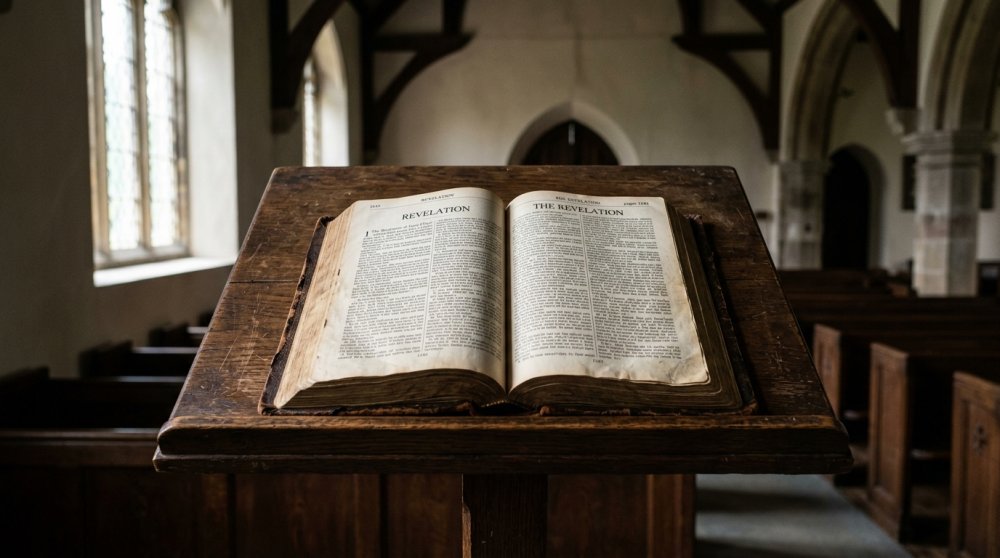
- Revelation chapters 2 and 3 contain direct messages from Jesus to seven churches in Asia Minor, blending commendation with stern rebuke.
- Scripture records that Jesus declares, “I know your works,” underscoring His intimate awareness of both corporate and personal conduct.
- The warnings delivered to these early congregations still apply to contemporary churches that drift into compromise or complacency.
In Revelation 2 and 3, the gentle and lowly Jesus speaks to seven churches with both praise and severe warning.
He knows their works, their compromises and what they can’t see about themselves.
He knows ours, too.
Let us know what you think, please share your thoughts in the comments below.

Faith Facts
- Professional wrestler Samoa Joe has publicly encouraged Christians to give a portion of their income to the local church.
- Joe described his decision to tithe as one of his “greatest decisions.”
- The call to tithe reflects the biblical principle of returning the firstfruits of one’s labor to God.
Professional wrestler Samoa Joe is using his platform to point believers toward faithful giving. He recently shared that his commitment to tithing remains one of the most important choices he has made.
Joe described the practice as both a spiritual discipline and a source of blessing in his life. His public encouragement comes at a time when many families are weighing how to honor God with their finances amid rising costs and economic uncertainty.
“One of my greatest decisions was to tithe,”
The wrestler’s testimony underscores the biblical call found in Malachi 3:10, where God invites His people to bring the whole tithe into the storehouse. For Christian audiences, Joe’s words serve as a reminder that generosity is not limited to pastors or ministry professionals.
His straightforward challenge to tithe resonates with believers who see financial stewardship as an act of worship rather than mere obligation. In an industry often marked by self-promotion, Joe’s public stand for biblical giving offers a refreshing counter-example.
Let us know what you think, please share your thoughts in the comments below.


-

 Self-Reliance2 years ago
Trump’s Bold Move Uncovers Massive Social Security Fraud
-

 Faith1 year ago
New Clues Emerge in Noah’s Ark Mystery
-

 News2 years ago
Governor Walz’s Rhetoric Sparks National Controversy
-

 News2 years ago
Mel Gibson’s ‘The Passion of the Christ’ Sequel Title Announced
-

 Family2 years ago
Texas Lawmaker Targets Furries in Schools
-

 Freedom2 years ago
Maine Lawmaker Challenges Sports Fairness Controversy
-

 Family1 year ago
Canada’s Controversial Policy Sparks Ethical Debate
-
Faith11 months ago
Congress Hears Pleas for Nigerian Christians