
Faith
Three Moments That Changed Christian History This Week

Faith Facts
- Welsh revivalist Howell Harris experienced his born-again conversion on Whitsunday 1735, sparking the Methodist revival in Wales
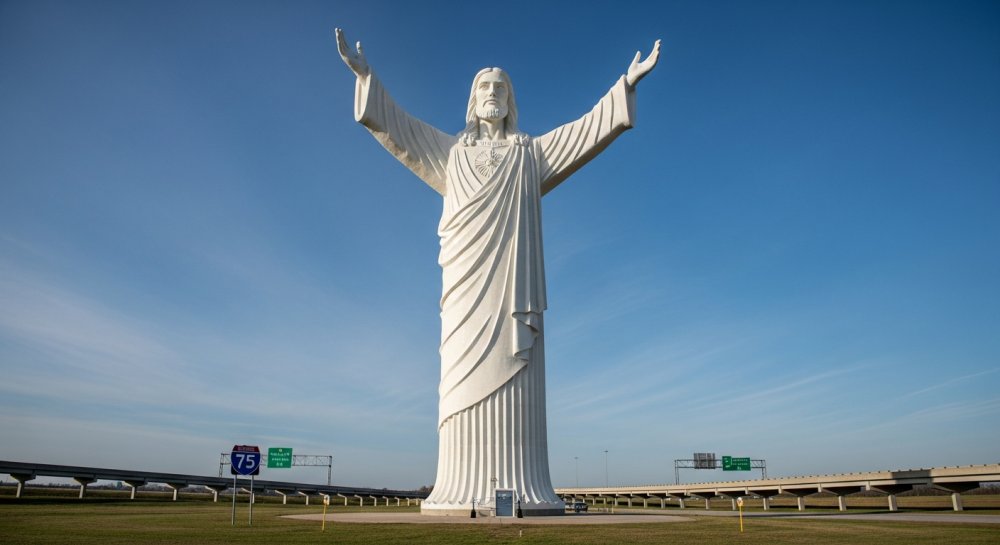
- The iconic ‘Touchdown Jesus’ statue at Solid Rock Church in Ohio was destroyed by lightning in 2010
- St. Isaac’s Cathedral in Russia reopened for worship this week in history after decades of Communist suppression
This week marks the anniversary of several pivotal moments in Christian history that demonstrate God’s hand in revival, the resilience of faith under persecution, and the humbling reminder that no human monument stands above divine sovereignty.
Howell Harris’ Life-Changing Encounter
On May 25, 1735, Howell Harris experienced a powerful born-again conversion during a Whitsunday communion service in Talgarth, Wales. The young schoolteacher’s spiritual awakening would ignite one of the most significant religious movements in British history.
Harris became a driving force behind the Methodist revival in Wales, preaching tirelessly across the countryside despite fierce opposition from established church authorities. His passionate evangelism and emphasis on personal conversion aligned closely with the broader evangelical awakening occurring throughout the British Isles.
Working alongside fellow revivalists like George Whitefield and the Wesley brothers, Harris helped establish societies for spiritual growth and discipleship that transformed Welsh Christianity. His ministry demonstrated that God uses ordinary believers filled with extraordinary faith to accomplish His purposes.
The Destruction of ‘Touchdown Jesus’
On June 14, 2010, a massive statue of Jesus Christ with upraised arms—popularly known as “Touchdown Jesus”—was struck by lightning and destroyed by fire at Solid Rock Church in Monroe, Ohio. The 62-foot-tall statue, formally called “King of Kings,” had become a regional landmark along Interstate 75.
The dramatic destruction sparked conversations across America about the appropriateness of such monuments and God’s sovereignty over all things. While some viewed the lightning strike as divine judgment, church leaders emphasized their continued commitment to proclaiming the Gospel.
The congregation later replaced the statue with a new sculpture called “Lux Mundi” (Light of the World), demonstrating that their faith rested not in monuments but in the living Christ. The incident serves as a powerful reminder that our worship should focus on the risen Savior rather than human creations.
St. Isaac’s Cathedral Reopens
St. Isaac’s Cathedral in St. Petersburg, Russia, reopened for religious services this week in history after decades of Communist suppression. The magnificent 19th-century cathedral had been converted into a museum of atheism under Soviet rule, part of the regime’s systematic persecution of Christian faith.
The reopening symbolized the resilience of Christian witness even under the most oppressive circumstances. Throughout seven decades of official atheism, Russian believers maintained their faith in secret, passed down traditions to their children, and awaited the day when they could worship freely again.
The cathedral’s return to active worship stands as testimony to the biblical truth that the gates of hell cannot prevail against Christ’s Church. It reminds American Christians to cherish religious freedom while it remains and to stand firm regardless of cultural opposition.
Lessons for Today’s Believers
These three events from Christian history speak powerfully to contemporary challenges facing the American Church. Howell Harris’ conversion reminds us that genuine spiritual awakening begins with individual encounters with Christ and spreads through faithful witness.
The destruction of “Touchdown Jesus” calls believers to examine whether our faith rests on external symbols or on Christ Himself. In an age of celebrity pastors and megachurch spectacle, we must ensure our foundation remains the unchanging Word of God.
The reopening of St. Isaac’s Cathedral encourages American Christians facing increasing cultural hostility. Just as Russian believers preserved their faith through persecution, we must remain steadfast in proclaiming truth regardless of social pressure or opposition.
These historical moments demonstrate that God’s purposes advance through surrender, humility, and perseverance rather than human monuments or institutional power. They call us back to the essentials of biblical Christianity: personal conversion, faithful witness, and unwavering commitment to Christ above all else.
Let us know what you think, please share your thoughts in the comments below.

Faith Facts
- Pastor Liu Zhenbin remains detained in China as authorities continue their crackdown on unregistered Christian congregations
- Communist officials attempted to coerce a confession by invoking threats regarding the pastor’s young children
- The persecution highlights the ongoing assault on religious freedom under China’s authoritarian regime
Pastor Liu Zhenbin, a Christian minister held captive by Chinese authorities, has revealed disturbing details about the tactics being used against him as Communist officials intensify their campaign against unregistered churches. The pastor disclosed that prosecutors stooped to using his own children as leverage in an attempt to force him into making a false confession.
The detention of Pastor Liu represents yet another chapter in China’s escalating war on religious freedom, particularly targeting Christians who refuse to bow to state-controlled worship. His unregistered congregation has faced systematic harassment and persecution simply for gathering to worship according to their biblical convictions rather than government mandates.
By threatening a father through his children, Chinese authorities have demonstrated the depths to which totalitarian regimes will sink to suppress faith and control their citizens. This manipulation of family bonds reveals the moral bankruptcy of a system that views religious devotion as a threat to state power.
The pastor’s courage in standing firm despite these unconscionable tactics serves as an inspiration to believers worldwide and a sobering reminder of the price many Christians pay for their faith. While American Christians enjoy constitutional protections for religious liberty, brothers and sisters in Christ around the world face imprisonment, torture, and death for refusing to renounce their Savior.
China’s Communist Party has dramatically increased its persecution of Christians in recent years, demolishing church buildings, imprisoning pastors, and demanding that congregations register with the government and submit to state oversight. Unregistered churches that insist on maintaining their independence and biblical integrity face the harshest treatment.
The case of Pastor Liu underscores the urgent need for American Christians to pray for the persecuted church and for our government to maintain strong pressure on China regarding human rights violations. Religious freedom is not a luxury or a cultural preference—it is a fundamental human right grounded in the recognition that people are created in the image of God.
As believers in the free world, we must not take our freedoms for granted while our fellow Christians suffer under oppressive regimes. The faith that sustains Pastor Liu in his cell is the same faith that calls us to stand in solidarity with all who face persecution for the name of Jesus Christ.
Let us know what you think, please share your thoughts in the comments below.
Faith Facts
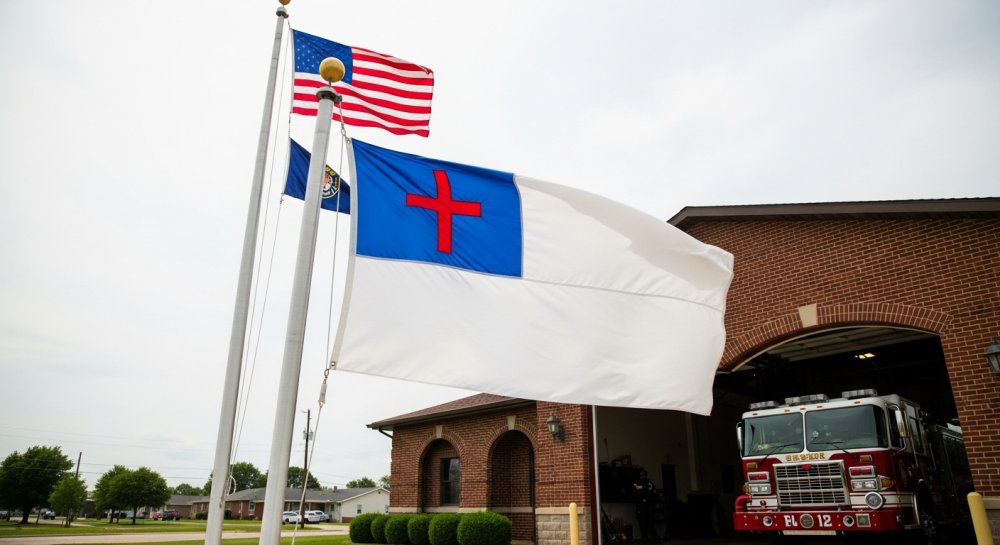
- A Missouri fire station removed a Christian flag after receiving a demand letter from the Freedom From Religion Foundation
- The atheist advocacy group argued the Christian flag violated constitutional separation of church and state
- The flag had been displayed alongside the American flag at the fire station before removal
A Missouri fire department has removed a Christian flag from public display following pressure from a national atheist organization. The flag came down after the station received a legal demand letter from the Freedom From Religion Foundation (FFRF), a Wisconsin-based group known for targeting religious displays on public property across the nation.
The FFRF’s letter claimed the Christian flag violated the Establishment Clause of the First Amendment. The organization argued that displaying the flag at a taxpayer-funded fire station constituted government endorsement of Christianity, which they contend is unconstitutional.
The Christian flag, which features a blue canton with a red cross on a white field, had been displayed at the fire station alongside the American flag. The flag is recognized worldwide as a symbol of Christian faith and unity among believers.
Fire department officials made the decision to remove the flag rather than engage in what could have been a prolonged legal battle with the atheist group. The FFRF has built a reputation for sending demand letters to municipalities, schools, and government agencies nationwide, threatening litigation over religious symbols and expressions of faith in public spaces.
This incident represents another example of how small communities face increasing pressure to remove Christian symbols from public view. Critics of such efforts argue that removing religious symbols doesn’t promote neutrality but instead promotes hostility toward faith, particularly Christianity.
The controversy highlights ongoing tensions between religious freedom and increasingly aggressive interpretations of the separation of church and state. While the Constitution prohibits government establishment of religion, many Americans believe it also protects the free exercise of faith, including the display of religious symbols that reflect the values and heritage of local communities.
Supporters of keeping the Christian flag argue that such displays honor America’s Christian heritage and reflect the beliefs of the majority of Americans who identify as Christian. They contend that removing these symbols erases an important part of American identity and culture.
The Freedom From Religion Foundation continues to actively seek out religious displays on government property across the country, sending hundreds of complaint letters annually. The organization’s aggressive tactics have made it a controversial figure in debates over religious liberty and the proper role of faith in public life.
Let us know what you think, please share your thoughts in the comments below.

Faith Facts
- Jemima Ooi, co-founder of Love in Action Mission Global, addressed approximately 4,000 young Christians at Arise Asia in Manila
- Ooi challenged believers to view God as a companion rather than a destination, emphasizing relationship over achievement
- The missionary taught that true purpose flows from God’s presence, not from striving to reach spiritual goals
A powerful message delivered to thousands of young believers in the Philippines is resonating across Asia this week. Jemima Ooi, co-founder of Love in Action Mission Global based in Singapore, spoke to approximately 4,000 young Christians gathered in Manila on Tuesday evening with a truth that cuts through much of modern Christian confusion.
Ooi challenged the audience to rethink the very foundation of their faith walk. She explained that the central mistake many Christians make is treating God as a destination to reach rather than a companion to walk with daily.
“God can do a lot with a willing heart,”
Ooi told the gathering, emphasizing the power of simple availability to the Lord.
The missionary’s message focused on a critical distinction often lost in contemporary Christian culture: the difference between pursuing purpose and pursuing God’s presence. While purpose has become a buzzword in churches worldwide, Ooi reframed it as something that naturally flows from relationship rather than something to be grasped through effort.
According to her teaching, purpose — however important it may be — is best understood as a byproduct of God’s presence in our lives. This perspective shifts the focus from what we can accomplish for God to who we become with God.
The Arise Asia gathering represents a significant moment for Christian youth across the region. In an era when young people face unprecedented pressure and competing worldviews, events like this provide grounding in biblical truth and Christian community.
Ooi’s ministry, Love in Action Mission Global, has been spreading the Gospel throughout Asia, demonstrating that faithful witness combined with compassionate service continues to bear fruit in regions hungry for hope. Her message in Manila reflects the timeless biblical principle that knowing God precedes serving God effectively.
The teaching resonates particularly well with a generation often told to find their purpose, build their platform, or make their mark. Ooi’s counter-cultural message reminds believers that Christianity begins not with what we do, but with whom we follow — and that the presence of the living God transforms ordinary willingness into extraordinary impact.
For young Christians navigating an increasingly secular world, this message offers both relief and empowerment. Relief from the pressure to manufacture spiritual significance, and empowerment through the promise that God works powerfully through hearts simply willing to say yes to His leading.
Let us know what you think, please share your thoughts in the comments below.


-

 Self-Reliance1 year ago
Trump’s Bold Move Uncovers Massive Social Security Fraud
-

 Faith1 year ago
New Clues Emerge in Noah’s Ark Mystery
-

 News1 year ago
Governor Walz’s Rhetoric Sparks National Controversy
-

 News1 year ago
Mel Gibson’s ‘The Passion of the Christ’ Sequel Title Announced
-

 Family1 year ago
Texas Lawmaker Targets Furries in Schools
-

 Freedom1 year ago
Maine Lawmaker Challenges Sports Fairness Controversy
-

 Family1 year ago
Canada’s Controversial Policy Sparks Ethical Debate
-
Faith8 months ago
Congress Hears Pleas for Nigerian Christians