
Faith
The Wolves Among Us We Never Learned to Recognize


Faith Facts
- Scripture warns about people who maintain “a form of godliness” while causing harm through manipulation and self-love (2 Timothy 3:1-5)
- Churches often teach doctrinal discernment but may fail to equip believers to recognize harmful relational patterns that contradict Christian character
- Biblical discernment requires examining both public image and private behavior, testing the spirits and recognizing consistent patterns of manipulation
One of the most sobering realizations many Christians face is this: It’s possible for someone to cause deep, ongoing harm and still be seen as a strong, faithful believer. That realization often comes not from theory, but from painful experience.
After more than 20 years in a close friendship, one believer began to recognize patterns never taught in Sunday school: manipulation, confusion and a slow erosion of reality itself. What proved most unsettling wasn’t just the behavior—it was how easily that same person could use church spaces, relationships and spiritual language to uphold a completely different image.
Growing up in churches across America, many hear warnings about false teachers. We’re taught to measure everything against Scripture and be careful about doctrines that don’t align with God’s Word. That emphasis matters and protects countless believers.
But there’s another kind of danger too many were never taught to recognize. No one ever taught us how to identify harmful relational patterns hiding behind spiritual language.
Today, the word narcissism appears everywhere—often overused and misused. The Bible doesn’t use the term at all. But Scripture clearly describes the behaviors.
In 2 Timothy 3:1-5, Paul warns about people who are “lovers of self,” abusive and yet maintain “a form of godliness.”
“Jesus cautions about ‘wolves in sheep’s clothing’ (Matthew 7:15). And in 3 John, the elder calls out Diotrephes for loving prominence and using his position to push others aside.”
The language may be modern. The patterns are not.
What many Christians are discovering is that we simply haven’t been equipped to recognize these patterns. We’ve been taught to watch doctrine closely but not always to “test the spirits” (1 John 4:1) or examine fruit in the context of everyday relationships. We know what truth sounds like but don’t always know what manipulation feels like.
Church environments can unintentionally make this harder. We’re taught to see the best in people, to forgive quickly, to avoid conflict. We often elevate and celebrate those who appear spiritually mature—all good and necessary parts of faith. But without discernment and accountability, these virtues can also provide cover for someone highly invested in maintaining an image.
In some cases, that image becomes a shield. One of the more damaging dynamics that can emerge is what’s often called a smear campaign, where a person subtly or overtly discredits someone else to protect their own reputation.
Because the individual has carefully built trust, credibility and spiritual standing, their version of events is often believed without question. Meanwhile, the person on the receiving end may find themselves isolated, misunderstood or even abandoned by their church family.
One woman described her husband as “shape-shifting” the moment he stepped into the church parking lot, becoming gentle, kind and respected in public while being something very different at home. That kind of contrast can make it incredibly difficult for truth to surface in faith communities.
To be clear, not every difficult person fits this pattern. And the goal isn’t to label people or act as amateur psychologists. You don’t need a clinical diagnosis to recognize when a relationship consistently produces confusion, fear, manipulation or emotional harm.
The label isn’t the point. The pattern is.
Scripture calls believers to be both loving and discerning. Paying attention to patterns, especially when behavior consistently contradicts a person’s public image, is part of that biblical discernment. It allows us to care well for ourselves and others and to avoid enabling harm in the name of grace.
“The ‘fruit’ Jesus speaks about isn’t just what people say. It’s what consistently shows up in their actions, especially in private.”
This is simply an encouragement to learn and grow in wisdom. Seek understanding about unhealthy relational dynamics that can infiltrate even faithful congregations. Talk with your children about manipulation and emotional harm in age-appropriate ways.
Help them understand that the “fruit” Jesus speaks about isn’t just what people say—it’s what consistently shows up in their actions, especially in private, where image management falls away and true character reveals itself.
For many believers, this kind of awareness was never part of spiritual training. But it can be now, protecting future generations from spiritual abuse.
Sometimes, that awareness is what protects our minds, our faith and our sense of self from harm we were never taught to see—the wolves among us wearing the finest sheep’s clothing.
Let us know what you think, please share your thoughts in the comments below.

Faith Facts
- The United Kingdom, Sweden, and Germany are experiencing some of the largest net losses of Protestant believers worldwide, according to new research on religious switching patterns.
- These historically Protestant nations, long seen as spiritual allies to American faith communities, are witnessing unprecedented departures from traditional Christianity.
- The findings raise urgent questions about the future of Protestant Christianity in Western nations and what lessons American believers can draw from Europe’s spiritual decline.
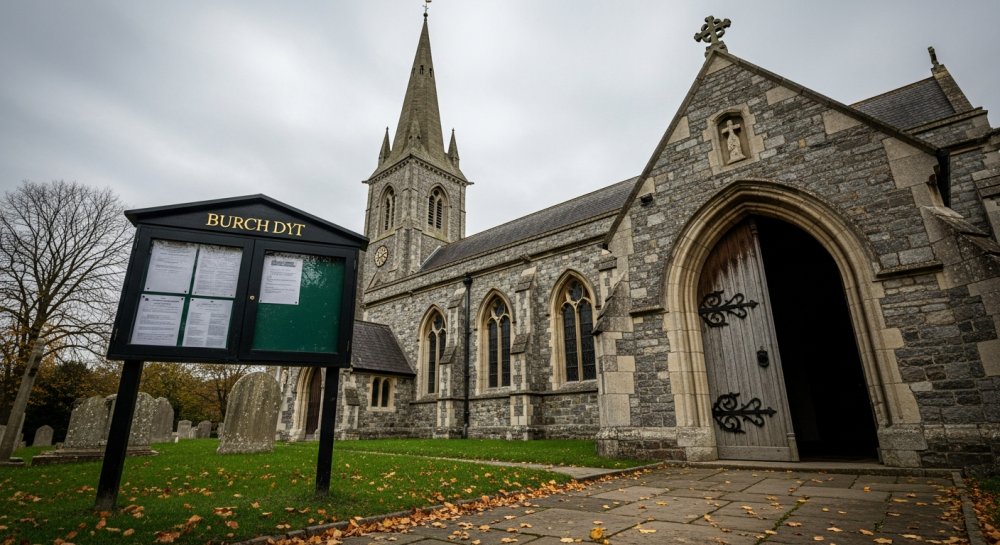
A comprehensive new study examining religious switching across the globe has revealed troubling trends for Protestant Christianity in some of America’s closest international allies. The research identifies the United Kingdom, Sweden, and Germany—nations with deep Protestant heritage—as experiencing the most significant net losses of Protestant adherents.
For centuries, these European nations stood as bastions of the Reformation faith that shaped Western civilization and influenced the founding principles of the United States. Their current spiritual condition serves as a sobering warning for American Christians who cherish their Protestant heritage.
The study’s findings on religious switching paint a picture of Christianity in retreat across much of Western Europe. Where Protestant churches once filled with faithful congregations, many now stand empty or converted to secular uses. The cultural shift away from traditional Christian faith has accelerated in recent decades, particularly among younger generations.
Sweden, once home to a robust Lutheran tradition, has seen particularly dramatic declines. Germany, the birthplace of the Reformation under Martin Luther, is experiencing similar losses. The United Kingdom, despite its established Church of England, continues to see Protestant numbers dwindle as secularism advances.
These trends stand in stark contrast to the religious vitality still present in many parts of the United States, where Protestant Christianity remains a significant cultural and spiritual force. However, the European experience offers important lessons about the consequences of cultural drift from biblical values and the importance of faithful witness in increasingly secular societies.
For American Christians, the European situation underscores the critical need to remain steadfast in faith, committed to biblical truth, and engaged in passing down Christian heritage to the next generation. The losses experienced overseas demonstrate what can happen when churches compromise core doctrines or fail to effectively disciple believers.
The research highlights the importance of strong, biblically grounded churches that can withstand cultural pressures to abandon traditional Christian teaching. It also points to the need for believers to be intentional about their faith rather than relying on cultural Christianity or nominal church affiliation.
As America faces its own spiritual challenges, the Protestant decline in Europe serves as both warning and motivation. Christians across the United States must recognize that the faith of previous generations cannot be taken for granted and requires active cultivation, defense, and transmission to future generations.
Let us know what you think, please share your thoughts in the comments below.

Faith Facts
- Generation Z has unprecedented access to spiritual content yet reports feeling disconnected from authentic faith experiences
- Traditional discipleship models are failing to engage young believers in meaningful spiritual formation
- Young Christians are seeking genuine encounters with God beyond digital information consumption
American churches face a sobering reality: despite living in an age of unprecedented access to biblical teaching, sermon podcasts, worship music, and spiritual content, the next generation remains spiritually malnourished. The problem isn’t a lack of information—it’s the absence of genuine transformation.
Generation Z can stream thousands of sermons, access countless Bible study apps, and follow dozens of Christian influencers on social media. Yet this digital abundance has not produced the spiritual depth and commitment seen in previous generations. Instead, many young people report feeling disconnected from authentic faith, viewing Christianity as a set of principles rather than a living relationship with Jesus Christ.
The current discipleship model prioritizes knowledge transfer over life transformation. Sunday school classes, youth groups, and even seminary education often focus on imparting biblical facts while neglecting the call to holiness, sacrifice, and daily surrender to Christ. Young believers can articulate theological concepts yet struggle to apply scriptural truth to their everyday decisions.
This crisis reveals a fundamental misunderstanding of what discipleship actually means. Jesus didn’t call His followers to simply learn about Him—He called them to follow Him, to deny themselves, take up their cross daily, and be transformed into His image. True discipleship requires personal mentorship, accountability, and modeling of the Christian life in real-world contexts.
The spiritual hunger among Generation Z represents both a crisis and an opportunity for the American church. These young people aren’t satisfied with shallow religiosity or performance-based Christianity. They’re searching for authenticity, longing for a genuine encounter with the living God that changes everything about how they live.
Churches must return to biblical models of discipleship that emphasize relationship over programs, character formation over information accumulation, and Spirit-empowered living over intellectual assent. This means older believers investing intentionally in younger Christians, opening their lives as examples of faith in action, and creating spaces where honest questions and real struggles can be addressed with biblical wisdom.
The path forward requires churches to prioritize quality over quantity, depth over breadth. Rather than entertaining youth with engaging programs, churches must challenge them with the radical call of Christ. Young people need to see what it looks like to pray fervently, worship authentically, serve sacrificially, and stand boldly for biblical truth in a hostile culture.
American Christianity cannot afford to lose another generation. The stakes are too high, both for individual souls and for the future of our nation. When young believers encounter the transforming power of Jesus Christ through genuine discipleship, they become world-changers who impact their families, communities, and culture for the Kingdom of God.
The answer isn’t more content, better technology, or trendier youth programs. The answer is returning to the ancient path of Christian discipleship—walking alongside younger believers, modeling authentic faith, and pointing them to a genuine, life-changing relationship with Jesus Christ.
Let us know what you think, please share your thoughts in the comments below.
Faith Facts
- Christian leaders from across Africa gathered in Arusha to discuss authentic expressions of faith rooted in their cultures
- Churches increasingly recognize the need to honor ethnic identity while maintaining biblical faithfulness
- The movement toward culturally authentic Christianity is growing as believers seek to separate colonial traditions from genuine biblical teaching
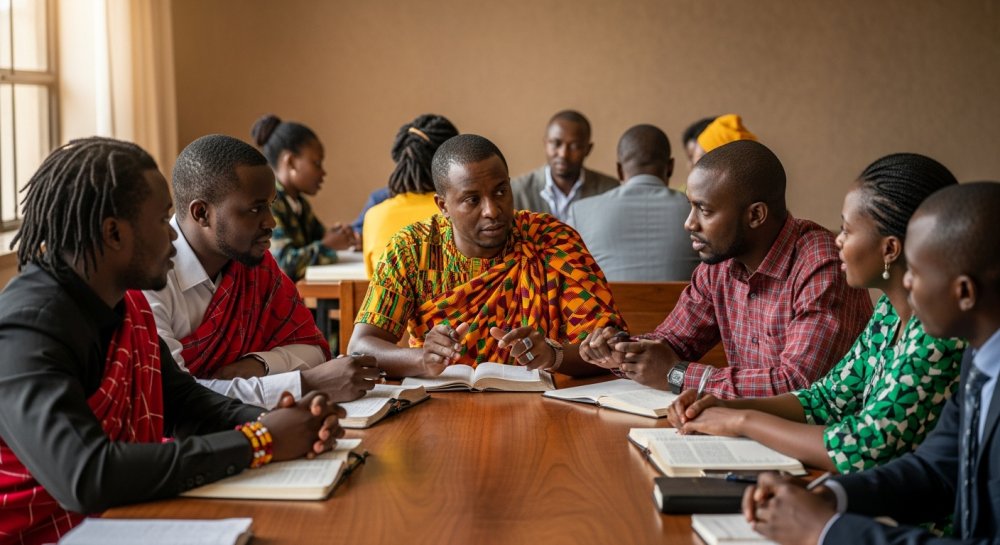
Christian leaders from across Africa are demonstrating how the Gospel can be authentically expressed within diverse cultural contexts while remaining true to Scripture. At a gathering of the Network for the History of Mission in Arusha, participants shared powerful testimonies of discovering their God-given ethnic identity while faithfully following Christ.
The discussion centered on an important truth: Christianity is not a Western religion to be imposed on other cultures, but rather a universal faith that can and should be expressed authentically within every culture. These African Christian leaders are rejecting the notion that following Christ means abandoning their cultural heritage or adopting Western forms of worship and practice.
As confidence grows in ethnically authentic expressions of Christianity, churches face new opportunities and challenges. Urban congregations especially are becoming increasingly diverse, bringing together believers from multiple ethnic backgrounds and traditions. This beautiful picture of unity in Christ requires wise leadership and intentional cultivation.
Church leaders at the conference emphasized the need for better equipping to navigate cultural differences within their congregations. They highlighted the importance of recognizing hidden patterns of exclusion that can creep into church life, often unintentionally favoring one cultural expression over others.
The goal is not cultural relativism or compromise of biblical truth, but rather a deeper understanding of how the unchanging Gospel can be faithfully lived out in diverse cultural settings. This requires discernment to distinguish between biblical essentials and cultural preferences that may have been mistaken for doctrine.
These African examples offer valuable lessons for churches worldwide, including in America, where congregations are also becoming more diverse. The challenge is to cultivate genuine unity in Christ that honors both our common faith and our diverse cultural backgrounds. This requires intentional effort, humble learning, and a commitment to Scripture as our ultimate authority.
The movement represents a maturing of the global Church, as believers in formerly colonized regions claim their rightful place as equal participants in the body of Christ. Rather than simply receiving and replicating forms of Christianity developed elsewhere, they are engaging Scripture directly and allowing the Holy Spirit to guide expressions of faith that honor both biblical truth and cultural identity.
This development strengthens the universal Church by demonstrating that the Gospel truly is for all nations, tribes, and tongues. It reminds us that God’s design for humanity includes beautiful diversity, and that our unity in Christ doesn’t require uniformity in all cultural expressions.
Let us know what you think, please share your thoughts in the comments below.


-

 Self-Reliance1 year ago
Trump’s Bold Move Uncovers Massive Social Security Fraud
-

 Faith1 year ago
New Clues Emerge in Noah’s Ark Mystery
-

 News1 year ago
Governor Walz’s Rhetoric Sparks National Controversy
-

 News1 year ago
Mel Gibson’s ‘The Passion of the Christ’ Sequel Title Announced
-

 Family1 year ago
Texas Lawmaker Targets Furries in Schools
-

 Freedom1 year ago
Maine Lawmaker Challenges Sports Fairness Controversy
-

 Family11 months ago
Canada’s Controversial Policy Sparks Ethical Debate
-
Faith5 months ago
Congress Hears Pleas for Nigerian Christians