
Faith
The Untold Story of Churches of Christ in Iran and Libya

Faith Facts
- Albert and Ellen Bryan established Churches of Christ in both Tripoli, Libya, and Tehran, Iran during the 1950s, serving U.S. servicemen and civilians during the Cold War
- Their grandson, Lt. Gen. John Bradley, continued their legacy of service through 41 years in the Air Force and humanitarian work in Afghanistan through the Lamia Afghan Foundation
- Today, over 1 million Iranians worship Christianity in secret despite severe persecution, with 250 believers arrested in 2025 alone for “propaganda contrary to Islam”
Officially, fewer than 150,000 of Iran’s 93 million people claim Christianity as their faith, most of them from Armenian and Assyrian backgrounds, according to a government census. Unofficially, at least 1 million more Iranians worship in secret, and their numbers are growing, claim organizations that track religious movements.
Iranian authorities arrested more than 250 of those worshipers last year on charges of “propaganda contrary to the holy religion of Islam.” That’s nearly double the number arrested on such charges the previous year, according to a report from Open Doors, Christian Solidarity Worldwide and other nonprofits.
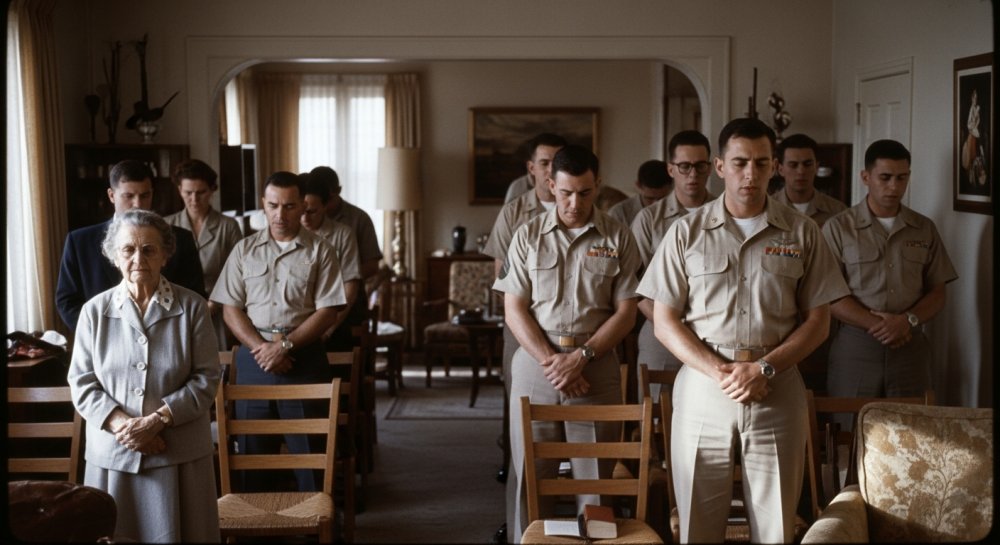
It’s difficult to imagine a time when Churches of Christ — much less, congregations comprised of U.S. servicemen — met freely in Iran and other predominantly Muslim countries, including Libya. But Churches of Christ did once exist in the capitals of Tehran and Tripoli, thanks to the work of Christians including Albert and Ellen Bryan.
A Humble Beginning in Tennessee
Born near Lebanon, Tennessee, in 1892, Albert H. Bryan Sr. was the son of a farmer who also taught in a one-room schoolhouse near his farm. Two of Albert’s brothers earned medical degrees from Vanderbilt University in Nashville, Tennessee.
One became a medical missionary in China in the 1920s and was imprisoned by the Japanese when they invaded. The Japanese later released the brother, who returned to the U.S.
Albert, meanwhile, stayed on the farm and married Ellen Waters Baker, who grew up in nearby Watertown, Tennessee. Albert took over teaching at the school when his father died.
Although he never went to college, Albert studied civil engineering through mail-order courses and got a job with the Tennessee Highway Department. He helped plan some of the first paved highways in Middle Tennessee.
Then Albert took a job in the civil engineering office at Arnold Air Force Base near Tullahoma, Tennessee. He attempted to retire in the early 1950s, but the U.S. Army Corps of Engineers asked him to change his plans and move to Libya.
Building God’s Kingdom in North Africa
At the time, the U.S. operated Wheelus Air Force Base, just east of Tripoli. Albert and Ellen moved there in early 1953.
During the Cold War, Wheelus was the largest U.S. military facility outside the U.S. Albert worked in the civil engineering department, assisting in building projects on the base.
“He and my grandmother right away started a church in their home,” said his grandson, John Bradley. “They were longtime members of the Church of Christ.”
In addition to being a self-taught civil engineer, Albert became a minister, baptizing new converts in the Mediterranean Sea. Eventually, the Tripoli Church of Christ purchased its own meeting place with the help of the College Street Church of Christ in Lebanon.
Bradley has a photo of the building, complete with North African-style pointed arches. “There is a note on the back of the photo that says it was the first ‘non-Muslim’ church ever allowed by Libya in Tripoli,” Bradley said.
From Libya to Iran
After four years, the Bryans returned to the U.S., though not for long. The Corps asked Albert to do similar engineering work in Tehran, so he and Ellen packed their bags for Iran.
“Again, my grandfather and grandmother started holding church services in their Tehran home,” Bradley said. “There were many U.S. military and civilians working there who attended those services.
I do not know if they were ever allowed to buy a building in Tehran for church services.”
During the couple’s time in Tehran, U.S. President Dwight Eisenhower visited Iran’s ruler, Shah Mohammad Reza Pahlavi.
“My grandparents saw a huge parade down a boulevard in December 1959 with the president and the shah sitting together in a Cadillac convertible,” Bradley said.
The Bryans returned to the U.S. again in 1962. Seven years later, Muammar Gaddafi seized control of Libya and ordered the closure of U.S. air bases there.
A decade later, in 1979, Pahlavi fled Tehran in the midst of the Iranian Revolution. The freedoms that had allowed American Christians to worship openly vanished.
A Legacy of Faith and Service
Albert became an elder of the College Street church, eventually serving alongside his son-in-law and Bradley’s father, Leonard K. Bradley Sr. Ellen Bryan died in 1973 at age 86.
Albert followed her in 1986 at age 91.
The couple’s sons served in the military. Albert Bryan Jr. fought in the Army in World War II.
Robert Bryan graduated from West Point before earning a doctorate in nuclear engineering. Charles Bryan attended the U.S. Naval Academy in Annapolis, Maryland, and flew reconnaissance missions during the Vietnam War.
“The sweetest man I ever knew,” said his grandson, John Bradley. “He was so kind. He was a wonderful husband to my very sweet grandmother. All the grandchildren loved them so much.”
Bradley himself served in the Air Force for 41 years. He flew 337 combat missions in Vietnam, received the Distinguished Flying Cross and earned the rank of lieutenant general before retiring.
In 2008, Bradley and his wife, Jan, launched the Lamia Afghan Foundation, named for a 9-year-old girl who pushed her way through a crowd to ask the general for boots during his tour in Afghanistan. Through the foundation, the Bradleys provided more than 3.5 million pounds of humanitarian aid to Afghanistan, built seven schools and clinics and provided prosthetics for children injured in their country’s decades of conflict.
“I always wanted to be like Papa,” Bradley said of his grandfather. “I have fallen short, but I keep trying. The work Jan and I do in Afghanistan through our foundation, we feel, is trying to help very needy people have some hope of improving their lives.”
Although laws prevented the Bradleys from evangelizing Afghans, “people there, of course, knew we were Christians,” he said.
Taking a cue from Jesus’ words in Matthew 25:40, “I looked at our work as doing for ‘the least of these.'”
Let us know what you think, please share your thoughts in the comments below.

Faith Facts
- Pope Leo XIV invoked Matthew 25 while addressing migrants during his tour of Spain this week
- The pontiff told migrants he wants to ‘bow before your dignity’ in remarks applying biblical passages to Europe’s immigration crisis
- The statements reflect the Vatican’s continued engagement with migration policy through a religious framework
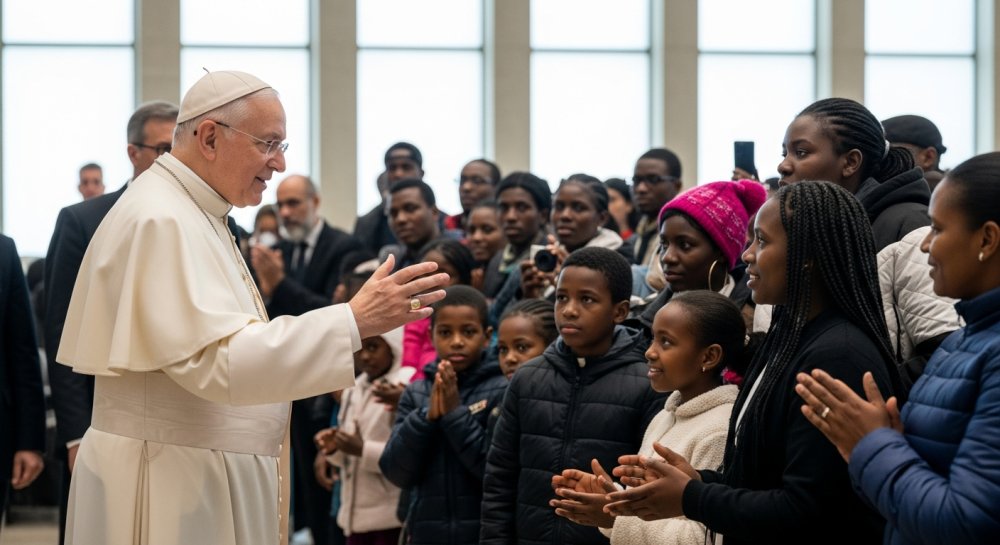
During his apostolic visit to Spain this week, Pope Leo XIV addressed the ongoing immigration crisis in Europe by turning to Scripture, specifically citing Matthew 25:41-45 in his remarks to migrants.
The passage from Matthew records Jesus saying: “Then he will say to those on his left, ‘Depart from me, you who are cursed, into the eternal fire prepared for the devil and his angels. For I was hungry and you gave me nothing to eat, I was thirsty and you gave me nothing to drink, I was a stranger and you did not invite me in, I needed clothes and you did not clothe me, I was sick and in prison and you did not look after me.'”
“Dear migrants, before saying anything else to you, I want to bow before your dignity. You are not just numbers or files,” Pope Leo XIV said in a meeting with organizations working with migrants at the Port of Arguineguína in Las Palmas de Gran Canaria, Spain.
In his address the… pic.twitter.com/HQcw12quvl
— Vatican News (@VaticanNews) June 11, 2026
Q: Pope Leo cited Matthew 25:35 to critique Donald Trump’s mass deportation agenda. How would you respond to Pope Leo in scripture?
MIKE JOHNSON: Sovereign borders are biblical and right and just. It’s not because we hate the people on the outside. It’s because we love the… pic.twitter.com/eS4A5dtXRt
— Aaron Rupar (@atrupar) February 3, 2026
In his address, the pope emphasized the dignity inherent in every human person, a central tenet of Catholic social teaching rooted in the belief that all people are created in the image of God.
“I want to bow before your dignity,” Pope Leo XIV told the migrants gathered before him.
The pontiff’s application of this biblical passage to the migration crisis represents the Vatican’s theological approach to a complex policy issue that has sparked significant debate across Europe and the United States. Conservative Christians have long wrestled with how to balance biblical commands to welcome the stranger with legitimate concerns about border security, rule of law, and national sovereignty.
Many faithful believers recognize the genuine compassion called for in Scripture while also acknowledging that governments have a God-given responsibility to protect their citizens and maintain ordered borders. The tension between mercy and justice, between individual dignity and collective security, remains a challenging question for Christians seeking to apply biblical principles to modern policy dilemmas.
The Spain visit continues Pope Leo XIV’s early papal ministry, which has included engagement on social issues facing the global Church. As Europe continues to grapple with waves of migration from Africa, the Middle East, and other regions, religious leaders across denominations are seeking to articulate responses grounded in their faith traditions.
The Matthew 25 passage cited by the pope has long been central to Christian discussions of social responsibility, though believers of different theological persuasions have debated its application to government policy versus individual Christian charity.
Let us know what you think, please share your thoughts in the comments below.
Faith Facts
- Small church pastors worldwide are being shaped through lived experience, prayer, and suffering rather than formal theological degrees
- Character formation through faithful discipleship and biblical mentoring often proves more valuable than academic credentials
- Responsibility, failure, and even persecution are proving to be powerful teachers in global Christian leadership development
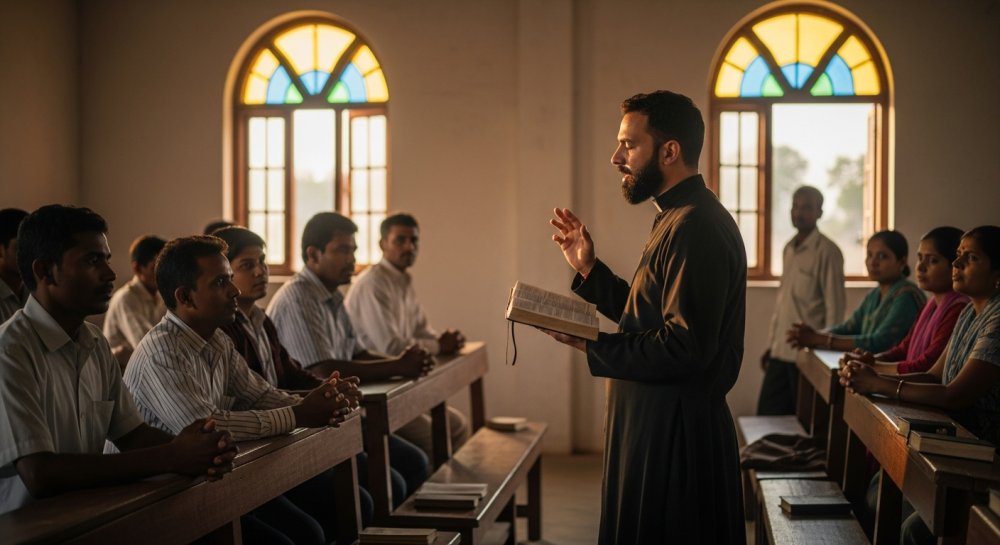
Across India and throughout the developing world, a quiet revolution in Christian leadership is taking place—one that challenges Western assumptions about what truly prepares a pastor to shepherd God’s people.
Thousands of faithful pastors leading small congregations lack the formal theological education that many in the West consider essential. Yet these men and women are being profoundly shaped by forces that no classroom can replicate.
Responsibility molds them as they care for their flocks with limited resources. Failure refines them as they learn to depend on God’s grace rather than their own competence. Suffering deepens them in ways that academic study alone never could.
Prayer becomes their seminary, persecution their crucible of faith. Character formation occurs not through curriculum but through walking faithfully with Jesus, guided by the Bible and trustworthy mentors who have traveled the same difficult road.
This form of education doesn’t result in a diploma suitable for framing. It produces no measurable outcomes that satisfy institutional assessment requirements. Yet its value in preparing shepherds for Christ’s church may exceed what many formal programs deliver.
The distinction matters profoundly as Western mission organizations and denominations consider how to support the global church. Programs designed to replicate Western seminary models may miss what’s already happening—the Holy Spirit forming leaders through the ancient pattern of discipleship, testing, and faithful endurance.
This doesn’t diminish the value of theological education. Sound doctrine matters immensely, and formal training provides irreplaceable benefits when done well. But it does challenge the assumption that credentialed education must precede or validate ministry effectiveness.
The early church operated without seminaries for centuries, relying instead on mentorship, apprenticeship, and the school of hard experience. Today’s global church is rediscovering that model by necessity—and often finding it produces leaders of deep faith, biblical wisdom, and proven character.
As the center of Christianity continues shifting to the Global South, Western believers might learn from brothers and sisters who understand that formation cannot be measured by the metrics we’ve grown comfortable with. Sometimes the best education comes not from what can be programmed, but from what can only be lived.
Let us know what you think, please share your thoughts in the comments below.

Faith Facts
- Two prominent evangelical professors are urging seminary faculty worldwide to address artificial intelligence’s growing influence on theological education
- Experts warn that AI poses both unprecedented opportunities and serious risks to how Christian students learn, write, and develop critical thinking skills
- The call comes as AI tools rapidly transform traditional classroom dynamics and academic integrity standards across Christian higher education
As artificial intelligence continues its rapid integration into every corner of American life, two leading voices in evangelical theological education are sounding the alarm about its transformative impact on seminary classrooms. Their message is clear: Christian educators must engage with this technology now, understanding both its potential benefits and its serious limitations.
The professors are urging seminary faculty across the globe to take seriously the challenge AI presents to traditional Christian education. The technology is already reshaping fundamental aspects of how students approach their studies—from writing assignments to theological reasoning itself.
This isn’t simply about detecting plagiarism or monitoring academic dishonesty. The deeper concern involves how AI may fundamentally alter the way future pastors, missionaries, and Christian leaders develop their capacity for critical thinking and theological discernment. These skills have traditionally been honed through rigorous study, prayerful reflection, and intellectual struggle—processes that AI threatens to short-circuit.
The rapid adoption of AI tools by students has created an urgent need for Christian institutions to establish clear guidelines and theological frameworks. Without proper guardrails, there’s risk that seminarians may become overly dependent on technology that cannot replicate the spiritual dimension of theological study or the formation of godly character.
Yet the professors also recognize that AI isn’t going away. Rather than simply resisting the technology, they advocate for a balanced approach that acknowledges legitimate educational applications while maintaining the irreplaceable human and spiritual elements of preparing men and women for ministry.
The challenge for Christian educators is to discern how AI can serve theological education without supplanting the essential work of the Holy Spirit in forming faithful servants of Christ. This requires wisdom, discernment, and a commitment to upholding traditional Christian values even as technology evolves.
For conservative Christians who value both intellectual rigor and spiritual formation, this conversation couldn’t be more timely. The question isn’t whether AI will impact Christian education—it already has. The question is whether Christian institutions will lead in establishing faithful, biblically-grounded approaches to this technology, or simply react to changes imposed from secular culture.
As these professors make clear, the stakes are high. The next generation of Christian leaders is being trained today, and the methods and tools they use will shape the church for decades to come. Faithful stewardship demands that Christian educators engage thoughtfully with AI, neither embracing it uncritically nor rejecting it out of fear.
Let us know what you think, please share your thoughts in the comments below.


-

 Self-Reliance1 year ago
Trump’s Bold Move Uncovers Massive Social Security Fraud
-

 Faith1 year ago
New Clues Emerge in Noah’s Ark Mystery
-

 News1 year ago
Governor Walz’s Rhetoric Sparks National Controversy
-

 News1 year ago
Mel Gibson’s ‘The Passion of the Christ’ Sequel Title Announced
-

 Family1 year ago
Texas Lawmaker Targets Furries in Schools
-

 Freedom1 year ago
Maine Lawmaker Challenges Sports Fairness Controversy
-

 Family1 year ago
Canada’s Controversial Policy Sparks Ethical Debate
-
Faith7 months ago
Congress Hears Pleas for Nigerian Christians