
Faith
The Silent Enabler: Why the Most Dangerous Person in Your Church May Not Be the Pastor

Faith Facts
- Church leadership accountability is a biblical mandate requiring both shepherds and overseers to guard sound doctrine
- Silent complicity among elders and church leaders can enable spiritual abuse and theological drift
- Scripture calls Christians to speak truth in love and hold leaders accountable to God’s Word
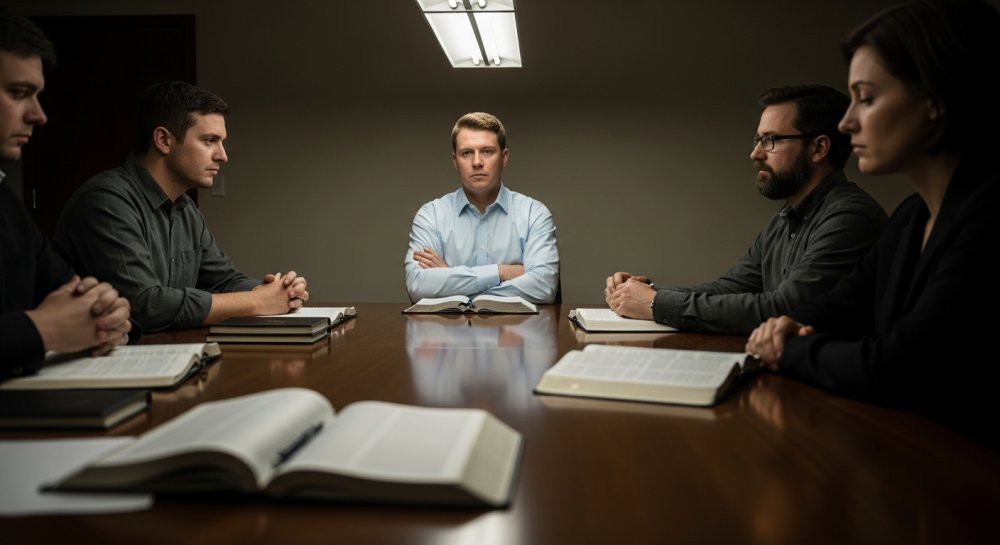
When we think about threats to the health of a local church, our minds often go immediately to the most visible leader—the person in the pulpit each Sunday. But a deeper, more insidious danger often lurks in the shadows: the leader who sees problems, knows the truth, yet chooses to remain silent.
In unhealthy church environments, the most dangerous individual may not be the pastor or teacher who has strayed from sound doctrine or engaged in harmful leadership practices. It may be the elder, board member, or influential leader who witnesses these issues and says nothing at all.
This silent complicity creates a vacuum where accountability should exist. Scripture is clear that church leadership is a shared responsibility, not a one-man show. Elders are called to shepherd the flock, protect against false teaching, and hold one another accountable to the standards of God’s Word.
When those entrusted with oversight choose silence over truth-telling, they become enablers of spiritual harm. Their inaction allows unhealthy patterns to continue unchecked, congregation members to remain vulnerable, and the testimony of the church to be compromised.
The Bible offers numerous examples of the importance of speaking up. From Nathan confronting King David to Paul publicly correcting Peter, we see that godly leadership sometimes requires uncomfortable conversations and courageous stands for truth.
Churches thrive when leaders embrace biblical accountability structures. This means elders who ask hard questions, board members who prioritize Scripture over personality, and congregation members who understand their responsibility to pray for and, when necessary, biblically address leadership concerns.
The fear of conflict, desire to maintain relationships, or concern about church reputation often drives leaders to silence. But these motivations, however understandable, pale in comparison to our ultimate accountability to Christ Himself, the true Head of the Church.
Healthy church culture requires leaders at every level who value truth more than comfort, who love their brothers and sisters enough to have difficult conversations, and who understand that silence in the face of error is not neutrality—it’s complicity.
For church members, this reality underscores the importance of knowing Scripture personally, praying for discernment, and understanding that godly leadership includes the willingness to speak truth in love when necessary. We must support leaders who demonstrate this courage and pray for those who struggle with it.
The solution isn’t a culture of constant criticism or suspicion within the body of Christ. Rather, it’s a commitment to the biblical model of mutual accountability, where leaders humbly submit to one another and to God’s Word, where questions are welcomed rather than silenced, and where the goal is always the health and holiness of the church.
As believers, we must remember that church leadership is a sacred trust, not a political game. Those who hold positions of spiritual oversight will give an account to God for how they stewarded that responsibility—including whether they spoke up when truth and love required it.
Let us know what you think, please share your thoughts in the comments below.

Faith Facts
- Jacob and Esau were twin brothers whose lives reveal deep lessons about reconciliation and divine purpose.
- Hebrew scholars continue to study the biblical account to draw wisdom for today’s divided culture.
- Traditional Christian teaching emphasizes forgiveness and restoration between estranged family members.
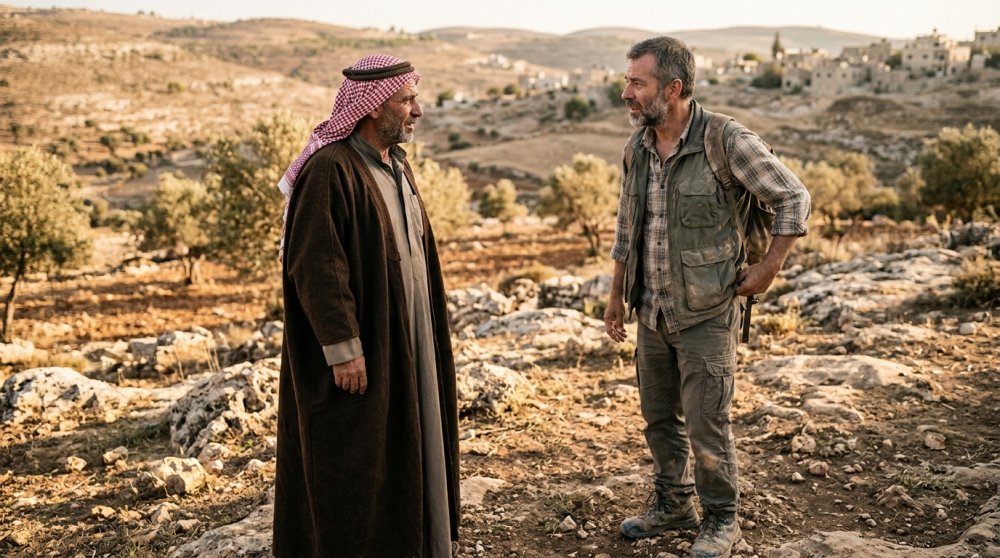
Jewish academic and Hebrew scholar Irene Lancaster explores the rabbinic interpretation of Jacob’s encounter with Esau.
Her analysis highlights how ancient Jewish teachings have long focused on the themes of repentance and healing between the brothers.
The story of Jacob and Esau offers powerful insight for families seeking restoration today.
Lancaster notes that the rabbinic texts do not merely recount a family reunion, but instead present a model for resolving conflict through humility and faith.
“The encounter between Jacob and Esau is not just a personal story—it is a template for how God brings healing to broken relationships.”
These interpretations resonate with Christian readers who see the account as a foreshadowing of reconciliation through Christ.
Let us know what you think, please share your thoughts in the comments below.

Faith Facts
- New Pew Research Centre data projects Islam will surpass Christianity worldwide by 2035.
- Christian population share in the United Kingdom is forecast to fall to 25 percent by 2070.
- Andrew Boyd draws on three decades of persecuted-church reporting to frame these statistics as a discipleship challenge.
New demographic forecasts from the Pew Research Centre predict that Islam is set to overtake Christianity globally by 2035. And in the UK, the Christian share is set to collapse to 25 per cent by 2070.
Drawing on 30 years’ reporting on the persecuted church, Andrew Boyd argues that these figures are a sharp wake-up call.
Let us know what you think, please share your thoughts in the comments below.
Faith Facts
- Scripture teaches that true greatness in God’s kingdom is measured by faithful service rather than formal titles.
- Believers are called to pursue God’s purposes with diligence regardless of human recognition.
- Hospitality and pastoral care remain vital expressions of Christian leadership in every generation.
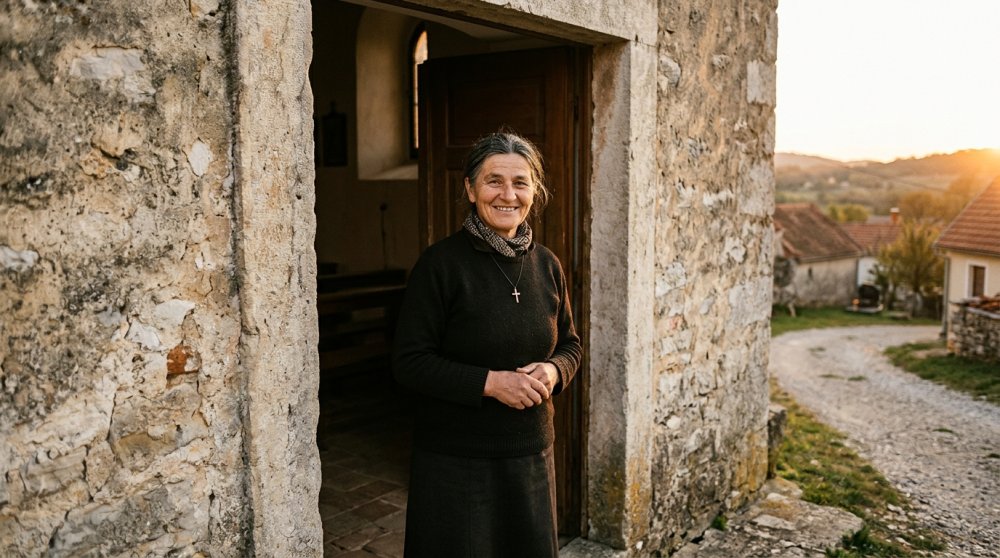
Eternity will reveal the lasting fruit of those who served without demanding recognition. Rahela’s story from Croatia illustrates this truth in vivid detail.
She overcame significant obstacles to answer a clear pastoral calling. Through every challenge, her commitment to hospitality produced abundant spiritual fruit.
“Eternity will show the long-term impact of people who do not need a formal title to be truly great leaders.”
Rahela’s example encourages believers to focus on faithfulness rather than position. Her life demonstrates that God’s purposes advance through humble, obedient hearts.
Let us know what you think, please share your thoughts in the comments below.


-

 Self-Reliance2 years ago
Trump’s Bold Move Uncovers Massive Social Security Fraud
-
 Faith2 years ago
New Clues Emerge in Noah’s Ark Mystery
-

 News2 years ago
Governor Walz’s Rhetoric Sparks National Controversy
-

 News2 years ago
Mel Gibson’s ‘The Passion of the Christ’ Sequel Title Announced
-

 Family2 years ago
Texas Lawmaker Targets Furries in Schools
-

 Freedom2 years ago
Maine Lawmaker Challenges Sports Fairness Controversy
-

 Family2 years ago
Canada’s Controversial Policy Sparks Ethical Debate
-
Faith1 year ago
Congress Hears Pleas for Nigerian Christians