
Faith
The Real Barrier Keeping Seekers From Christ


Faith Facts
- Faith explorer Rio Summers reveals the greatest obstacle to Christianity isn’t hostility, but widespread misconceptions about what the faith actually teaches
- Many seekers reject Christianity based on cultural caricatures rather than biblical truth
- Correcting false assumptions about the faith opens doors for genuine spiritual conversations
The biggest challenge facing Christianity today may not be aggressive secularism or outright hostility to the gospel. According to Rio Summers, who regularly engages with those exploring faith, the real barrier is far more subtle: people are rejecting a version of Christianity that doesn’t actually exist.
In her conversations with spiritual seekers, Summers has discovered a troubling pattern. Many who dismiss Christianity aren’t rejecting Christ’s actual teachings—they’re rejecting distorted caricatures shaped by media portrayals, cultural stereotypes, and unfortunately, poor examples from professing Christians themselves.
The questions Summers encounters most frequently reveal just how deeply these misconceptions run. Seekers often arrive with preconceived notions about Christianity being anti-intellectual, oppressive, or fundamentally at odds with science and reason. These assumptions become walls that prevent honest exploration of biblical truth.
What many don’t realize is that authentic Christianity has always valued truth, encouraged honest questioning, and engaged seriously with the deepest philosophical and scientific inquiries. The faith that produced universities, hospitals, and the scientific method itself is hardly the backwards, fear-based system it’s often portrayed to be.
Summers’ experience highlights a critical mission field right here in America: correcting false narratives about Christianity itself. Before seekers can encounter Christ, they often need to unlearn what they think they know about His followers.
This presents both a challenge and an opportunity for believers. The challenge is acknowledging that cultural Christianity—divorced from biblical substance—has sometimes confirmed these negative stereotypes. The opportunity is that once misconceptions are cleared away, many seekers find themselves surprisingly open to the genuine article.
The heart of Christianity remains unchanged: it’s about a relationship with Jesus Christ, forgiveness through His sacrifice, and transformation by the Holy Spirit. It’s about grace, not performance; freedom, not bondage; truth spoken in love, not judgment divorced from compassion.
When seekers encounter this authentic Christianity—the kind that welcomes questions, engages the mind, and demonstrates sacrificial love—many of their objections dissolve. What remains is the same question every human must eventually face: what will you do with Jesus?
For those engaged in evangelism and apologetics, Summers’ insights offer valuable guidance. Meeting people’s misconceptions with patience, clarity, and biblical truth creates space for the Holy Spirit to work. Sometimes the most important apologetic work isn’t defending the faith, but accurately defining it.
The good news is that truth has power. When people encounter Christianity as it actually is—rooted in Scripture, centered on Christ, and lived out in genuine love—the contrast with their assumptions can be striking and life-changing.
Let us know what you think, please share your thoughts in the comments below.

Faith Facts
- Southern Baptist Convention President Willy Rice has requested the SBC Executive Committee consider adding an article on gender and human sexuality to the Baptist Faith & Message 2000.
- Richard Land, who served on the original drafting committee, affirms that Rice’s proposal aligns with longstanding Baptist tradition.
- The Baptist Faith & Message 2000 serves as the doctrinal statement guiding Southern Baptist churches nationwide.
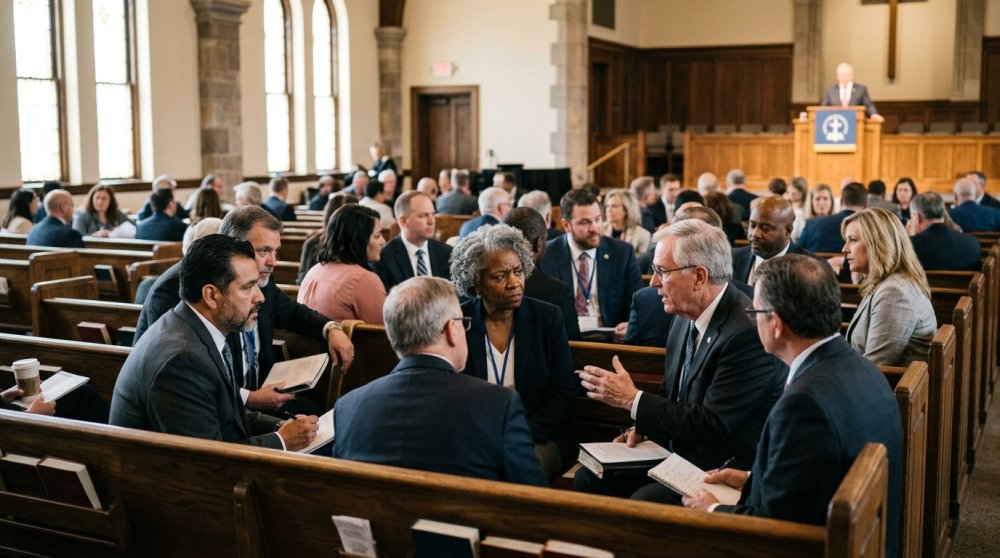
The Southern Baptist Convention is weighing an important doctrinal update that would clarify its position on gender and human sexuality. President Willy Rice has formally asked the SBC Executive Committee to recommend adding a specific article addressing these issues to the Baptist Faith & Message 2000. This proposal comes as cultural debates over gender identity continue to intensify across American society.
Richard Land, who helped draft the current confession, believes Rice’s request stands firmly within Baptist tradition. Land emphasized that Southern Baptists have historically maintained clear biblical positions on matters of human sexuality and identity. The current statement addresses marriage and sexuality but lacks specific language on gender distinctions.
“The Baptist Faith & Message has always sought to articulate what the Bible teaches about the fundamental issues facing God’s people,” Land noted in his assessment of Rice’s proposal. The timing reflects growing concern among conservative Christians about the rapid cultural shifts regarding gender ideology in schools, sports, and medical settings.
Many Southern Baptist leaders see this potential addition as necessary protection for biblical truth. Churches across the denomination have increasingly faced questions about gender identity from members and the surrounding culture. A clear confessional statement would provide guidance for pastors, parents, and educators navigating these challenging issues.
The proposal will now move through the Executive Committee review process before potentially coming before messengers at a future annual meeting. Southern Baptists have historically amended their confessional statement when cultural challenges demanded clearer biblical articulation. This process ensures that the denomination’s doctrinal commitments remain both faithful to Scripture and relevant to contemporary challenges.
Let us know what you think, please share your thoughts in the comments below.

Faith Facts
- The World Evangelical Alliance was founded in 1846 and continues to serve as a unifying network for evangelical Christians worldwide.
- Hundreds of leaders, volunteers, and supporters from over twenty countries gathered online to mark the 180th anniversary.
- The celebration was held entirely through two separate Zoom events on September 23, 2026, demonstrating the alliance’s commitment to fellowship across borders.
The World Evangelical Alliance commemorated its 180th anniversary with a virtual gathering that spanned multiple time zones and nations. Hundreds of participants joined two separate Zoom events to reflect on the alliance’s enduring mission of uniting evangelical believers in faith, witness, and service.
The anniversary celebration highlighted the alliance’s continued emphasis on the authority of Scripture and the proclamation of the Gospel. Participants from more than twenty countries joined together, underscoring the global reach of the evangelical movement and its commitment to traditional Christian doctrine.
“The World Evangelical Alliance has stood for the truth of God’s Word for nearly two centuries,” one speaker noted during the online program.
Another participant emphasized the importance of maintaining biblical convictions amid cultural shifts. “We gather not merely to remember history, but to recommit ourselves to the Great Commission,” the speaker stated.
The virtual format allowed leaders from diverse nations to participate without the barriers of travel, reflecting the alliance’s ongoing adaptability while preserving its core mission of defending religious freedom and advancing the Gospel.
Let us know what you think, please share your thoughts in the comments below.

Faith Facts
- The new featurette for Heart of the Beast emphasizes biblical themes of faith, sacrifice, unconditional love, and perseverance.
- The film draws direct parallels between its story and Psalm 23.
- Brad Pitt stars in the upcoming survival thriller.
A new featurette for Heart of the Beast, the upcoming survival thriller starring Brad Pitt, highlights the film’s biblical themes of faith, sacrifice, unconditional love and perseverance.
The production draws parallels between its story and Psalm 23, underscoring how these timeless truths guide characters through trials.
Let us know what you think, please share your thoughts in the comments below.


-

 Self-Reliance1 year ago
Trump’s Bold Move Uncovers Massive Social Security Fraud
-

 Faith1 year ago
New Clues Emerge in Noah’s Ark Mystery
-

 News2 years ago
Governor Walz’s Rhetoric Sparks National Controversy
-

 News1 year ago
Mel Gibson’s ‘The Passion of the Christ’ Sequel Title Announced
-

 Family2 years ago
Texas Lawmaker Targets Furries in Schools
-

 Freedom2 years ago
Maine Lawmaker Challenges Sports Fairness Controversy
-

 Family1 year ago
Canada’s Controversial Policy Sparks Ethical Debate
-
Faith10 months ago
Congress Hears Pleas for Nigerian Christians