
Faith
The Hidden Power of Spiritual Representation That Affects Your Life

Faith Facts
- Scripture reveals God consistently works through spiritual representatives whose actions carry lasting consequences beyond their own lives
- Biblical examples demonstrate how leaders, priests, and family heads acted as representatives affecting entire communities and generations
- Understanding spiritual representation helps Christians recognize their responsibility as ambassadors for Christ in today’s culture
Throughout the pages of Scripture, a powerful principle emerges that many modern believers overlook: God establishes representatives whose decisions and faithfulness impact not just themselves, but entire families, communities, and nations. This biblical concept of representation carries profound implications for how we understand both our spiritual heritage and our calling in today’s world.
From the earliest chapters of Genesis, we see this pattern unfold. Adam stood as representative of all humanity, and his choice in the Garden of Eden affected every person who would ever live. Noah represented not just himself but his entire family and, by extension, the future of mankind itself. Abraham’s faith established a covenant that would bless generations yet unborn.
The priesthood in Israel operated on this same principle of representation. When the high priest entered the Holy of Holies on the Day of Atonement, he didn’t go alone in spirit—he carried the names of all twelve tribes on his breastplate. His actions, his purity, his faithfulness mattered not just for his own standing before God, but for the entire nation he represented.
Kings in Scripture likewise bore the weight of representation. When David sinned with Bathsheba, the consequences rippled through his family and his kingdom. When Josiah turned his heart fully to the Lord and restored true worship, the entire nation experienced a season of blessing and revival. Their choices as leaders carried exponential spiritual weight.
This principle reaches its ultimate fulfillment in Jesus Christ, who stands as the perfect representative of redeemed humanity. Where Adam failed, Christ succeeded. Where Israel stumbled, Jesus remained faithful. His obedience unto death provided what no other representative could: complete reconciliation between a holy God and fallen mankind.
Yet the principle of representation doesn’t end with Christ’s finished work. Believers today carry a form of representational responsibility as well. Scripture calls Christians ambassadors for Christ, representatives of His kingdom in a watching world. Parents represent Christ to their children. Pastors represent the Chief Shepherd to their flocks. Believers in the workplace, in government, in education—all serve as living representatives of another kingdom.
This understanding should profoundly affect how Christians view their daily choices and callings. When we recognize that our faithfulness impacts not just our own spiritual journey but also those who observe our lives, it elevates the importance of consistent, authentic Christian living. Our children watch how we handle trials. Our neighbors observe how we treat others. Our coworkers see whether our faith makes any practical difference.
The representational principle also helps explain why spiritual leadership carries such serious accountability. James warns that teachers will face stricter judgment because they represent God’s truth to others. Church leaders throughout Scripture are held to higher standards precisely because they serve as representatives—their conduct either honors or dishonors the One they claim to serve.
Understanding representation also clarifies the spiritual battle believers face. Satan doesn’t merely attack individuals—he targets representatives because compromising one leader can affect many followers. This explains the intense spiritual warfare that often surrounds those in positions of Christian influence and authority.
For everyday believers, embracing this representational calling means recognizing that faithfulness matters far more than we might naturally assume. The way we conduct business, raise our families, participate in our communities, and engage with culture all serve as representation of either God’s kingdom or the world’s values. There is no neutral ground.
This principle should inspire both humility and holy ambition. Humility, because we recognize we carry a responsibility far greater than our own strength can bear—we desperately need God’s grace and wisdom. Holy ambition, because our lives have the potential to impact others for eternity if we faithfully represent Christ where He has placed us.
The question confronting every believer is straightforward but penetrating: Who do you represent? Are you functioning as an ambassador for Christ’s kingdom, or have other allegiances claimed your primary loyalty? Do your choices reflect the values of heaven or merely the preferences of contemporary culture?
Equally important: Who represents you spiritually? While Christ alone serves as our ultimate representative before God, we all exist within networks of spiritual influence and authority. Understanding who speaks into our lives, whose example we’re following, and what spiritual heritage we’ve received helps us navigate our own calling with greater wisdom.
As America faces mounting cultural challenges, the need for faithful representatives of biblical truth has never been greater. Believers who understand their representational calling and embrace it with both courage and grace will shape the spiritual landscape for generations to come. The question is not whether we will represent something—everyone does. The question is whether we’ll represent what ultimately matters for eternity.
Let us know what you think, please share your thoughts in the comments below.


Faith Facts
- Growing numbers of churches and Bible apps are removing The Passion Translation following intense theological scrutiny
- Christian apologist Mike Winger’s investigation has sparked widespread debate about translation accuracy and biblical fidelity
- The controversy highlights the critical importance of maintaining scriptural integrity in Bible translations for American congregations
A wave of churches and digital Bible platforms are severing ties with The Passion Translation as concerns about its theological accuracy continue to grow across the Christian community. The controversial paraphrase faces mounting rejection following increased examination of its departure from traditional biblical scholarship.
The pullback follows an investigation highlighted by prominent Christian apologist Mike Winger, whose work has raised significant questions about the translation’s fidelity to original biblical texts. His research has resonated deeply with pastors and church leaders committed to preserving the integrity of Scripture in their congregations.
The growing distance from The Passion Translation represents a decisive turn by churches determined to prioritize doctrinal soundness. Multiple Bible apps and ministry platforms have quietly removed the version from their offerings, responding to concerns from users who value traditional biblical scholarship and accuracy.
For many conservative Christians, the controversy underscores the vital importance of maintaining theological rigor in translations used for teaching and discipleship. The movement away from disputed versions reflects a broader commitment to scriptural authority that remains central to evangelical faith communities across America.
Church leaders making the change cite their responsibility to shepherd congregations with biblically sound resources. The decisions come as believers increasingly scrutinize Bible translations for theological precision and faithfulness to ancient manuscripts that form the foundation of Christian faith.
The rejection of questionable translations demonstrates the vigilance of American Christians who refuse to compromise on matters of biblical truth. This widespread response reveals a church community that takes seriously its duty to guard the purity of God’s Word for future generations.
Let us know what you think, please share your thoughts in the comments below.

Faith Facts
- Two powerful earthquakes struck Venezuela, prompting evangelical organizations worldwide to mobilize humanitarian relief efforts
- Search-and-rescue operations continue as Christian groups coordinate emergency response
- Faith-based organizations are providing critical aid to devastated communities
Venezuelan authorities continue their desperate search-and-rescue operations following two devastating earthquakes that struck the nation. Evangelical organizations across the globe are rapidly mobilizing to deliver humanitarian assistance to the crisis-stricken country.
The powerful twin earthquakes have left communities in ruins, prompting an immediate response from faith-based relief organizations committed to serving those in need. Christian groups are coordinating efforts to provide emergency supplies, medical care, and spiritual support to affected populations.
These relief efforts reflect the church’s historical role in responding to natural disasters with compassion and practical aid. Evangelical organizations have established a proven track record of efficient, effective disaster response that prioritizes getting help directly to those who need it most.
The mobilization demonstrates how Christian communities worldwide continue to embody the biblical mandate to care for neighbors in times of crisis. These faith-driven relief efforts often reach communities faster than government agencies, providing critical resources when they’re needed most urgently.
As the situation continues to develop, evangelical groups are preparing for long-term recovery efforts beyond immediate emergency response. This sustained commitment reflects the church’s understanding that true compassion extends beyond the initial crisis to help communities rebuild and restore hope.
Let us know what you think, please share your thoughts in the comments below.
Faith Facts
- Renowned theologian Os Guinness addressed the Alliance for Responsible Citizenship conference in London, calling for the West to return to its biblical foundations
- Guinness warned that the West’s decline stems from abandoning the faith principles that once made it great
- The theologian emphasized that spiritual renewal, not political solutions alone, holds the key to restoring Western civilization
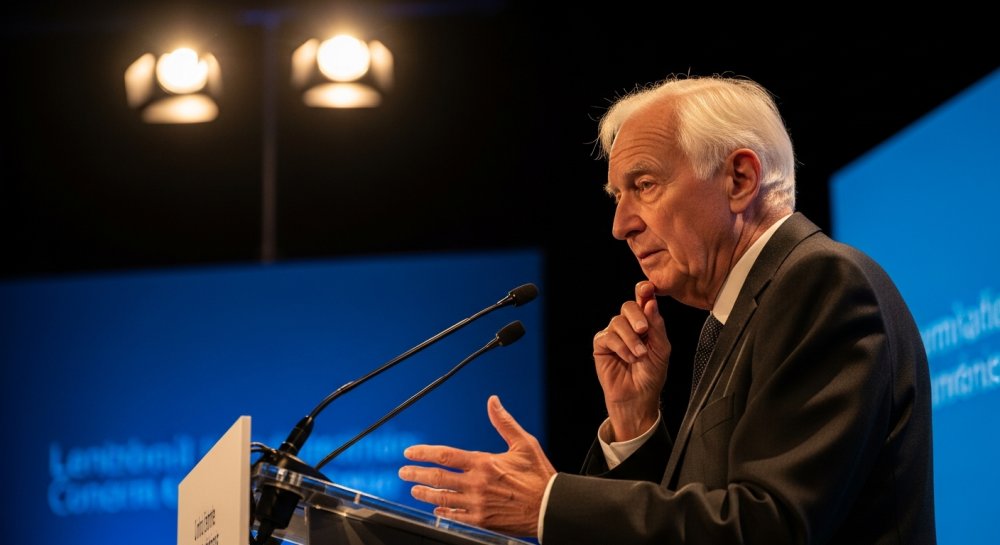
Esteemed theologian Os Guinness delivered a powerful closing message at the Alliance for Responsible Citizenship (ARC) conference in London, issuing an urgent appeal for the West to rediscover its biblical roots. His remarks come at a critical moment when Western nations face mounting cultural, moral, and spiritual challenges.
Guinness, a longtime defender of Christian orthodoxy and cultural critic, emphasized that the decline of Western civilization is directly connected to its abandonment of the faith principles that once served as its foundation. The theologian’s message resonated deeply with conference attendees who share concerns about the erosion of traditional values across Europe and America.
The ARC conference has become an important gathering point for leaders, thinkers, and activists committed to preserving the best of Western civilization. Guinness’s closing address underscored the central theme that has emerged from such gatherings: without a return to faith, all other efforts at renewal will ultimately fall short.
Throughout his address, Guinness made clear that political solutions, economic reforms, and social programs cannot substitute for the spiritual transformation that the West desperately needs. He argued that the very freedoms, institutions, and prosperity that characterize Western nations were built upon a biblical worldview that honored God, valued human dignity, and promoted moral responsibility.
The theologian’s call for renewal comes as Christians across the Western world are increasingly recognizing that their nations have drifted far from their founding principles. From the United States to the United Kingdom, the abandonment of biblical morality has coincided with rising social fragmentation, moral confusion, and cultural decay.
Guinness has spent decades warning about the consequences of secularization and the hollowing out of Western culture. His message at the ARC conference reinforced his consistent position that faith is not merely a private matter but the essential foundation for a healthy society.
The conference brought together individuals who understand that defending Western civilization requires more than political activism or intellectual arguments. It requires a genuine spiritual awakening that transforms hearts, renews minds, and restores the biblical principles that once guided nations toward truth, justice, and human flourishing.
As the West faces unprecedented challenges from hostile ideologies, moral relativism, and spiritual apathy, voices like Guinness’s provide much-needed clarity and direction. His call for a return to biblical foundations represents not a retreat into the past but a recovery of timeless truths that remain as relevant today as they were centuries ago.
The theologian’s message serves as a reminder that the future of Western civilization depends not on human wisdom alone but on a humble return to the God who made freedom, prosperity, and human dignity possible in the first place.
Let us know what you think, please share your thoughts in the comments below.


-

 Self-Reliance1 year ago
Trump’s Bold Move Uncovers Massive Social Security Fraud
-

 Faith1 year ago
New Clues Emerge in Noah’s Ark Mystery
-

 News1 year ago
Governor Walz’s Rhetoric Sparks National Controversy
-

 News1 year ago
Mel Gibson’s ‘The Passion of the Christ’ Sequel Title Announced
-

 Family1 year ago
Texas Lawmaker Targets Furries in Schools
-

 Freedom1 year ago
Maine Lawmaker Challenges Sports Fairness Controversy
-

 Family1 year ago
Canada’s Controversial Policy Sparks Ethical Debate
-
Faith7 months ago
Congress Hears Pleas for Nigerian Christians