
Faith
The Hidden Danger Lurking in America’s Most Popular Sayings


Faith Facts
- Many common cultural sayings Americans accept as wisdom often contradict biblical teachings and can lead believers away from Christ-centered truth
- Popular phrases like “follow your heart” and “you do you” promote self-centered thinking that conflicts with Scripture’s call to deny ourselves and follow Jesus
- Christians must measure every piece of conventional wisdom against the unchanging standard of God’s Word to avoid being conformed to worldly thinking
American culture is saturated with catchy phrases and popular sayings that sound wise on the surface. From coffee mugs to social media posts, these mantras shape how millions of Americans think about life, relationships, and decision-making. But for believers committed to living according to biblical principles, these seemingly harmless expressions often contain dangerous half-truths that can subtly erode our Christian foundation.
The problem isn’t just that these sayings are wrong—it’s that they’re presented as self-evident truth. When an entire culture repeats the same messages over and over, they become normalized, accepted without question. Before we know it, we’re making decisions based on worldly wisdom rather than the timeless truth of Scripture.
Consider the popular phrase “follow your heart.” It sounds romantic and freeing, doesn’t it? But the Bible tells us something very different about the human heart. Jeremiah 17:9 warns us plainly: “The heart is deceitful above all things and beyond cure. Who can understand it?” Our hearts, apart from transformation by the Holy Spirit, lead us astray. They justify sin, rationalize selfishness, and pull us away from God’s best for our lives.
Then there’s the increasingly common “you do you,” which has become a rallying cry for radical individualism. This phrase elevates personal preference above all else and discourages any form of correction or accountability. Yet Christians are called to something entirely different—a life of mutual submission, bearing one another’s burdens, and speaking truth in love. We don’t “do us”—we die to ourselves and live for Christ.
The saying “God helps those who help themselves” is perhaps the most deceptive of all because it sounds vaguely biblical. Many Americans believe this phrase actually appears in Scripture. It doesn’t. In fact, it contradicts the gospel message entirely. Christianity teaches that God helps those who cannot help themselves—that’s the whole point of grace. We were helpless in our sin, and Christ saved us not because of our efforts but despite our inability.
What about “everything happens for a reason”? While Christians do believe in God’s sovereignty, this particular phrase is often used to minimize real suffering or avoid the hard work of lament and wrestling with difficult circumstances. Sometimes things happen because we live in a fallen world affected by sin, not because God orchestrated a specific tragedy for some hidden purpose we’ll discover later.
These cultural sayings gain traction because they appeal to our flesh—our desire for autonomy, comfort, and self-justification. They require nothing of us except affirming what we already want to believe. Biblical wisdom, on the other hand, often cuts against our natural inclinations. It calls us to forgive when we want revenge, to serve when we want to be served, to give when we want to accumulate, and to trust God when circumstances seem hopeless.
The Apostle Paul warned the Roman church, “Do not conform to the pattern of this world, but be transformed by the renewing of your mind.” This transformation requires intentionality. We must actively test every message we receive against Scripture, no matter how popular or widely accepted it may be.
For families raising children in today’s America, this vigilance is especially critical. Our kids are bombarded with worldly wisdom from every direction—schools, entertainment, peers, and social media. If we don’t equip them to recognize the difference between cultural platitudes and biblical truth, they’ll absorb these messages by default and build their lives on a faulty foundation.
The solution isn’t to become cynical about all wisdom or to reject common sense. Rather, it’s to develop discernment—the ability to distinguish between what sounds good and what is actually true. This discernment comes from immersing ourselves in God’s Word, praying for wisdom, and being part of a church community that values biblical truth over cultural acceptance.
When we encounter a popular saying, we should ask ourselves: Does this align with Scripture? Does it promote self or Christ? Does it encourage dependence on God or self-sufficiency? Does it lead toward holiness or compromise? These questions serve as filters, protecting our minds and hearts from the subtle deceptions of worldly wisdom.
America’s cultural moment is increasingly hostile to Christian values, making it all the more important that believers stand firm on the foundation of biblical truth. When everyone around us is repeating the same secular mantras, we must have the courage to say, “That’s not what Jesus taught.” Our allegiance is to Christ and His Word, not to whatever philosophy is currently trending.
True wisdom doesn’t come from popular consensus or cultural momentum. It comes from the fear of the Lord, as Proverbs repeatedly tells us. It’s found in Scripture, revealed by the Holy Spirit, and confirmed in the community of faith. Everything else, no matter how catchy or comforting, must be measured against this standard.
Let us know what you think, please share your thoughts in the comments below.


Faith Facts
- Ahmed Joktan, a Saudi-born evangelist, says a dream led him to Jesus and prompted his conversion from Islam.
- After embracing Christ, Joktan suffered violent persecution for leaving the Islamic faith.
- He now urges Western believers to share the Gospel courageously with their Muslim neighbors.
Saudi-born Christian evangelist Ahmed Joktan is urging believers in the West to proclaim the Gospel without fear after he himself paid a steep price for following Jesus.
Joktan says a dream drew him to Christ and led him to abandon Islam, a decision that triggered a violent assault against him.
“I was attacked because I chose to follow Jesus,” Joktan stated.
Despite the beating he endured, the evangelist insists the cost of obedience is worth it and that American Christians must not shrink from sharing their faith.
“I want to encourage my brothers and sisters in the West to be bold in witnessing to their Muslim neighbors,” Joktan said.
His testimony highlights the stark contrast between the freedom of religion enjoyed in the United States and the harsh reality faced by converts in many Muslim-majority nations.
Family, faith, and the courage to speak truth remain central to Joktan’s message as he travels and ministers across the country.
Let us know what you think, please share your thoughts in the comments below.

Faith Facts
- The Bible records Noah’s Ark as a historical vessel built at God’s command to preserve life during the Flood.
- Archaeologists and geologists continue to study sites in Turkey that some claim match the Ark’s resting place.
- Christians are urged to ground their faith in Scripture rather than unverified discoveries.
Explosive headlines this week announced that Noah’s Ark has been discovered beneath a mountain range in Turkey. The claims have quickly spread across social media and news outlets, stirring both excitement and skepticism among believers.
Chris Sinkinson, a respected Christian author and lecturer, cautions that such announcements often outpace the evidence. He urges fellow believers to remain anchored in Scripture and verified facts rather than sensational reports.
“Christians need to stick to the facts,” Sinkinson stated. His words serve as a timely reminder that faith rests on the unchanging Word of God, not on the latest archaeological headline.
While the possibility of discovering physical remnants of the Ark is intriguing, experts note that conclusive proof remains elusive. Many past claims have failed under closer scientific examination.
Scripture itself provides the foundation for understanding the Flood and God’s covenant with Noah. Believers are reminded that the reliability of the Bible does not depend on locating the physical Ark.
Let us know what you think, please share your thoughts in the comments below.
Faith Facts
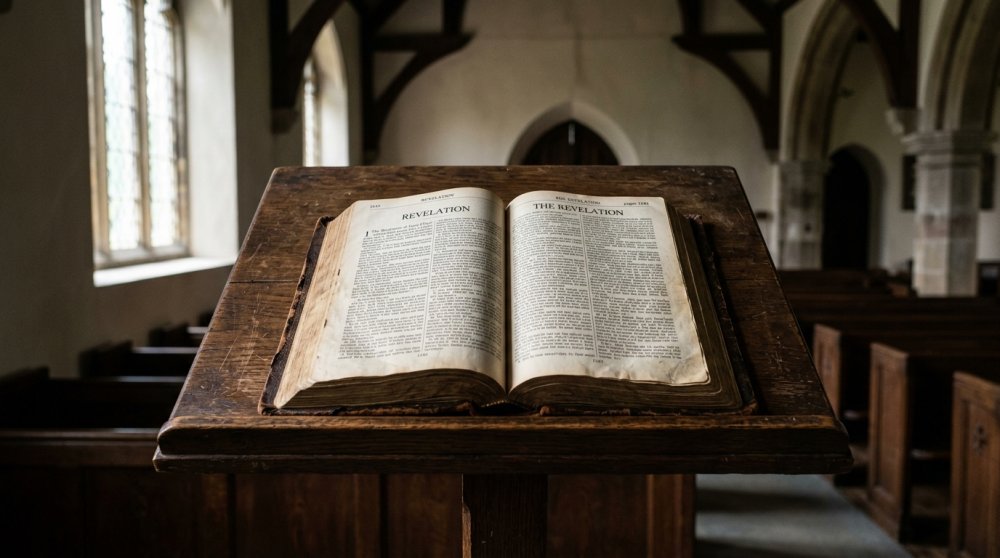
- Revelation chapters 2 and 3 contain direct messages from Jesus to seven churches in Asia Minor, blending commendation with stern rebuke.
- Scripture records that Jesus declares, “I know your works,” underscoring His intimate awareness of both corporate and personal conduct.
- The warnings delivered to these early congregations still apply to contemporary churches that drift into compromise or complacency.
In Revelation 2 and 3, the gentle and lowly Jesus speaks to seven churches with both praise and severe warning.
He knows their works, their compromises and what they can’t see about themselves.
He knows ours, too.
Let us know what you think, please share your thoughts in the comments below.


-

 Self-Reliance2 years ago
Trump’s Bold Move Uncovers Massive Social Security Fraud
-

 Faith1 year ago
New Clues Emerge in Noah’s Ark Mystery
-

 News2 years ago
Governor Walz’s Rhetoric Sparks National Controversy
-

 News2 years ago
Mel Gibson’s ‘The Passion of the Christ’ Sequel Title Announced
-

 Family2 years ago
Texas Lawmaker Targets Furries in Schools
-

 Freedom2 years ago
Maine Lawmaker Challenges Sports Fairness Controversy
-

 Family1 year ago
Canada’s Controversial Policy Sparks Ethical Debate
-
Faith11 months ago
Congress Hears Pleas for Nigerian Christians