
Faith
The Hidden Cost of Digital Convenience Your Pastor Warned About


Faith Facts
- Modern conveniences like AI chatbots and same-day delivery are quietly eroding traditional community bonds that once anchored American society.
- The decline in neighborly interactions—from borrowing tools to face-to-face conversations—mirrors declining church attendance and community engagement.
- Christian fellowship and local church involvement offer the biblical antidote to isolation that technology companies cannot replicate.
When did we stop knocking on our neighbor’s door to borrow a hammer? The answer might explain why Americans feel more isolated than ever before, despite being more “connected” through screens than any generation in history.
The convenience economy has delivered unprecedented ease to our daily lives. Need a hammer? Amazon delivers it tomorrow. Need an answer? ChatGPT responds instantly. Need a ride? An app summons one in minutes.
But this frictionless existence comes at a profound cost—one that Christians and conservatives have long understood. Each convenience that removes human interaction strips away another thread from the fabric of community that once held neighborhoods, towns, and ultimately our nation together.
The rise of artificial intelligence chatbots represents the latest evolution in this troubling trend. Millions now turn to AI for conversation, advice, and even emotional support—interactions that once happened naturally in church fellowship halls, over backyard fences, and in community gatherings.
Traditional American communities thrived on interdependence. Neighbors needed neighbors. This wasn’t merely practical; it was formative. When you borrowed your neighbor’s tools, you built relationship capital. When you gathered at church on Sunday, you strengthened bonds that carried through the week.
Scripture consistently emphasizes the importance of fellowship and community. Hebrews 10:24-25 instructs believers not to forsake “assembling together,” recognizing that physical presence and genuine human connection are irreplaceable elements of the Christian life.
The digital convenience culture runs counter to this biblical model. Every Amazon order that replaces a trip to a local shop, every AI chat that substitutes for calling a friend, every streaming service that keeps families isolated in separate rooms—these conveniences accumulate into a crisis of loneliness.
Statistics confirm what many sense intuitively. Church attendance has declined steadily even as technology has exploded. Loneliness rates have soared. Mental health challenges among young people have reached crisis levels. These trends are not coincidental.
The solution isn’t to reject technology entirely—that’s neither realistic nor necessary. Rather, Christians must intentionally prioritize genuine community over convenient isolation. This means choosing the local hardware store over the app, choosing Sunday morning worship over sleeping in, choosing face-to-face conversation over digital chat.
Churches stand uniquely positioned to counter this cultural drift. Where ChatGPT offers algorithms, the church offers authentic relationship. Where Amazon offers convenience, the church offers communion—the breaking of bread together in fellowship that technology cannot replicate.
American communities need neighbors who know each other’s names, who check on each other during storms, who gather for more than just transactions. We need churches filled with people, not livestream viewers—though digital options serve those genuinely unable to attend.
The path forward requires intentionality. It means inconveniencing ourselves for the sake of community. It means borrowing that hammer instead of buying another one. It means attending that church potluck instead of ordering takeout. It means having coffee with a friend instead of chatting with an AI.
This isn’t nostalgia for a bygone era—it’s wisdom rooted in both Scripture and social science. Human beings were created for relationship, first with God and then with one another. No algorithm can substitute for the image of God reflected in another person’s face.
The convenience economy promised to make life easier. In many ways it has. But we’re discovering the hidden costs—costs measured in weakened communities, increased isolation, and the erosion of the social capital that makes freedom and self-governance possible.
Christians have always understood that the narrow road is rarely the convenient one. Building genuine community requires effort, time, and yes, inconvenience. But the reward—strong families, thriving churches, and resilient communities—far exceeds what any app can deliver.
As artificial intelligence becomes more sophisticated and conveniences multiply, the choice before us grows starker. Will we embrace the easy isolation of digital existence, or will we choose the harder but richer path of authentic Christian community?
The answer will determine not just our personal well-being, but the future character of American society itself. Churches, families, and neighbors who choose relationship over convenience are choosing to preserve something precious that, once lost, cannot be ordered online or generated by AI.
Let us know what you think, please share your thoughts in the comments below.

Faith Facts
- St. Paul’s Cathedral in London has signed a multi-year partnership with Fabric, a nightclub that lost its license in 2016 following two drug-related deaths
- The agreement allows the secular venue to host concerts inside one of Christianity’s most historic worship spaces
- Critics are condemning the Church of England for compromising sacred space for commercial revenue
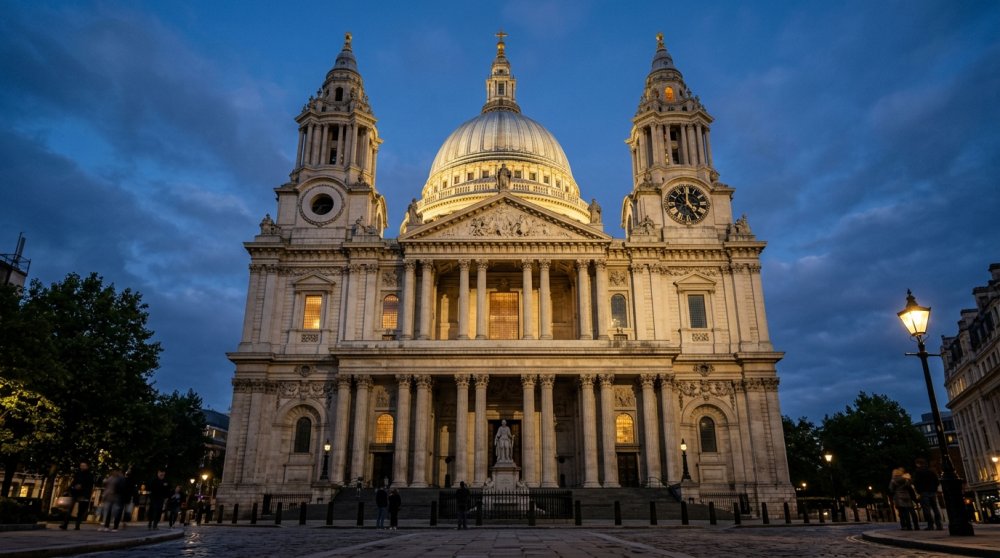
The Church of England is facing mounting criticism after St. Paul’s Cathedral in London entered into a controversial multi-year agreement with a nightclub operator to host concerts inside the historic house of worship. The partnership with Fabric, a nightclub that previously lost its operating license following two drug-related deaths at its venue, has sparked outrage among Christians who view the arrangement as a desecration of sacred space.
St. Paul’s Cathedral, one of the most iconic Christian landmarks in the world and a symbol of faith that has stood for centuries, will now open its doors to secular entertainment events under the new contract. The decision represents a troubling trend within mainline Protestant denominations that appear willing to compromise the sanctity of worship spaces in pursuit of revenue and cultural relevance.
Fabric nightclub lost its license in 2016 after two young people died from drug overdoses at events hosted by the venue. While the license was eventually reinstated, the history raises serious questions about the judgment of Church of England leadership in selecting this particular partner for events inside a cathedral that has served as a place of prayer, worship, and national reflection for generations.
Critics argue that transforming a sacred worship space into a concert venue fundamentally misunderstands the purpose of a cathedral and disrespects the faithful who view St. Paul’s as holy ground. The controversy highlights a broader pattern within the Church of England of prioritizing financial considerations and secular approval over traditional Christian values and the preservation of sacred spaces.
For centuries, St. Paul’s Cathedral has stood as a beacon of Christian faith in England, hosting royal weddings, state funerals, and serving as a place where believers gather to worship God. The decision to allow a nightclub operator with a troubled history to host entertainment events inside the building marks a stark departure from that heritage.
The backlash reflects growing concerns among traditional Christians that mainline denominations are abandoning their core mission in favor of cultural accommodation. Rather than standing as distinct, holy spaces set apart for worship and prayer, historic churches are increasingly being repurposed for secular events that bear no connection to their sacred purpose.
This controversy comes at a time when the Church of England is already facing declining attendance and questions about its theological direction. Rather than recommitting to biblical teaching and traditional worship, leadership appears to be pursuing strategies that further alienate faithful believers while failing to attract new congregants.
The partnership between St. Paul’s Cathedral and Fabric nightclub serves as a cautionary tale about what happens when church leaders lose sight of their primary calling. Sacred spaces should remain sacred, set apart for the worship of God and the edification of believers, not repurposed as entertainment venues for secular profit.
Let us know what you think, please share your thoughts in the comments below.
Faith Facts
- Kathy Sanders lost two grandsons in the 1995 Oklahoma City bombing that killed 168 people, including 19 children
- Sanders publicly forgave the men responsible for the terrorist attack and has shared her Christian testimony for nearly 30 years
- She credits her faith in Jesus Christ as the foundation that enabled her to survive three decades of profound grief and loss
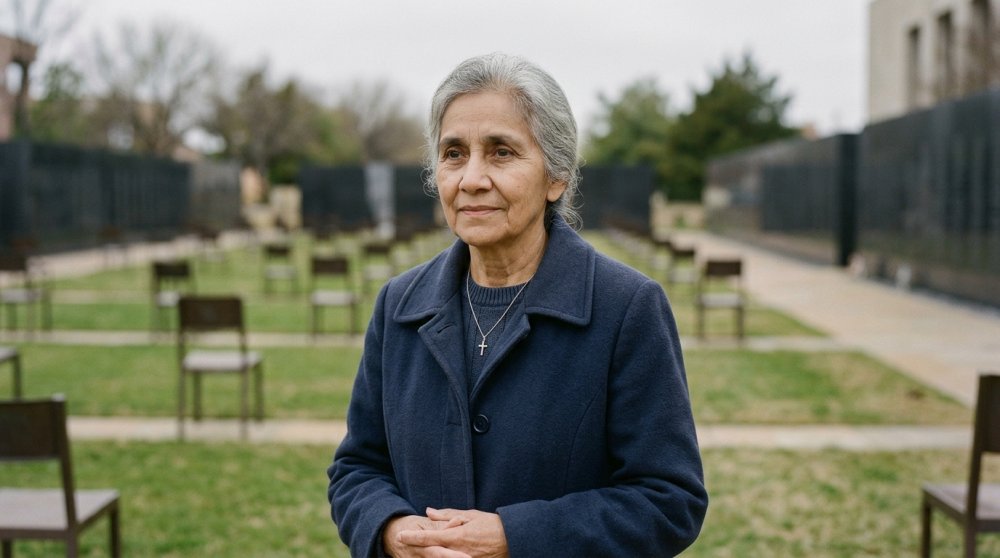
The grandmother who lost two precious grandsons in one of America’s deadliest domestic terror attacks has a message that defies human understanding. Kathy Sanders’ journey from unspeakable tragedy to powerful witness demonstrates the transformative power of Christian faith in the darkest valleys of life.
On April 19, 1995, a truck bomb exploded outside the Alfred P. Murrah Federal Building in Oklahoma City, killing 168 people and injuring hundreds more. Among the victims were 19 children, including Sanders’ two young grandsons who were in the building’s daycare center.
In the nearly three decades since that horrific day, Sanders has become a living testimony to God’s redeeming grace. She has publicly stated that she forgave the men responsible for the bombing, a declaration that stands in stark contrast to the world’s understanding of justice and vengeance.
“God has done a work in my life,”
Sanders shared, pointing to the supernatural strength that has sustained her through unimaginable loss.
Her story illustrates a biblical truth that confounds secular wisdom: true healing and peace come not from harboring bitterness, but from extending the same forgiveness that Christ offers to all. This is not a denial of justice or minimizing of evil, but rather a recognition that revenge and hatred ultimately destroy the one who carries them.
For believers, Sanders’ testimony serves as a powerful reminder that God’s grace is sufficient even in the most devastating circumstances. Her ability to forgive reflects the heart of the Gospel itself—that while we were still sinners, Christ died for us.
The Oklahoma City bombing remains one of the darkest chapters in American history, a stark reminder of the evil that exists in a fallen world. Yet even in such darkness, the light of Christ shines through witnesses like Sanders who refuse to let tragedy have the final word.
Her journey also speaks to the importance of the Christian community in times of crisis. Faith is not meant to be lived in isolation, and survivors of trauma need the support, prayer, and encouragement of fellow believers to walk through the valley of the shadow of death.
Sanders’ willingness to share her story publicly for nearly 30 years demonstrates the evangelistic power of authentic Christian testimony. Her message reaches beyond the church walls to a world desperately searching for hope and meaning in the face of suffering.
The contrast between worldly responses to tragedy and the Christian response could not be more clear. Where culture promotes endless grievance and perpetual victimhood, the Gospel offers genuine healing through forgiveness and faith in a sovereign God who works all things together for good for those who love Him.
As our nation continues to face division, violence, and moral confusion, stories like Sanders’ point the way forward. True peace—both personal and societal—is found not in political solutions or therapeutic techniques, but in the transformative power of Jesus Christ.
Her testimony challenges every believer to examine their own hearts. Are we willing to extend the same forgiveness we have received? Can we trust God’s sovereignty even when circumstances seem unbearable?
These questions strike at the heart of authentic Christian faith, which calls us not to a life of comfort but to sacrificial love modeled after our Savior.
Let us know what you think, please share your thoughts in the comments below.
Faith Facts
- Richard Land responds to recent controversial remarks made by a fellow Baptist leader regarding Christian Nationalism and political office
- Land argues the statements contradict foundational Baptist principles on religious liberty and the separation of church and state
- Multiple Baptist colleagues expressed concern over what they perceived as a departure from traditional Baptist convictions on faith and government
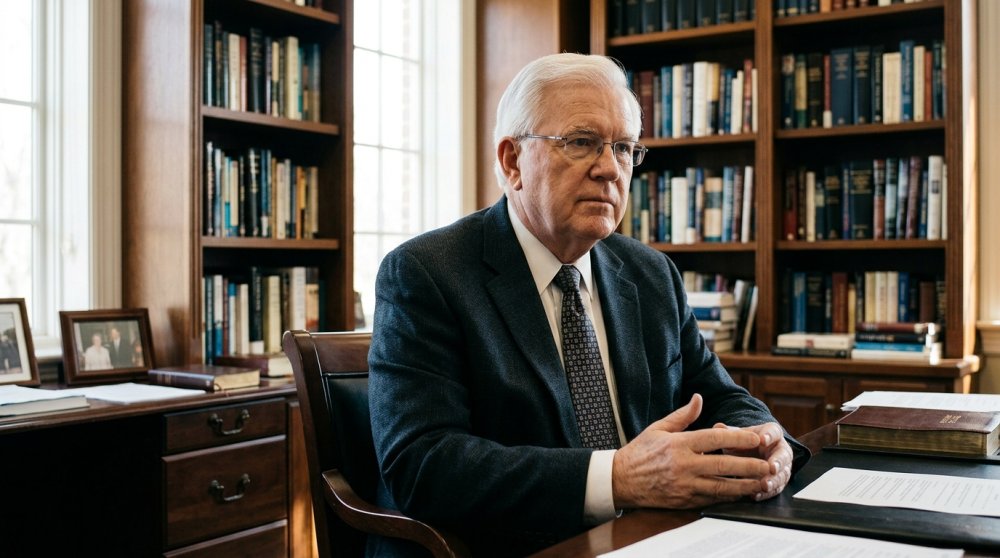
A prominent Baptist leader has raised concerns about recent remarks made by a colleague regarding Christian Nationalism and political leadership, sparking a debate within the denomination about religious liberty and constitutional principles. Richard Land, who has maintained a 30-year relationship with the leader in question, felt compelled to respond after multiple Baptist colleagues reached out expressing alarm over the statements.
The controversy centers on comments that some interpreted as suggesting religious qualifications for political office. Land, a respected voice on matters of faith and public policy, believes these remarks represent a significant departure from core Baptist convictions that have historically championed religious freedom for all Americans.
Baptist tradition has long held firm to the principle of religious liberty, standing against any form of religious test for public service. This commitment stems from the denomination’s own history of persecution and their founders’ determination to ensure freedom of conscience for believers and non-believers alike.
The debate highlights ongoing tensions within Christian circles about the proper relationship between faith and government. While many Christians advocate for believers to engage actively in the political process, the question of whether religious identity should serve as a criterion for holding office touches on fundamental constitutional principles.
Land’s response reflects concern that departing from traditional Baptist teaching on religious liberty could undermine the very freedoms that have allowed Christianity to flourish in America. The First Amendment’s prohibition on religious tests for office has been viewed by many faith leaders as a protection for religious expression, not a hindrance to it.
The situation underscores the importance of careful discernment as Christians navigate the intersection of faith and politics. While believers are called to be salt and light in every sphere of society, including government, maintaining commitment to constitutional principles and religious freedom protects the ability of all Americans to live according to their convictions.
This internal debate among Baptist leaders serves as a reminder that discussions about Christian engagement in public life require wisdom, historical understanding, and careful attention to both biblical principles and the constitutional framework that has safeguarded religious liberty in America.
Let us know what you think, please share your thoughts in the comments below.


-

 Self-Reliance1 year ago
Trump’s Bold Move Uncovers Massive Social Security Fraud
-

 Faith1 year ago
New Clues Emerge in Noah’s Ark Mystery
-

 News1 year ago
Governor Walz’s Rhetoric Sparks National Controversy
-

 News1 year ago
Mel Gibson’s ‘The Passion of the Christ’ Sequel Title Announced
-

 Family1 year ago
Texas Lawmaker Targets Furries in Schools
-

 Freedom1 year ago
Maine Lawmaker Challenges Sports Fairness Controversy
-

 Family1 year ago
Canada’s Controversial Policy Sparks Ethical Debate
-
Faith10 months ago
Congress Hears Pleas for Nigerian Christians