
Faith
The Forgotten Story Behind America’s Most Sacred Pledge

Faith Facts
- The phrase ‘one nation under God’ was added to the Pledge of Allegiance in 1954 during the Cold War as a declaration against atheistic communism
- Flag Day was established to commemorate the adoption of the Stars and Stripes as America’s official flag on June 14, 1777
- Historian Bill Federer reveals how America’s founding principles were rooted in acknowledgment of divine providence and Christian heritage
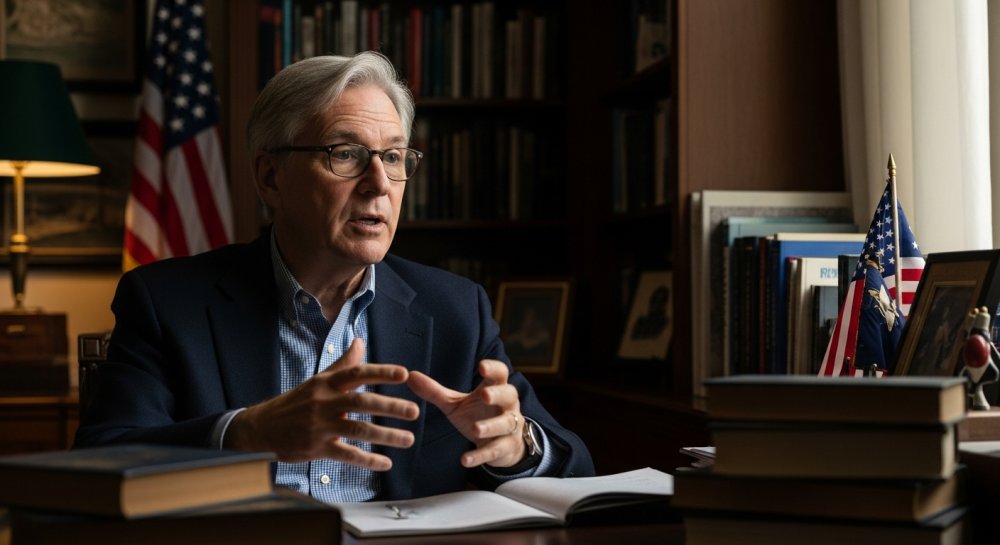
In a nation increasingly divided over its history and values, historian and author Bill Federer is bringing Americans back to the roots of their most cherished symbols. His recent discussion sheds light on the profound Christian heritage woven into the fabric of our flag and national pledge.
Federer traces the origins of Flag Day back to June 14, 1777, when the Continental Congress adopted the Stars and Stripes as the official flag of the new nation. This wasn’t merely a political decision—it was a declaration of independence rooted in the belief that God had ordained this new nation for a special purpose.
The American flag has undergone numerous changes throughout history, with stars added as new states joined the union. Yet its fundamental design—the red, white, and blue symbolizing valor, purity, and justice—has remained constant, reflecting the enduring values upon which our nation was built.
Perhaps most compelling is Federer’s account of how “one nation under God” came to be added to the Pledge of Allegiance. In 1954, at the height of the Cold War, President Dwight D. Eisenhower signed legislation adding these four words to distinguish America from the atheistic Soviet Union.
The phrase wasn’t invented in 1954, however. It echoed President Abraham Lincoln’s Gettysburg Address, where he spoke of ensuring “that this nation, under God, shall have a new birth of freedom.”
This acknowledgment of divine authority was not incidental—it was foundational. Our founders understood that rights come from God, not government, and that recognition of a higher moral authority was essential to preserving liberty.
Federer’s work serves as a timely reminder that America’s greatness has always been tied to its acknowledgment of God. As secular forces attempt to erase this heritage from public life, understanding the true history of our national symbols becomes more important than ever.
The story behind “one nation under God” isn’t about establishing a theocracy or favoring one denomination over another. It’s about recognizing the transcendent moral foundation that makes self-government possible and protects individual liberty from the tyranny of an all-powerful state.
In today’s climate, where some seek to remove God from every public square, Federer’s historical research provides crucial context. The phrase “under God” was added specifically to declare that America answers to a higher authority than any earthly government—a principle that protects citizens from totalitarianism.
This history matters because it reveals the intentional design of our republic. Our founders and subsequent generations understood that without acknowledging God’s sovereignty, human rights become mere privileges granted by those in power.
As we continue to celebrate Flag Day and recite the Pledge of Allegiance, may we remember not just the words, but the profound truth they convey: that America was founded on the recognition that our rights and our nation exist under God’s providence and authority.
Let us know what you think, please share your thoughts in the comments below.


Faith Facts
- Hundreds of Evangelical Christians marched through Chiapas, Mexico in the Grand Citizens’ March for Values to oppose new gender identity legislation
- The Chiapas Congress approved amendments on June 30 allowing adults to change gender markers on official documents through administrative process
- The demonstration reflects growing Christian resistance in Latin America to policies that contradict biblical teaching on gender and creation
Evangelical Christians in the Mexican state of Chiapas demonstrated their commitment to biblical values by organizing a massive public march through the state capital. The Grand Citizens’ March for Values drew hundreds of participants on Saturday, July 25, united in opposition to recent legislative changes that undermine traditional understandings of gender.
The Chiapas Congress approved controversial amendments to the state’s Civil Code on June 30. These changes permit adults to change the gender marker on their official documents through a simple administrative process, without requiring medical or psychological evaluation.
The march represents a significant mobilization of the Christian community in defense of God’s design for humanity. Evangelical leaders organized the demonstration to give voice to concerns that such laws contradict biblical teaching and the natural order established at creation.
The response from Chiapas believers mirrors similar movements across Latin America, where Christians are increasingly standing firm against policies that conflict with scriptural truth. The willingness of hundreds to march publicly demonstrates that faith communities will not remain silent when core values are at stake.
Mexico’s Evangelical population has grown substantially in recent decades, with Christians now representing a significant voice in public discourse. The Chiapas demonstration shows this community is prepared to exercise its constitutional rights to advocate for laws that reflect traditional moral principles.
The administrative nature of the new law—allowing gender changes without medical oversight or objective criteria—troubles many Christians who see it as abandoning biological reality in favor of subjective feelings. Such policies, they argue, have profound implications for families, children, and society’s understanding of fundamental truth.
The march through the capital streets sent a clear message that Christian citizens expect their representatives to uphold laws consistent with the values that have sustained families and communities for generations. Religious freedom includes the right to speak prophetically to government on matters of moral consequence.
As similar legislation advances in various jurisdictions worldwide, the Chiapas march offers an example of peaceful, organized Christian witness. Believers are called not only to hold fast to truth in their personal lives but to be salt and light in the public square, advocating for policies that honor God’s created order.
Let us know what you think, please share your thoughts in the comments below.

Faith Facts
- Practicing Christians use artificial intelligence more frequently than the average American, both professionally and personally
- Nearly half of practicing Christians say they would trust AI technology to assist with their spiritual growth
- New Barna Group survey reveals how believers are integrating modern technology into their faith journey
A new survey from Barna Group has uncovered surprising insights about how practicing Christians are embracing artificial intelligence in their daily lives. The research reveals that faithful believers are not only keeping pace with technological advancement but are actually leading the way in AI adoption across multiple areas of life.
According to the study, practicing Christians are using artificial intelligence tools more than most Americans, integrating the technology into both their professional work and personal routines. This finding challenges common assumptions about the relationship between traditional religious practice and cutting-edge technology.
Perhaps most striking is the openness many Christians show toward AI’s potential role in their spiritual development. Nearly half of practicing Christians surveyed indicated they would trust artificial intelligence to support their spiritual growth, suggesting a willingness to explore how modern tools might complement traditional practices of prayer, Scripture study, and discipleship.
The Barna Group research highlights how the Christian community is navigating the intersection of timeless faith and rapidly evolving technology. Rather than viewing AI as a threat to authentic spirituality, many believers appear to see it as a potential resource that could enhance their walk with God when used wisely and discerningly.
This openness to technological innovation reflects a broader pattern among practicing Christians who seek to engage thoughtfully with cultural changes while maintaining their core values and biblical convictions. The findings suggest that faith and technology need not be at odds, but can potentially work together to support spiritual formation in the digital age.
As artificial intelligence continues to develop and become more integrated into everyday American life, the Christian community’s engagement with these tools will likely shape important conversations about ethics, discipleship, and the future of ministry in an increasingly technological society.
Let us know what you think, please share your thoughts in the comments below.
Faith Facts
- Theologian Wayne Grudem has published comprehensive public policy backgrounders rooted in biblical principles to guide Christian voters in upcoming elections
- The resources examine how Scripture speaks directly to contemporary political and governance issues facing America today
- Christian voters are being equipped with timeless biblical truths to navigate the increasingly complex political landscape with wisdom and discernment
As America approaches another crucial election season, Christian voters are being offered a powerful resource to help them navigate the complex intersection of faith and politics. Noted theologian Wayne Grudem has released comprehensive public policy backgrounders specifically designed to prepare believers for the decisions they’ll face at the ballot box.
The materials represent a significant effort to bridge the gap between eternal biblical principles and contemporary political realities. Rather than offering simplistic answers or partisan talking points, Grudem’s work seeks to ground political thinking in the unchanging truths of Scripture.
For many Christian Americans, the question of how faith should inform their political choices has become increasingly urgent. With cultural battles intensifying and traditional values under mounting pressure, believers are searching for guidance that honors both their citizenship in heaven and their responsibilities as American citizens.
Grudem’s backgrounders address this need by examining what the Bible actually says about government, justice, human dignity, and the proper role of civil authority. The approach recognizes that while Scripture doesn’t endorse specific parties or candidates, it does provide clear principles about righteousness, justice, and the protection of human life and freedom.
The timing of these resources is particularly significant as Christian voters face decisions that will shape the nation’s future on issues ranging from religious liberty to the sanctity of life, from educational freedom to economic stewardship. The biblical framework offered helps believers think through these issues with both conviction and wisdom.
Traditional Christian values have long formed the bedrock of American culture and governance. These new resources aim to help voters rediscover how those timeless truths can inform their participation in the democratic process without compromising their faith or reducing Christianity to mere partisan politics.
The materials serve as a reminder that Christian engagement in the public square isn’t optional—it’s part of the responsibility believers have to be salt and light in their communities. By grounding political participation in Scripture rather than cultural trends or party platforms, Christians can engage with both confidence and humility.
As the election season intensifies, resources like these provide an invaluable service to believers who want to vote their values while maintaining the primacy of their faith. The challenge for Christian voters isn’t choosing between faith and citizenship, but allowing biblical truth to inform every aspect of life—including how they engage with government and politics.
Let us know what you think, please share your thoughts in the comments below.


-

 Self-Reliance1 year ago
Trump’s Bold Move Uncovers Massive Social Security Fraud
-

 Faith1 year ago
New Clues Emerge in Noah’s Ark Mystery
-

 News1 year ago
Governor Walz’s Rhetoric Sparks National Controversy
-

 News1 year ago
Mel Gibson’s ‘The Passion of the Christ’ Sequel Title Announced
-

 Family1 year ago
Texas Lawmaker Targets Furries in Schools
-

 Freedom1 year ago
Maine Lawmaker Challenges Sports Fairness Controversy
-

 Family1 year ago
Canada’s Controversial Policy Sparks Ethical Debate
-
Faith8 months ago
Congress Hears Pleas for Nigerian Christians