
Family
The Final Decisions Daystar Founder Made Before Her Passing


Faith Facts
- Joni Lamb sold three homes and placed four properties in a trust during her final year to prepare for her passing
- The Christian broadcaster structured her estate to bypass probate and ensure smooth asset distribution to her heirs
- Lamb’s careful planning reflects the biblical principle of responsible stewardship and preparing one’s house in order
Joni Lamb, the beloved co-founder of Daystar Television Network, spent her final year on earth making careful preparations for her family’s future. In a display of faithful stewardship, she took deliberate steps to ensure her earthly affairs were in order before entering eternity.
During her last year of life, Lamb sold three homes and strategically placed four properties into a trust. This thoughtful estate planning allowed her assets to be distributed to her heirs without the complications and delays of probate court, demonstrating wisdom and care for those she would leave behind.
The Christian broadcaster’s actions reflect biblical principles found throughout Scripture about preparing one’s house and being a faithful steward of the resources God provides. Her careful planning ensured that her family would not face unnecessary legal burdens during their time of grief.
Lamb’s legacy extends far beyond her financial planning. Along with her late husband Marcus Lamb, she built Daystar into the world’s second-largest Christian television network, reaching millions of viewers with the Gospel message. Her faithful service to Christian broadcasting impacted countless lives around the globe.
The trust structure she established represents responsible Christian stewardship, allowing for orderly distribution of assets while avoiding the public nature and expense of probate proceedings. This approach has become increasingly common among Christians who wish to ensure their earthly possessions serve their family’s needs efficiently.
Her final acts of preparation serve as a reminder to all believers of the importance of putting temporal affairs in order while maintaining focus on eternal matters. Scripture reminds us that a wise person leaves an inheritance for their children’s children, and Lamb embodied this principle through her careful planning.
Let us know what you think, please share your thoughts in the comments below.


Faith Facts
- A prominent rabbi has publicly advised Prince William to withhold forgiveness from Prince Harry, suggesting anger is more comfortable than grace
- Christian teaching clearly distinguishes between forgiveness—a command—and reconciliation, which requires two willing parties
- Biblical principles call believers to forgive even when relationships cannot be restored, protecting our own spiritual health
The ongoing rift between Prince William and Prince Harry has captured global attention, but a recent commentary from Rabbi Jonathan Romain has sparked an important conversation about forgiveness, reconciliation, and what Christian faith actually requires of us in broken relationships.
Rabbi Romain advised Prince William against extending peace to his brother, suggesting it was “cosier” to remain “wrapped in a blanket of anger and victimhood.” While the rabbi’s perspective may resonate with our human nature, it stands in stark contrast to the clear teachings of Scripture.
Emma Fowle, deputy editor of Premier Christianity, offers a different path—one rooted in biblical truth and hard-won personal experience. Drawing from her own family’s painful divisions, Fowle makes a compelling case that forgiveness is not optional for Christians, even when reconciliation remains impossible.
The distinction matters tremendously. Forgiveness is a command from God, given for our own spiritual health and obedience to Christ. Reconciliation, however, requires both parties to participate in healing and restoration.
We can forgive someone who has wounded us deeply while simultaneously maintaining healthy boundaries. We can release bitterness without pretending the hurt never happened. We can obey God’s call to forgive without being required to restore a relationship to its former state.
This is particularly relevant when trust has been shattered repeatedly, when one party refuses to acknowledge wrongdoing, or when reconciliation would require compromising other important relationships or principles. In such cases, forgiveness protects our own hearts from the poison of bitterness while wisdom protects us from further harm.
The world watches how Christians respond to family fractures, betrayal, and public humiliation. Our witness depends not on achieving perfect family harmony, but on demonstrating supernatural grace even in the midst of unresolved pain.
Prince William faces a situation many families understand all too well—a broken relationship with a sibling, complicated by public scrutiny and competing loyalties. The path of forgiveness without full reconciliation may be the wisest course, honoring both biblical truth and practical wisdom.
Remaining “wrapped in a blanket of anger and victimhood,” as the rabbi suggested, may feel temporarily safer, but it ultimately imprisons us. Forgiveness liberates us from that prison, even when the relationship itself cannot be fully restored.
Our faith does not call us to be doormats or to enable destructive behavior. It calls us to forgive as we have been forgiven—freely, completely, and for our own spiritual good as much as for the sake of the one who wronged us.
Let us know what you think, please share your thoughts in the comments below.

Faith Facts
- A survivor of the 9/11 attacks arrived in America in 2001 with only $50 and two suitcases, searching for purpose
- The tragedy became a turning point that eventually led to a divine calling to fight human trafficking
- A cry for help from a trafficking victim revealed God’s purpose for his survival
When the Twin Towers fell on September 11, 2001, one man’s brush with death would become the beginning of an extraordinary journey of faith and purpose. Having arrived in America just months earlier with nothing but hope and determination, he had no idea that surviving one of history’s darkest days would set him on a path to rescue others from darkness.
The survivor recalls arriving on American soil with modest means — just $50 in his pocket and two suitcases containing all his worldly possessions. He came with dreams like so many immigrants before him, but without a clear sense of calling or direction for his life.
“When I arrived in America in 2001 with $50 and two suitcases, I had dreams — but no sense of purpose.”
Then came September 11th. The attacks that shook our nation and took nearly 3,000 innocent lives also marked a turning point in his own story. The trauma and survival would plant seeds that wouldn’t fully bloom for years to come.
“Then 9/11 changed everything, and it would take years, and a cry for help from a trafficking victim, before I understood why I survived.”
In the years following that fateful day, he searched for meaning in his survival. Why had God spared him when so many perished? The answer wouldn’t come immediately, but when it did, it arrived with unmistakable clarity.
The moment of revelation came through the desperate plea of a human trafficking victim. In that cry for help, he finally understood the divine purpose behind his survival — he was meant to be a voice for the voiceless and a defender of the vulnerable.
Human trafficking remains one of the darkest sins plaguing our modern world, with millions trapped in various forms of slavery. It’s an evil that Christians are called to confront, standing firm on biblical principles that affirm the dignity and worth of every human life created in God’s image.
This survivor’s transformation from a man without purpose to a warrior against human trafficking exemplifies how God can redeem even our most traumatic experiences. His story serves as a powerful reminder that our trials often prepare us for our true calling.
The fight against human trafficking requires courage, commitment, and compassion — qualities forged in the fires of adversity. For this 9/11 survivor, those qualities were born from ashes and refined through years of searching for meaning.
His journey demonstrates a fundamental truth that resonates with Christian values: no experience is wasted in God’s economy. Every hardship can become a tool for His purpose, and every survival story can inspire others to action.
As Americans who cherish freedom and human dignity, we must join the fight against modern slavery in all its forms. Whether through prayer, advocacy, or direct action, we each have a role to play in protecting the vulnerable and pursuing justice.
Let us know what you think, please share your thoughts in the comments below.
Faith Facts
- Over 20,000 foster youth age out of the system annually with no family support or safety net
- Christian communities are being called to provide long-term mentorship and support beyond the foster care system’s cutoff age
- A single committed adult can transform the trajectory of a young person’s life after foster care ends
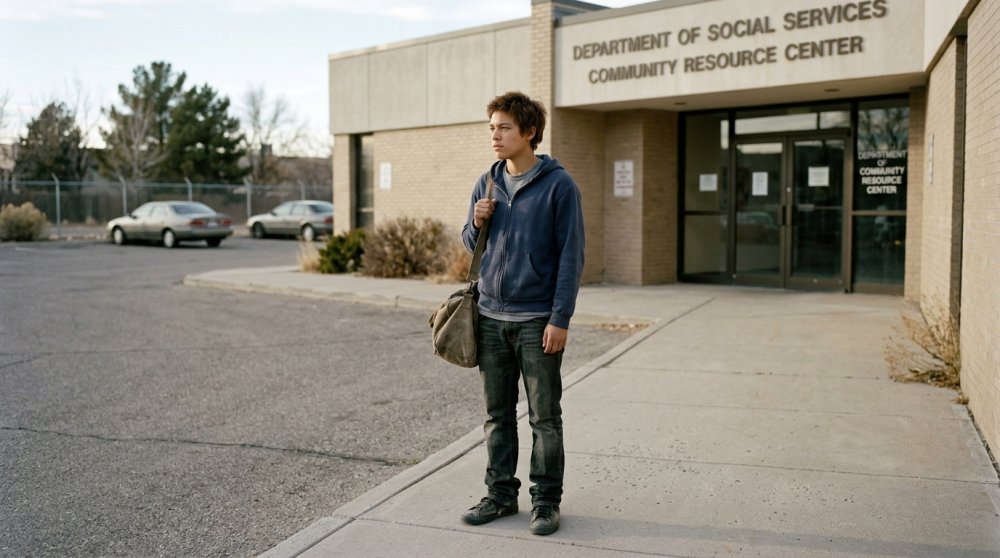
Every year, more than 20,000 young Americans reach the age when the foster care system stops caring. At 18, often alone and unprepared, these young men and women are suddenly cut off from the only support structure they’ve known. No family waiting. No safety net to catch them. And far too often, no one showing up to help them navigate adulthood.
For the American Church, this represents both a sobering failure and a profound opportunity. These aren’t statistics — they’re sons and daughters, created in God’s image, who desperately need the body of Christ to live out the Biblical call to care for the fatherless.
The transition out of foster care is perilous. Without family connections or financial resources, many of these young adults face homelessness, unemployment, and a future that seems impossibly dark. The challenges they encounter would overwhelm anyone, let alone teenagers who have already experienced trauma and instability.
But there is hope, and it comes in a surprisingly simple form: one caring adult who refuses to walk away. Research consistently shows that young people who have at least one committed mentor or supportive adult in their lives fare dramatically better than those who face the world alone.
This is where the Church should be stepping forward with conviction and compassion. Christian families and individuals across America are uniquely positioned to provide the long-term relationships these young people need. This isn’t just foster care — it’s spiritual family, extended beyond legal obligations and bureaucratic timelines.
The call to care for orphans didn’t come with an age limit. James 1:27 reminds believers that pure religion includes looking after orphans in their distress. When the government stops providing care at 18, the Church’s responsibility doesn’t end — it intensifies.
Many churches are already answering this call through mentorship programs, housing assistance, job training, and simply by opening their homes and hearts. But the need far exceeds the current response. Thousands of young people are still falling through the cracks because Christians haven’t fully recognized this mission field in their own communities.
The beauty of this ministry is that it doesn’t require specialized training or massive resources. It requires presence, consistency, and love — showing up for birthdays, helping with job applications, answering late-night calls, being the family that biology or circumstance didn’t provide.
For congregations serious about putting faith into action, supporting aged-out foster youth offers a practical way to live out the Gospel. It’s messy, challenging, and requires long-term commitment. But it’s also exactly what Jesus modeled: entering into broken situations and refusing to abandon the vulnerable.
American churches have a legacy of leading social reform and caring for society’s most vulnerable. From the abolition movement to crisis pregnancy centers, Christians have historically recognized that faith demands action. Supporting aged-out foster youth is the next frontier of this faithful witness.
The question facing every believer isn’t whether these young people need help — the data makes that clear. The question is whether we will be the ones who show up, who refuse to walk away, who become the family they never had.
This generation of foster youth didn’t choose their circumstances, but the Church can choose its response. Twenty thousand young people will age out this year. Will twenty thousand Christians step forward?
Let us know what you think, please share your thoughts in the comments below.


-

 Self-Reliance1 year ago
Trump’s Bold Move Uncovers Massive Social Security Fraud
-

 Faith1 year ago
New Clues Emerge in Noah’s Ark Mystery
-

 News2 years ago
Governor Walz’s Rhetoric Sparks National Controversy
-

 News1 year ago
Mel Gibson’s ‘The Passion of the Christ’ Sequel Title Announced
-

 Family1 year ago
Texas Lawmaker Targets Furries in Schools
-

 Freedom1 year ago
Maine Lawmaker Challenges Sports Fairness Controversy
-

 Family1 year ago
Canada’s Controversial Policy Sparks Ethical Debate
-
Faith10 months ago
Congress Hears Pleas for Nigerian Christians