
Faith
The Fatal Flaw Threatening America’s Conservative Movement

Faith Facts
- Conservative principles derive their moral authority from biblical foundations, not secular philosophy
- The pro-life movement’s power stems directly from the Christian belief that life is sacred because humans are created in God’s image
- A Christianity-free conservatism removes the transcendent moral framework necessary for preserving American freedoms and traditional values
America’s conservative movement faces an existential question: Can it survive without Christ at its center? According to thoughtful voices within the movement, the answer is a resounding no.
The argument is straightforward and compelling. Conservative values—the sanctity of life, the importance of family, personal responsibility, and limited government—are not free-floating ideas that exist in a vacuum. They are rooted in a Christian worldview that recognizes God as the ultimate authority and human beings as created in His image.
Consider the pro-life position, one of conservatism’s defining moral stands. What gives it power and coherence?
“Take that away, and you take away all the power behind the pro-life argument.”
Without the Christian understanding that every human life bears the image of God from conception, the pro-life position becomes just another opinion in the marketplace of ideas. It loses its transcendent grounding and becomes vulnerable to the shifting sands of cultural preference and utilitarian calculation.
The same principle applies across the conservative agenda. Traditional marriage is sacred because God ordained it. Religious liberty matters because our rights come from our Creator, not from government. Human dignity is inviolable because we are fearfully and wonderfully made.
Strip away the Christian foundation, and conservatism becomes merely a set of preferences—no more authoritative than any competing ideology. It becomes conservatism in name only, unable to answer the fundamental question: Why should we conserve these things?
Some have attempted to build a purely secular conservatism based on classical liberalism, natural law, or pragmatic considerations. But these frameworks, while valuable, lack the comprehensive worldview and moral urgency that Christianity provides. They cannot sustain a movement through cultural opposition and generational change.
History demonstrates this reality. The American founding was deeply influenced by Christian principles, even among founders who weren’t orthodox believers. The civil rights movement drew its moral force from biblical justice. Every major conservative achievement has been animated by people who believed they were advancing God’s purposes, not merely political preferences.
This doesn’t mean non-Christians cannot hold conservative positions or join conservative causes. Many do, and their contributions are welcome and valuable. But the movement itself requires a Christian center to maintain its coherence and power.
The implications are significant for how conservatives engage in public life. It’s not enough to win political battles or pass legislation. The deeper work involves cultural renewal—calling America back to the faith that made its freedoms possible.
A Christless conservatism might achieve temporary political victories, but it cannot preserve the civilization it claims to defend. Without the rock of Christian truth, even the best conservative ideas become sand, shifting with every cultural tide.
The path forward requires conservatives to embrace, not hide, the Christian roots of their convictions. It means articulating how biblical truth speaks to contemporary issues with clarity and compassion. It means recognizing that cultural transformation precedes political change.
America’s future depends not on a conservatism that awkwardly tiptoes around faith, but on one that boldly proclaims the lordship of Christ over every sphere of life—including politics, culture, and governance.
Let us know what you think, please share your thoughts in the comments below.

Faith Facts
- Research from the Institute for Family Studies shows couples with different last names divorce at a 50% higher rate.
- A shared family name reflects the biblical call for husband and wife to become one flesh in covenant marriage.
- Taking a husband’s last name serves as a visible sign of leaving, cleaving, and surrender within Christian marriage.
New research is shining a light on a simple yet profound tradition many Christian couples continue to embrace.
Couples who choose to keep separate last names after marriage face a divorce rate 50% higher than those who share one name, according to findings from the Institute for Family Studies.
“A shared name is an outward sign of the leaving, cleaving and covenantal surrender at the heart of biblical marriage,” the report notes.
This practice aligns with Scripture’s description of marriage as a lifelong union where two become one, both in spirit and in name.
Christian wives who adopt their husband’s surname often see it as an act of unity and humility that strengthens their household witness.
Let us know what you think, please share your thoughts in the comments below.
Faith Facts
- The Message Bible paraphrase author Eugene Peterson passed away this week in Christian history.
- The Edict of Nantes, which granted religious freedom to French Protestants, was revoked in the seventeenth century.
- Christian history continues to record both faithful perseverance and grave setbacks for believers.
Christian history is filled with moments that shaped the Church, from milestones and triumphs to tragedies and controversies, as well as the lasting impact of influential believers. These events remind believers of the enduring cost of standing for the faith once delivered to the saints.
Each week brings fresh reminders that the Church has weathered storms and celebrated victories for centuries. Remembering these milestones helps strengthen the resolve of Christians today to hold fast to biblical truth.
Let us know what you think, please share your thoughts in the comments below.
Faith Facts
- Tony Dungy has consistently spoken about his Christian faith throughout his NFL coaching career and broadcasting work.
- Dungy has been a vocal advocate for pro-life causes, aligning with traditional Christian teachings on the sanctity of life.
- His commitment to living out biblical principles publicly has been a hallmark of his career in professional sports.
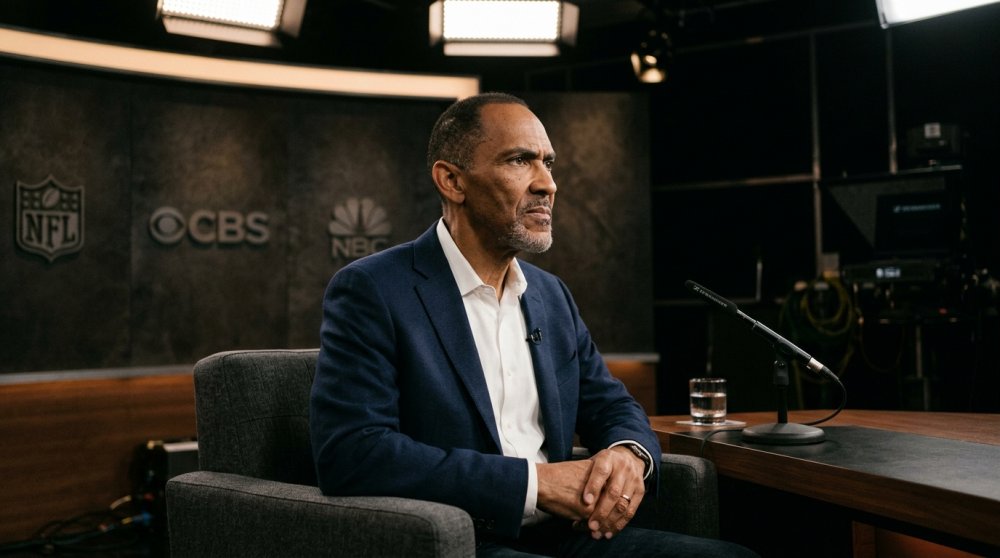
Former NFL coach and longtime sportscaster Tony Dungy suggested his pro-life activism and willingness to speak publicly about his Christian faith may have contributed to his departure from NBC Sports, though he said he cannot be certain.
Though Dungy did not accuse NBC of discrimination, his comments raised questions about how networks value employees who openly share their faith. He indicated that networks sometimes prefer commentators who keep their beliefs private.
“They don’t always appreciate you speaking about your faith,” Dungy said.
His departure comes as more Christian athletes and coaches face pressure to remain silent about their beliefs in mainstream media. Dungy’s experience highlights the tension between personal conviction and corporate expectations in today’s sports broadcasting landscape.
“It’s something that I’ve always tried to do,” he added, referring to his habit of sharing his faith when opportunities arise.
Let us know what you think, please share your thoughts in the comments below.


-

 Self-Reliance2 years ago
Trump’s Bold Move Uncovers Massive Social Security Fraud
-

 Faith2 years ago
New Clues Emerge in Noah’s Ark Mystery
-

 News2 years ago
Governor Walz’s Rhetoric Sparks National Controversy
-

 News2 years ago
Mel Gibson’s ‘The Passion of the Christ’ Sequel Title Announced
-

 Family2 years ago
Texas Lawmaker Targets Furries in Schools
-

 Freedom2 years ago
Maine Lawmaker Challenges Sports Fairness Controversy
-

 Family1 year ago
Canada’s Controversial Policy Sparks Ethical Debate
-
Faith11 months ago
Congress Hears Pleas for Nigerian Christians