
Faith
The Church’s Mission Under Fire From Within

Faith Facts
- A Christian leader with over 30 years of equipping believers warns of theological weaknesses in the Seven Mountain Mandate movement
- Critics argue the framework risks reducing the Church to just another cultural sector rather than the foundation of Christian influence
- The debate centers on whether believers should focus on institutional conquest or gospel transformation
A prominent voice in Christian worldview training is raising concerns about a popular movement that has captivated many conservative believers for years. The Seven Mountain Mandate, which calls Christians to claim influence over seven key cultural spheres, may contain a critical flaw that undermines the very mission it seeks to advance.
For over three decades, Christian leaders have worked to equip believers with a biblical worldview that transforms culture from the inside out. Yet even among those committed to cultural engagement, questions are emerging about whether certain strategies align with Scripture’s vision for the Church’s role in society.
The Seven Mountain Mandate identifies seven spheres of influence: religion, family, education, government, media, arts and entertainment, and business. Proponents believe Christians must “take back” these mountains from secular control. The framework has gained tremendous popularity in conservative Christian circles, particularly among those concerned about America’s spiritual direction.
However, critics point to a troubling element in the model itself. By placing “religion” as merely one mountain among seven, the framework may inadvertently diminish the Church’s unique calling. Instead of recognizing the body of Christ as the foundation and source of godly influence across all sectors, it risks reducing the Church to just another cultural institution competing for dominance.
This theological concern strikes at the heart of how Christians understand their mission in the world. Scripture presents the Church not as one sphere among many, but as the bride of Christ, the pillar and foundation of truth, and the primary vehicle through which God’s kingdom advances on earth. When believers are equipped and empowered through the Church, they naturally bring biblical values into every area of life—not through institutional conquest, but through personal transformation and faithful witness.
The alternative vision emphasizes that cultural change flows from changed hearts, not from Christians merely occupying positions of power. History demonstrates that the most profound social transformations have come when believers, rooted in vibrant church communities, lived out their faith authentically in their callings—whether in business, education, government, or the arts.
This doesn’t mean Christians should withdraw from public life or avoid positions of influence. Rather, it suggests that the Church itself must be healthy, biblically grounded, and spiritually vibrant before sustainable cultural change can occur. A weak church cannot produce strong cultural influencers, regardless of how many “mountains” believers may scale.
The concern also touches on the danger of conflating Christian influence with political or institutional power. Throughout church history, believers have sometimes confused temporal authority with spiritual authority, leading to compromises that damaged both the gospel witness and society at large. The Seven Mountain framework, critics worry, may inadvertently encourage this confusion by framing Christian faithfulness primarily in terms of cultural dominance rather than sacrificial service and truth-telling.
Furthermore, the mandate’s emphasis on “taking back” territory assumes that Christians once controlled these spheres and must now reclaim them. This narrative, while emotionally compelling, may not accurately reflect either American history or biblical teaching about the Church’s relationship to the world. Scripture consistently presents believers as exiles and pilgrims whose citizenship is in heaven, called to faithful presence rather than cultural conquest.
None of this diminishes the urgent need for Christians to engage culture with biblical truth. America desperately needs believers who think clearly, speak courageously, and serve sacrificially in every sector of society. The question is not whether Christians should seek to influence culture, but how that influence should be understood and pursued.
The most effective cultural engagement begins with the Church fulfilling its calling to make disciples, preach the gospel, and build communities that reflect God’s kingdom values. When local congregations are spiritually healthy and doctrinally sound, they naturally produce believers who bring salt and light to their spheres of influence—not because they’re trying to conquer cultural mountains, but because they’re living out their faith authentically.
As this debate continues within conservative Christian circles, the stakes extend beyond mere terminology or strategic frameworks. How we understand the Church’s mission shapes how we invest our time, resources, and spiritual energy. A framework that inadvertently marginalizes the Church’s central role risks leading believers down a path that produces cultural activity without spiritual fruit.
The call for Christians to examine popular movements through the lens of Scripture remains as vital as ever. While enthusiasm for cultural engagement is commendable, wisdom requires ensuring that our strategies align with biblical teaching about the Church’s nature and mission. Only then can believers pursue cultural influence in ways that truly honor God and advance His kingdom.
Let us know what you think, please share your thoughts in the comments below.


Faith Facts
- Danica McKellar credits Candace Cameron Bure with leading her to Christ four years ago.
- McKellar now views her acting career through a faith-centered lens.
- She seeks roles that reflect her Christian values and convictions.
Actress Danica McKellar has opened up about the moment she found faith in Christ. She credits longtime friend and fellow former child star Candace Cameron Bure for guiding her on that journey four years ago.
McKellar shared that her new relationship with Jesus has transformed the way she sees her career and the projects she now chooses to pursue. Instead of simply chasing roles for fame or success, she is now more intentional about the stories she tells on screen.
“It’s been Jesus this whole time”
McKellar’s transformation reflects a deeper commitment to living out her faith both on and off the screen. She has expressed gratitude for the spiritual mentorship she received from Bure, whose own public witness as a believer has long been a steady presence in Hollywood.
The actress says her faith has redefined her purpose, helping her to focus on projects that align with her Christian convictions rather than simply accepting work based on popularity or financial gain.
Let us know what you think, please share your thoughts in the comments below.
Faith Facts
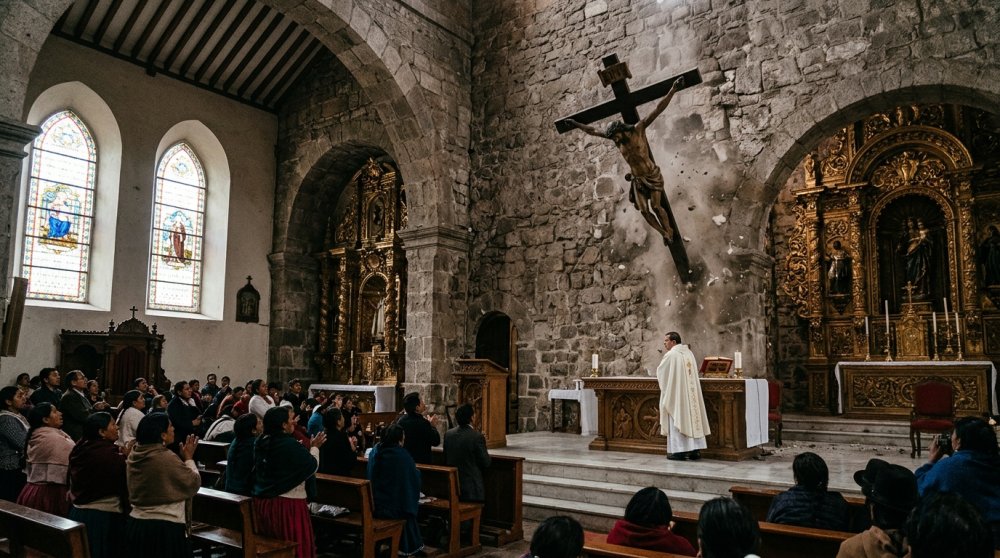
- A priest in Ecuador died during a church service when a large crucifix fell from the wall.
- Kenny Kinglesmith addresses unbelieving friends in an open letter about hope in Jesus amid suffering.
- Christian believers continue to place their trust in Christ even when tragedy strikes inside the sanctuary.
The sudden death of a priest while leading worship has shaken believers across Ecuador. Questions about suffering and divine purpose are rising again.
Kenny Kinglesmith has written an open letter to friends who do not believe. He explains why his hope in Jesus remains firm despite the pain.
“In the face of inexplicable suffering, I still choose to place my hope in Jesus.”
Many Christians are wrestling with how a loving God could allow such a loss inside His house. The event has prompted renewed reflection on the mystery of suffering.
Kinglesmith does not offer easy answers. Instead he points to the cross itself, where Christ endured the ultimate injustice yet brought redemption.
“I still choose to place my hope in Jesus.”
The tragedy has become a moment for believers to examine their own trust in God. It is also an opportunity to demonstrate compassion to those who question.
Kinglesmith urges Christians to live out their faith openly. He believes the witness of steadfast hope can speak louder than arguments.
“In the face of inexplicable suffering, I still choose to place my hope in Jesus.”
Let us know what you think, please share your thoughts in the comments below.
Faith Facts
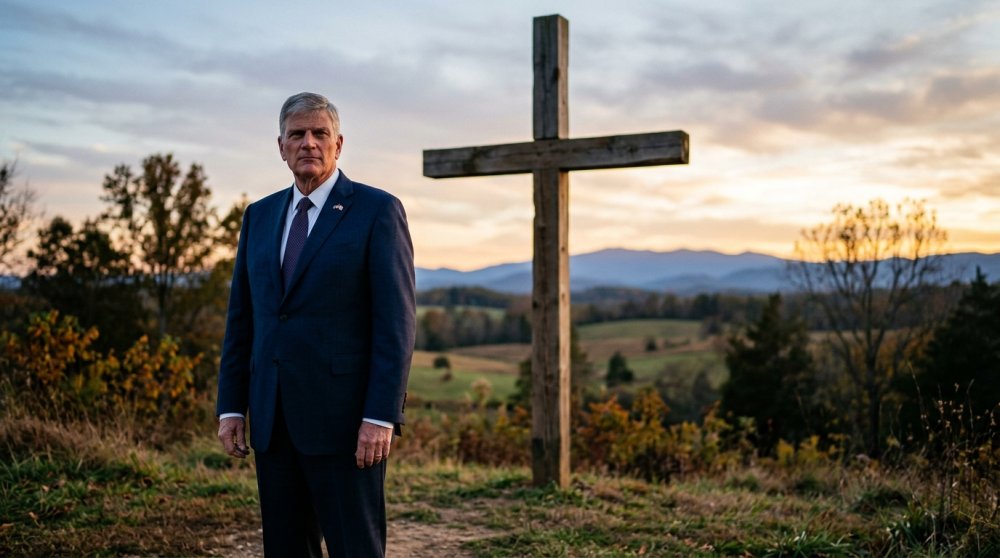
- Franklin Graham was raised in the shadow of his father Billy Graham, one of the most influential Christian leaders of the twentieth century.
- He has publicly stated that he never tried to become Billy Graham and instead sought to follow the distinct path God set before him.
- The younger Graham has carried the Gospel message across the globe through Samaritan’s Purse and the Billy Graham Evangelistic Association while maintaining a clear Christian conservative witness.
Franklin Graham recently opened up about the challenges of growing up in the household of the twentieth century’s most renowned evangelist. He explained that being the son of Billy Graham carried both a tremendous blessing and a heavy weight of expectations.
Despite the public scrutiny and inevitable comparisons, Graham made a deliberate choice early in life. He decided he would not attempt to replicate his father’s ministry or persona in any way.
“I never try to be Billy Graham,”
he said. This statement reflects the conviction that God equips each believer for a unique assignment rather than a copy of someone else’s.
Graham’s own ministry has grown into a powerful force for the Gospel through both the Billy Graham Evangelistic Association and the international relief work of Samaritan’s Purse. His approach has been marked by direct, unapologetic proclamation of biblical truth on issues ranging from religious liberty to the sanctity of life and traditional marriage.
“I never try to be Billy Graham,”
he reiterated, underscoring that his calling has always been to serve the Lord faithfully in the time and culture where God has placed him.
Today Franklin Graham continues to lead large-scale evangelistic events across the United States and around the world. He remains a steady voice for Christian values at a time when many pulpits have grown silent on cultural matters.
Let us know what you think, please share your thoughts in the comments below.


-

 Self-Reliance2 years ago
Trump’s Bold Move Uncovers Massive Social Security Fraud
-

 Faith2 years ago
New Clues Emerge in Noah’s Ark Mystery
-

 News2 years ago
Governor Walz’s Rhetoric Sparks National Controversy
-

 News2 years ago
Mel Gibson’s ‘The Passion of the Christ’ Sequel Title Announced
-

 Family2 years ago
Texas Lawmaker Targets Furries in Schools
-

 Freedom2 years ago
Maine Lawmaker Challenges Sports Fairness Controversy
-

 Family1 year ago
Canada’s Controversial Policy Sparks Ethical Debate
-
Faith11 months ago
Congress Hears Pleas for Nigerian Christians