
News
Texas University Reverses Course on Campus Event for Controversial Islamic Group

Faith Facts
- Southern Methodist University canceled a scheduled event for CAIR after the Islamic organization was designated a terrorist group by the state of Texas.
- SMU was recently ranked as the second-best Christian college in America despite its secular academic approach.
- The decision reflects ongoing concerns about CAIR’s ties to extremist organizations and anti-American activities.
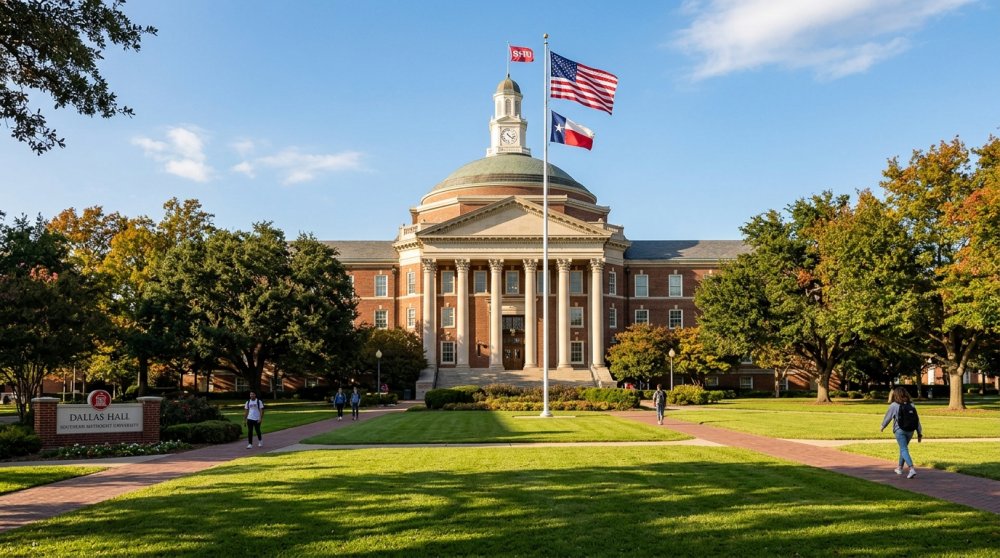
Southern Methodist University has made the decision to cancel a planned campus event organized by the Council on American-Islamic Relations, following Texas’s official designation of the group as a terrorist organization. The announcement has sparked conversations about religious liberty, national security, and the role of faith-based institutions in protecting students from extremist influences.
SMU, which maintains historical ties to the United Methodist Church and was recently recognized as one of the top Christian colleges in the nation, initially agreed to host what CAIR described as an “unapologetically Muslim” event. However, the university reversed its decision after state officials raised serious concerns about the organization’s connections and activities.
The state of Texas has taken a firm stance against CAIR, identifying the group as having ties to organizations that support terrorism and anti-American ideologies. This designation reflects growing scrutiny of CAIR’s leadership, funding sources, and public statements that critics argue undermine American values and national security interests.
CAIR has long positioned itself as a civil rights advocacy group for Muslim Americans, but law enforcement and national security experts have repeatedly questioned the organization’s true intentions. Federal investigations have revealed concerning connections between CAIR officials and groups linked to terrorist financing and radical Islamic ideology.
The university’s decision to cancel the event demonstrates a commitment to student safety and responsible stewardship of campus resources. Christian institutions, even those with historical rather than strictly evangelical foundations, have a duty to protect their communities from organizations that may promote ideologies contrary to American constitutional principles and Judeo-Christian values.
Parents and alumni of SMU have expressed relief at the university’s decision, noting that hosting such an event would have been inconsistent with the institution’s heritage and mission. Many argued that religious freedom does not require providing a platform for organizations with documented ties to extremism.
Critics of CAIR point to numerous instances where the organization has defended individuals accused of terrorism, opposed law enforcement counterterrorism efforts, and promoted narratives that paint America as inherently hostile to Muslims. These positions stand in stark contrast to the experiences of millions of Muslim Americans who peacefully practice their faith while embracing American freedoms and values.
The controversy highlights the ongoing challenge universities face in balancing free expression with responsible oversight of campus activities. While academic institutions should encourage diverse perspectives and interfaith dialogue, they also bear responsibility for vetting organizations that seek to use their facilities and influence their students.
SMU’s decision comes at a time when Americans are increasingly concerned about the influence of radical ideologies on college campuses. From antisemitic demonstrations to anti-American rhetoric, universities have become battlegrounds for competing worldviews, making administrative vigilance more important than ever.
For Christian families considering higher education options, this incident serves as a reminder to carefully evaluate not just academic rankings but also how institutions handle controversial speakers and organizations. A university’s willingness to prioritize student safety and American values over political correctness speaks volumes about its true character and mission.
The cancellation also underscores the importance of state-level leadership in protecting citizens from organizations that may pose security risks. Texas officials deserve recognition for their proactive approach in designating CAIR as a terrorist organization and providing clear guidance to institutions within the state.
As the national conversation about campus safety and extremism continues, universities across the country would be wise to follow SMU’s example. Protecting students from potentially dangerous influences is not an infringement on religious liberty—it is a fundamental responsibility of educational institutions that serve in loco parentis.
Let us know what you think, please share your thoughts in the comments below.

Faith Facts
- The pastor preached a sermon that never addressed abortion.
- He now faces appeal after being convicted for breaching an abortion buffer zone.
- The case raises questions about religious liberty and free speech protections.
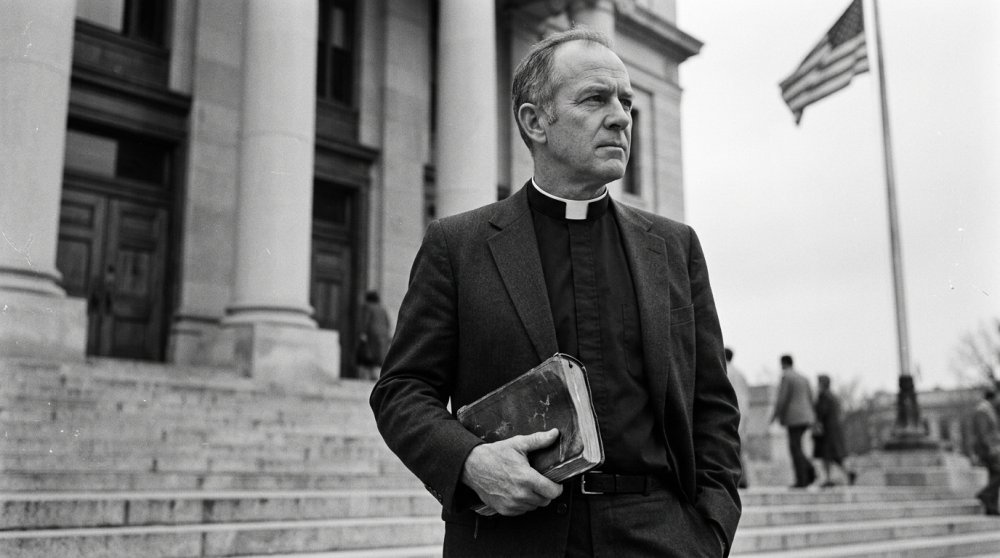
The pastor delivered a sermon that made no mention of abortion.
Despite the absence of any abortion-related content, authorities found him guilty of violating a newly enforced buffer zone law around the clinic.
The ruling has sparked concern among faith communities who fear the law could be applied broadly to silence biblical teaching.
“The pastor delivered a sermon that made no mention of abortion.”
Supporters argue the conviction sets a troubling precedent that could limit pastors from preaching the full counsel of Scripture near certain locations.
The appeal now seeks to clarify the boundaries between public safety regulations and the constitutional right to freely exercise religion.
Let us know what you think, please share your thoughts in the comments below.
Faith Facts
- A Christian pastor and a historian debated whether Islamic theology and politics can coexist with Western freedoms.
- The discussion centered on relationships between Christians and Muslims in America and Europe.
- Both speakers addressed the tension between Islamic doctrine and traditional Western values.
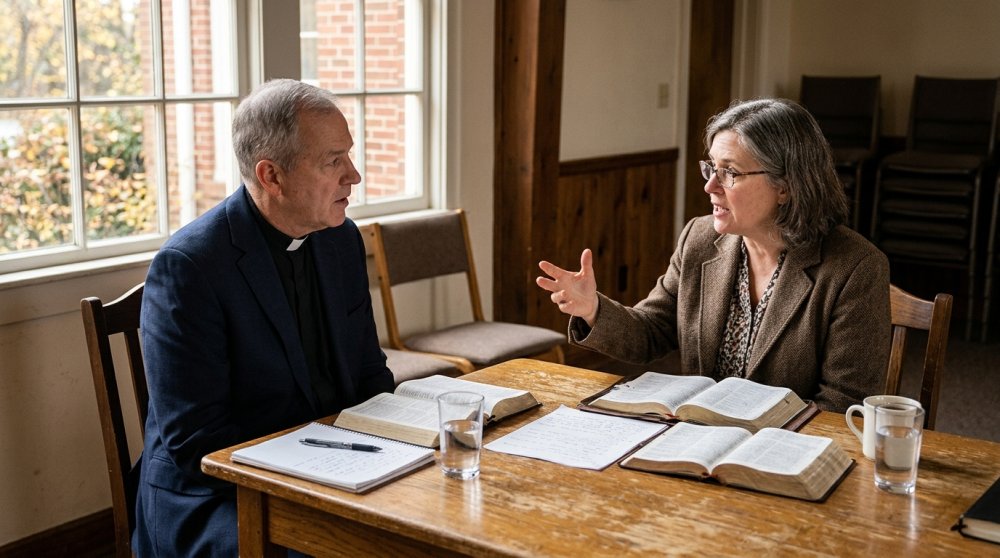
A Christian pastor who has spent years building relationships with Muslims and a historian who has studied Islamic history and doctrine debated whether Islam’s theological and political teachings make it possible for the religion to coexist in Western society.
The conversation examined the core claims of Islamic doctrine and how those claims intersect with the freedoms and principles that have long defined Western nations.
Participants considered whether Islamic theology can accommodate the separation of mosque and state that has protected religious liberty in America for generations.
“We must understand what Islam teaches about the relationship between religion and government before we can have an honest conversation about integration,”
The pastor emphasized the importance of personal relationships with Muslim neighbors while still maintaining a clear witness to the gospel of Jesus Christ.
“Love for our neighbors does not require us to ignore fundamental differences in belief about who Jesus is,”
The historian drew from centuries of Islamic expansion and governance to illustrate patterns that have repeated across different cultures and eras.
Both speakers agreed that truthfulness about doctrinal differences is essential for genuine dialogue rather than superficial agreement that avoids hard questions.
Let us know what you think, please share your thoughts in the comments below.

Faith Facts
- Proverbs 2:6 teaches that the Lord gives wisdom and understanding.
- Colossians 3:23 instructs believers to work at whatever they do as unto the Lord.
- Ecclesiastes 7:12 reminds that wisdom is a defense just as money is, but the excellence of knowledge is that wisdom gives life.
The share of American adults who say a college education is very important has reached its lowest level in nearly five decades, according to new polling data. The trend is especially pronounced among men, Republicans, white adults, and those who did not attend college themselves.
Parents who once viewed a four-year degree as the sure path to prosperity now weigh the rising cost of tuition against uncertain job prospects. Many are choosing apprenticeships, trade schools, and military service as equally honorable callings.
Christian families have long stressed that education must be grounded in biblical truth and practical skill rather than prestige alone. The drop in enthusiasm for college reflects a broader desire to protect children from ideological pressures on many campuses.
“The Lord gives wisdom; from his mouth come knowledge and understanding.”
Conservative leaders argue that workforce development and character formation matter more than accumulating debt for degrees that may never be used. They point to strong demand in skilled trades and technical fields where earnings often exceed those of recent graduates burdened by student loans.
Churches across the country are expanding vocational ministries that pair young believers with mentors in construction, healthcare, and technology. These programs combine practical training with discipleship and prayer.
“Whatever you do, work at it with all your heart, as working for the Lord.”
Let us know what you think, please share your thoughts in the comments below.


-

 Self-Reliance2 years ago
Trump’s Bold Move Uncovers Massive Social Security Fraud
-

 Faith1 year ago
New Clues Emerge in Noah’s Ark Mystery
-

 News2 years ago
Governor Walz’s Rhetoric Sparks National Controversy
-

 News2 years ago
Mel Gibson’s ‘The Passion of the Christ’ Sequel Title Announced
-

 Family2 years ago
Texas Lawmaker Targets Furries in Schools
-

 Freedom2 years ago
Maine Lawmaker Challenges Sports Fairness Controversy
-

 Family1 year ago
Canada’s Controversial Policy Sparks Ethical Debate
-
Faith11 months ago
Congress Hears Pleas for Nigerian Christians