Faith
Texas Pastor Sees Evangelical Unity in High-Stakes Senate Battle
Faith Facts
- Pastor Robert Jeffress says evangelical voters will unite behind the Republican Senate nominee
- The primary runoff between two Republicans is drawing national attention ahead of Tuesday’s vote
- Democratic nominee James Talarico faces strong evangelical opposition regardless of GOP outcome
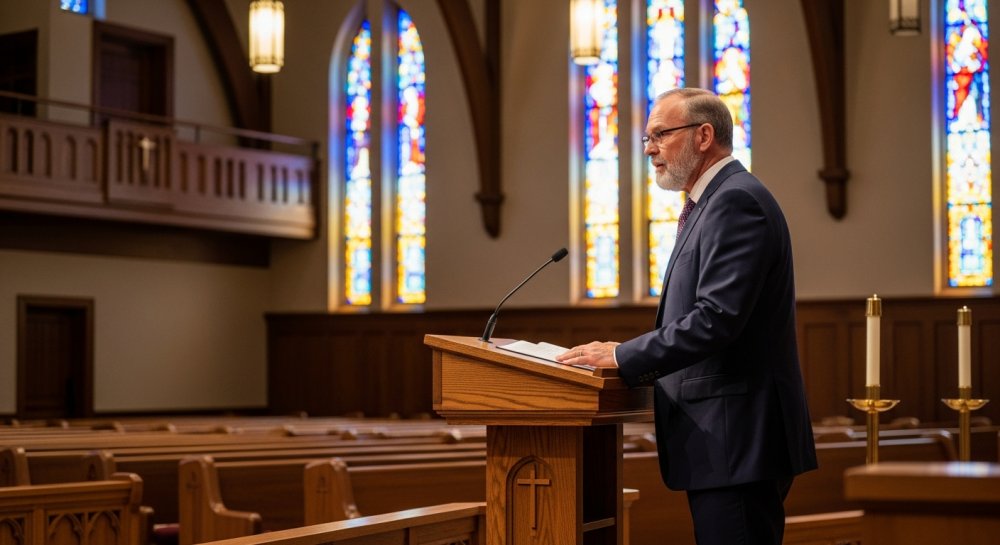
A prominent Texas pastor says Christian conservatives across the Lone Star State are preparing to unite behind the Republican nominee in what could become one of the nation’s most closely watched Senate races. Pastor Robert Jeffress, who leads First Baptist Church of Dallas, says evangelical voters will rally together following next Tuesday’s GOP primary runoff.
The runoff has drawn significant attention as Republicans work to maintain their Senate majority. Jeffress indicated that while he is not endorsing either candidate in the Republican contest, the faith community remains focused on the larger goal of defeating the Democratic nominee in November.
“Evangelicals are unified” in their opposition to Democratic candidate James Talarico, Jeffress emphasized, signaling that the Christian conservative vote will consolidate after the primary concludes.
The pastor’s comments come as new polling suggests the general election could be more competitive than initially expected. Texas has long been considered Republican territory, but shifting demographics and increased Democratic investment have put the state on national radar.
Talarico, the Democratic nominee, has attempted to appeal to voters of faith during his campaign. However, Jeffress and other evangelical leaders have expressed concerns about positions they believe conflict with traditional Christian values on issues including religious liberty, the sanctity of life, and parental rights in education.
The Republican primary runoff represents a choice between two conservative candidates who have both worked to earn the support of the state’s influential evangelical voting bloc. Texas evangelical voters have historically played a decisive role in statewide elections, providing crucial margins of victory for Republican candidates.
Jeffress leads one of the largest and most influential congregations in the Southwest. His church has long been a significant voice in conservative Christian circles, and his observations about voter sentiment carry weight among faith leaders across Texas.
The winner of Tuesday’s runoff will face Talarico in what both parties now acknowledge could be a competitive race. Republicans are working to ensure strong turnout among their base voters, while Democrats see an opportunity to make gains in a state that has been out of reach for their party in recent election cycles.
Conservative Christians remain a core constituency for Republicans in Texas, representing a voting bloc that values candidates who support religious freedom, traditional marriage, pro-life policies, and parental authority in children’s education. Both Republican candidates in the runoff have emphasized their commitment to these principles.
As the primary election approaches, Republican leaders are calling for party unity following what has been a hard-fought contest. The focus will quickly shift to the general election, where maintaining evangelical enthusiasm and turnout will be critical to Republican success.
Let us know what you think, please share your thoughts in the comments below.
Faith
American Idol Winner Chose Worship Over Pop Stardom
Faith Facts
- Hannah Harper won American Idol after performing Christian worship songs throughout the competition, including in the finale
- All three finalists on the show’s latest season are professing Christians who performed worship music on national television
- Five Christian contestants competed in this season, making it one of the most faith-filled lineups in the show’s history
In an extraordinary display of faith on one of America’s biggest stages, Hannah Harper has won the latest season of American Idol — and she did it while openly proclaiming Jesus Christ through worship music. Her victory represents more than just a singing competition win; it’s a testament to the power of living out one’s faith unapologetically in the public square.
What makes this season particularly remarkable is that it wasn’t just Harper who stood firm in her Christian convictions. All three finalists identified as Christians and chose to perform worship songs during the competition’s most critical moments, when millions of Americans were watching.
Five Christian contestants competed overall this season, creating what many are calling one of the most faith-forward lineups in American Idol’s long history. These young believers didn’t hide their light under a bushel — they let it shine before men, glorifying their Father in heaven just as Scripture commands.
The boldness demonstrated by these contestants raises important questions for believers everywhere, particularly those in nations where public expressions of faith have become increasingly rare or culturally discouraged. While American culture certainly has its secular pressures, there remains a space for Christians to openly share their faith on mainstream platforms.
British writer Sophie Sanders reflects on this phenomenon, wondering whether such open declarations of Christian faith could ever occur on British television. The contrast is striking: while American contestants feel emboldened to sing worship songs on primetime television, many British Christians struggle to mention their faith even in casual conversation.
This cultural difference didn’t happen by accident. It reflects decades of Christians either retreating from public life or apologizing for their beliefs rather than confidently proclaiming them. The American Idol contestants demonstrate an alternative approach: speak truth with grace, but speak it nonetheless.
Harper’s choice to perform worship music wasn’t a calculated strategy to appeal to a niche audience. She sang from her heart about the One who saved her, and millions of Americans responded positively. Her authenticity resonated because people recognize genuine faith when they see it.
The success of these Christian contestants offers several lessons for believers. First, don’t underestimate how hungry people are for authentic expressions of faith. Second, excellence matters — these contestants won not just because of their message, but because they delivered it with exceptional talent and professionalism. Third, you don’t have to compromise your convictions to succeed in secular spaces.
For too long, many Christians have operated under the assumption that we must choose between cultural relevance and biblical faithfulness. These American Idol contestants prove that’s a false dichotomy. They remained unapologetically Christian while competing at the highest levels of popular entertainment.
This moment also highlights the importance of supporting Christians who step into secular spaces. These contestants didn’t just encourage fellow believers; they introduced the Gospel to countless viewers who might never darken a church door. That’s the kind of evangelism Jesus modeled — going where the people are rather than waiting for them to come to us.
The question Sanders poses about British television is worth considering: What would it take for Christian contestants on shows like The Voice UK or Britain’s Got Talent to feel comfortable openly worshiping Jesus on stage? The answer likely involves both cultural change and individual courage.
Christians in every nation can learn from Harper’s boldness. We live in an increasingly secular age where many treat religious faith as something private, meant to be kept behind closed doors. But Christianity has never been a private faith — it’s a public proclamation that Jesus Christ is Lord, and that truth demands to be shared.
The Great Commission didn’t come with geographical or cultural limitations. Jesus commanded His followers to make disciples of all nations, teaching them to observe everything He commanded. That includes sharing the Gospel in unexpected places, even on reality television shows.
Harper’s victory demonstrates that faithfulness and excellence aren’t mutually exclusive — they’re complementary. When Christians pursue excellence in their fields while maintaining their convictions, they become powerful witnesses for Christ. They show the watching world that following Jesus doesn’t diminish us; it completes us.
As believers consider how to engage their own cultures, the American Idol example provides inspiration. We don’t need to be confrontational or judgmental, but neither should we hide our faith. There’s a confidence that comes from knowing the truth, and that confidence naturally spills over into how we live and speak.
The impact of these contestants extends beyond their individual careers. They’ve created space for future Christians to compete openly on such platforms. They’ve shown producers and audiences alike that faith-filled content can succeed commercially and artistically. They’ve proven that America still has room for unashamed Christians in the public square.
For parents raising children in an increasingly secular world, these contestants model what it looks like to be in the world without being of it. They competed fiercely, showed grace to opponents, performed with excellence, and never compromised their core beliefs. That’s exactly the kind of witness this generation needs to see.
Harper’s story should inspire Christians everywhere to share their faith more openly. Whether you’re in a workplace, a classroom, a neighborhood, or yes, even on a television stage, there are opportunities every day to let people know what Jesus has done in your life. The question is whether we’ll seize those moments or let them pass in silence.
American culture may be far from perfect, but moments like this remind us why religious freedom matters. When Christians have the liberty to speak openly about their faith, beautiful things happen. Lives are changed, hope is spread, and the Kingdom of God advances in unexpected ways.
Let us know what you think, please share your thoughts in the comments below.

Faith
Reality TV Crisis Exposes How Far We’ve Strayed From Biblical Marriage
Faith Facts
- A BBC investigation revealed allegations of rape involving two women during filming of the reality show Married at First Sight: UK
- The show’s premise involves strangers marrying at first sight, fundamentally departing from biblical principles of courtship and covenant marriage
- Christian leaders point to society’s abandonment of God’s design for marriage as creating environments where exploitation and harm flourish
A shocking BBC investigation has brought to light disturbing allegations that two women were raped during the filming of the reality television show Married at First Sight: UK. The revelations have sparked urgent conversations about the ethics of reality television and, more fundamentally, about how far modern society has drifted from God’s divine plan for marriage and relationships.
The show’s premise—pairing complete strangers in marriage based on algorithms and the advice of supposed relationship experts—stands in stark contrast to the biblical model of marriage as a sacred covenant entered into with careful discernment, prayer, and commitment. This is not merely entertainment gone wrong; it is a symptom of a culture that has discarded timeless wisdom in favor of manufactured spectacle.
When marriage is reduced to a social experiment for ratings and advertising revenue, we should not be surprised when vulnerable people are harmed. Scripture teaches us that marriage is a holy institution designed by God to reflect Christ’s relationship with the church—a union built on sacrificial love, mutual respect, and covenant faithfulness.
The allegations raise serious questions not just about this particular show’s production practices, but about the entire culture that treats sacred institutions as entertainment fodder. Reality television has normalized casual approaches to commitment, intimacy, and marriage that would have been unthinkable just a generation ago.
Christian voices have long warned about the consequences of severing sexuality and marriage from their divine purpose. When intimate relationships are divorced from the context of committed, God-centered marriage, the vulnerable—particularly women—often bear the heaviest cost.
The entertainment industry’s commodification of relationships reflects broader societal attitudes that prioritize personal gratification and entertainment value over human dignity and the sacredness of covenant. These are not victimless trends; real people suffer real harm when foundational moral guardrails are removed.
Families and faith communities must respond by reaffirming biblical truth about marriage and relationships. Young people especially need to hear clearly that God’s design for marriage is not restrictive legalism, but a loving blueprint for human flourishing and protection.
The path forward requires more than better production oversight or revised consent forms. It demands a cultural return to recognizing marriage as what it truly is: a sacred covenant between one man and one woman, established before God, and entered into with the seriousness and preparation it deserves.
These heartbreaking allegations should serve as a wake-up call. When we abandon God’s design for human relationships, we open the door to exploitation, pain, and brokenness. The answer is not better reality TV, but a return to timeless biblical principles that honor human dignity and the sanctity of marriage.
Let us know what you think, please share your thoughts in the comments below.

Faith
New Pope Draws Sharp Lines Between Catholic and Protestant Traditions
Faith Facts
- Pope Leo XIV has maintained traditional Catholic distance from evangelical Protestant dialogue during his first year in office
- Italian evangelical theologian describes the pontiff as focused on global peace advocacy while managing internal Catholic tensions
- The Pope’s approach signals continued theological divisions between Catholic and Protestant Christian communities
An Italian evangelical pastor and theologian has published a comprehensive evaluation of Pope Leo XIV’s inaugural year as head of the Roman Catholic Church, painting a picture of a leader prioritizing global political engagement over Protestant-Catholic reconciliation.
The assessment reveals that evangelicals remain “distant and remote” to the new pontiff, indicating little change in the longstanding theological divide between Catholic tradition and Bible-centered Protestant faith. This distance underscores fundamental differences that have separated these Christian communities since the Reformation.
According to the evangelical theologian’s analysis, Pope Leo XIV has positioned himself as a prominent voice on international peace issues while simultaneously navigating complex internal challenges within the Catholic hierarchy. This dual focus appears to leave little room for bridge-building with evangelical Christians who emphasize salvation by grace through faith alone.
The continued separation highlights enduring theological differences between Catholic sacramental traditions and evangelical emphasis on Scripture as the sole authority for Christian faith and practice. Many American evangelicals view closer Catholic-Protestant relations with caution, preferring to maintain doctrinal clarity on core Reformation principles.
Pope Leo XIV’s first year suggests the Vatican will continue traditional Catholic approaches rather than pursuing the kind of theological dialogue some ecumenical advocates have promoted. For American evangelicals committed to biblical orthodoxy, this distance may actually preserve important distinctions about the nature of salvation and church authority.
The pontiff’s global activism on peace issues reflects the Catholic Church’s long-standing engagement in international diplomacy, an area where Protestant evangelicals often take more varied approaches based on national interest and biblical prophecy considerations.
Let us know what you think, please share your thoughts in the comments below.

-
Self-Reliance1 year agoTrump’s Bold Move Uncovers Massive Social Security Fraud
-

Faith1 year agoNew Clues Emerge in Noah’s Ark Mystery
-

News1 year agoGovernor Walz’s Rhetoric Sparks National Controversy
-

News1 year agoMel Gibson’s ‘The Passion of the Christ’ Sequel Title Announced
-

Family1 year agoTexas Lawmaker Targets Furries in Schools
-

Freedom1 year agoMaine Lawmaker Challenges Sports Fairness Controversy
-

Family12 months agoCanada’s Controversial Policy Sparks Ethical Debate
-
Faith6 months ago
Congress Hears Pleas for Nigerian Christians