
Faith
Texas Pastor Declares Spiritual Battle Over City’s Mayoral Race

Faith Facts
- Pastor Keith Craft of Elevate Life Church is supporting mayoral candidate Alan Vera in a Fort Worth runoff election
- Craft called Islam an “ideology from Hell” during a prayer service for the candidate
- The pastor characterized the election as a spiritual battle requiring Christian engagement
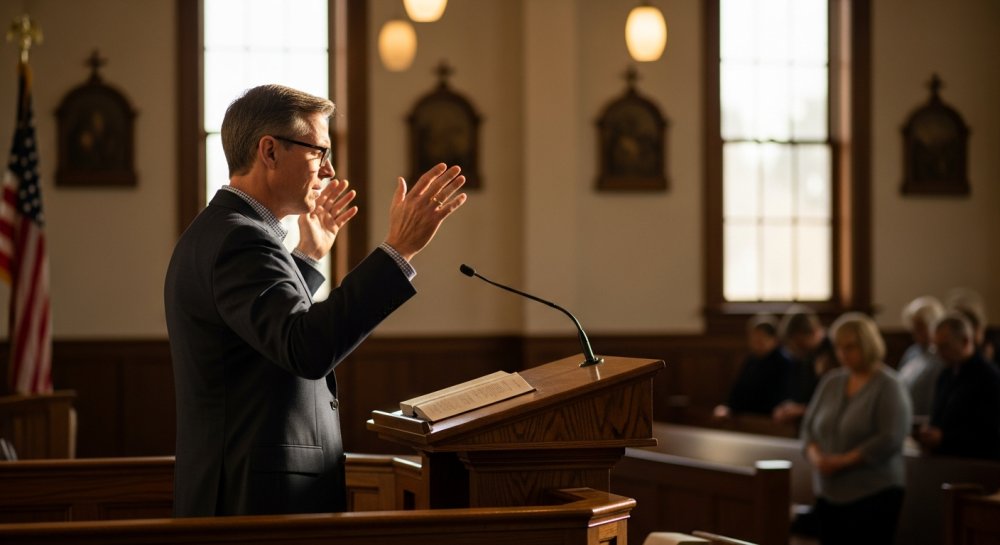
A prominent Texas pastor is calling on Christians to recognize the spiritual dimensions of local politics as a member of his congregation competes in a critical mayoral runoff. Pastor Keith Craft of Elevate Life Church in Frisco has publicly declared his support for Fort Worth mayoral candidate Alan Vera, characterizing the race as more than just a political contest.
During a prayer service, Craft made clear statements about competing worldviews and their impact on American cities. The pastor called Islam an “ideology from Hell” while praying for Vera’s campaign, emphasizing what he sees as fundamental differences between Christian values and other belief systems.
“This is a spiritual battle,” Craft told his congregation, framing the election in terms that resonate with many Christian conservatives who believe faith must inform civic engagement.
Vera, described as a longtime member of Craft’s church, is seeking to lead Fort Worth in what has become a closely watched race. The runoff election format means the outcome will be determined by which candidate can most effectively mobilize their base of support.
Pastor Craft’s public involvement reflects a growing trend among evangelical leaders who are encouraging their congregations to view local elections through a spiritual lens. Rather than separating faith from politics, these pastors argue that Christian principles should guide decisions at every level of government.
The pastor’s characterization of Islam has drawn attention, representing a theological position held by many evangelical Christians who view their faith as uniquely true. This perspective maintains that Christianity offers the only path to salvation and that other religious systems represent false teachings that lead people away from God.
For supporters, Craft’s willingness to speak plainly about religious differences demonstrates courage in an era when many religious leaders avoid such direct statements. They argue that pastors have a responsibility to help their congregations understand the implications of different worldviews on public policy and community life.
The Fort Worth mayoral race has become a focal point for discussions about the role of faith in local government. Vera’s campaign has emphasized traditional values and principles that align with his Christian background, appealing to voters who want leadership grounded in biblical morality.
Craft’s prayer for Vera included specific requests for divine intervention in the election outcome. The pastor encouraged his congregation to participate actively in the democratic process, viewing their votes as expressions of their faith commitments.
The concept of spiritual warfare in political contexts has deep roots in evangelical theology. Many Christians believe that earthly conflicts reflect larger battles between good and evil, light and darkness, requiring both prayer and action from believers.
This perspective holds that who leads cities and nations matters not just for practical reasons but for spiritual ones. Leaders who honor God and govern according to biblical principles create environments where faith can flourish, while those who reject Christian values may implement policies that undermine religious freedom and moral standards.
The pastor’s public stance demonstrates a conviction that churches should not remain neutral when elections involve candidates with vastly different worldviews and values. Rather than avoiding controversy, Craft has embraced his role as a spiritual leader who helps his congregation navigate political decisions through a biblical framework.
As the runoff election approaches, the involvement of faith leaders like Craft highlights the ongoing importance of religious conviction in American political life. For many Christian conservatives, the integration of faith and civic duty represents not a violation of separation between church and state but rather the fulfillment of their responsibility as citizens and believers.
Let us know what you think, please share your thoughts in the comments below.


Faith Facts
- Nearly 100 students at a Christian high school in Colorado have been baptized following athletic events this year.
- Five separate worship gatherings were organized after games, drawing students seeking faith commitments.
- The baptisms reflect a growing movement of young people responding to the Gospel in school settings.
High school athletic events have long been community gatherings, but one Colorado Christian school is seeing those moments turn into something far more eternal.
After five post-game worship services, nearly 100 students stepped forward for baptism, marking a powerful season of spiritual renewal.
School leaders say the response has been both unexpected and deeply encouraging, as students publicly declare their faith in Christ.
“It has been incredible to watch these young people take this step,” one administrator shared.
The gatherings combine prayer, worship, and testimony, creating a space where students feel welcomed to respond to the message of salvation.
Parents and faculty have noted a renewed sense of purpose and unity among the student body as a result.
“We are seeing the Holy Spirit move in powerful ways,” a staff member added.
Christian education advocates view the events as evidence that faith-based environments can shape hearts as well as minds.
The school plans to continue the post-game worship gatherings in the coming seasons, hoping to build on the momentum of spiritual awakening.
Let us know what you think, please share your thoughts in the comments below.

Faith Facts
- Matthew West releases new album titled ‘Jesus Is King’
- Album emphasizes surrender, vulnerability, and Scripture after nearly 30 years in Christian music
- West challenges the culture of self-empowerment with a message of Christ-centered living
Christian music artist Matthew West is calling believers to place Jesus above self in his latest album, ‘Jesus Is King.’ The project comes after nearly three decades of ministry and reflects a deeper commitment to Scripture and surrender.
West says the album confronts a culture obsessed with self-empowerment by lifting up the lordship of Christ instead. He believes true strength comes from laying down personal control and trusting God’s Word.
"The message of this album is that Jesus is King, and that changes everything."
Through honest lyrics and personal testimony, West hopes listeners will rediscover the power of vulnerability before God. He points to Scripture as the foundation for every song and every season of life.
"After nearly 30 years in Christian music, I am more convinced than ever that surrender is the doorway to real freedom."
Let us know what you think, please share your thoughts in the comments below.

Faith Facts
- Jordan Shipley called on the Lord during a life-threatening accident that left over 20% of his body with third-degree burns.
- More than eight months later, the former NFL wide receiver described his recovery as a miracle.
- Shipley publicly credits his faith in God for sustaining him through the ordeal.
Former NFL wide receiver Jordan Shipley is sharing a powerful testimony of survival and faith. More than eight months ago, Shipley endured a devastating accident on his Texas ranch that left him with third-degree burns across more than 20 percent of his body.
In the midst of the crisis, Shipley says he turned to God with desperate prayers for help. He now describes his recovery as nothing short of miraculous.
“I desperately called on the Lord for help during the life-threatening ordeal and experienced a ‘miracle.'”
Let us know what you think, please share your thoughts in the comments below.


-

 Self-Reliance1 year ago
Trump’s Bold Move Uncovers Massive Social Security Fraud
-

 Faith1 year ago
New Clues Emerge in Noah’s Ark Mystery
-

 News2 years ago
Governor Walz’s Rhetoric Sparks National Controversy
-

 News1 year ago
Mel Gibson’s ‘The Passion of the Christ’ Sequel Title Announced
-

 Family2 years ago
Texas Lawmaker Targets Furries in Schools
-

 Freedom2 years ago
Maine Lawmaker Challenges Sports Fairness Controversy
-

 Family1 year ago
Canada’s Controversial Policy Sparks Ethical Debate
-
Faith10 months ago
Congress Hears Pleas for Nigerian Christians