
News
Texas Governor-Elect Vows to Lift Terror Label on CAIR

Faith Facts
- Scripture teaches believers to guard against deceptive appearances and to test every spirit (1 John 4:1).
- Christians are called to stand for truth and justice without compromise, even when cultural pressures rise.
- The United States was founded on the conviction that religious freedom flourishes only when groups that advocate violence are clearly identified.
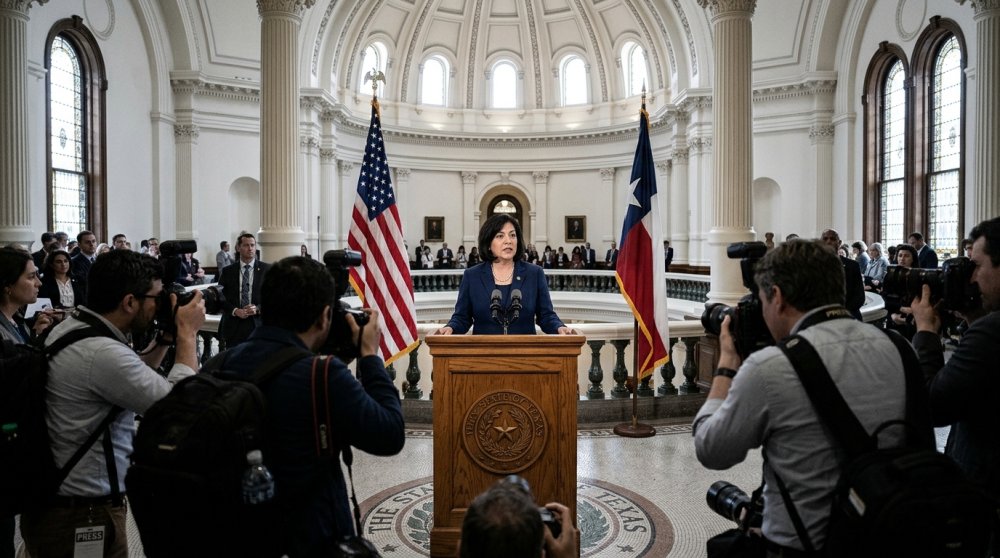
Texas Governor-elect Gina Hinojosa announced plans to revoke the terrorist designation that outgoing Republican Governor Greg Abbott placed on the Council on American-Islamic Relations.
Critics note that CAIR has long faced federal scrutiny and was named an unindicted co-conspirator in the Holy Land Foundation terrorism-financing trial.
Supporters of the designation argue it protects Texans by highlighting documented ties between CAIR leaders and organizations previously linked to Hamas.
“We will not allow fearmongering to define how Texas treats its Muslim community,” Hinojosa stated during a campaign appearance.
Opponents counter that rescinding the label sends the wrong message at a time when Hamas sympathizers openly march in major cities.
Faith leaders across the state are urging lawmakers to maintain clear boundaries between legitimate religious expression and groups that have repeatedly excused terrorism.
Let us know what you think, please share your thoughts in the comments below.

Faith Facts
- Wes Huff publicly confessed to plagiarizing other scholars and described his actions as sinful.
- The Canadian-born Christian apologist asked followers to pray for his family during this time of accountability.
- Huff issued his statement on a Thursday, acknowledging the gravity of his wrongdoing.
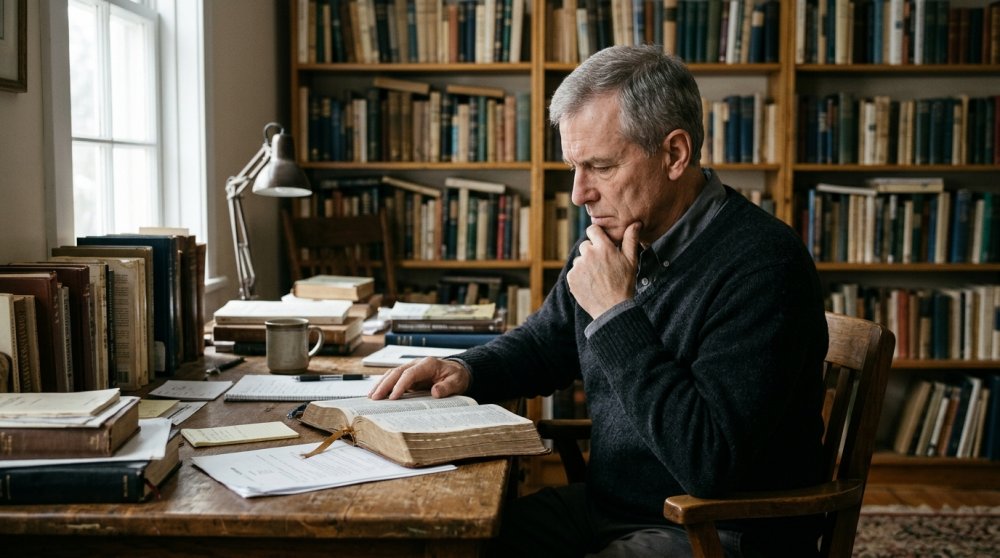
Canadian-born Christian apologist Wes Huff issued a public statement Thursday confessing that he sinned by extensively plagiarizing other scholars.
He asked his followers to pray for his family as he faces the consequences of his actions.
I have plagiarized the work of others. This was wrong, and it was sinful. Over the years, I allowed myself to develop justifications for my actions, minimizing their seriousness and, at times, even pushing them so far from my mind that I failed to reckon with what I had done. These patterns have affected far more of my work than I ever wanted to acknowledge. I do not want to simply move past this or treat it as something to be managed. I deeply regret my initial defensive and dishonest response to the accusations, and my involvement of others in that response. I want to face all of this truthfully, accept the consequences of my actions, and do what I can to make things right. My heart has always been to tell people about Jesus, to share the gospel, and to help others discover the beauty and richness of the Bible and its history. But having a good desire does not excuse the ways I have fallen short in pursuing it. I have clearly failed to uphold the standards of integrity that I have encouraged others to value. That failure is mine, and I take responsibility for it. One of the things that grieves me most is the reality that, through my own actions, I have undeniably brought reproach upon the very gospel I have spent so much of my life seeking to proclaim. The truth of the gospel is never served by dishonesty in the way we communicate it. I cannot justify my actions by appealing to my intentions. In my sin and failing, I have wronged those who have trusted me and sought to learn from me, and have wronged those whose work I treated as my own. To those individuals, and to everyone who has trusted me and my work, I am deeply sorry. I ask for your forgiveness, recognizing that forgiveness cannot be demanded and that rebuilding trust, if it is possible, will take time. As I step back from my ministry and church work, I am submitting myself fully to Apologetics Canada’s in-depth review, and to any academic disciplinary process I will be subject to. I will also be under the care and counsel of my church and elders. Above all, I want to walk through this with genuine repentance before God, and with humility toward those I have wronged. I know that repentance is more than words, and I recognize that it will need to be demonstrated through my actions going forward. My prayer is that God would use this painful season to confront what needs to change in me and to lead me toward genuine repentance. My soul feels grieved by this situation. My heart is heavy. And my guilt at times has felt like it will swallow me whole. I am grateful for those who can still find it in their hearts to pray for me and my family.
— Wes Huff (@WesleyLHuff) November 19, 2026
“It was sinful”
Let us know what you think, please share your thoughts in the comments below.
Faith Facts
- Survivors of child sexual abuse deserve to be heard and protected by the church
- One in four girls and one in six boys experience sexual abuse before age 18
- Christian communities must confront abuse with truth and compassion rooted in biblical justice
In 2020 the world was caught off guard by a pandemic that swept the globe. Before people really knew what it was, bodies were literally being staged in makeshift morgues, and family members were shunned from hospital rooms where their loved ones were dying.
A few years later the world moved on, but the effects of the pandemic can still be felt — even if we don’t really talk about them anymore.
Sexual abuse in the church is a much bigger pandemic, and it has been going on since the beginning of time. Like COVID-19, it gains national attention until it doesn’t.
In 2016 the nation was shocked when USA Gymnastics doctor Larry Nassar was publicly outed as a pedophile as hundreds of victims told their stories. In 2018 the Pennsylvania grand jury report on abuse in the Catholic Church dropped, sparking a worldwide exposure of systemic cover-ups by the Catholic Church.
In 2019 the Fort Worth Star-Telegram published a damning investigative report exposing widespread abuse and cover-ups in the independent fundamental Baptist churches. We were making ground. Then COVID swept the globe.
Sexual abuse in the church went back to its comfort zone of being a taboo subject.
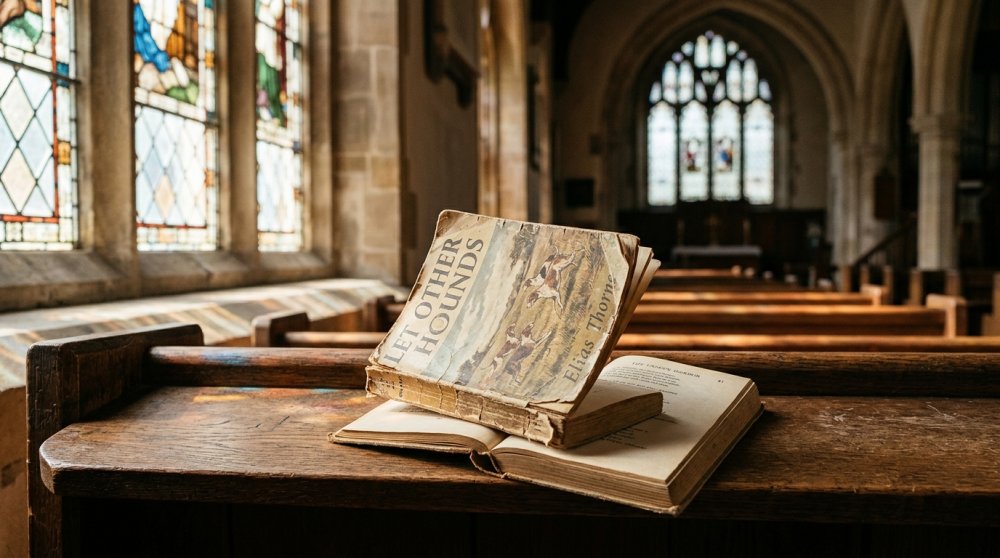
But in “Let Other Hounds: Poems Breaking Silence Fifty Years After Sexual Abuse at Church,” Scott LaMascus reminds us that there are a million reasons why survivors of abuse remain silent, especially males.
LaMascus is director of the McBride Center for Public Humanities at Oklahoma Christian University and serves as a board member of the Federation of State Humanities Councils.
But it is his experience as a child sexual abuse survivor that gives “Let Other Hounds” the attention it deserves. Long-listed for the 2024 Idaho Prize for Poetry, the collection of poems reminds us of the daily range of emotions that survivors go through.
Survivors are invisible. They are seen — often as prey. They are rejected. They experience anger, hopelessness … and hope.
LaMascus doesn’t mince words in describing his emotions. Abuse can’t be sanitized. It is horrific and affects an estimated 42 million living breathing souls in the United States alone.
On average, 1 in 4 girls and 1 in 6 boys will be sexually abused before their 18th birthday. I’ve known many friends who took their own lives because of the daily reminders and lack of justice they received. How can we sanitize our language to describe something so horrific?
“You don’t invite that kind of grisly pain in — sit down with it for tea and watermelon then go watch fireworks with the family. … It’s cheap to ask why this boy was chosen, shameful to ask why that boy didn’t tell anyone.”
LaMascus writes, “You don’t invite that kind of grisly pain in — sit down with it for tea and watermelon then go watch fireworks with the family. … It’s cheap to ask why this boy was chosen, shameful to ask why that boy didn’t tell anyone. Sometimes, the fireman’s waiting in the next room, other times it’s the arsonist. Ask them, with flares in hand and ready. This kind is a risky fuse — might bring light, maybe doom.”
We must keep the conversation alive and confront abuse with vigor. I recommend “Let Other Hounds” for anyone willing to sit at the feet of an abuse survivor and learn.
Let us know what you think, please share your thoughts in the comments below.
Faith Facts
- Scripture teaches that we are stewards of all God has entrusted to us, including our time, resources, and bodies.
- Proverbs warns that “wealth hastily gained will dwindle, but whoever gathers little by little will increase it.”
- Christian parents are called to guard their children’s hearts and minds against practices that can lead to addiction and spiritual harm.
More than half of Americans ages 13 to 27 reported gambling in the past year, and nearly 40% of those who gambled showed signs of life-altering repetitive gambling behavior known as problem gambling, according to new research.
The findings paint a sobering picture of a generation increasingly drawn into an activity once largely confined to adults in regulated venues. Researchers tracking the trend emphasize that the accessibility of online platforms and sports-betting apps has lowered the barrier to entry for minors and young adults alike.
“We are seeing earlier onset, higher frequency, and more severe consequences than in previous generations,”
one of the lead investigators stated.
The spiritual implications are equally troubling. Gambling often promises quick reward without labor, a notion contrary to the biblical ethic of honest work and contentment. Families report strained relationships, depleted savings, and young people dropping out of school or work as debts mount.
Churches and faith-based ministries across the country are responding by offering counseling programs and support groups tailored to youth struggling with addiction. Pastors stress the need for honest conversations at home about money, risk, and the fleeting nature of worldly gain.
“Train up a child in the way he should go; even when he is old he will not depart from it,”
reminds one concerned parent who now leads a local recovery ministry.
Advocates urge lawmakers to strengthen age-verification requirements and to limit aggressive advertising that targets younger audiences. They also call on tech companies to implement more robust safeguards against underage account creation.
Christian leaders remind believers that protecting the next generation requires both vigilance and compassion. By modeling wise stewardship and pointing youth toward lasting hope in Christ rather than fleeting chance, families can help steer young Americans away from the snares of problem gambling.
Let us know what you think, please share your thoughts in the comments below.


-

 Self-Reliance2 years ago
Trump’s Bold Move Uncovers Massive Social Security Fraud
-

 Faith2 years ago
New Clues Emerge in Noah’s Ark Mystery
-

 News2 years ago
Governor Walz’s Rhetoric Sparks National Controversy
-

 News2 years ago
Mel Gibson’s ‘The Passion of the Christ’ Sequel Title Announced
-

 Family2 years ago
Texas Lawmaker Targets Furries in Schools
-

 Freedom2 years ago
Maine Lawmaker Challenges Sports Fairness Controversy
-

 Family1 year ago
Canada’s Controversial Policy Sparks Ethical Debate
-
Faith12 months ago
Congress Hears Pleas for Nigerian Christians