
Faith
Tennessee Pastor Shares Heartbreaking Loss of Young Son


Faith Facts
- Greg Locke, pastor of Global Vision Bible Church in Lebanon, Tennessee, announced the death of his 20-year-old son, Evan Roberts Locke
- The young man died from a drug overdose, highlighting the ongoing epidemic affecting families across America
- Pastor Locke has been transparent about his family’s struggles, using this tragedy to minister to others facing similar battles
Greg Locke, the outspoken pastor of Global Vision Bible Church in Lebanon, Tennessee, shared devastating news with his congregation and followers on Friday. His son, Evan Roberts Locke, just 20 years old, has passed away from a drug overdose.
The tragedy serves as a sobering reminder that the drug crisis in America spares no family, regardless of faith, position, or social standing. Even pastors and ministry leaders face the heartbreak of addiction’s grip on their loved ones.
Pastor Locke has built a reputation for bold, uncompromising preaching and advocacy for Christian values in the public square. Now, he faces one of the most painful trials a parent can endure—the loss of a child.
The opioid and drug epidemic continues to devastate communities across our nation, claiming tens of thousands of lives each year. Christian families are not immune to this scourge, and many in the faith community are calling for both spiritual revival and practical solutions to address the crisis.
This heartbreaking loss reminds us of the importance of prayer, community support, and the desperate need for effective intervention in the lives of those struggling with addiction. It also underscores the reality that behind every statistic is a real family experiencing unimaginable grief.
As the body of Christ, we are called to bear one another’s burdens and support families walking through the valley of the shadow of death. The Locke family will undoubtedly need the prayers and support of believers across the country during this incredibly difficult time.
This tragedy also highlights the need for churches to address addiction openly and compassionately, providing resources and support for families battling this epidemic within their own homes.
Let us know what you think, please share your thoughts in the comments below.


Faith Facts
- Infant baptism is a sacred Christian tradition that welcomes children into the faith community as an act of divine grace.
- Scripture affirms that children are to be brought to Jesus, as He declared, “Let the little children come to me, and do not hinder them, for the kingdom of heaven belongs to such as these.”
- Baptism represents God’s free gift of grace, not a violation of rights, but a profound blessing passed from one generation to the next.
Former Irish President Mary McAleese recently made headlines by asserting that baptizing infants amounts to an infringement on their human rights. This claim strikes at the heart of centuries-old Christian practice and the biblical understanding of grace.
Christian theologian Gavin Ashenden has responded forcefully, calling the assertion “nonsense.” He argues that baptizing children into a loving church family is actually the greatest gift parents can give, reflecting God’s own free gift of grace to humanity.
“Being baptised into a loving church family is the greatest gift we can offer our children, and echoes God’s free gift of grace to us all.”
Ashenden’s defense of infant baptism aligns with the historic teaching of the Church across denominations. For generations, Christian parents have brought their children to the baptismal font, trusting in God’s promises rather than waiting for a profession of faith that may never come.
The controversy reveals a deeper cultural shift, where traditional religious practices are increasingly scrutinized through the lens of modern human rights ideology. This framework often pits individual autonomy against the communal bonds of faith and family that have sustained Western civilization.
Critics like McAleese frame baptism as an imposition rather than a blessing. Yet Christian teaching holds that children are born into original sin and stand in need of the regenerating grace that baptism signifies. Far from violating rights, baptism restores what was lost in the Fall.
Parents who baptize their infants are exercising their God-given responsibility to raise children in the nurture and admonition of the Lord. This sacred duty cannot be reduced to a question of consent any more than feeding or clothing a child requires their permission.
The push to redefine baptism as a rights violation represents yet another front in the ongoing conflict between secular progressivism and historic Christianity. As the culture drifts further from its biblical foundations, even the most cherished sacraments face new forms of attack.
Let us know what you think, please share your thoughts in the comments below.
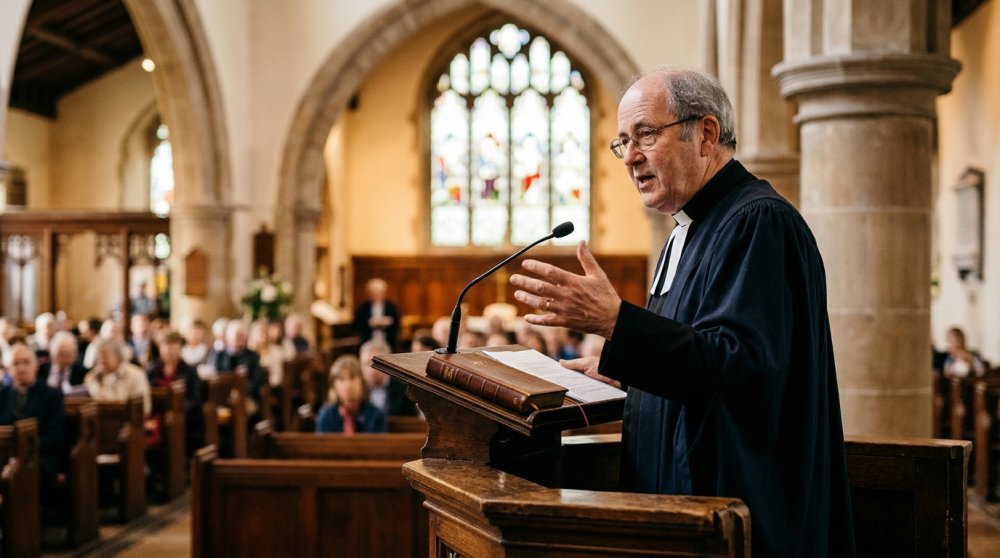
Faith Facts
- Renowned New Testament scholar N.T. Wright teaches that biblical glory centers on restored humanity rather than heavenly escape.
- Wright stresses that Scripture calls believers to serve as God’s image-bearing agents in a renewed creation.
- This understanding affirms traditional Christian teaching on the value of the physical world and human responsibility.
For renowned New Testament scholar N.T. Wright, the “glory” promised in the Bible doesn’t primarily mean “going to Heaven,” but the restoration of humanity’s role as God’s image-bearing agents in a renewed creation.
This perspective challenges modern assumptions that reduce the Christian hope to an otherworldly escape. Wright’s view instead highlights the biblical emphasis on God’s intention to redeem and restore His creation through faithful human stewardship.
“Glory doesn’t mean going to Heaven” but rather “becoming fully human,” says NT Wright
By framing glory as the fulfillment of humanity’s original calling, Wright invites believers to embrace their earthly responsibilities with renewed purpose. This message resonates with traditional Christian values that honor work, family, and community as sacred vocations.
Let us know what you think, please share your thoughts in the comments below.

Faith Facts
- Scripture calls believers to bear one another’s burdens and so fulfill the law of Christ (Galatians 6:2).
- Regular church attendance alone does not guarantee the deep fellowship God designed for His people.
- True Christian community requires honest vulnerability and genuine relationship, not merely surface-level conversation.
You can attend church every Sunday, know everyone by name and still feel desperately lonely. Derek Hughes knows what it’s like to hide behind small talk. Here’s why genuine Christian community requires more than simply showing up.
Many believers show up week after week, exchange polite greetings, and leave without ever being truly known. This pattern leaves hearts heavy even in crowded sanctuaries.
God never intended His church to function as a collection of isolated individuals who merely occupy the same space for an hour. He calls His people to live in deep, accountable, and loving community.
“You can attend church every Sunday, know everyone by name and still feel desperately lonely.”
Small talk serves as a convenient shield, allowing Christians to remain hidden even while surrounded by brothers and sisters in Christ. This kind of superficial interaction falls far short of the biblical vision for fellowship.
Authentic Christian community demands courage to step beyond pleasantries and share real struggles, prayer requests, and victories. When believers open their lives to one another, the body of Christ functions as God intended.
“Here’s why genuine Christian community requires more than simply showing up.”
Churches that prioritize depth over attendance numbers create spaces where lonely hearts find true belonging. Such fellowships reflect the love of Christ in practical, life-giving ways.
Believers who invest in meaningful relationships discover that church becomes more than a weekly obligation; it becomes a spiritual family where burdens are shared and hope is renewed.
Let us know what you think, please share your thoughts in the comments below.


-

 Self-Reliance2 years ago
Trump’s Bold Move Uncovers Massive Social Security Fraud
-

 Faith2 years ago
New Clues Emerge in Noah’s Ark Mystery
-

 News2 years ago
Governor Walz’s Rhetoric Sparks National Controversy
-

 News2 years ago
Mel Gibson’s ‘The Passion of the Christ’ Sequel Title Announced
-

 Family2 years ago
Texas Lawmaker Targets Furries in Schools
-

 Freedom2 years ago
Maine Lawmaker Challenges Sports Fairness Controversy
-

 Family1 year ago
Canada’s Controversial Policy Sparks Ethical Debate
-
Faith12 months ago
Congress Hears Pleas for Nigerian Christians