
Faith
Switzerland Quietly Strips Clergy of Military Exemption in Alarming Secularization Move


Faith Facts
- Switzerland has ended a long-standing exemption from compulsory military service for clergy without consulting affected churches
- A prominent Swiss free church leader warns this represents state-driven secularization and denial of churches’ public service role
- The policy change signals a broader governmental retreat from recognizing the vital contributions of religious institutions to society
Switzerland has quietly abolished a historic exemption that allowed clergy to avoid compulsory military service, a move that church leaders are calling a disturbing example of state-driven secularization. The policy shift, made without consultation with affected religious communities, represents more than a administrative change—it signals a fundamental shift in how the government views the role of faith in public life.
The president of a Swiss free church federation has condemned the government’s unilateral decision, characterizing it as “self-secularization” by the state. This leader argues that ending the clergy exemption reveals a troubling denial of the essential public service that churches provide to Swiss society.
For generations, Switzerland recognized that clergy serve their communities in unique and vital ways that warranted exemption from military obligations. Pastors, ministers, and other religious leaders provide spiritual guidance, counseling, charitable work, and community support that strengthens the social fabric. By revoking this recognition, the Swiss government appears to be rejecting the idea that religious service holds public value.
The church leader’s criticism focused not only on the policy itself but on the secretive manner in which it was implemented. The government changed the law without engaging in meaningful dialogue with the religious communities that would be directly affected. This lack of consultation demonstrates a dismissive attitude toward faith communities and their constitutional role in Swiss society.
This development in Switzerland reflects a broader pattern across Western Europe, where governments increasingly treat religious institutions as private interest groups rather than as pillars of civil society. Such policies ignore the extensive social services, humanitarian aid, education, and community building that churches have historically provided—and continue to provide today.
From a Christian conservative perspective, this move represents the kind of secular overreach that marginalizes faith and undermines religious freedom. When governments cease to recognize the distinct and valuable role of clergy in society, they effectively diminish the space for religious expression and service in the public square.
The Swiss policy change should serve as a warning to Christians in America and throughout the West. Incremental steps to treat religious service as equivalent to any other private activity gradually erode the special protections and recognition that faith communities have traditionally enjoyed. These protections exist not as special privileges, but as acknowledgments of the unique contributions that religious institutions make to the common good.
As Switzerland moves forward with this policy, the impact on clergy recruitment, pastoral formation, and church operations remains to be seen. What is clear is that the government’s decision reflects a secularizing impulse that seeks to minimize religion’s role in public life—a trend that people of faith must resist through advocacy, civic engagement, and steadfast commitment to their calling.
Let us know what you think, please share your thoughts in the comments below.

Faith Facts
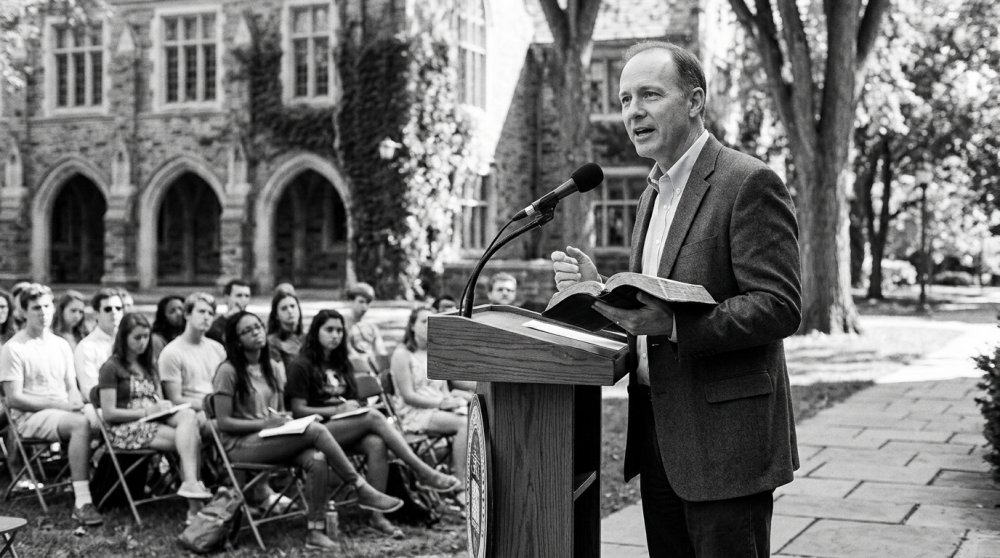
- Frank Turek wakes each morning and ends each evening thinking of Charlie Kirk.
- One year after witnessing the assassination of the conservative activist, Turek continues his commitment to share the Gospel on college campuses.
- The loss of Charlie Kirk has strengthened Turek’s resolve to defend biblical truth among young people.
Christian apologist Frank Turek has carried the memory of Charlie Kirk with him every single day since witnessing the conservative activist’s assassination at Utah Valley University. The grief remains real, yet so does his steadfast determination to keep proclaiming the Gospel.
Each morning when he wakes and each night before he sleeps, Turek’s first and last thoughts return to Kirk. The loss of a friend and fellow defender of truth has left a deep mark, but it has not silenced his mission.
“The first person I think of when I wake up is Charlie.”
Turek’s ongoing work on college campuses reflects a commitment to the same values Kirk championed. He continues reaching students with biblical truth, refusing to let tragedy silence the message of Christ.
Let us know what you think, please share your thoughts in the comments below.

Faith Facts
- Scripture shows God pairing leaders such as Moses with Joshua, David with Jonathan, and Paul with Barnabas and Timothy.
- Jesus sent the seventy-two disciples out in pairs, modeling shared leadership rather than isolation.
- Healthy Christian leaders are called to build friendships that strengthen their walk with Christ and service to others.
Leadership brings heavy responsibility whether you run a business, shepherd a congregation or coach a youth team. Decisions rest on your shoulders and burdens often feel uniquely yours.
Many leaders quietly admit that the role can feel lonely. Yet loneliness does not have to become isolation that harms both the leader and the people served.
“Leadership will always have moments of loneliness. That comes with the territory. But that doesn’t have to mean isolation.”
Throughout the Bible, God provides companions for those He calls to lead. These relationships offer wisdom, encouragement and accountability that solitary leadership cannot supply.
“Build deep friendships with fellow leaders. No leader feels like they have time for this. Yet few leaders make it to the finish line healthy without it.”
Leaders are encouraged to take two practical steps. First, seek a coach or mentor who is a few steps ahead and willing to share honest insight and guidance.
Regular meetings with such a mentor can help a leader recognize blind spots, set growth goals and stay faithful when the fire of service begins to fade.
Second, build deep friendships with other leaders who share the same values and challenges. These relationships offer laughter, correction, prayer and perspective that refresh the soul.
For more than twenty years, one minister has walked alongside six fellow leaders from Texas, Oklahoma and California. They meet weekly by video, attend conferences together and retreat each year for three days of honest conversation and prayer.
The investment of time and travel has strengthened each man’s ministry and personal walk with the Lord. Distance and busy schedules require intentionality, yet the spiritual return far outweighs the cost.
Christian leaders are urged to pray for the right companions, take the initiative to reach out and keep showing up even when the effort feels awkward at first. The people entrusted to their care deserve leaders who remain spiritually and emotionally healthy.
Let us know what you think, please share your thoughts in the comments below.

Faith Facts
- God’s design for human sexuality is rooted in marriage between one man and one woman.
- Scripture teaches that our bodies are temples of the Holy Spirit and should be honored accordingly.
- Christian teaching holds that sexual expression outside of biblical marriage leads to spiritual harm.
New legislation targeting extreme violent pornography marks a step toward protecting families from harmful content.
James Mildred, a Christian commentator, welcomes the criminalization of violent pornographic material while calling for broader restrictions.
“New legislation will criminalise some of the most extreme forms of violent pornography.”
Mildred argues that partial restrictions fail to address the deeper moral concerns surrounding all pornography.
The Christian perspective emphasizes that pornography in any form contradicts God’s intended purpose for human sexuality.
“James Mildred welcomes the change, but argues that God’s design for sex means porn should be banned altogether.”
This position reflects traditional Christian teaching that sexual intimacy belongs exclusively within the covenant of marriage.
Let us know what you think, please share your thoughts in the comments below.


-

 Self-Reliance2 years ago
Trump’s Bold Move Uncovers Massive Social Security Fraud
-

 Faith2 years ago
New Clues Emerge in Noah’s Ark Mystery
-

 News2 years ago
Governor Walz’s Rhetoric Sparks National Controversy
-

 News2 years ago
Mel Gibson’s ‘The Passion of the Christ’ Sequel Title Announced
-

 Family2 years ago
Texas Lawmaker Targets Furries in Schools
-

 Freedom2 years ago
Maine Lawmaker Challenges Sports Fairness Controversy
-

 Family1 year ago
Canada’s Controversial Policy Sparks Ethical Debate
-
Faith11 months ago
Congress Hears Pleas for Nigerian Christians