
Faith
Supreme Court Justice Reveals Bulletproof Vest Threat After Dobbs Leak
Faith Facts
- Justice Amy Coney Barrett testified to Congress that she received a bulletproof vest following intense threats after the 2022 Dobbs decision leak
- Barrett and Justice Elena Kagan both advocated for increased security funding for the Supreme Court in congressional testimony
- The unprecedented leak of the draft Dobbs opinion sparked widespread protests and threats against justices who voted to overturn Roe v. Wade
U.S. Supreme Court Justice Amy Coney Barrett revealed to members of Congress that she was provided with a bulletproof vest amid serious threats to her safety following the unprecedented leak of the draft decision in Dobbs v. Jackson Women’s Health Organization in 2022. The disclosure came as Barrett and fellow Justice Elena Kagan appeared before lawmakers to request additional security funding for the nation’s highest court.
The leak of the Dobbs draft opinion in May 2022 marked an extraordinary breach of Supreme Court protocol and ignited a firestorm of controversy across the nation. The final decision, issued in June 2022, overturned Roe v. Wade and returned abortion regulation to individual states, representing one of the most significant rulings in the Court’s modern history.
Barrett’s testimony underscores the intense atmosphere justices faced following the leak. Pro-abortion activists organized protests at the homes of conservative justices, prompting concerns about judicial independence and the safety of Court members and their families. The threats became so severe that federal law enforcement increased protective measures for justices and their families.
Justice Kagan joined Barrett in emphasizing the need for enhanced security resources. Both justices, despite their differing judicial philosophies, united in their appeal to Congress for adequate funding to protect the Court and maintain the rule of law. Their bipartisan request reflects the gravity of the security challenges facing the judiciary in an increasingly polarized political climate.
The Dobbs decision represented a watershed moment for the pro-life movement and American constitutional law. By returning the question of abortion to elected representatives in state legislatures, the Court restored the people’s ability to enact laws reflecting their values and beliefs about the sanctity of life.
The threats against Justice Barrett and her colleagues highlight a troubling trend of political violence and intimidation directed at public officials who make decisions based on constitutional principles rather than political pressure. For Christians and conservatives who value the rule of law and the protection of innocent life, the safety of justices willing to stand on principle remains paramount.
Congressional leaders from both parties have expressed support for increased security measures, recognizing that an independent judiciary requires justices who can deliberate and decide cases free from fear and intimidation. The security funding request comes as the Court continues to face high-profile cases touching on fundamental questions of religious liberty, life, and constitutional governance.
Let us know what you think, please share your thoughts in the comments below.
Faith
Young Believers Launch Unlikely Battle Inside America’s Oldest Churches
Faith Facts
- A new generation of young Christian conservatives is attempting to restore biblical orthodoxy within America’s historic Mainline Protestant denominations
- Mainline Protestant churches have experienced decades of declining membership amid theological liberalization and departure from traditional Christian teaching
- Conservative believers like Alex Hibbs are working to reclaim their denominational heritage for Gospel-centered faith and traditional values
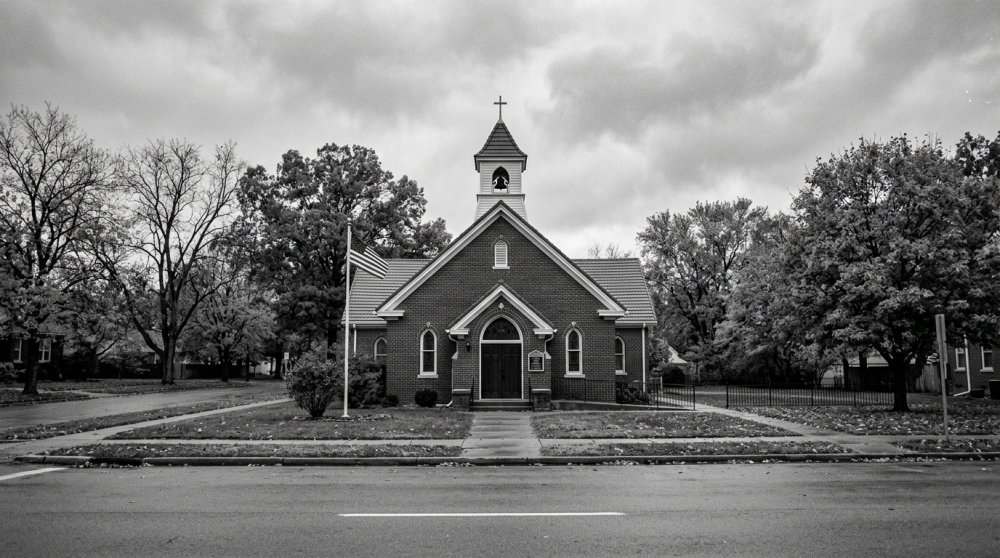
Across America’s historic Protestant denominations, a quiet revolution is underway. Young Christian conservatives are refusing to abandon the churches their grandparents built, instead choosing to fight for biblical truth within institutions that have drifted far from their founding principles.
Alex Hibbs represents a growing number of earnest young believers who are challenging the status quo. Rather than simply leaving for more theologically sound congregations, these faithful Christians are working to reclaim their denominational heritage for the Gospel.
The stakes could not be higher. America’s Mainline Protestant churches—including the United Methodist Church, Presbyterian Church (USA), Episcopal Church, and Evangelical Lutheran Church in America—have hemorrhaged members for decades as they’ve embraced progressive theological positions at odds with Scripture. These denominations, which once formed the spiritual backbone of American Christianity, now face existential questions about their future.
The decline has been stunning. What were once thriving communities of faith have become shadows of their former selves, with aging congregations, empty pews, and diminishing cultural influence. Many observers have written off these historic institutions as lost causes, destined for irrelevance.
But the young conservatives now stepping forward refuse to accept that verdict. They see the historic confessions, the beautiful liturgies, and the rich theological traditions of these denominations as worth fighting for. They believe that biblical faithfulness and traditional Christian teaching can be restored, one congregation and one presbytery at a time.
The path forward is not easy. These young believers face entrenched denominational bureaucracies, liberal leadership, and decades of institutional momentum moving away from orthodoxy. They are often outnumbered and outmaneuvered by those who have redefined Christianity to accommodate contemporary cultural values rather than biblical truth.
Yet their determination springs from a deep conviction that these churches belong to Christ, not to any particular generation or ideological faction. They understand that surrendering these historic institutions without a fight means abandoning not just buildings and endowments, but centuries of faithful witness and theological heritage.
The question remains whether this effort can succeed. Can a remnant of faithful believers turn around massive denominational ships that have been sailing toward theological liberalism for half a century? Can they overcome the structural and cultural barriers that have been erected against traditional Christian teaching?
History offers both encouragement and caution. Throughout Church history, faithful minorities have sometimes sparked remarkable renewals. But history also records many instances where theological compromise proved irreversible, leading to the necessity of separation and new beginnings.
What sets this current effort apart is the conviction and clarity of the young conservatives leading it. They are not seeking political power or institutional control for its own sake. They are motivated by a genuine love for the Gospel and a desire to see their churches proclaim biblical truth with courage and clarity.
The broader Christian community should watch these efforts with prayerful interest. The fate of America’s Mainline churches matters not just to those denominations, but to the witness of Christianity in American public life. These historic institutions still occupy significant real estate, literal and metaphorical, in communities across the nation.
Whether through internal reform or eventual realignment, the struggle for the soul of these denominations represents a crucial front in the larger battle for biblical faithfulness in American Christianity. The outcome will shape not just individual congregations, but the religious landscape of the nation for generations to come.
Let us know what you think, please share your thoughts in the comments below.
Faith
French Christians Raise Urgent Alarm Over New Euthanasia Mandate
Faith Facts
- France’s National Assembly approved an assisted dying bill, sparking serious concerns from evangelical Christians about threats to the sanctity of life
- The national evangelical alliance warns vulnerable citizens will face pressure to end their lives rather than receive compassionate care
- Christian leaders view this legislation as another assault on biblical values of human dignity and the inherent worth of every person
France’s National Assembly has passed a controversial assisted dying bill, and now Christian leaders across the nation are sounding the alarm about what this means for the most vulnerable members of society.
The national evangelical alliance issued a stern warning that this legislation will create dangerous pressure on elderly, disabled, and sick individuals to choose death over continued care. Rather than protecting the weak, Christian leaders argue, this law effectively encourages them to view themselves as burdens worthy of elimination.
This development represents yet another troubling departure from the Judeo-Christian values that once formed the foundation of Western civilization. Where the Bible teaches that every human life is created in the image of God and possesses inherent dignity from conception to natural death, secular governments increasingly embrace a utilitarian calculus that measures human worth by productivity and convenience.
French evangelicals recognize that true compassion means caring for the suffering, not eliminating the sufferer. They understand that legalizing assisted suicide doesn’t expand freedom—it creates an expectation that the vulnerable should consider ending their lives to avoid being a burden on family or society.
The pressure on vulnerable populations under such laws is well-documented in other nations that have traveled this path. Elderly patients report feeling obligated to choose death rather than continue receiving care. Those with disabilities face the implicit message that their lives are less valuable. The sick encounter doctors who present death as a reasonable medical option alongside treatment.
For Bible-believing Christians, this issue goes to the heart of what it means to be human and how a just society treats its weakest members. Scripture consistently calls God’s people to defend the vulnerable, care for the sick, and honor the elderly—principles that stand in direct opposition to state-sanctioned suicide.
The French evangelical alliance’s warning deserves serious attention from Americans watching similar debates unfold across the United States. What happens in France today could easily arrive on our shores tomorrow if Christians fail to stand firm on the sanctity of human life.
This battle is ultimately spiritual in nature. When societies reject God’s authority over life and death, they inevitably slide toward policies that devalue human existence. Only by returning to biblical truth about the inherent worth of every person can nations resist the culture of death that increasingly dominates secular governance.
French Christians are now called to be salt and light in their nation, speaking truth about human dignity and offering genuine compassion through sacrificial care for those who suffer. American believers should stand with them in prayer and learn from their courage to oppose laws that contradict God’s design for human flourishing.
Let us know what you think, please share your thoughts in the comments below.
Faith
Anglican Church’s Reparations Fund Raises Questions About Faith and Historical Justice
Faith Facts
- The Church of England has established a reparations fund to address its historical ties to the transatlantic slave trade
- A reverend who previously opposed apologizing for historical actions now supports the church’s decision after studying Scripture on corporate sin and repentance
- The debate raises important questions about biblical accountability, forgiveness, and how Christians should respond to the sins of previous generations
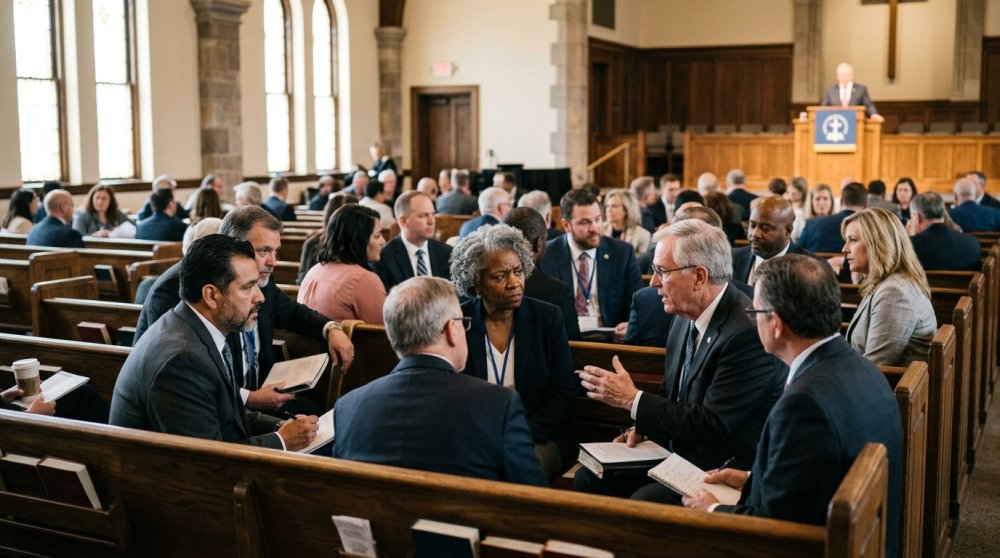
The Church of England has taken a controversial step by creating a fund to address its historical connections to the slave trade, sparking renewed debate among Christians about how to properly respond to the sins of the past. The decision has prompted soul-searching even among those who previously questioned the wisdom of such gestures.
Rev George Pitcher, a former Church of England priest and journalist, admits he once dismissed the idea of apologizing for actions committed by people long dead. His perspective has since evolved through deeper engagement with Scripture and Christian theology.
“I used to think it was silly to say sorry for historical actions over which you had no control,” Pitcher acknowledges. His transformation came through studying biblical principles of corporate responsibility and the nature of repentance within the body of Christ.
The Church of England’s decision reflects a growing movement within some Christian denominations to confront uncomfortable truths about institutional involvement in historical injustices. However, the approach raises legitimate questions for American Christians about the proper biblical response to ancestral sins.
Conservative Christians have long emphasized individual accountability before God, as Scripture teaches each person will give account for their own actions. Romans 14:12 states clearly that “each of us will give an account of ourselves to God.” This principle of individual responsibility forms a cornerstone of Christian faith and American legal tradition.
Yet Scripture also contains examples of corporate repentance and acknowledgment of generational sin. The book of Nehemiah records prayers confessing “the sins we Israelites, including myself and my father’s family, have committed against you.” Daniel similarly confessed the sins of his people, even those committed before his birth.
The challenge for modern Christians lies in discerning the difference between acknowledging historical wrongs committed by institutions and accepting personal guilt for actions one neither committed nor condoned. This distinction matters both theologically and practically.
Critics of reparations programs argue they can create new injustices by holding current generations financially responsible for past sins. They point out that most Americans today had ancestors who arrived after slavery ended, fought to end it, or were themselves victims of different historical injustices. Collective guilt, they argue, contradicts both Scripture and American principles of individual justice.
Supporters counter that institutions which benefited from slavery have an obligation to address that legacy, particularly when those institutions still exist and retain wealth accumulated during that era. They distinguish between individual guilt and institutional responsibility.
The Church of England’s fund specifically addresses the church’s institutional involvement, not the personal guilt of current members. This approach attempts to thread the needle between denying uncomfortable history and imposing unfair burdens on the living.
For American Christians, the debate touches on fundamental questions about justice, mercy, and redemption. The gospel message centers on forgiveness and transformation—Christ died for sins we did commit, offering grace we didn’t earn. How should this inform our approach to sins we didn’t commit but whose effects may linger?
Scripture calls believers to “do justice, love mercy, and walk humbly” with God. It also warns against punishing children for their fathers’ sins. Balancing these principles requires wisdom, prayer, and honest dialogue rooted in biblical truth rather than political agendas.
The conversation about historical wrongs must also include the full context of history. While slavery remains one of humanity’s great evils, its abolition was driven largely by Christian conviction. Believers like William Wilberforce fought tirelessly to end the slave trade because their faith demanded it. This legacy of Christian opposition to slavery deserves equal acknowledgment.
Moving forward, Christians should focus on present-day injustices we can actively combat—human trafficking, persecution of believers, attacks on religious freedom, and the breakdown of families. These current evils demand our immediate attention and action.
The Church of England’s decision represents one denomination’s attempt to grapple with its past. American Christians need not reflexively embrace or reject such efforts, but should thoughtfully examine what Scripture teaches about repentance, justice, and reconciliation. The answers won’t satisfy everyone, but they must be grounded in biblical truth, not cultural pressure.
Ultimately, the church’s mission remains unchanged: proclaim the gospel, make disciples, and serve as salt and light in a broken world. Historical reckonings have value only insofar as they advance this mission and honor God’s Word. Any approach that divides believers along racial or generational lines contradicts the unity Christ died to create.
Let us know what you think, please share your thoughts in the comments below.
-
Self-Reliance1 year agoTrump’s Bold Move Uncovers Massive Social Security Fraud
-

Faith1 year agoNew Clues Emerge in Noah’s Ark Mystery
-

News1 year agoGovernor Walz’s Rhetoric Sparks National Controversy
-

News1 year agoMel Gibson’s ‘The Passion of the Christ’ Sequel Title Announced
-

Family1 year agoTexas Lawmaker Targets Furries in Schools
-

Freedom1 year agoMaine Lawmaker Challenges Sports Fairness Controversy
-

Family1 year agoCanada’s Controversial Policy Sparks Ethical Debate
-
Faith8 months ago
Congress Hears Pleas for Nigerian Christians
