
Freedom
State Regulators Found a Way Around Free Speech Protections


Faith Facts
- Colorado’s regulatory board is targeting Christian counseling practices through financial intimidation after being unable to legally ban them
- Licensed therapist Kaley Chiles faces potential loss of her counseling license for offering biblically-based therapy grounded in traditional Christian teachings
- The state’s actions represent a concerning pattern of regulatory overreach against faith-based professionals across America
The First Amendment stands as a cornerstone of American liberty, protecting the free expression of religious beliefs and speech. Yet in Colorado, state regulators have found a troubling workaround to these constitutional protections.
When outright legal bans on Christian counseling proved impossible, the state turned to a different weapon: financial and professional intimidation. Licensed therapist Kaley Chiles now faces the potential destruction of her career, not because she broke any law, but because she offers counseling rooted in biblical truth and traditional Christian values.
The regulatory board’s tactics reveal a disturbing trend emerging across our nation. Unable to directly prohibit faith-based practices through legislation, government agencies are increasingly using licensing threats and professional sanctions to accomplish the same goal.
Chiles provides counseling that reflects centuries of Christian teaching on human sexuality, marriage, and identity. Her approach aligns with the beliefs held by millions of American Christians and represents the free exercise of religion guaranteed by our Constitution.
Yet Colorado’s regulatory apparatus has determined that such counseling—offered voluntarily to willing clients who share these values—somehow warrants professional discipline. The message is clear: conform to the state’s preferred ideology or lose your livelihood.
This strategy of financial terror proves particularly effective because it requires no legislative action, no public debate, and no democratic accountability. Unelected bureaucrats in regulatory agencies can simply threaten professional licenses, impose crushing fines, or initiate costly legal proceedings.
For many Christian professionals, the choice becomes stark: abandon their deeply held religious convictions or face financial ruin. It’s a form of coercion that circumvents the First Amendment’s protections while achieving the same censorious result.
The implications extend far beyond Colorado and far beyond the counseling profession. If state agencies can use licensing power to suppress religious expression in therapy, they can apply the same tactics to physicians, nurses, teachers, social workers, and countless other licensed professionals.
Religious Americans who seek counseling consistent with their faith deserve access to therapists who share and respect their values. Parents raising children in the Christian tradition have every right to seek professional support that reinforces rather than undermines their family’s beliefs.
The founders understood that genuine religious liberty meant more than freedom of worship within church walls. It meant the freedom to live according to one’s faith in every sphere of life, including one’s profession and livelihood.
Colorado’s approach threatens this fundamental understanding. By weaponizing the regulatory state against Christian professionals, officials are establishing a precedent that could silence faithful voices across countless fields and industries.
What makes this strategy particularly insidious is its quiet efficiency. Unlike high-profile legislative battles that generate headlines and public engagement, regulatory intimidation operates largely in the shadows, targeting individuals who often lack the resources to mount effective legal challenges.
The defense of religious liberty has always required vigilance, but the battlefield has shifted. Today’s threats come not only from explicit legal prohibitions but from the administrative state’s subtle yet powerful machinery of professional control.
Christian Americans must recognize this tactic for what it is: an end-run around constitutional protections that our founders established to prevent exactly this kind of government overreach. When regulators can effectively ban what legislatures cannot, the rule of law itself is undermined.
Kaley Chiles’s case should serve as a wake-up call. Her willingness to stand firm in her faith despite professional threats deserves support from all who value religious freedom and constitutional government.
The question facing our nation is whether we will permit unelected bureaucrats to accomplish through intimidation what our constitutional system forbids through legislation. The answer will determine whether the First Amendment remains a genuine protection or becomes merely a historical artifact.
Let us know what you think, please share your thoughts in the comments below.

Faith Facts
- America’s 250th birthday arrives at a time when many citizens no longer understand the biblical and moral foundations that made freedom possible
- The Founding Fathers understood that liberty requires virtue, and virtue requires faith—a truth increasingly dismissed in modern American culture
- Without recovering the character and principles that built this nation, future generations will not be able to sustain the freedoms we’ve inherited
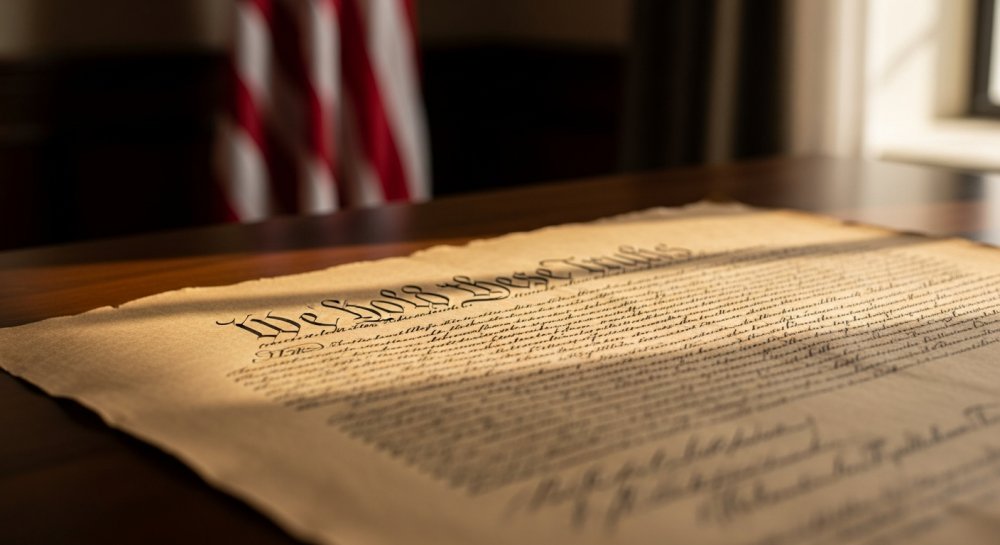
As the United States reaches its 250th anniversary, a sobering question confronts every American who values freedom: Do we still understand what made this nation uniquely free? The answer, for many Christians and conservatives, is troubling. We have inherited extraordinary liberties—speech, worship, assembly, self-defense—but we’ve largely forgotten the moral infrastructure that makes those freedoms sustainable.
The Founding Fathers were clear in their understanding: liberty is not merely a legal framework but a moral ecosystem. They knew that self-government requires a virtuous people, and that virtue cannot exist in a vacuum.
John Adams famously warned, “Our Constitution was made only for a moral and religious people. It is wholly inadequate to the government of any other.” This was not a casual observation but a foundational truth. Freedom without virtue descends into chaos, and chaos inevitably invites tyranny. The Founders designed a republic that assumed citizens would govern themselves according to timeless moral principles—principles largely drawn from the Christian faith that shaped Western civilization.
Today, that assumption is under relentless assault. Public schools teach rights without responsibilities, freedoms without restraint. The culture celebrates autonomy while scorning the self-discipline that makes autonomy workable. We are raising generations who demand liberty but reject the character necessary to sustain it.
The Bible is clear: “Where the Spirit of the Lord is, there is liberty” (2 Corinthians 3:17). Freedom flows from a right relationship with God, not from the mere absence of government constraint. Our Founders understood this. They built a system designed for people who knew how to restrain themselves because they feared God more than they feared man.
We see the consequences of forgetting this truth everywhere. Crime rises as moral standards fall. Families fracture as covenantal commitment gives way to convenience. Public discourse coarsens as respect for truth and neighbor erodes. These are not random social problems—they are the predictable result of abandoning the virtues that underpin a free society.
Courage, honesty, self-control, compassion, humility, diligence—these are not optional accessories to liberty. They are its foundation. Without them, freedom becomes license, and license becomes enslavement to our worst impulses.
Benjamin Franklin once remarked, “Only a virtuous people are capable of freedom. As nations become corrupt and vicious, they have more need of masters.” His words ring prophetic today. As virtue declines, government expands to manage the chaos that follows. We trade freedom for security, self-governance for state control, and wonder why we feel less free despite having more rights on paper.
The solution is not political alone, though politics matter. The solution begins in the human heart. It begins with parents teaching their children what is right and true. It begins with churches recovering their prophetic voice and calling people back to holiness. It begins with citizens choosing integrity over convenience, service over selfishness, truth over tribalism.
If we hope to preserve the blessings of liberty for future generations, we must recover the virtues that made liberty possible in the first place. We must teach our children not just what freedoms they have, but why they have them and what responsibilities come with them. We must model lives of character that demonstrate freedom is not the absence of restraint but the power to choose what is good.
America’s 250th birthday is a milestone worth celebrating—but also a moment for sober reflection. Will we be the generation that squandered the inheritance, or the one that recovered what was lost? The answer depends on whether we remember what our Founders knew: that freedom and virtue are inseparable, and both require hearts turned toward God.
Let us know what you think, please share your thoughts in the comments below.

Faith Facts
- Christian author Eric Metaxas spoke at the ARC Conference, connecting Christianity to America’s founding principles and modern liberty
- Metaxas urged British leaders to resist the imprisonment of citizens for social media posts and memes
- The author emphasized that Christian faith remains essential to understanding and preserving freedom in Western civilization
Christian conservative commentator and bestselling author Eric Metaxas delivered a powerful message at this year’s ARC Conference, drawing direct lines between Christian faith, America’s founding principles, and the preservation of liberty in the modern world. His remarks came at a critical time as Western nations grapple with questions of free speech and religious freedom.
Metaxas made an impassioned case that Christianity wasn’t merely present at America’s founding but was absolutely central to the ideals that shaped the nation. He argued that understanding this connection remains vital for sustaining liberty today.
The author and radio host didn’t limit his message to historical reflection. He issued a direct challenge to British leaders and citizens, urging them to rise up against the troubling trend of people being imprisoned for social media posts and memes. This call to action highlighted growing concerns among Christians and conservatives about government overreach and threats to free expression in Western democracies.
Metaxas’s speech resonated with conference attendees who share concerns about the erosion of traditional Christian values and constitutional freedoms across the Western world. His message emphasized that the fight for liberty is inseparable from the defense of Christian principles that undergird free societies.
The ARC Conference provided a platform for discussing these critical issues facing people of faith and supporters of traditional values. Metaxas’s participation underscored the urgency many Christian leaders feel about preserving religious freedom and free speech rights.
His remarks come as Christians worldwide face increasing pressure to conform to secular ideologies that often conflict with biblical teachings. The imprisonment of individuals for expressing opinions online represents a stark warning about where such trends can lead when left unchecked.
Let us know what you think, please share your thoughts in the comments below.
Faith Facts
- Independence Day offers Christian families an opportunity to reconnect with America’s founding principles rooted in faith and divine providence
- Historic sites where the Founding Fathers deliberated represent sacred ground where religious liberty was enshrined as a foundational right
- Visiting America’s birthplaces provides tangible lessons in courage, sacrifice, and the biblical values that shaped our constitutional republic
There is something fitting about spending Independence Day not just with fireworks and backyard barbecues, but by rediscovering the places where the American story began. For Christian families seeking to instill a deeper appreciation for our God-given freedoms, these historic destinations offer more than history—they offer reverence.
The cradle of American liberty beckons those willing to walk where our Founding Fathers stood, prayed, and pledged their lives, fortunes, and sacred honor. These aren’t merely tourist attractions; they are monuments to the divine providence that guided the birth of a nation conceived in liberty and dedicated to the proposition that our rights come from God, not government.
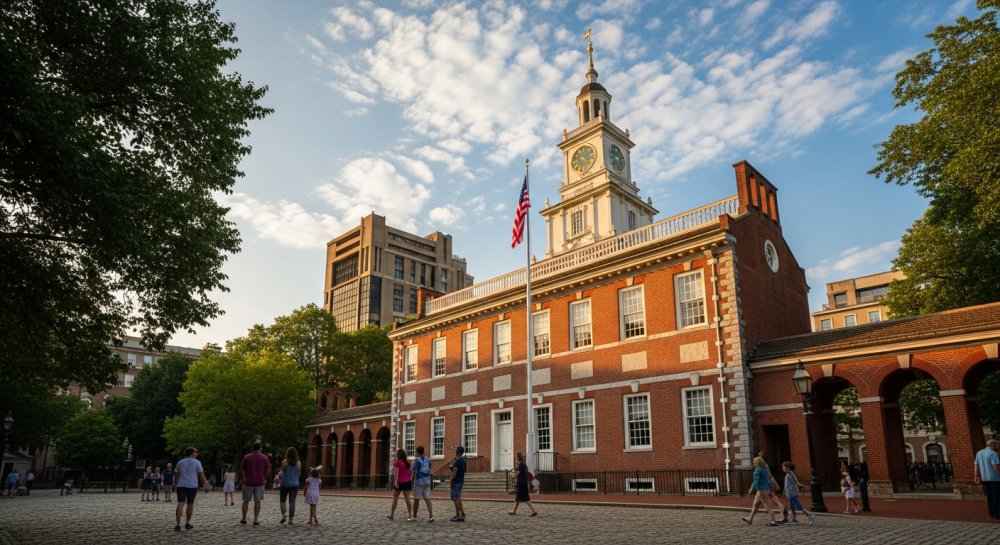
Philadelphia stands as the epicenter of American independence, where the Declaration of Independence was signed and the Constitution crafted. Independence Hall remains hallowed ground where men of faith and conviction debated the future of a free people. The Liberty Bell, with its biblical inscription from Leviticus—”Proclaim Liberty Throughout All the Land Unto All the Inhabitants Thereof”—serves as a powerful reminder that America’s founders drew directly from Scripture in establishing our freedoms.
Boston’s Freedom Trail winds through the birthplace of the American Revolution, where patriots risked everything for the cause of liberty. Walking the cobblestone streets past the Old North Church, where lanterns signaled the approach of British troops, families can reflect on the courage born from conviction—the same faith that sustained our forebears through impossible odds.
Colonial Williamsburg offers an immersive experience into 18th-century America, where the ideas of liberty and self-governance took root. Here, the intertwining of faith and freedom becomes unmistakable, as colonial churches and public squares reveal a society grounded in biblical principles and natural law.
Mount Vernon, George Washington’s beloved estate, provides insight into the character of the man who refused to become king and instead chose to serve. Washington’s farewell address warned that morality and religion are indispensable supports for political prosperity—a message as vital today as it was then.
These journeys through America’s founding aren’t exercises in nostalgia but acts of remembrance and renewal. They remind us that freedom is fragile, that liberty requires vigilance, and that the blessings we enjoy were secured through sacrifice grounded in faith. As we celebrate our independence, we honor those who built a nation under God by walking where they walked and recommitting ourselves to the principles they held sacred.
This Independence Day season, consider taking your family beyond the festivities to the foundational sites of American freedom. Let the next generation see, touch, and understand the miracle of America—a nation founded on the radical idea that human dignity flows from our Creator, and that government exists to protect, not grant, our God-given rights.
Let us know what you think, please share your thoughts in the comments below.


-

 Self-Reliance1 year ago
Trump’s Bold Move Uncovers Massive Social Security Fraud
-

 Faith1 year ago
New Clues Emerge in Noah’s Ark Mystery
-

 News1 year ago
Governor Walz’s Rhetoric Sparks National Controversy
-

 News1 year ago
Mel Gibson’s ‘The Passion of the Christ’ Sequel Title Announced
-

 Family1 year ago
Texas Lawmaker Targets Furries in Schools
-

 Freedom1 year ago
Maine Lawmaker Challenges Sports Fairness Controversy
-

 Family1 year ago
Canada’s Controversial Policy Sparks Ethical Debate
-
Faith7 months ago
Congress Hears Pleas for Nigerian Christians