
Faith
St. Stephen: First Martyr Remembered in Faith

Faith Facts
- St. Stephen was the first Christian martyr, commemorated on December 26, widely known as St. Stephen’s Day.
- Chosen for his faith and filled with the Holy Spirit, Stephen was among seven men appointed to serve the early Church’s needs.
- Stephen’s bold witness led to his stoning, as he prayed for his persecutors, mirroring Christ’s example of forgiveness and faithfulness.
The name Stephen means “wreath” or “crown” and is honored in nations of Orthodox, Catholic, and Protestant heritage. Stephen’s legacy testifies to the enduring strength of Christian faith and sacrificial love.
Scripture in Acts highlights Stephen’s selection as a servant leader addressing the needs of believers, especially widows among Greek-speaking Jews. His courage in the face of false accusations and his powerful witness before the Sanhedrin showed a faith rooted deeply in God’s truth.
Luke records that as Stephen faced martyrdom, “his face was like the face of an angel.”
With his dying breath, Stephen prayed, “Lord Jesus, receive my spirit,” and asked forgiveness for his attackers, echoing the compassion and mercy of Christ Himself.
Stephen’s martyrdom sparked early persecution, scattering believers to share the Gospel, fulfilling Christ’s promise that His followers would be witnesses beyond Jerusalem.
Let us remember Stephen’s steadfastness as an example to trust God boldly, extend forgiveness, and proclaim truth—foundations for godly living in our families and nation.


Faith Facts
- Pastor Elisha Kiire, 25, was killed in Uganda’s Butebo District just hours after participating in a Christian-Muslim public debate
- An imam who participated in the debate is among the prime suspects in the murder investigation
- Christians in Uganda face increasing violence and persecution, particularly when sharing their faith publicly
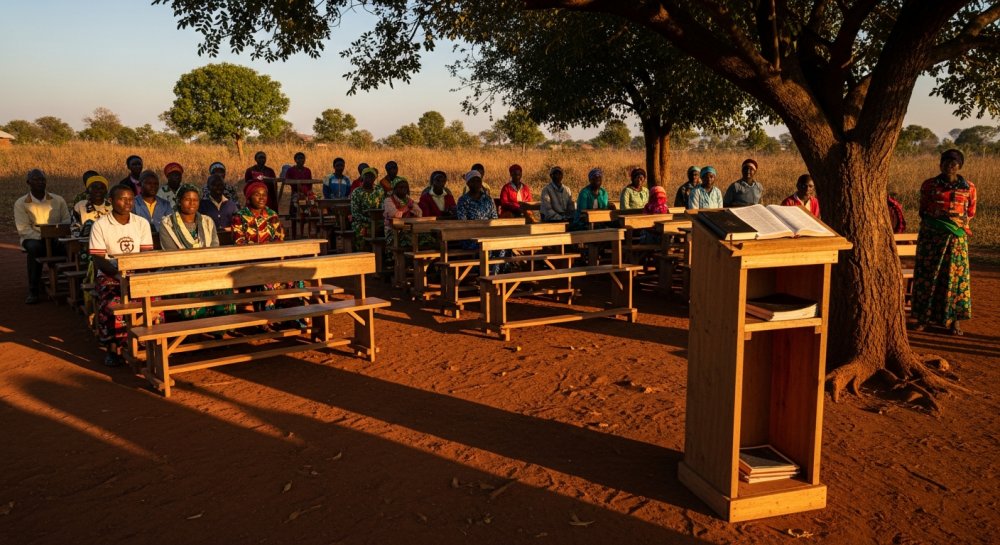
A young pastor’s commitment to defending the Christian faith cost him his life in eastern Uganda. Pastor Elisha Kiire, just 25 years old, was murdered hours after engaging in a public theological debate that drew a crowd in Butebo District.
The pastor served as a minister at New Restoration Church of Christ and was known for his willingness to engage in interfaith dialogue. His death serves as a stark reminder of the persecution Christians face in regions where sharing the Gospel can be a dangerous endeavor.
Local authorities have identified an imam who participated in the debate as one of the prime suspects in the killing. The swift timeline between the debate and the murder has raised serious concerns about religiously motivated violence in the region.
This tragic incident highlights the reality that many Christians around the world continue to face deadly consequences for their faith. While Americans enjoy religious freedom protected by the Constitution, believers in countries like Uganda regularly risk their lives simply for proclaiming biblical truth.
The young pastor’s death underscores the importance of supporting persecuted Christians globally through prayer and advocacy. His willingness to stand firm in his faith, even in the face of opposition, exemplifies the courage that has sustained the Church throughout history.
Religious tensions in Uganda have escalated in recent years as Christian evangelism has grown. Pastors and missionaries who openly share their faith often face threats, harassment, and violence from those opposed to the Gospel message.
The investigation into Pastor Kiire’s murder continues as local authorities work to bring those responsible to justice. The Christian community in Butebo District mourns the loss of a dedicated shepherd who paid the ultimate price for his commitment to Christ.
Let us know what you think, please share your thoughts in the comments below.
Faith Facts
- Mircea Cristian founded Rock of Ages prison ministry in Romania to bring the Gospel to incarcerated men and women
- His son Timotei is now preparing to take over leadership of the transformative ministry
- The ministry has pioneered Christian outreach in Romanian prisons, demonstrating the power of faith to redeem even the most broken lives
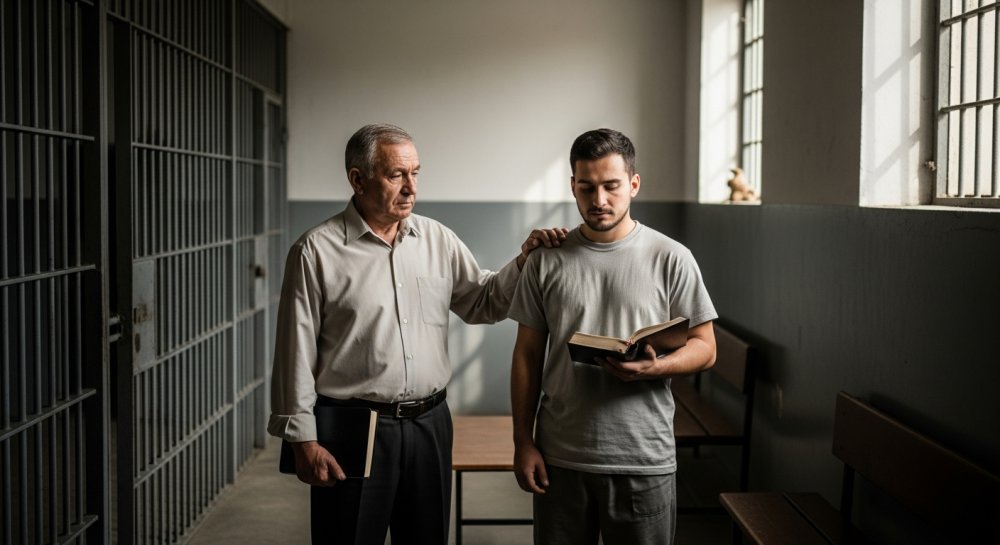
For decades, Mircea Cristian has dedicated his life to a mission many would find daunting: bringing the hope of Jesus Christ to those behind bars in Romania. Now, as he prepares to pass the torch to his son Timotei, the legacy of Rock of Ages prison ministry stands as a testament to the transformative power of faith and the importance of generational faithfulness.
In an interview with Christian Daily International, Cristian reflected on the journey that led him to pioneer this vital ministry. His vision was simple yet profound: incarcerated individuals need more than rehabilitation programs or social services—they need the Lord.
Rock of Ages has become a beacon of hope in Romania’s prison system, where volunteers regularly share the Gospel, disciple new believers, and demonstrate Christ’s love to men and women society has often written off. The ministry’s impact extends far beyond prison walls, as former inmates who encountered Jesus during their incarceration now live transformed lives in their communities.
The decision to transition leadership to Timotei represents more than just organizational succession. It embodies a biblical pattern of fathers equipping sons to carry forward the work of the Kingdom. This generational transfer ensures that the ministry’s mission will continue with fresh energy while maintaining its foundational commitment to sharing Christ with the incarcerated.
Timotei’s preparation for leadership reflects the discipleship model that Rock of Ages has employed with inmates for years. Just as prisoners are mentored in their faith journey, the younger Cristian has been mentored by his father, learning not just the operational aspects of running a ministry but the spiritual disciplines and pastoral heart required to serve this often-overlooked population.
The Romanian prison ministry serves as an example for American Christians who may question whether faith-based approaches truly work in the criminal justice system. The evidence from Rock of Ages demonstrates that when individuals encounter genuine Christian love and the life-changing message of the Gospel, transformation is not only possible—it’s probable.
In an era when secular rehabilitation programs often fall short and recidivism rates remain high, ministries like Rock of Ages prove that addressing the spiritual root of brokenness yields lasting fruit. The ministry’s approach aligns with the biblical truth that real change comes from the inside out, as hearts are renewed by the Holy Spirit.
As Mircea Cristian prepares to hand over leadership, he does so with confidence that the next generation will carry forward this crucial work. His investment in his son mirrors God’s design for passing down faith and mission from one generation to the next—a pattern seen throughout Scripture and one that strengthens the Church’s witness across time.
The work of Rock of Ages reminds believers that no one is beyond the reach of God’s grace. Prisons may confine bodies, but the Gospel sets souls free. This ministry’s continued impact under new leadership will undoubtedly bring more Romanians to saving faith in Jesus Christ.
Let us know what you think, please share your thoughts in the comments below.

Faith Facts
- William Tyndale was executed in 1536 for translating the Bible into English, strangled and burned at the stake outside Brussels
- Modern Bible translators continue to face persecution, kidnapping, and death threats in countries hostile to Christianity
- Over 3,000 languages worldwide still lack a complete Bible translation, leaving billions without access to Scripture in their native tongue
Five hundred years after William Tyndale gave his life to bring Scripture to the common people, the mission of Bible translation remains one of the most dangerous callings in Christianity. His sacrifice in 1536 — strangled and burned at the stake for the crime of translating God’s Word into English — echoes across the centuries as modern translators face similar threats in hostile territories around the world.
Tyndale’s final prayer, “Lord, open the King of England’s eyes,” was answered within months when King Henry VIII authorized the Great Bible, built largely on Tyndale’s faithful work. His translation legacy lives on in the King James Bible and nearly every English translation that followed.
Today’s Bible translators work in the shadow of that same martyrdom. In Muslim-majority nations, communist countries, and regions controlled by extremist groups, men and women risk imprisonment, torture, and death to provide Scripture in languages that have never heard the Gospel in their own tongue. Organizations working in these areas report threats, kidnappings, and violence against translation teams with alarming frequency.
The stakes remain eternally high. More than 3,000 languages worldwide still lack a complete Bible translation. Hundreds of millions of people have never read a single verse in the language of their heart. For these communities, the absence of Scripture represents not just an academic gap but a spiritual crisis of the highest order.
Conservative Christian mission organizations emphasize that Bible translation work is not merely linguistic scholarship — it is spiritual warfare. Translators must navigate not only complex grammar and vocabulary but also hostile governments, militant opposition, and spiritual resistance that seeks to keep entire people groups in darkness.
The comparison to Tyndale is not metaphorical. Just as the institutional church of his day opposed Scripture in the vernacular, modern translators face organized opposition from religious and political powers that fear what happens when ordinary people gain direct access to God’s Word. History has shown that when the Bible reaches people in their own language, transformation follows — in individuals, families, communities, and nations.
American Christians benefit from an abundance of Bible translations, study tools, and easy access to Scripture in multiple formats. Yet this blessing was purchased with the blood of martyrs like Tyndale. The same price is still being paid in corners of the world where darkness has not yet been pierced by the light of God’s Word.
The urgency of Bible translation work cannot be overstated. Every people group deserves access to Scripture. Every language deserves to hear the Gospel. Every translator who risks their life to make this possible walks in the footsteps of Tyndale and countless other martyrs who believed that nothing is more valuable than giving people the Word of God.
Supporting Bible translation ministries represents one of the most strategic investments American Christians can make in global evangelism. These organizations need prayer, financial support, and advocacy as they work in increasingly hostile environments. The Great Commission commands us to make disciples of all nations — and that work begins with giving them the Bible in their own language.
Let us know what you think, please share your thoughts in the comments below.


-

 Self-Reliance1 year ago
Trump’s Bold Move Uncovers Massive Social Security Fraud
-

 Faith1 year ago
New Clues Emerge in Noah’s Ark Mystery
-

 News1 year ago
Governor Walz’s Rhetoric Sparks National Controversy
-

 News1 year ago
Mel Gibson’s ‘The Passion of the Christ’ Sequel Title Announced
-

 Family1 year ago
Texas Lawmaker Targets Furries in Schools
-

 Freedom1 year ago
Maine Lawmaker Challenges Sports Fairness Controversy
-

 Family1 year ago
Canada’s Controversial Policy Sparks Ethical Debate
-
Faith8 months ago
Congress Hears Pleas for Nigerian Christians