
Faith
Slain Christian Minister’s Lasting Legacy Still Shields Pakistan’s Faithful

Faith Facts
- Shahbaz Bhatti, Pakistan’s only Christian federal minister, was assassinated in 2011 for defending religious minorities and opposing blasphemy laws
- Bhatti secured landmark reforms including a 5% employment quota for religious minorities in government positions
- Pakistan’s National Minorities Day on August 11 honors Bhatti’s sacrifice and ongoing protections for Christians and other religious minorities
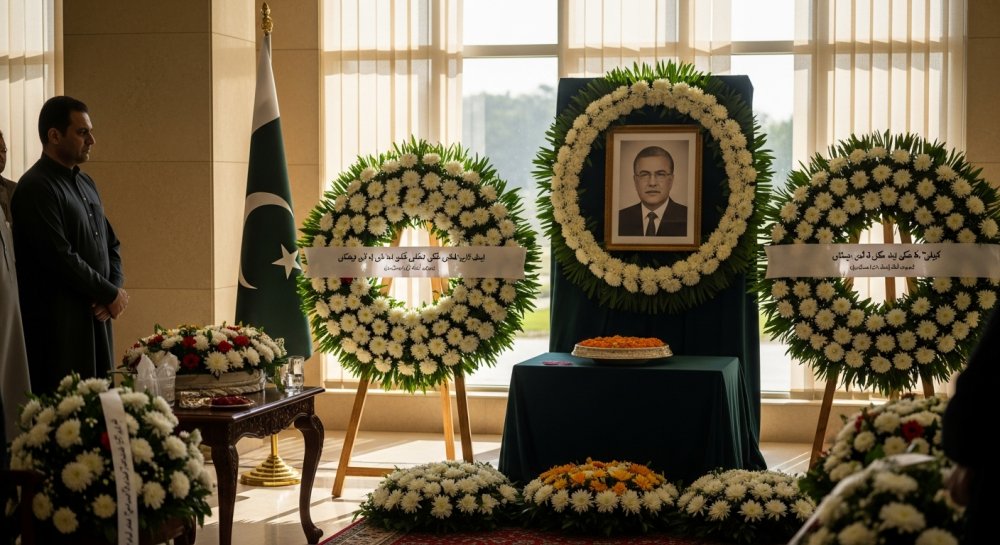
As Pakistan marked National Minorities Day on August 11, the profound sacrifice of Shahbaz Bhatti continues to bear fruit for the nation’s embattled Christian community. The slain federal minister’s courageous stand for religious freedom nearly fourteen years ago still provides some of the most meaningful protections Pakistan’s religious minorities have known since the nation’s founding.
Bhatti, who served as Pakistan’s Minister for Minority Affairs, was gunned down in 2011 by Islamic extremists for his outspoken defense of Christians and his opposition to the country’s notorious blasphemy laws. His martyrdom sent shockwaves through Pakistan’s Christian community, which comprises roughly 2% of the nation’s 240 million people.
Yet the reforms Bhatti championed before his death remain in place today, offering tangible benefits to Christians, Hindus, Sikhs, and other religious minorities in the Muslim-majority nation. Chief among these is a 5% employment quota for minorities in government positions—a policy that has opened doors for thousands of Christian families seeking economic stability and social advancement.
Bhatti’s legacy also includes strengthened protections against forced conversions, improved educational opportunities for minority students, and formal recognition of religious holidays for non-Muslim communities. These measures, while imperfect and often unevenly enforced, represent hard-won victories in a country where Christians face regular persecution, discrimination, and violence.
The late minister understood that securing legal protections was essential to the survival of Pakistan’s Christian community. He worked tirelessly to institutionalize safeguards that would outlast any single political administration, demonstrating a strategic vision rooted in both his Christian faith and his love for his country.
Pakistan’s Christians continue to face severe challenges, including accusations under blasphemy laws that carry the death penalty, mob violence, forced marriages of Christian girls to Muslim men, and systemic discrimination in employment and education. Yet Bhatti’s reforms provide a framework for defending the rights of religious minorities in court and in public discourse.
National Minorities Day serves as an annual reminder of both the progress made and the work that remains. For Pakistan’s Christians, the day honors not only Bhatti’s ultimate sacrifice but also his unwavering commitment to ensuring that people of all faiths could live, work, and worship freely in Pakistan.
Religious freedom advocates point to Bhatti as a model of principled Christian leadership in a hostile environment. He refused to be silenced despite repeated death threats, choosing instead to speak boldly for those who had no voice. His example continues to inspire Christian leaders throughout Pakistan and the wider persecuted church around the world.
The reforms Bhatti secured stand as a testament to what one faithful servant can accomplish when guided by conviction and courage. Though he paid the ultimate price, his legacy lives on in every Christian child who receives an education, every believer who finds government employment, and every family that celebrates their faith openly because of the protections he fought to establish.
Let us know what you think, please share your thoughts in the comments below.


Faith Facts
- The U.S. government announced nearly $2 billion in health and humanitarian funding will be directed through faith-based organizations
- The National Association of Evangelicals praised the decision as an encouraging sign for global compassion work
- The funding represents a significant commitment to partnering with religious groups on international health initiatives
In a move welcomed by Christian leaders across America, the federal government has committed nearly $2 billion in health and humanitarian aid to be channeled through faith-based organizations working on global relief efforts.
The National Association of Evangelicals, representing millions of American Christians, responded enthusiastically to the announcement. The organization called the funding decision an encouraging signal that the nation will continue prioritizing compassionate outreach worldwide through trusted faith communities.
This substantial investment recognizes the vital role that Christian and other religious organizations play in delivering effective health care and humanitarian assistance to vulnerable populations around the globe. Faith-based groups have long maintained established networks and deep community relationships in regions where government agencies often struggle to operate effectively.
The funding allocation underscores a growing recognition among policymakers that religious organizations bring unique strengths to international aid work, including cultural sensitivity, long-term community presence, and the trust of local populations. These groups have historically demonstrated remarkable efficiency in delivering aid directly to those in greatest need.
For evangelical Christians who view service to the suffering as a biblical mandate, this government partnership represents an opportunity to expand life-saving work while maintaining the faith-driven compassion that motivates their mission. The announcement comes at a time when global health challenges continue to impact millions in developing nations.
The decision also reflects traditional American values of supporting civil society organizations and recognizing the positive contribution of faith communities to the common good, both domestically and internationally.
Let us know what you think, please share your thoughts in the comments below.

Faith Facts
- Biblical spiritual maturity is demonstrated through forgiveness, intimate knowledge of God, and gracious impact on others, not merely theological knowledge
- True knowledge of God transforms believers from earthly-focused living to heaven-minded purpose with practical earthly impact
- Scripture distinguishes between knowing about God academically and truly knowing Him through relationship and obedience
In an age where theological debates rage across social media and church denominations split over doctrinal minutiae, many believers have lost sight of what it truly means to know God. The Christian faith has never been about accumulating facts about the Almighty—it’s about experiencing a transforming relationship with Him.
Critics often dismiss devoted believers as being “too heavenly minded with no earthly good.” This accusation suggests that deep spirituality somehow disconnects people from practical reality. But the witness of Scripture and two thousand years of Christian history tells a radically different story.
The Bible reveals three unmistakable traits that mark those who genuinely know God—not just those who know theology. These characteristics separate mere religious academics from true disciples whose lives have been transformed by divine encounter.
The Grace of Forgiveness
The first mark of someone who truly knows God is a remarkable capacity to forgive others. This isn’t the superficial “forgive and forget” of popular psychology. It’s the deep, costly forgiveness that mirrors what God has extended to us through Christ.
When we truly grasp the magnitude of our own forgiveness—that God pardoned rebels who deserved judgment—it fundamentally reshapes how we view those who wrong us. The person who knows God intimately cannot harbor bitter unforgiveness while simultaneously celebrating their own pardon.
This doesn’t mean becoming a doormat or enabling sin. Biblical forgiveness releases the debt while maintaining healthy boundaries. It refuses to let bitterness take root, recognizing that unforgiveness poisons the soul of the one who holds it.
Intimate Knowledge Beyond Information
The second trait is deep, experiential knowledge of God that transcends mere intellectual understanding. Many can recite systematic theology or debate eschatological positions, yet remain strangers to God Himself.
True knowledge of God comes through relationship—spending time in His presence through prayer, meditation on Scripture, and obedient response to His leading. It’s the difference between knowing about the President and actually knowing him personally.
This intimate knowledge produces confidence in God’s character, trust in His promises, and sensitivity to His voice. It creates believers who don’t just quote verses but who have tested God’s faithfulness in the crucible of real life.
Gracious Impact on Others
The third mark is a gracious, positive impact on the lives of others. Those who genuinely know God become conduits of His grace to a broken world. Their presence brings encouragement, their words bring life, and their actions demonstrate Christ’s love in tangible ways.
This gracious impact isn’t manufactured or forced—it flows naturally from a heart that has encountered divine love. These believers don’t condemn the struggling or judge the seeking; instead, they extend the same patient grace that God showed them.
Far from being “no earthly good,” heaven-minded believers become the most earthly relevant people in their communities. History’s greatest reformers, educators, hospital founders, and social justice pioneers were typically those most captivated by eternal realities.
The Counterfeit and the Real
American Christianity today faces a crisis of authenticity. Church attendance, Bible knowledge, and even ministry involvement don’t automatically indicate genuine knowledge of God. The Pharisees of Jesus’ day proved that religious activity can mask spiritual deadness.
These three traits—forgiveness, deep knowledge, and gracious impact—serve as diagnostic tools for spiritual health. They reveal whether our faith has penetrated beyond the surface level into the transforming depths where God does His greatest work.
The good news is that knowing God isn’t reserved for spiritual elites or theological scholars. It’s available to every believer who genuinely seeks Him with an open heart. The invitation stands: “You will seek me and find me when you seek me with all your heart.”
As our nation faces unprecedented challenges—moral confusion, family breakdown, and spiritual apathy—we desperately need believers who truly know God, not just know about Him. These are the people who will stand firm when everything shakes, forgive when revenge seems justified, and pour out grace when judgment seems deserved.
Let us know what you think, please share your thoughts in the comments below.

Faith Facts
- An Armenian business tycoon is planning to construct the world’s tallest statue of Jesus Christ in Armenia
- The statue would surpass the current tallest Christ statue, Christ the King in Poland, which stands at 172 feet
- Armenia was the first nation in history to officially adopt Christianity as its state religion in 301 A.D.
A prominent business leader with political aspirations is moving forward with plans to erect the world’s tallest statue of Jesus Christ in Armenia, a nation with deep Christian roots stretching back more than 1,700 years.
The ambitious project would create a monument surpassing all existing Christ statues worldwide. Currently, the tallest statue of Jesus is Christ the King in Świebodzin, Poland, which reaches 172 feet in height, not including its pedestal and crown.
Armenia holds a unique place in Christian history as the first country to officially adopt Christianity as its state religion in 301 A.D., predating the Roman Empire’s embrace of the faith. This proposed statue would serve as a powerful symbol of the nation’s enduring Christian heritage and identity.
The businessman behind the initiative sees the project as both a spiritual statement and a potential source of national pride. While specific details about the statue’s exact height, location, and timeline have not been fully disclosed, the plan has generated significant interest both within Armenia and among Christians worldwide.
Such monuments have long served as visible testaments to faith and devotion. Brazil’s famous Christ the Redeemer statue in Rio de Janeiro, standing at 98 feet tall, has become an iconic symbol recognized globally, drawing millions of visitors annually and serving as a reminder of Christ’s presence and love.
If completed, the Armenian statue would not only claim the title of world’s tallest Christ monument but also reinforce Armenia’s historical significance as a cradle of early Christianity. The project represents a bold declaration of faith in a region where Christians have faced persecution and challenges throughout history.
Armenia’s Christian community has remained resilient despite centuries of trials, including the Armenian Genocide of 1915 and ongoing regional tensions. A towering statue of Christ would stand as a beacon of hope and a testament to the enduring strength of the Armenian people’s faith.
Let us know what you think, please share your thoughts in the comments below.


-

 Self-Reliance1 year ago
Trump’s Bold Move Uncovers Massive Social Security Fraud
-

 Faith1 year ago
New Clues Emerge in Noah’s Ark Mystery
-

 News1 year ago
Governor Walz’s Rhetoric Sparks National Controversy
-

 News1 year ago
Mel Gibson’s ‘The Passion of the Christ’ Sequel Title Announced
-

 Family1 year ago
Texas Lawmaker Targets Furries in Schools
-

 Freedom1 year ago
Maine Lawmaker Challenges Sports Fairness Controversy
-

 Family1 year ago
Canada’s Controversial Policy Sparks Ethical Debate
-
Faith9 months ago
Congress Hears Pleas for Nigerian Christians