
Faith
Six Chinese Christians Arrested for Teaching Children the Gospel

Faith Facts
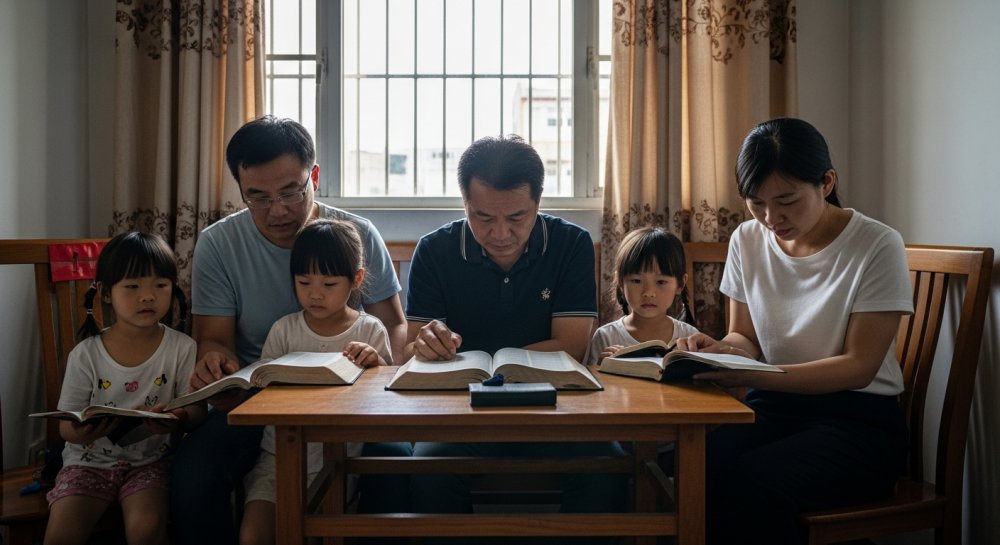
- Six Christians in China were arrested on charges of “organizing minors to carry out activities disrupting public order” for conducting ordinary church activities
- The arrests are part of China’s intensifying crackdown on religious freedom and Christian education of young people
- Communist authorities increasingly target churches that teach children biblical principles, viewing faith education as a threat to state control
Communist authorities in China have arrested six Christians this month, charging them with the crime of “organizing minors to carry out activities disrupting public order.” According to religious rights watchdog Bitter Winter, these believers were simply conducting ordinary church activities — teaching children about Jesus Christ and biblical values.
The arrests highlight the Chinese Communist Party’s escalating war on religious freedom, particularly targeting Christians who dare to pass their faith on to the next generation. Under the regime’s increasingly oppressive rules, sharing the Gospel with children has become a criminal offense worthy of arrest and imprisonment.
These believers face serious consequences simply for exercising what Americans recognize as fundamental rights — the freedom to worship God and teach children about faith, family, and moral truth. What the Communist government labels as “disrupting public order” is nothing more than Sunday school, youth ministry, and biblical instruction.
China’s crackdown on Christian education reflects the regime’s fear that young people exposed to biblical teaching will reject Communist ideology. The party understands that faith in God undermines loyalty to the state, and children who learn about Jesus will question atheistic propaganda. Rather than compete in the marketplace of ideas, authorities resort to arrests, intimidation, and persecution.
For American Christians, this persecution serves as a sobering reminder of what happens when governments view religious freedom as negotiable rather than God-given. The Chinese Communist Party demonstrates the end result of state power unchecked by recognition of human dignity and divine authority.
The targeting of children’s ministry represents a particularly sinister aspect of religious persecution. By criminalizing the transmission of faith from one generation to the next, the regime attempts to ensure Christianity dies out within a single lifetime. Parents and church leaders face an impossible choice: obey God’s command to raise children in faith, or comply with laws designed to eradicate Christianity entirely.
These six arrested believers join countless other Chinese Christians who have chosen faithfulness to Christ over compliance with tyranny. Their courage should inspire believers in free nations to defend religious liberty vigorously and support persecuted brothers and sisters abroad through prayer, advocacy, and material assistance.
The arrests also expose the moral bankruptcy of those who promote engagement with China while ignoring or minimizing religious persecution. Business interests and diplomatic niceties must never take precedence over standing with those suffering for their faith. American policy toward China should reflect our nation’s founding commitment to religious freedom as an inalienable right.
As these six Christians face prosecution for teaching children about Jesus, believers worldwide must remember them in prayer and speak out against the injustice they suffer. Religious freedom is not a privilege governments grant; it is a right God bestows. No regime has legitimate authority to punish people for worshiping their Creator or sharing their faith with the next generation.
Let us know what you think, please share your thoughts in the comments below.


Faith Facts
- Christians are called to redeem every tool for God’s glory and the spread of the Gospel.
- Artificial intelligence is a human creation and remains under God’s sovereign authority.
- Believers must approach emerging technologies with wisdom rooted in Scripture.
Christians around the world are asking an important question as artificial intelligence grows more powerful. How can this technology be captured for the glory of God and the advancement of the Gospel?
Scripture teaches that every good gift comes from above. Technology itself is not evil, but its use must be directed by truth and righteousness.
AI systems are built by people and trained on data created by people. They reflect human choices and remain limited by the boundaries God has established.
Believers have a responsibility to guide these tools toward purposes that honor Christ and serve others. That includes sharing the Gospel, protecting life, and strengthening families.
“Whether therefore ye eat, or drink, or whatsoever ye do, do all to the glory of God,” 1 Corinthians 10:31 reminds us.
Churches and ministries are already exploring ways to use AI for translation, accessibility, and discipleship resources. These efforts must stay anchored in sound doctrine and prayerful discernment.
At the same time, Christians are right to raise concerns about privacy, truth, and the temptation to place ultimate trust in machines rather than in the Lord.
“Trust in the Lord with all thine heart; and lean not unto thine own understanding,” Proverbs 3:5 declares.
Ultimately, the future belongs to the One who created all things, not to any algorithm or invention of man. AI will never have the final word over humanity.
Let us know what you think, please share your thoughts in the comments below.
Faith Facts
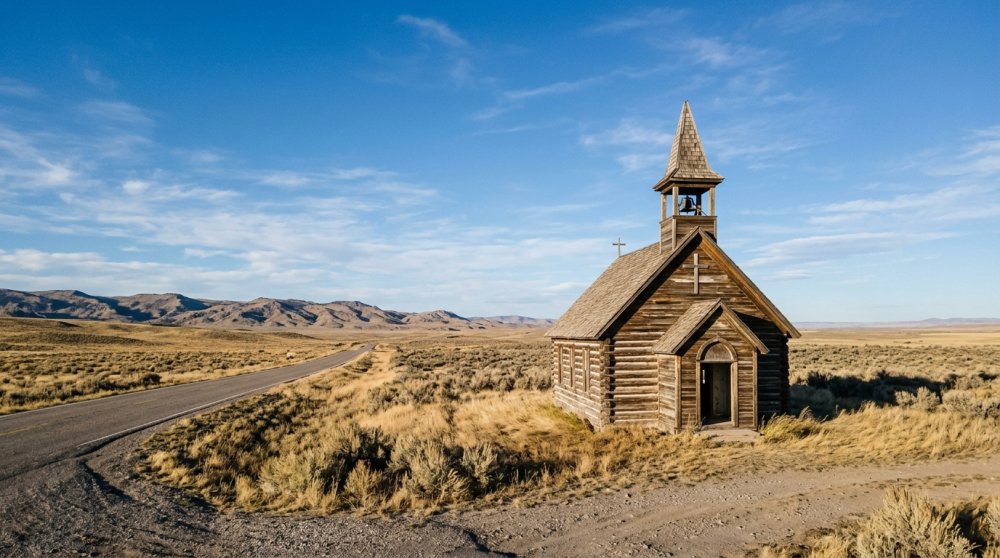
- The little log church has stood along the historic Oregon Trail route, serving as a steadfast reminder of Christian faith amid the rugged American frontier.
- U.S. Highway 191 passes near this enduring structure, connecting modern travelers to the spiritual legacy of pioneer families who settled the West.
- The church continues to bear witness to the traditional values of faith, family, and freedom that shaped our nation’s westward expansion.
Along U.S. Highway 191 stands a little log church that looks as though it has occupied this windswept landscape since the days of wagon trains.
The humble structure serves as a tangible link to the pioneer families who carried their Bibles and their faith across the plains in search of new beginnings.
Its weathered logs and simple steeple rise against the vast Western sky, a quiet testament to the enduring strength of Christian witness in America.
Travelers passing by are reminded that the values of hard work, self-reliance, and devotion to God helped build this nation from the ground up.
Let us know what you think, please share your thoughts in the comments below.

Faith Facts
- Scripture teaches that creation groans under the weight of sin and awaits redemption
- Christian teaching holds that believers are called to reflect God’s compassion through practical help
- History shows the church has long been first on the scene after floods, fires, and storms
Every natural disaster reminds us that we live in a fallen world — that mankind’s sin irreparably marred the world’s original perfection.
We call these events “natural disasters,” but the reality is that these tragedies are anything but “natural.”
Let us know what you think, please share your thoughts in the comments below.


-

 Self-Reliance1 year ago
Trump’s Bold Move Uncovers Massive Social Security Fraud
-

 Faith1 year ago
New Clues Emerge in Noah’s Ark Mystery
-

 News2 years ago
Governor Walz’s Rhetoric Sparks National Controversy
-

 News1 year ago
Mel Gibson’s ‘The Passion of the Christ’ Sequel Title Announced
-

 Family1 year ago
Texas Lawmaker Targets Furries in Schools
-

 Freedom2 years ago
Maine Lawmaker Challenges Sports Fairness Controversy
-

 Family1 year ago
Canada’s Controversial Policy Sparks Ethical Debate
-
Faith10 months ago
Congress Hears Pleas for Nigerian Christians