
Family
Sesame Street Sparks Controversy with Traditional Values and Sanctity of Family


In a world where traditional values and the sanctity of family are increasingly under siege, it is vital for us to remain vigilant in protecting the innocence of our children. Recently, the beloved children’s program “Sesame Street” stirred controversy by celebrating pride month, a move that many see as an attempt to introduce complex adult themes to impressionable young minds.
The show’s official social media account proclaimed, “On our street, everyone is welcome. Together, let’s build a world where every person and family feels loved and respected for who they are. Happy #PrideMonth!” Accompanying this message was an image of multi-colored puppet arms, symbolizing the rainbow often associated with LGBT pride.
This post, viewed by millions, has ignited a fierce backlash from concerned parents and faith leaders alike. Many have taken to social media to express their dismay, arguing that “Sesame Street” has become a vehicle for what they see as a broader cultural agenda aimed at undermining moral values.
One poignant response referenced Matthew 18:6, where Jesus warns against leading children astray: “It would be better for them to have a large millstone hung around their neck and to be drowned in the depths of the sea.” This biblical admonition serves as a stark reminder of the responsibility we have to safeguard our children’s moral upbringing.
Wade Miller, executive director of Citizens for Renewing America, voiced his concerns, stating, “I’d prefer you just focus on content for children instead of pushing sexual identity stuff onto them.” His sentiment is shared by many who grew up with the show and now feel alienated by its current direction.
Pastor James White, director of Alpha and Omega Ministries, echoed these sentiments, declaring, “My grandchildren will never watch your propaganda.” His words reflect a broader unease about the erosion of traditional family values in media aimed at children.
Christian author William Wolfe took a more direct approach, quipping, “Sesame Street was brought to you today by the letter ‘G’ for Groomer.” Such statements underscore the frustration felt by many who believe that the show has strayed far from its original mission of educating young minds in a wholesome manner.
Brady Gray, president of the Texas Family Project, criticized the program for promoting what he described as “immoral, perverse sexual lifestyles.” His comments highlight a growing concern among parents who seek to protect their children from what they perceive as inappropriate content.
This is not the first time “Sesame Street” has faced criticism for promoting certain ideologies. In the past, the show has been accused of supporting narratives aligned with COVID-19 vaccinations and Black Lives Matter rallies, further fueling the perception that it has become a platform for progressive propaganda.
In a decisive move to address these concerns, President Donald Trump previously signed an executive order to end public funding for PBS, the network that airs “Sesame Street.” This action was taken in response to allegations of bias and has sparked a legal battle with PBS.
As guardians of our children’s future, it is imperative that we remain steadfast in our commitment to upholding the values of faith, family, and freedom. By doing so, we can ensure that the next generation is raised with the moral compass needed to navigate an increasingly complex world.
Let us know what you think, please share your thoughts in the comments below.

Family
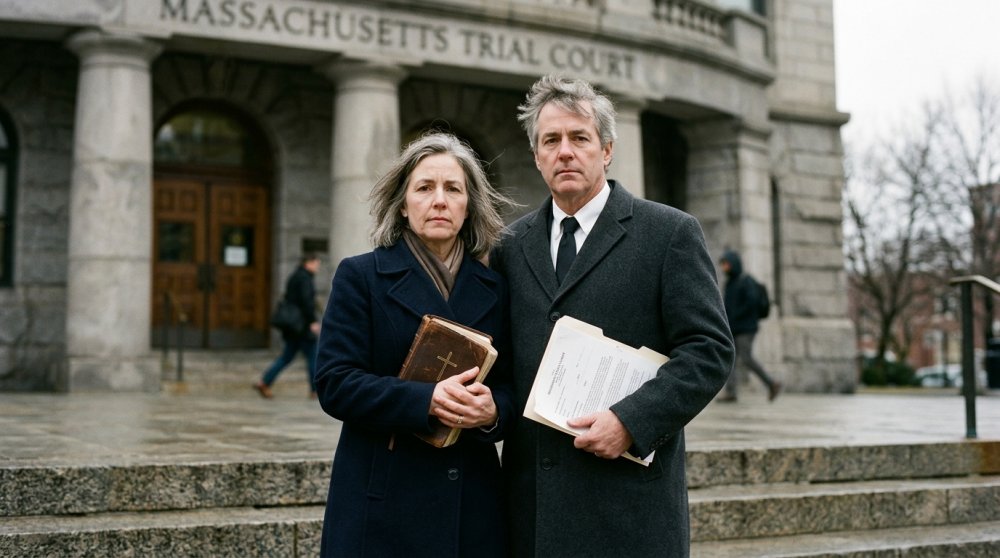
Catholic Parents Battle Massachusetts Over Daughter’s Custody After School Transition Allegations

Faith Facts
- The family is Catholic and is standing on their faith-based parental rights against state interference.
- Parents have a God-given responsibility to raise and protect their children according to biblical principles.
- Public institutions are increasingly challenging traditional family authority and religious convictions.
A Catholic family in Massachusetts is locked in a custody battle with state authorities after accusing a public school of secretly transitioning their daughter without their knowledge or consent. The parents claim the school took it upon itself to affirm the girl’s gender confusion and initiated steps toward medical interventions, prompting legal action to regain control of their child’s well-being.
The case has drawn national attention as it highlights the growing tension between parental rights and government overreach in public education. The family secured a temporary court order halting further medical procedures, including cross-sex hormone therapy, while the custody dispute plays out in the courts.
“We are fighting for our daughter and for the right of every parent to guide their children according to their faith and values,” the parents stated in court documents. “No school should ever bypass a mother’s and father’s authority on matters this serious.”
The allegations have raised serious questions about how public schools handle students struggling with gender dysphoria, especially when religious families are involved. The parents argue that the school acted in direct opposition to their Catholic beliefs and their explicit instructions regarding their daughter’s care.
Christian conservatives across the country are watching the case closely, concerned that similar incidents could occur in their own communities. The family has asked for continued prayer as they navigate the legal system and seek to bring their daughter home.
Let us know what you think, please share your thoughts in the comments below.

Faith Facts
- A prominent rabbi has publicly advised Prince William to withhold forgiveness from Prince Harry, suggesting anger is more comfortable than grace
- Christian teaching clearly distinguishes between forgiveness—a command—and reconciliation, which requires two willing parties
- Biblical principles call believers to forgive even when relationships cannot be restored, protecting our own spiritual health
The ongoing rift between Prince William and Prince Harry has captured global attention, but a recent commentary from Rabbi Jonathan Romain has sparked an important conversation about forgiveness, reconciliation, and what Christian faith actually requires of us in broken relationships.
Rabbi Romain advised Prince William against extending peace to his brother, suggesting it was “cosier” to remain “wrapped in a blanket of anger and victimhood.” While the rabbi’s perspective may resonate with our human nature, it stands in stark contrast to the clear teachings of Scripture.
Emma Fowle, deputy editor of Premier Christianity, offers a different path—one rooted in biblical truth and hard-won personal experience. Drawing from her own family’s painful divisions, Fowle makes a compelling case that forgiveness is not optional for Christians, even when reconciliation remains impossible.
The distinction matters tremendously. Forgiveness is a command from God, given for our own spiritual health and obedience to Christ. Reconciliation, however, requires both parties to participate in healing and restoration.
We can forgive someone who has wounded us deeply while simultaneously maintaining healthy boundaries. We can release bitterness without pretending the hurt never happened. We can obey God’s call to forgive without being required to restore a relationship to its former state.
This is particularly relevant when trust has been shattered repeatedly, when one party refuses to acknowledge wrongdoing, or when reconciliation would require compromising other important relationships or principles. In such cases, forgiveness protects our own hearts from the poison of bitterness while wisdom protects us from further harm.
The world watches how Christians respond to family fractures, betrayal, and public humiliation. Our witness depends not on achieving perfect family harmony, but on demonstrating supernatural grace even in the midst of unresolved pain.
Prince William faces a situation many families understand all too well—a broken relationship with a sibling, complicated by public scrutiny and competing loyalties. The path of forgiveness without full reconciliation may be the wisest course, honoring both biblical truth and practical wisdom.
Remaining “wrapped in a blanket of anger and victimhood,” as the rabbi suggested, may feel temporarily safer, but it ultimately imprisons us. Forgiveness liberates us from that prison, even when the relationship itself cannot be fully restored.
Our faith does not call us to be doormats or to enable destructive behavior. It calls us to forgive as we have been forgiven—freely, completely, and for our own spiritual good as much as for the sake of the one who wronged us.
Let us know what you think, please share your thoughts in the comments below.

Faith Facts
- A survivor of the 9/11 attacks arrived in America in 2001 with only $50 and two suitcases, searching for purpose
- The tragedy became a turning point that eventually led to a divine calling to fight human trafficking
- A cry for help from a trafficking victim revealed God’s purpose for his survival
When the Twin Towers fell on September 11, 2001, one man’s brush with death would become the beginning of an extraordinary journey of faith and purpose. Having arrived in America just months earlier with nothing but hope and determination, he had no idea that surviving one of history’s darkest days would set him on a path to rescue others from darkness.
The survivor recalls arriving on American soil with modest means — just $50 in his pocket and two suitcases containing all his worldly possessions. He came with dreams like so many immigrants before him, but without a clear sense of calling or direction for his life.
“When I arrived in America in 2001 with $50 and two suitcases, I had dreams — but no sense of purpose.”
Then came September 11th. The attacks that shook our nation and took nearly 3,000 innocent lives also marked a turning point in his own story. The trauma and survival would plant seeds that wouldn’t fully bloom for years to come.
“Then 9/11 changed everything, and it would take years, and a cry for help from a trafficking victim, before I understood why I survived.”
In the years following that fateful day, he searched for meaning in his survival. Why had God spared him when so many perished? The answer wouldn’t come immediately, but when it did, it arrived with unmistakable clarity.
The moment of revelation came through the desperate plea of a human trafficking victim. In that cry for help, he finally understood the divine purpose behind his survival — he was meant to be a voice for the voiceless and a defender of the vulnerable.
Human trafficking remains one of the darkest sins plaguing our modern world, with millions trapped in various forms of slavery. It’s an evil that Christians are called to confront, standing firm on biblical principles that affirm the dignity and worth of every human life created in God’s image.
This survivor’s transformation from a man without purpose to a warrior against human trafficking exemplifies how God can redeem even our most traumatic experiences. His story serves as a powerful reminder that our trials often prepare us for our true calling.
The fight against human trafficking requires courage, commitment, and compassion — qualities forged in the fires of adversity. For this 9/11 survivor, those qualities were born from ashes and refined through years of searching for meaning.
His journey demonstrates a fundamental truth that resonates with Christian values: no experience is wasted in God’s economy. Every hardship can become a tool for His purpose, and every survival story can inspire others to action.
As Americans who cherish freedom and human dignity, we must join the fight against modern slavery in all its forms. Whether through prayer, advocacy, or direct action, we each have a role to play in protecting the vulnerable and pursuing justice.
Let us know what you think, please share your thoughts in the comments below.


-

 Self-Reliance1 year ago
Trump’s Bold Move Uncovers Massive Social Security Fraud
-

 Faith1 year ago
New Clues Emerge in Noah’s Ark Mystery
-

 News2 years ago
Governor Walz’s Rhetoric Sparks National Controversy
-

 News1 year ago
Mel Gibson’s ‘The Passion of the Christ’ Sequel Title Announced
-

 Family2 years ago
Texas Lawmaker Targets Furries in Schools
-

 Freedom2 years ago
Maine Lawmaker Challenges Sports Fairness Controversy
-

 Family1 year ago
Canada’s Controversial Policy Sparks Ethical Debate
-
Faith10 months ago
Congress Hears Pleas for Nigerian Christians