
News
Savannah’s Civic Sanctuaries Need Faithful Renewal

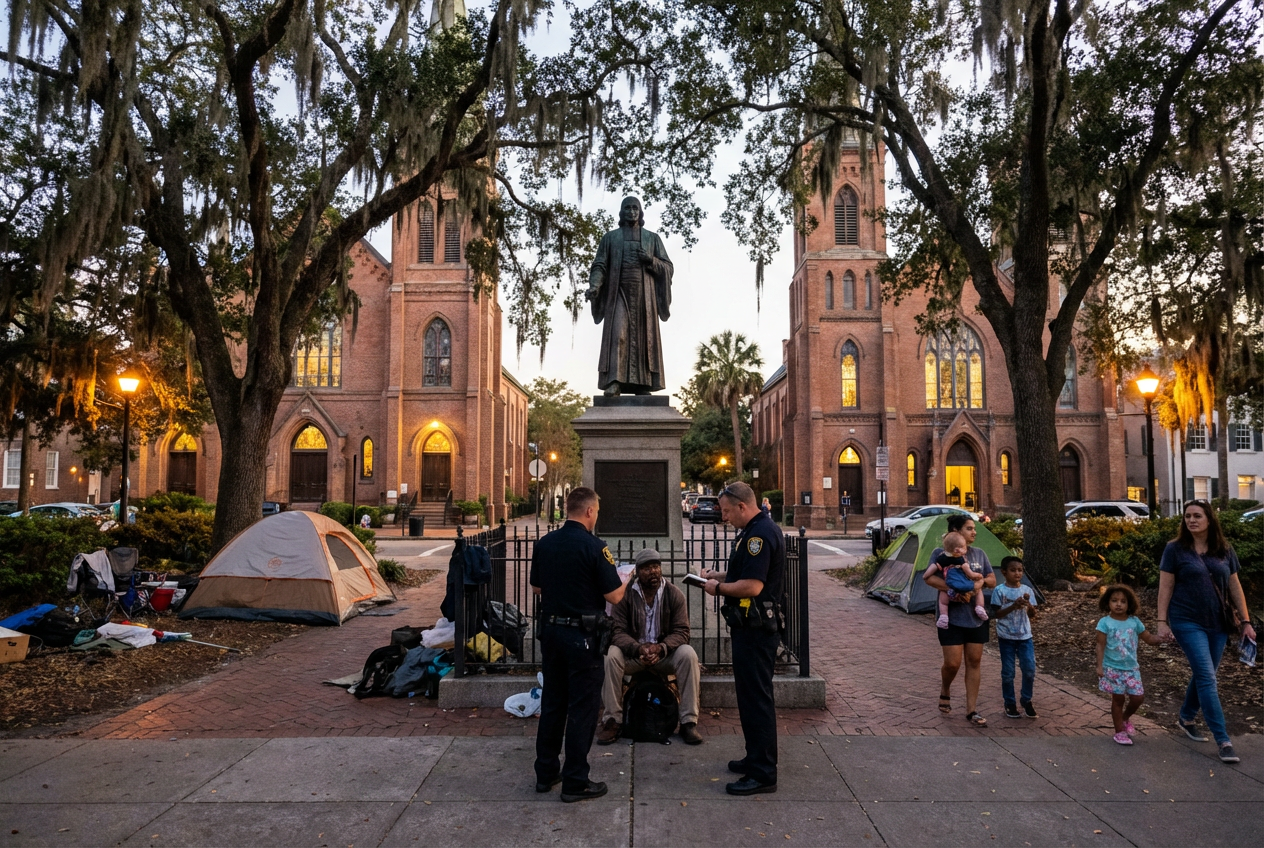
Savannah, Georgia, was originally designed by General James Oglethorpe in 1733 to be a masterpiece of urban beauty defined by faith and civic order.
Its iconic squares and historic churches once represented the best of Southern heritage and hospitality.
Recent visits reveal a troubling decline as homelessness and open-air drug use overtake these sacred public spaces.
Even sites dedicated to Christian leaders like John Wesley have become hubs for illicit activity instead of places for prayer and reflection.
The preservation of our cities requires more than just maintaining historic architecture; it demands the enforcement of law and the protection of public decency.
When crime and transit-camp mentalities are tolerated, the very soul of a community is at risk.
While the city has begun implementing ordinances to prohibit urban camping, the path to restoration is long.
We must pray for leaders who prioritize the safety of families and the sanctity of our shared history.
Faith Facts
- Savannah was laid out in 1733 as a colonial haven defined by more than 20 public squares.
- A statue of John Wesley, the founder of Methodism, stands in Reynolds Square as a testament to the city’s religious roots.
- Recent enforcement efforts led to 179 citations for illegal camping as the city attempts to reclaim its public spaces.
Our historic cities are a legacy that must be guarded with vigilance and a commitment to moral order.


Faith Facts
- A former Missouri church employee faces embezzlement charges for allegedly stealing over $16,000 through unauthorized checks
- The accused has been ordered to appear in court in June to face the charges
- Church communities continue to emphasize the importance of financial accountability and transparency in ministry operations
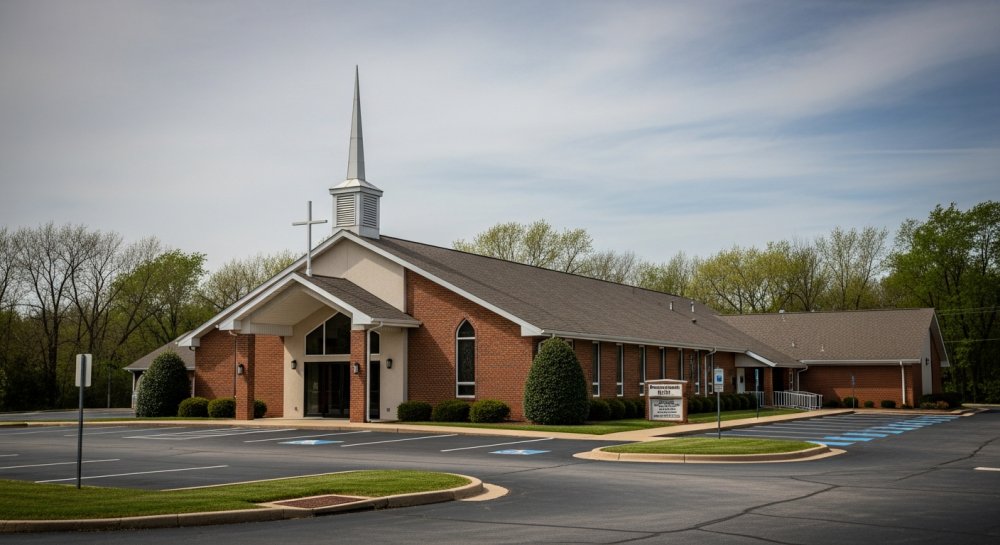
A former employee of a Missouri church is facing serious criminal charges after allegedly embezzling more than $16,000 from the congregation through fraudulent checks. The case highlights ongoing concerns about financial oversight in faith-based organizations and the need for vigilant stewardship of ministry resources.
Law enforcement authorities have accused the former church worker of writing unauthorized checks over a period of time, defrauding the church of funds that were intended for ministry purposes and community outreach. The alleged theft represents a significant breach of trust in a setting where financial integrity is paramount to the mission of serving God and the congregation.
The accused individual has been ordered to appear in court in June, where formal proceedings will determine the outcome of the embezzlement allegations. The sheriff’s office has been working with church leadership to investigate the full extent of the fraudulent activity and ensure accountability.
This case serves as a sobering reminder for churches across America about the critical importance of implementing strong financial controls and oversight mechanisms. Many ministry leaders emphasize that proper accounting procedures, regular audits, and multiple layers of approval for financial transactions are essential safeguards against fraud and misuse of church resources.
Church embezzlement cases, while relatively rare, can have devastating effects on congregations both financially and spiritually. When those entrusted with stewardship of ministry funds betray that sacred responsibility, it can shake the faith community’s confidence and divert resources away from gospel work and community service.
Christian financial experts recommend that churches establish clear policies including separation of duties, regular financial reporting to leadership boards, and independent audits to protect both the organization and its employees from temptation or false accusations. These practices honor biblical principles of accountability and transparency in handling resources dedicated to God’s work.
As this case moves forward through the legal system, it serves as a call for all faith-based organizations to review their financial procedures and ensure they are practicing good stewardship of the resources entrusted to them by their congregations.
Let us know what you think, please share your thoughts in the comments below.
Faith Facts
- Victory Church in East Palatka, Florida, lost its senior pastor and his wife after their son, a youth pastor, was caught in a video sting operation attempting to meet with someone he believed was a minor.
- The son admitted on camera to sending sexually explicit photos and messages to what he thought was a teenage girl, and had driven to meet her in person.
- The church is now searching for new pastoral leadership as the community grapples with the betrayal of trust and the need for accountability and healing.
A Florida church community is reeling after a video surfaced showing a youth pastor confessing to attempting to meet with a minor for sexual purposes. The incident has led to the immediate resignation of the church’s senior leadership and raised urgent questions about accountability and child protection in ministry settings.
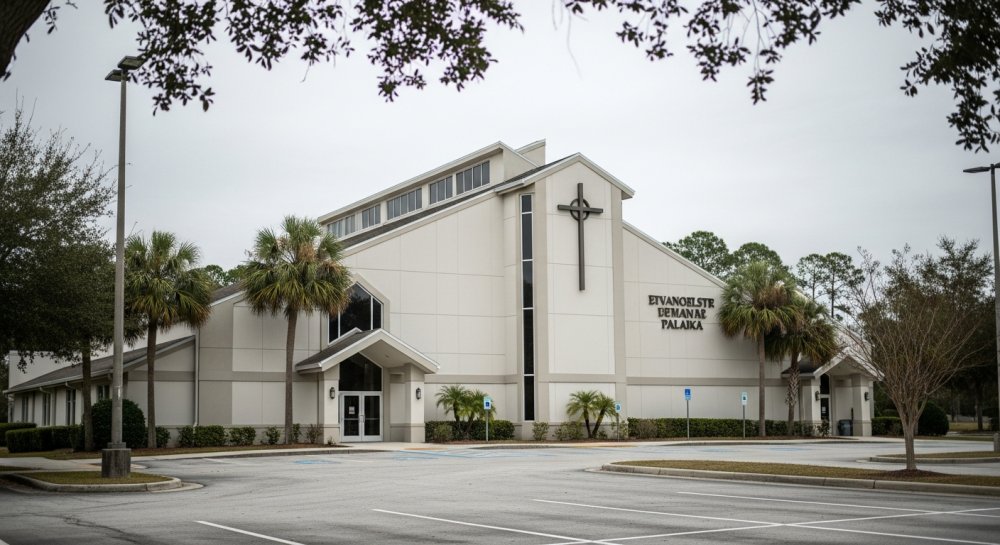
Victory Church in East Palatka announced that its recently installed senior pastor and his wife have stepped down from their positions. The resignations came after their son, who served as a youth pastor at the church, was caught on video admitting to sending sexually explicit photographs to someone he believed to be an underage girl.
The video, which has circulated online, shows the youth pastor confessing to the inappropriate communications and acknowledging that he had traveled to meet with the person he thought was a minor. The sting operation revealed the disturbing extent of his intentions and actions.
The case highlights the critical importance of safeguarding policies in churches and youth ministries. Christian leaders across the nation have long emphasized that protecting children must be the top priority in any faith community, and that no position or family connection should shield wrongdoers from accountability.
For the Victory Church congregation, the revelation represents a profound breach of trust. Youth pastors hold positions of spiritual authority and mentorship over the most vulnerable members of the church family. When that sacred trust is violated, the damage extends far beyond the immediate victims to shake the foundation of the entire community.
The senior pastor’s decision to resign, while painful, reflects an understanding that leadership requires not only spiritual gifts but also the confidence of the congregation. When family circumstances create conflicts or undermine that trust, stepping aside becomes the honorable path forward.
Victory Church now faces the challenging work of healing and rebuilding. The congregation will need to implement stronger safeguards, ensure proper vetting and accountability measures for all ministry leaders, and provide pastoral care for those affected by this betrayal.
This incident serves as a sobering reminder that churches must remain vigilant in protecting children and maintaining high standards for those in leadership. Background checks, accountability structures, and clear policies are not optional extras but essential elements of faithful stewardship.
The broader Christian community has a responsibility to support churches in crisis while also learning from these failures. Every congregation should examine its own policies and practices to ensure that children are protected and that leaders are held to biblical standards of conduct.
As Victory Church searches for new pastoral leadership, the priority must be finding shepherds who will lead with integrity, implement robust child protection measures, and guide the congregation through this difficult season with wisdom and grace. The path forward requires both justice for wrongdoing and hope for restoration.
Let us know what you think, please share your thoughts in the comments below.
Faith Facts
- National Religious Broadcasters formally requested FCC investigation into Jimmy Kimmel’s monologue following third assassination attempt on President Trump
- NRB President Troy A. Miller expressed concern that Kimmel’s rhetoric may have crossed from protected speech into dangerous territory
- The complaint comes amid heightened concerns about violent rhetoric targeting conservative leaders and its real-world consequences
The National Religious Broadcasters has taken the extraordinary step of calling for a federal investigation into late-night host Jimmy Kimmel after controversial remarks about President Donald Trump.
The request comes in the wake of a third assassination attempt on the former president’s life, raising serious questions about the impact of inflammatory rhetoric in the media.
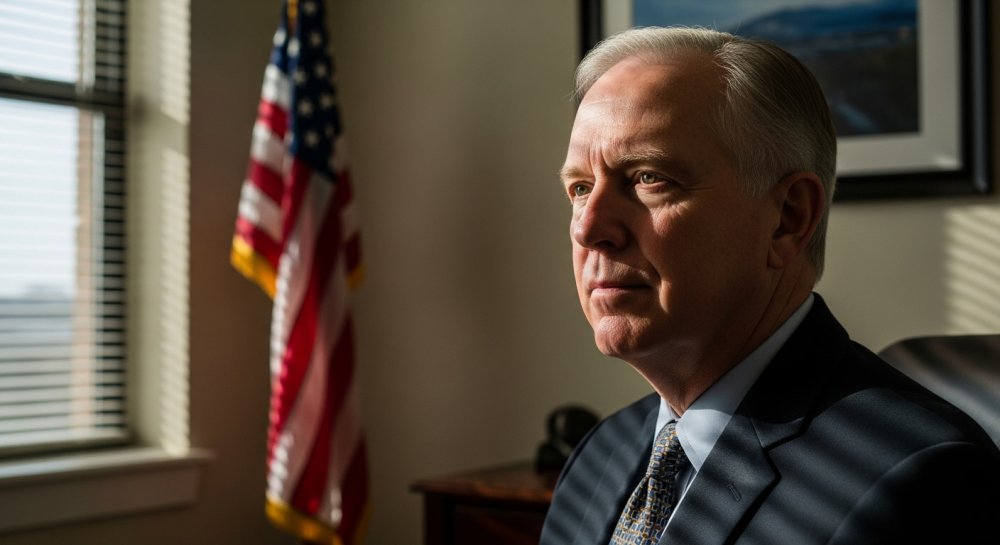
Troy A. Miller, President of the National Religious Broadcasters, spoke about the organization’s decision to petition the Federal Communications Commission. The NRB represents thousands of Christian communicators across America and has historically advocated for responsible broadcasting standards.
The controversy centers on Kimmel’s monologue, which critics argue went beyond typical political commentary. Following multiple attempts on President Trump’s life, concerns have mounted about whether certain types of speech create a climate that encourages political violence.
Miller and the NRB argue that there must be accountability when public figures use their platforms in ways that could potentially incite harm. The organization is asking the FCC to determine whether Kimmel’s comments violated broadcasting standards designed to protect public safety.
The timing of the complaint is significant. With Trump having survived three assassination attempts, the stakes of public discourse have never been higher. Faith leaders and conservative voices have increasingly expressed alarm at what they view as a normalization of violent language directed at political opponents.
The FCC complaint represents a broader frustration among Christians and conservatives who believe mainstream media personalities face little accountability for inflammatory statements. Many point to a perceived double standard in how rhetoric is evaluated depending on the political target.
The NRB’s action raises important questions about the boundaries of free speech versus responsible broadcasting. While the First Amendment protects robust political debate, there are legal limits when speech crosses into incitement or creates imminent danger.
This case will test whether federal regulators believe those boundaries were crossed. The outcome could have significant implications for how media figures discuss political leaders, particularly in an era of heightened political tensions and actual violence.
For many Christians and conservatives, the complaint represents an overdue reckoning with a media culture they believe has become reckless in its treatment of traditional values and leaders. The NRB’s willingness to take formal action signals a growing determination to hold powerful media institutions accountable.
As the FCC considers the complaint, Americans across the political spectrum are watching to see whether there will be consequences for rhetoric that some believe has gone too far.
Let us know what you think, please share your thoughts in the comments below.


-

 Self-Reliance1 year ago
Trump’s Bold Move Uncovers Massive Social Security Fraud
-

 Faith1 year ago
New Clues Emerge in Noah’s Ark Mystery
-

 News1 year ago
Governor Walz’s Rhetoric Sparks National Controversy
-

 News1 year ago
Mel Gibson’s ‘The Passion of the Christ’ Sequel Title Announced
-

 Family1 year ago
Texas Lawmaker Targets Furries in Schools
-

 Freedom1 year ago
Maine Lawmaker Challenges Sports Fairness Controversy
-

 Family11 months ago
Canada’s Controversial Policy Sparks Ethical Debate
-
Faith5 months ago
Congress Hears Pleas for Nigerian Christians