
Freedom
Safety Over Ideology: A Necessary Stand in Public Spaces


At the Washington-Liberty Aquatics Center in Arlington, Virginia, a troubling incident unfolded that challenges the boundaries of privacy and safety in public spaces. Jen McDougal and her nine-year-old daughter, fresh from swim lessons, were confronted by an unsettling sight in the women’s locker room—a naked man, identified as Richard Cox, stood openly in the space designated for women and girls.
During a segment on “Fox & Friends,” McDougal described the moment as profoundly “awkward and scary,” noting the chilling silence that replaced what was typically a cheerful environment. This scene starkly contrasts with the safe, nurturing atmosphere parents expect in such community spaces.
The staff’s response to McDougal’s concerns was even more disheartening. They informed her that Cox, who identifies as transgender and has a history as a registered sex offender since 1998, had the “right” to be there, according to current policies. This stance was maintained despite his notorious background and previous similar offenses.
This incident at the aquatic center is not isolated. It reflects a broader issue that has seen various public facilities grappling with the balance between inclusivity and the safety of their patrons. Two months following the locker room incident, Cox was involved in similar disturbances, leading to charges of indecent exposure among others.
In response to these events, Arlington Public Schools, which oversees the aquatic center, has decided to enhance security measures and signage. However, their commitment to maintaining current access policies has sparked significant concern among parents and community members who feel that the safety of girls and women is being compromised for the sake of inclusivity.
The urgency of this situation has been recognized at the federal level as well. President Trump’s recent executive order, aimed at preserving the integrity of women’s sports and spaces, mandates a clear separation based on biological sex, underscoring the federal commitment to safety and fairness under Title IX.
Furthermore, the Defense of Freedom Institute has filed a civil rights complaint, pressing for a strict enforcement of Title IX to protect sex-segregated spaces. Their actions highlight a growing demand for policies that prioritize the well-being and safety of children over ideological agendas.
The stance taken by institutions like APS needs a reevaluation in light of these concerns. Meg Kilgannon of the Family Research Council articulates a widely felt frustration, questioning the absence of immediate law enforcement responses to such incidents. She emphasizes the need for clear, protective measures that safeguard against potential abuses of policy that compromise the safety of vulnerable populations.
This incident serves as a critical reminder of the need for vigilance and proactive measures to ensure that the rights and safety of individuals, especially children, are not overshadowed by broader political and ideological debates. As a society, we must uphold standards that protect our youngest members, ensuring that public spaces remain safe and welcoming for everyone.


Faith Facts
- California’s SB 934 would allow lawsuits against Christian counselors to be revived up to 17 years after the statute of limitations has expired
- The bill retroactively punishes conduct that was legal at the time it occurred, raising serious constitutional concerns about ex post facto laws
- This legislation sets a dangerous precedent that could be used to target other faith-based practices and religious freedom protections
A new California bill is raising alarm bells among religious freedom advocates and constitutional scholars. SB 934, promoted under the banner of protecting survivors of so-called “conversion therapy,” contains provisions that could fundamentally undermine legal protections that have existed for centuries.
The legislation would grant the state unprecedented power to reach back nearly two decades to revive expired legal claims. More troubling still, it would punish counselors and ministries for conduct that was entirely legal when it occurred.
At its core, this bill represents more than a policy dispute over counseling methods. It establishes a framework where the government can retroactively redefine legal conduct as punishable — a concept that violates basic American principles of due process and fair notice.
Christian counselors who provided biblically-based guidance years ago, operating within the law and their sincerely held religious convictions, could now face lawsuits for actions the state has decided to retroactively criminalize. This creates an impossible situation where citizens cannot know whether their lawful conduct today will be deemed illegal tomorrow.
The statute of limitations exists for good reason. It protects defendants from stale claims where evidence has disappeared, memories have faded, and witnesses may no longer be available. These protections apply to everyone, regardless of the popularity of their views.
By allowing plaintiffs to revive claims that expired years ago, SB 934 strips away these fundamental fairness protections. It opens the door for similar retroactive targeting of other unpopular groups or practices — a power that could easily be turned against any faith community.
Religious organizations have long provided counseling consistent with their theological beliefs. Whether helping individuals align their lives with biblical teaching on sexuality, marriage, or other matters of conscience, these ministries operate from a place of compassion and conviction.
While proponents frame this as protection for vulnerable individuals, the bill’s actual mechanism threatens to weaponize the legal system against religious practice. It sends a chilling message: hold traditional Christian beliefs at your own risk, because the rules can change retroactively.
The precedent extends far beyond this specific issue. If California can revive expired lawsuits and retroactively punish previously legal religious counseling, what prevents future legislatures from doing the same with other faith practices? Homeschooling curricula? Pastoral counseling on marriage? Religious education on gender?
Constitutional safeguards exist precisely to prevent this kind of overreach. The prohibition on ex post facto laws — laws that retroactively criminalize conduct — is foundational to American jurisprudence. It reflects the understanding that citizens must be able to know what the law is and conform their conduct accordingly.
Americans of all backgrounds should be concerned when any group faces retroactive punishment for conduct that was legal when performed. Today it may target one unpopular practice; tomorrow it could reach any belief or behavior the government decides to redefine.
Religious freedom means little if it can be revoked retroactively. The freedom to live according to one’s faith requires the assurance that lawful religious practice today won’t become the basis for punishment years from now when political winds shift.
California lawmakers should recognize that this bill, whatever its stated intentions, establishes a dangerous precedent that threatens foundational legal protections. The power to reach back in time to punish previously legal conduct is a power no government should possess in a free society.
Let us know what you think, please share your thoughts in the comments below.
Faith Facts
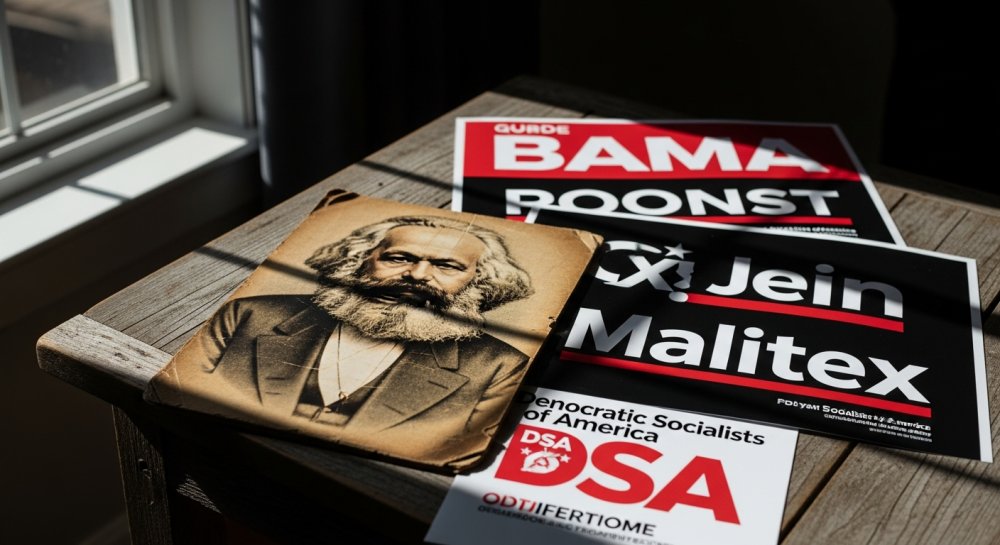
- The Democratic Socialists of America have emerged as a growing political force, openly promoting an ideology historically rooted in atheistic materialism
- Socialist philosophy, from Karl Marx forward, has consistently positioned itself in opposition to traditional religious faith and Biblical values
- Nations that embraced socialist ideology in the 20th century experienced widespread persecution of Christians and suppression of religious freedom
A dangerous ideology is being repackaged for American consumption, and faithful Christians must understand what stands behind the appealing rhetoric. Names like Abdul El-Sayed and Francesca Hong may be new to many Americans, but the worldview they represent carries deep historical roots—roots that are fundamentally hostile to religious faith and Biblical principles.
The Democratic Socialists of America (DSA) have positioned themselves as champions of economic justice and equality. But beneath the surface promises lies an intellectual foundation built by Karl Marx, whose writings explicitly rejected God and promoted a materialist philosophy incompatible with Christian truth.
Marx himself described religion as “the opium of the people,” viewing faith as an obstacle to his revolutionary vision. This wasn’t simply a passing comment—it was central to his entire philosophical system. Marxist ideology cannot accommodate genuine Christianity because it demands total allegiance to the state and its economic restructuring of society.
The historical record speaks with chilling clarity. When socialist and communist governments gained power throughout the 20th century, religious believers became targets. From the Soviet Union to China, from Cambodia to Cuba, those who proclaimed socialist ideals proceeded to persecute Christians, close churches, imprison pastors, and attempt to eradicate faith from public life entirely.
The death toll attributed to socialist regimes reaches into the tens of millions—a staggering human cost that cannot be dismissed or explained away. These weren’t accidents or deviations from “true socialism.” They were the predictable outcomes of an ideology that elevates human planning above divine wisdom and state power above individual conscience.
Today’s American socialists often distance themselves from these historical atrocities, claiming their vision is different. They speak of democratic socialism, Nordic models, and compassionate redistribution. But the philosophical foundation remains unchanged—a materialist worldview that sees human beings as economic units rather than souls created in God’s image.
Christians must discern the spiritual implications of political ideologies. When a movement’s intellectual godfather explicitly rejected the Creator, believers should approach its modern advocates with wisdom and caution. The Bible calls us to care for the poor and pursue justice, but God’s methods honor human dignity, personal responsibility, and voluntary generosity—not coercive state control.
The appeal of socialism often rests on legitimate concerns about inequality and suffering. But the solution to human brokenness isn’t found in empowering government bureaucrats to redistribute wealth. It’s found in the transformation of hearts through the Gospel and the building of communities rooted in Biblical values.
Religious freedom and economic freedom are deeply connected. When government assumes total control over economic life, it inevitably seeks control over every other sphere—including worship, education, and family life. History demonstrates this pattern with heartbreaking consistency.
American Christians have a responsibility to understand the ideologies shaping our political landscape. The DSA and similar movements may present themselves as progressive and compassionate, but their intellectual heritage tells a different story—one of hostility toward faith and tragic consequences for human flourishing.
As believers navigate these challenging times, we must hold fast to Biblical wisdom while engaging thoughtfully with political questions. The Gospel offers a vision of human dignity, redemption, and community that no political ideology can match. Our hope rests not in government programs or economic systems, but in the transforming power of Jesus Christ.
Let us know what you think, please share your thoughts in the comments below.
Faith Facts
- The Declaration of Independence contains a revolutionary right that modern Americans often overlook and critics have questioned for centuries
- This foundational document established principles rooted in the belief that human rights come from God, not government
- Understanding the full scope of the Declaration is essential for preserving American liberty and constitutional government
The Declaration of Independence stands as one of history’s most transformative documents, establishing the philosophical foundation for American freedom. Yet within its powerful words lies a principle that has been systematically downplayed and challenged throughout our nation’s history.
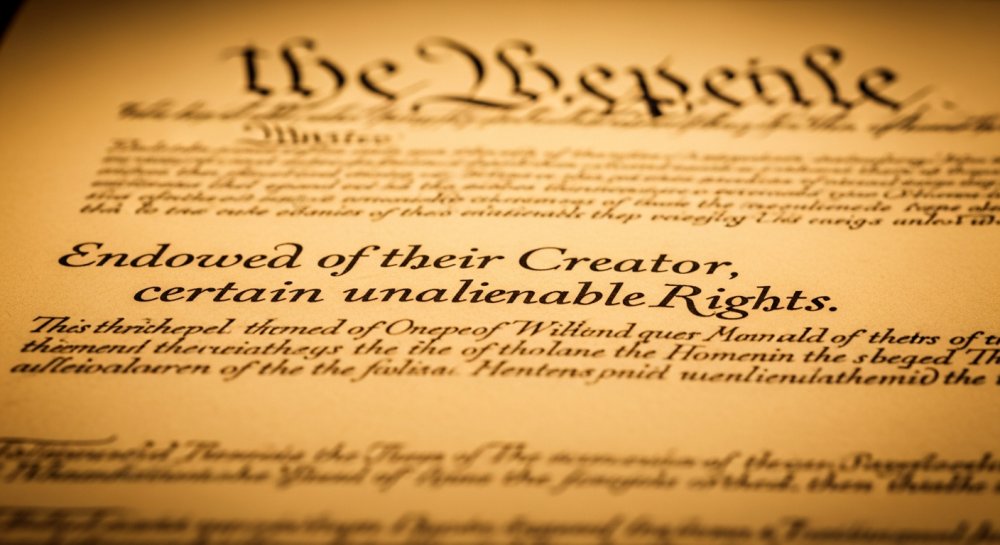
At the heart of the Declaration is the recognition that our rights come from our Creator, not from any earthly authority. This theological foundation undergirds everything America stands for, yet it’s precisely this divine origin of rights that secular forces have sought to diminish.
The Founders understood something profound: if rights come from God, no government can legitimately take them away. This wasn’t just political theory—it was a direct challenge to tyranny rooted in biblical truth. They recognized that acknowledging God as the source of our liberties was essential to preserving those liberties.
Throughout American history, various movements have attempted to reframe our rights as grants from government rather than gifts from God. This shift in understanding represents a fundamental threat to the American experiment. When government becomes the source of rights, government can also become the destroyer of rights.
The radical nature of the Declaration wasn’t just that it announced separation from Britain. It was radical because it grounded human dignity and freedom in the unchanging character of God Himself. This made American liberty something transcendent—something worth defending with our lives, our fortunes, and our sacred honor.
For Christian conservatives today, reclaiming the full meaning of the Declaration means standing firm on the principle that shaped our nation: that we are endowed by our Creator with certain unalienable rights. This isn’t merely historical trivia—it’s the cornerstone of freedom itself.
The question we must ask ourselves is whether we will continue to honor the complete vision of our Founders, or allow the secular rewriting of American history to erase the divine foundation of our liberties. The answer will determine whether future generations inherit the blessings of freedom we’ve enjoyed.
Let us know what you think, please share your thoughts in the comments below.
-

 Self-Reliance1 year ago
Trump’s Bold Move Uncovers Massive Social Security Fraud
-

 Faith1 year ago
New Clues Emerge in Noah’s Ark Mystery
-

 News1 year ago
Governor Walz’s Rhetoric Sparks National Controversy
-

 News1 year ago
Mel Gibson’s ‘The Passion of the Christ’ Sequel Title Announced
-

 Family1 year ago
Texas Lawmaker Targets Furries in Schools
-

 Freedom1 year ago
Maine Lawmaker Challenges Sports Fairness Controversy
-

 Family1 year ago
Canada’s Controversial Policy Sparks Ethical Debate
-
Faith9 months ago
Congress Hears Pleas for Nigerian Christians