
Freedom
Rubio Declares War on False Liberty

Faith Facts
- Secretary of State Marco Rubio stated that true liberty is not liberation from duty to family, nation, and God
- Rubio identified the Church as one of the foundational institutions that has sustained America for 250 years
- The statement reaffirms the traditional understanding of freedom rooted in moral responsibility and divine purpose
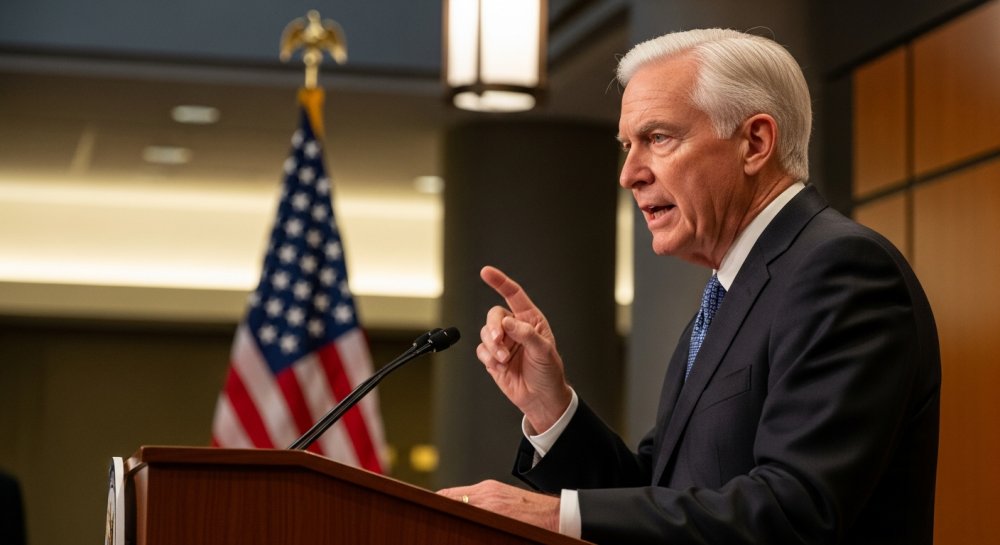
Secretary of State Marco Rubio delivered a powerful reminder about the true nature of American liberty, rejecting modern distortions that divorce freedom from responsibility. In remarks that underscore his commitment to traditional values, Rubio made clear that the Founders never intended liberty to mean abandonment of our sacred duties.
“Liberty was never meant to be ‘liberation from man’s duty to family, nation and God,'” Rubio declared, drawing a stark line between authentic freedom and the moral relativism promoted by secular progressives.
The Secretary of State pointed to the vital role of faith communities in preserving the American experiment. He identified the Church as one of the cornerstone institutions that has held the nation together throughout its 250-year history, providing moral guidance and social cohesion that government alone cannot supply.
Rubio’s statement comes at a critical moment when many Americans feel their religious liberties are under assault from an increasingly hostile secular culture. His words affirm what generations of believers have understood: that true freedom exists within the framework of moral duty, not in spite of it.
The traditional understanding of liberty that Rubio champions recognizes that our rights come with corresponding responsibilities—to our families, our communities, our nation, and above all, to God. This vision stands in sharp contrast to the modern conception of freedom as mere personal autonomy, disconnected from any higher purpose or moral accountability.
By highlighting the Church’s indispensable role in American society, Rubio reinforces the reality that faith-based institutions have been essential to the nation’s flourishing. From education to charitable works to moral formation, churches have provided the bedrock upon which civil society depends.
His remarks serve as both a history lesson and a rallying cry for Americans who understand that ordered liberty—not libertine license—is what the Founders bequeathed to us. It is a freedom rooted in truth, structured by duty, and oriented toward the common good under God.
Let us know what you think, please share your thoughts in the comments below.


Faith Facts
- Fellowship of Christian Athletes filed a federal lawsuit against a New Jersey school district that banned outside volunteer mentors following a complaint from an atheist legal organization
- The policy change specifically targeted faith-based mentoring programs while other secular outside organizations maintained access to students
- Legal experts argue the school district’s actions violate First Amendment protections for religious expression and viewpoint discrimination laws
The Fellowship of Christian Athletes has filed a federal lawsuit against a New Jersey school district, challenging a policy that effectively bars outside adult volunteer mentors from working with students. The policy change came after the district received a complaint from an out-of-state atheist legal organization.
The case highlights a growing pattern across America where school districts capitulate to pressure from secular activist groups seeking to remove Christian influence from public schools. Rather than standing firm on constitutional protections for religious liberty, administrators often choose the path of least resistance—silencing faith voices entirely.
For decades, the Fellowship of Christian Athletes has provided mentorship, character development, and spiritual guidance to millions of students nationwide. These volunteer mentors invest countless hours helping young people navigate the challenges of adolescence, often stepping in where families and communities have been fractured by modern social pressures.
The timing and targeting of this ban raises serious questions about religious discrimination. When secular organizations maintain access to students while faith-based groups are singled out for exclusion, the message is clear: some viewpoints are welcome in public schools, others are not.
This case represents more than just one school district’s policy. It reflects a broader cultural battle over whether Christian values have any place in the public square. Atheist activist organizations, often funded by wealthy coastal donors, have made it their mission to systematically remove Christian expression from every corner of American public life.
Parents and students who benefit from Christian mentorship programs deserve equal treatment under the law. The First Amendment doesn’t grant special privileges to secular worldviews while punishing religious ones. Constitutional protections apply to all Americans, regardless of whether activist groups find their beliefs offensive.
The Fellowship of Christian Athletes’ decision to fight back through legal channels sends an important message: Christian organizations will no longer quietly accept discrimination disguised as neutrality. When schools surrender to pressure from outside activist groups, they betray their obligation to protect the constitutional rights of all students and community members.
This lawsuit will test whether public schools can legally discriminate against faith-based organizations while maintaining access for secular groups. The outcome will have implications far beyond one New Jersey district, potentially setting precedent for how schools nationwide balance competing interests and constitutional protections.
American parents increasingly recognize that removing positive Christian influence from young people’s lives creates a vacuum that secular ideologies eagerly fill. Students deserve access to mentors who can speak to the whole person—including their spiritual needs and questions about purpose, meaning, and moral truth.
Let us know what you think, please share your thoughts in the comments below.
Faith Facts
- A majority of Hispanic Americans oppose open borders and want serious, fair immigration reform.
- Conservative leaders have a critical opportunity to demonstrate effective immigration policy that honors both law and human dignity.
- The Hispanic community is carefully evaluating whether the conservative movement will deliver on its promises.
The question facing conservative America today is not whether immigration reform matters, but whether the movement that swept into power can deliver on its promises. The answer carries consequences far beyond policy—it speaks to the credibility of conservative governance itself.
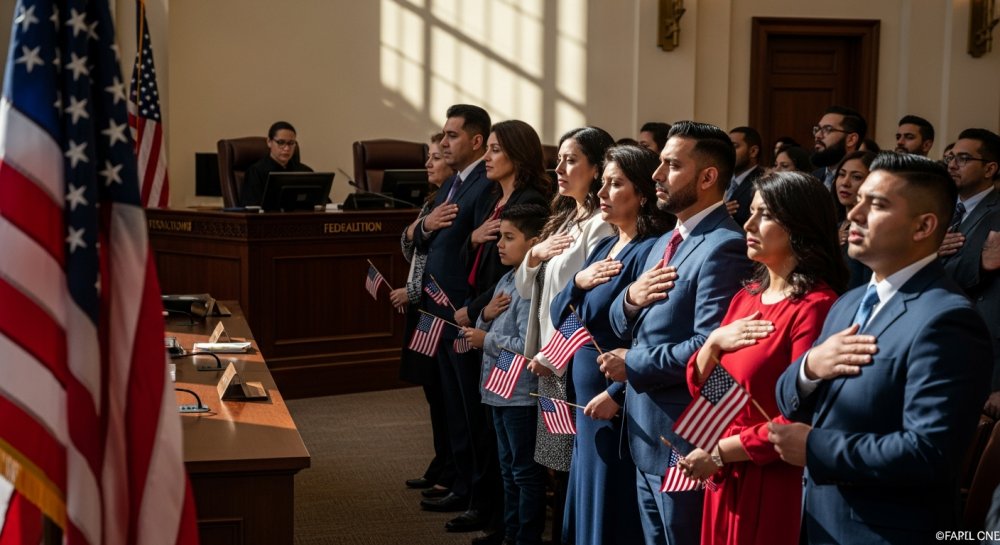
Hispanic Americans, often portrayed as a monolithic voting bloc favoring lenient immigration policies, tell a different story. A majority do not support open borders.
Instead, they desire what most Americans want: a system that respects the rule of law while treating people with fairness and human dignity. These are principles rooted in our Christian heritage and constitutional framework.
The conservative movement has long championed border security and legal immigration as cornerstones of national sovereignty. Now, with influence in government, the test is whether those principles translate into effective policy or remain empty campaign rhetoric.
Hispanic voters are watching closely. They understand that secure borders and orderly immigration processes benefit everyone, including immigrant communities themselves.
A serious immigration system protects American workers, upholds the law, and maintains the integrity of citizenship. A fair system recognizes the God-given dignity of every person and provides legal pathways that honor both our humanitarian values and national interests.
The challenge before conservatives is to prove that traditional values and practical governance can coexist. This means rejecting both the chaos of open borders and the failures of bureaucratic paralysis.
It means delivering reforms that secure our borders, enforce existing laws, and create clear, accessible legal immigration processes. The Hispanic community—and all Americans—deserve nothing less.
The conservative movement earned trust by promising serious solutions. Now comes the hard work of implementation.
Will conservatives deliver an immigration system that reflects both strength and compassion, law and grace? The answer will define not just policy, but the future credibility of conservative leadership in America.
Let us know what you think, please share your thoughts in the comments below.
Faith Facts
- A federal appellate court upheld Florida’s law protecting children from sexually explicit performances, including certain drag shows
- The ruling affirms the state’s authority to regulate child attendance at adult entertainment venues
- LGBT advocacy groups vowed to continue fighting the law despite the court decision
A federal appellate court has delivered a significant victory for Florida’s efforts to protect children from inappropriate sexual content. The court upheld a state law that makes it a crime to admit minors into venues featuring sexually explicit programming, including drag shows that contain adult material.
The decision represents a major win for parents’ rights and the state’s ability to shield children from sexualized entertainment. Florida’s law recognizes the fundamental principle that children should not be exposed to adult-oriented performances, regardless of the type of show or venue.
The ruling comes amid a broader national debate about the appropriateness of certain drag performances for young audiences. While traditional family-friendly entertainment has long been regulated to protect minors, this law extends those protections to venues and events that may blur the lines between adult entertainment and all-ages programming.
LGBT advocacy groups have expressed their opposition to the court’s decision. These organizations argue that the law represents censorship and unfairly targets drag performances, vowing to continue their legal challenges against the legislation.
However, supporters of the law maintain that it simply applies existing standards for protecting children from sexual content across all forms of entertainment. The legislation does not ban drag shows themselves but rather prevents businesses from admitting children to performances deemed sexually explicit.
Florida officials have defended the measure as common-sense legislation that prioritizes child safety and parental authority. The law empowers parents to make decisions about their children’s exposure to adult content while ensuring that venues cannot circumvent age-appropriate standards.
The federal court’s decision to uphold the law suggests that states retain significant authority to regulate entertainment venues when child welfare is at stake. This ruling may influence similar legislative efforts in other states seeking to establish or strengthen protections for minors.
As the legal battle continues, the debate highlights fundamental questions about parental rights, child protection, and the boundaries between free expression and community standards. For many Christian and conservative Americans, the ruling affirms the principle that protecting childhood innocence remains a legitimate government interest.
Let us know what you think, please share your thoughts in the comments below.


-

 Self-Reliance1 year ago
Trump’s Bold Move Uncovers Massive Social Security Fraud
-

 Faith1 year ago
New Clues Emerge in Noah’s Ark Mystery
-

 News1 year ago
Governor Walz’s Rhetoric Sparks National Controversy
-

 News1 year ago
Mel Gibson’s ‘The Passion of the Christ’ Sequel Title Announced
-

 Family1 year ago
Texas Lawmaker Targets Furries in Schools
-

 Freedom1 year ago
Maine Lawmaker Challenges Sports Fairness Controversy
-

 Family1 year ago
Canada’s Controversial Policy Sparks Ethical Debate
-
Faith9 months ago
Congress Hears Pleas for Nigerian Christians