
Faith
Presbyterians Reject Women Deacons in Major Denominational Decision

Faith Facts
- Presbyterian Church in America General Assembly voted against ordaining women as deacons at its annual meeting in Louisville, Kentucky
- The decision maintains the denomination’s traditional understanding of biblical church leadership and ordained offices
- The assembly also advanced a report examining Christian nationalism during this week’s proceedings
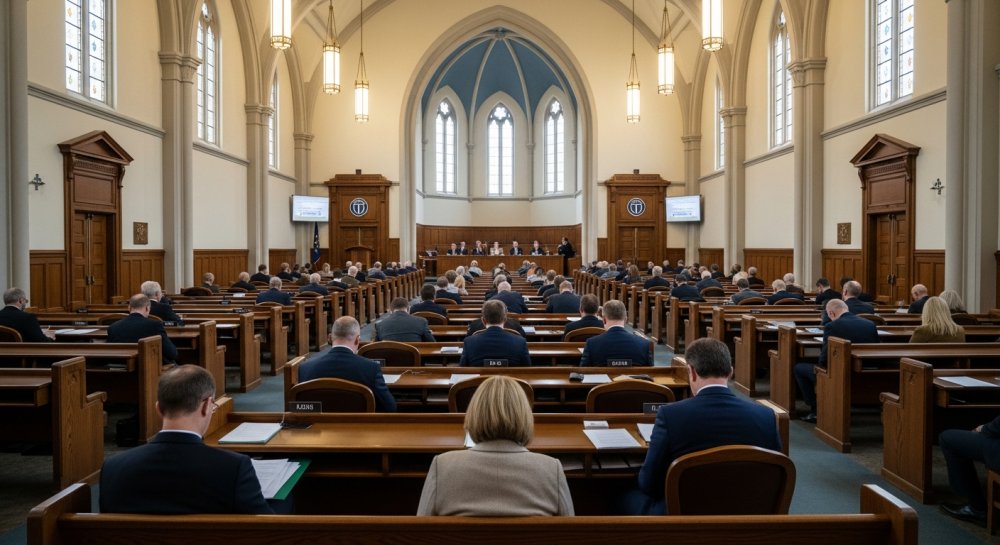
The Presbyterian Church in America has reaffirmed its commitment to traditional biblical leadership structures. During its General Assembly meeting in Louisville, Kentucky this week, the denomination voted decisively against an overture that would have opened the office of ordained deacon to women.
The decision reflects the PCA’s continued adherence to complementarian theology, which holds that men and women have distinct, God-given roles in the church. This theological position interprets Scripture as reserving ordained church offices for qualified men while honoring the vital contributions women make in other ministry capacities.
The PCA just crushed Overture 37, which would have allowed women to serve as deacons. With barely any support, which can be heard in the resounding ‘Yeas’ and whimpering ‘Nays,’ it was dead on arrival. #pcagapic.twitter.com/2voo3noFMC
— Protestia (@Protestia) June 25, 2026
For many conservative Presbyterian believers, the vote represents a faithful stand on biblical authority in an era when many mainline denominations have abandoned traditional interpretations of Scripture on leadership and gender roles. The PCA, which separated from the more liberal Presbyterian Church (USA) in 1973, has consistently maintained conservative positions on doctrinal matters.
The assembly’s decision comes as American Christianity faces increasing pressure to conform to cultural trends that often conflict with historic Christian teaching. Denominations that have embraced progressive positions on gender and sexuality have frequently experienced declining membership and theological drift.
In addition to the deacon question, the General Assembly advanced a report addressing Christian nationalism. The examination of this topic reflects ongoing discussions within conservative Christian circles about the proper relationship between faith and civic engagement, particularly as believers seek to maintain religious liberty and biblical values in the public square.
The PCA’s actions this week demonstrate the denomination’s commitment to deliberative decision-making on matters of church practice and doctrine. With approximately 1,500 congregations and 380,000 members, the PCA remains one of the largest conservative Presbyterian bodies in the United States.
As various Christian denominations navigate questions of biblical interpretation and cultural engagement, the PCA’s votes highlight the ongoing importance that many believers place on maintaining theological consistency with Scripture and historic Christian orthodoxy.
Let us know what you think, please share your thoughts in the comments below.


Faith Facts
- Jordan Shipley called on the Lord during a life-threatening accident that left over 20% of his body with third-degree burns.
- More than eight months later, the former NFL wide receiver described his recovery as a miracle.
- Shipley publicly credits his faith in God for sustaining him through the ordeal.
Former NFL wide receiver Jordan Shipley is sharing a powerful testimony of survival and faith. More than eight months ago, Shipley endured a devastating accident on his Texas ranch that left him with third-degree burns across more than 20 percent of his body.
In the midst of the crisis, Shipley says he turned to God with desperate prayers for help. He now describes his recovery as nothing short of miraculous.
“I desperately called on the Lord for help during the life-threatening ordeal and experienced a ‘miracle.'”
Let us know what you think, please share your thoughts in the comments below.
Faith Facts
- Dr Michael Tang relocated from London to Yorkshire to serve rural believers after observing urban church trends.
- Smaller rural churches often rely on older faithful members who continue to uphold traditional worship and community.
- The focus on headline-grabbing urban growth can overlook the steady witness of countryside congregations.
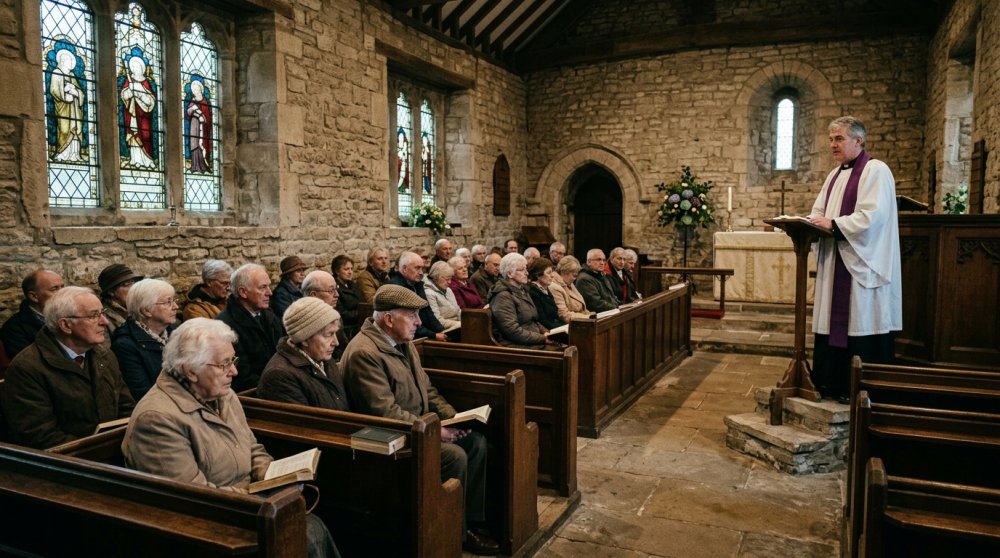
Big city churches full of young people are great, says Dr Michael Tang. But what about smaller rural ones, with their faithful older congregations?
After moving from London to Yorkshire, he’s learning to listen to the wisdom of age, not just the headline-grabbing reports of church growth.
“Big city churches full of young people are great, says Dr Michael Tang. But what about smaller rural ones, with their faithful older congregations?”
“After moving from London to Yorkshire, he’s learning to listen to the wisdom of age, not just the headline-grabbing reports of church growth.”
Let us know what you think, please share your thoughts in the comments below.

Faith Facts
- Eric Metaxas emphasizes the biblical foundation of American self-government.
- Nathan Hale, executed by the British at age 21, exemplifies early American faithfulness and courage.
- Remembering heroic figures like Hale strengthens national resolve rooted in biblical truth.
Author Eric Metaxas recently spoke with The Christian Post about the urgent need to recall the biblical principles that shaped American self-government.
Metaxas pointed to the story of Nathan Hale, the 21-year-old patriot who was hanged by British forces 250 years ago this week, as a powerful example of sacrificial courage.
“We need to remember these heroic figures who laid down their lives for the cause of liberty,” he said.
The author stressed that such stories are not mere historical footnotes but living reminders of the Christian virtues that once defined the American experiment.
“Without these examples, we lose the moral imagination required to sustain freedom,” Metaxas added.
He urged believers and citizens alike to recover the memory of those who stood firm in faith and principle during the nation’s founding era.
Let us know what you think, please share your thoughts in the comments below.


-

 Self-Reliance1 year ago
Trump’s Bold Move Uncovers Massive Social Security Fraud
-

 Faith1 year ago
New Clues Emerge in Noah’s Ark Mystery
-

 News2 years ago
Governor Walz’s Rhetoric Sparks National Controversy
-

 News1 year ago
Mel Gibson’s ‘The Passion of the Christ’ Sequel Title Announced
-

 Family2 years ago
Texas Lawmaker Targets Furries in Schools
-

 Freedom2 years ago
Maine Lawmaker Challenges Sports Fairness Controversy
-

 Family1 year ago
Canada’s Controversial Policy Sparks Ethical Debate
-
Faith10 months ago
Congress Hears Pleas for Nigerian Christians