
Faith
Pastor Who Lost Everything Rebuilds Church From the Ashes

Faith Facts
- Former megachurch pastor Tavner Smith is raising funds for a new building for Hope House Church in Georgia, four years after losing his Tennessee church.
- Smith stepped down from Venue Church in Chattanooga in 2021 following an adulterous affair with a staff member, leading to foreclosure and bankruptcy.
- The pastor has publicly addressed his past moral failures while working to rebuild his ministry and serve a growing congregation.
Redemption stories have always been central to the Christian faith, and one pastor’s journey from public scandal to spiritual rebuilding is raising both eyebrows and questions about restoration in church leadership.
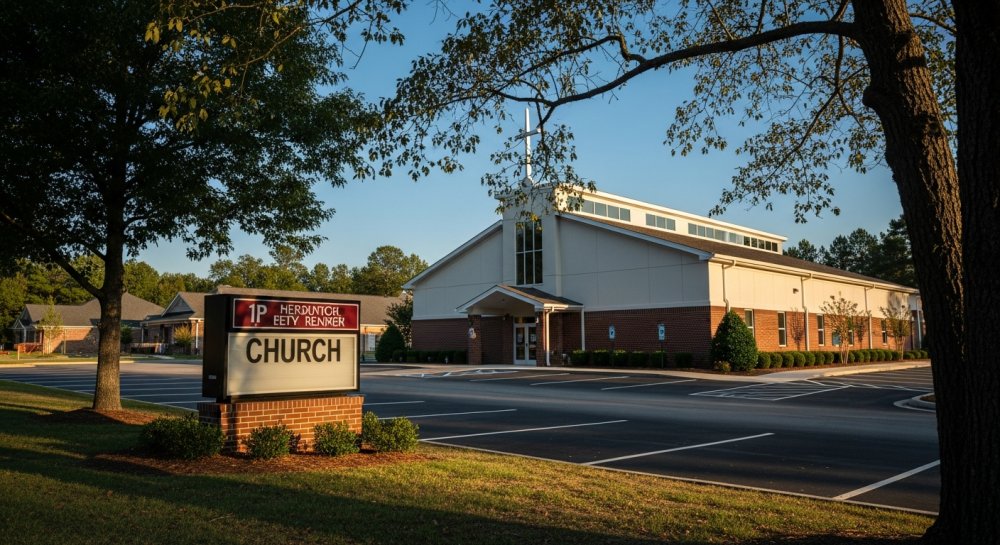
Tavner Smith, who once led a thriving megachurch in Tennessee, is now fundraising to secure a permanent home for his Georgia-based Hope House Church. The effort comes four years after his moral failure cost him his previous ministry, his building, and nearly his calling.
In 2021, Smith resigned from Venue Church in Chattanooga after admitting to an adulterous relationship with a member of his staff. The scandal triggered a cascade of consequences: the church lost its building to foreclosure, filed for bankruptcy, and Smith’s reputation lay in ruins. For many pastors, such a fall would mark the end of public ministry.
But Smith chose a different path—one marked by confession, counseling, and what he describes as genuine repentance. Rather than disappearing from ministry entirely, he relocated to Georgia and began Hope House Church, starting small with a handful of believers willing to give him another chance.
Now, that small gathering has grown, and Smith is actively seeking financial support to purchase a dedicated church building. The fundraising campaign has reignited debate within Christian circles about the biblical standards for pastoral restoration and whether certain moral failures should permanently disqualify someone from leadership.
Supporters of Smith point to the Christian doctrine of grace and redemption, emphasizing that no sin is beyond God’s forgiveness. They argue that after appropriate accountability, counseling, and demonstrated fruit of repentance, fallen leaders can be restored to ministry—particularly in new contexts where proper boundaries and oversight exist.
Critics, however, reference scriptural passages that establish high moral standards for church elders, particularly regarding family faithfulness and public reputation. They question whether someone who violated trust in such a significant way can ever fully regain the moral authority required for pastoral leadership, regardless of genuine repentance.
The situation highlights broader concerns about accountability structures in independent churches, where pastors often operate with limited oversight. When moral failures occur, restoration processes can vary wildly—some churches have rigorous protocols, while others lack any formal guidelines.
For traditional Christians who value both grace and accountability, cases like Smith’s present a challenging tension. Scripture clearly teaches that God forgives repentant sinners completely. Yet it also establishes that church leaders are held to higher standards precisely because their influence is so significant and the potential for harm so great.
The question isn’t whether Smith deserves God’s forgiveness—that’s already available through Christ. The question is whether return to pastoral leadership is appropriate, or whether other forms of Christian service might better honor both biblical standards and the protection of God’s people.
As Hope House Church grows and Smith pursues this new building, the Christian community watches to see what kind of accountability structures surround this restoration effort. True redemption stories include not just forgiveness, but also wisdom, humility, and safeguards that protect both the restored leader and those he serves.
Churches considering how to handle leadership failures would do well to establish clear restoration processes before crisis hits—processes that honor grace without compromising the biblical qualifications for shepherding God’s flock. The path forward requires both compassion and conviction, extending mercy while maintaining the high standards scripture demands of those who would lead.
Let us know what you think, please share your thoughts in the comments below.

Faith Facts
- The Bible affirms the sanctity of human life from conception, grounding the pro-life position in Scripture.
- James Talarico’s claim that Scripture is silent on abortion overlooks multiple passages that protect the unborn.
- Christian teaching on life is rooted in the unchanging Word of God rather than shifting cultural arguments.
While the Bible does not use the modern term abortion, the absence of contemporary terminology does not mean the absence of biblical teaching. Scripture consistently affirms the value of life in the womb and condemns the shedding of innocent blood.
Old Testament law explicitly protects the unborn child, establishing a moral framework that transcends modern political debates.
Psalm 139 declares that God forms each person in the womb, knitting them together with purpose and intention.
“For you created my inmost being; you knit me together in my mother’s womb.”
This divine craftsmanship leaves no room for treating the unborn as disposable.
The prophetic witness in Jeremiah reinforces this truth, showing that God knows and calls individuals before birth.
“Before I formed you in the womb I knew you, before you were born I set you apart.”
Such language underscores the personhood and destiny of the child from the earliest moments of existence.
New Testament teaching on love and justice further strengthens the case for defending the defenseless.
Proverbs 24 warns against failing to rescue those being led away to death, a command that applies directly to the unborn.
Christian voters and lawmakers who uphold these biblical principles stand in continuity with generations of believers who treasured life as a gift from God.
Let us know what you think, please share your thoughts in the comments below.

Faith Facts
- Actress Danica McKellar credits Candace Cameron Bure with leading her to a personal relationship with Jesus Christ.
- McKellar is best known for her childhood role as Winnie Cooper on the beloved family series “The Wonder Years.”
- Bure, a committed believer, has consistently used her platform to point others toward faith and traditional values.
Danica McKellar opened up about the meaningful influence of her longtime friend Candace Cameron Bure in her journey toward faith. The two former child stars developed a friendship that extended far beyond their early careers in Hollywood.
McKellar explained that Bure was the one who introduced her to Jesus in a personal way. Their shared history in the entertainment industry gave McKellar a trusted voice to hear when spiritual matters came up.
“Wonder Years” actress Danica McKellar shares how fellow child star Candace Cameron Bure helped bring her to Jesus.
McKellar has spoken openly about her growing faith and the importance of surrounding herself with fellow believers. She has described how that friendship helped anchor her during seasons of change and uncertainty.
The story reflects a pattern seen among many in Hollywood who quietly seek truth and community outside the spotlight. For McKellar, that path led her straight to the feet of Jesus through the faithful witness of a friend.
Let us know what you think, please share your thoughts in the comments below.

Faith Facts
- Danica McKellar credits Candace Cameron Bure with leading her to Christ four years ago.
- McKellar now views her acting career through a faith-centered lens.
- She seeks roles that reflect her Christian values and convictions.
Actress Danica McKellar has opened up about the moment she found faith in Christ. She credits longtime friend and fellow former child star Candace Cameron Bure for guiding her on that journey four years ago.
McKellar shared that her new relationship with Jesus has transformed the way she sees her career and the projects she now chooses to pursue. Instead of simply chasing roles for fame or success, she is now more intentional about the stories she tells on screen.
“It’s been Jesus this whole time”
McKellar’s transformation reflects a deeper commitment to living out her faith both on and off the screen. She has expressed gratitude for the spiritual mentorship she received from Bure, whose own public witness as a believer has long been a steady presence in Hollywood.
The actress says her faith has redefined her purpose, helping her to focus on projects that align with her Christian convictions rather than simply accepting work based on popularity or financial gain.
Let us know what you think, please share your thoughts in the comments below.


-

 Self-Reliance2 years ago
Trump’s Bold Move Uncovers Massive Social Security Fraud
-

 Faith2 years ago
New Clues Emerge in Noah’s Ark Mystery
-

 News2 years ago
Governor Walz’s Rhetoric Sparks National Controversy
-

 News2 years ago
Mel Gibson’s ‘The Passion of the Christ’ Sequel Title Announced
-

 Family2 years ago
Texas Lawmaker Targets Furries in Schools
-

 Freedom2 years ago
Maine Lawmaker Challenges Sports Fairness Controversy
-

 Family1 year ago
Canada’s Controversial Policy Sparks Ethical Debate
-
Faith11 months ago
Congress Hears Pleas for Nigerian Christians