
Faith
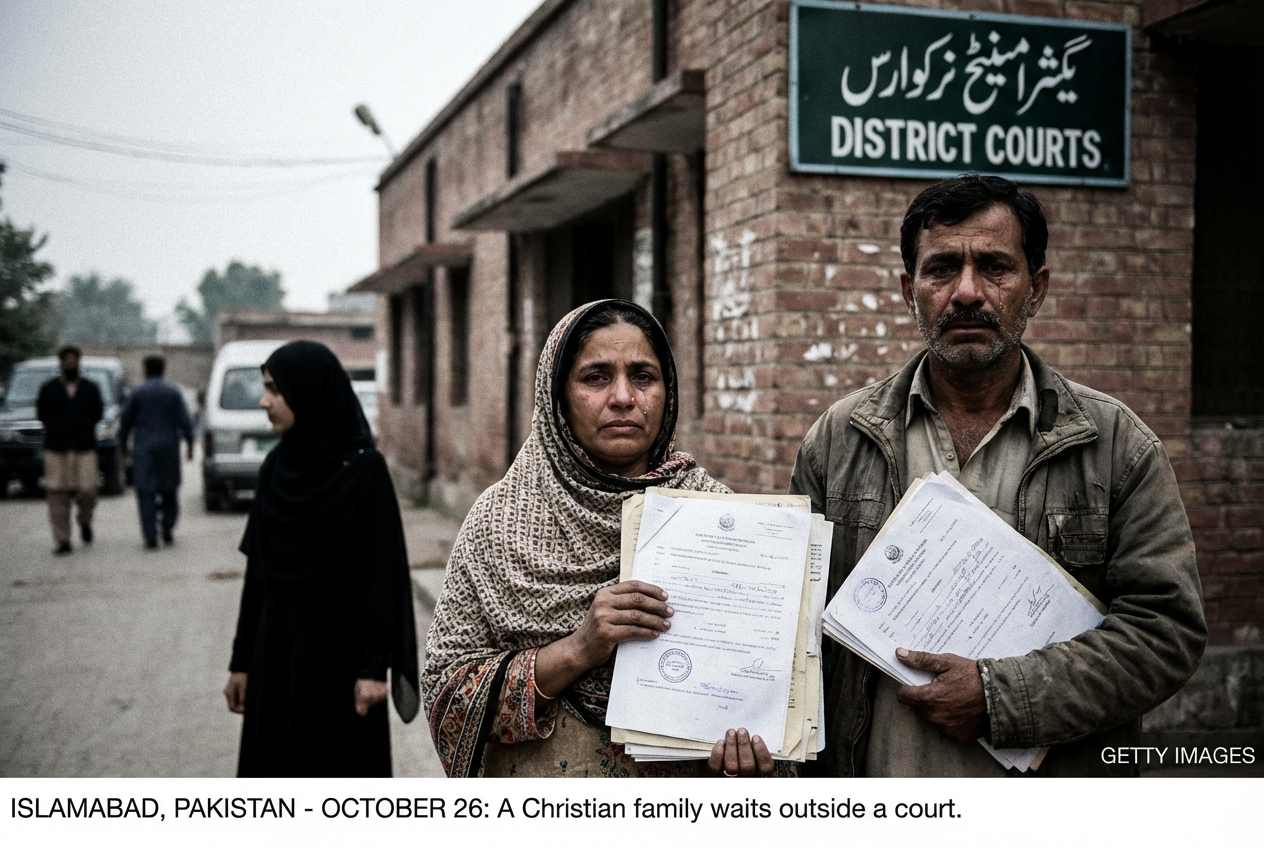
Pakistani Court Awards Christian Girl to Abductor

Faith Facts
- A federal court in Pakistan gave custody of a 13-year-old Christian girl to a Muslim man who kidnapped and forcibly converted her to Islam.
- The court dismissed official documents proving her age and ignored previous judicial findings declaring the marriage illegal.
- Legal advocates and the girl’s family denounced the decision as a threat to the protection of Christian minors.
A Christian family in Pakistan is mourning a court ruling that handed their 13-year-old daughter to her abductor, undermining official records and disregarding the sanctity of childhood.
Despite clear evidence and appeals from her parents, judicial authorities ignored the girl’s legal birth documents and failed to provide protection for her vulnerable status.
“The judges should have taken into account that she was likely to give a statement in the accused’s favor under duress,” said Safdar Chaudhry, chairperson of Raah-e-Nijaat Ministry.
Christian families in Pakistan continue to face great risk as forced conversions and child marriages target their daughters, often leaving parents helpless before the law.
Even law enforcement agencies showed concerning reluctance in safeguarding Maria Shahbaz, as police inaction and investigative failures were highlighted by legal advocates.
While new laws have raised the national marriage age for Christians and the capital city to 18, provincial delays and Sharia law loopholes leave many Christian girls unprotected.
“If superior courts refuse to recognize official birth documents, there is little hope for protecting minor girls,” Chaudhry warned.
Cases like Maria’s reveal urgent needs for justice and protections rooted in Biblical principles: upholding truth, defending the vulnerable, and protecting faith and families.
Let us pray for Maria and advocate for Christian families under persecution, standing firm for biblical justice and the moral protection of children.



Faith Facts
- Religious education teaching positions are becoming harder to fill despite growing student demand for faith-based learning
- Schools across the country are facing critical shortages of qualified religious studies instructors
- The crisis is creating unequal access to religious education depending on geographic location
America’s schools are facing a growing crisis that threatens the spiritual foundation of the next generation. Despite increasing student interest in understanding faith and religion, fewer qualified teachers are stepping forward to fill these vital classroom positions.
The shortage of religious studies educators is intensifying across the nation, creating what experts are calling a “postcode lottery” where a child’s access to quality faith education depends entirely on where they live. This disparity undermines the equal opportunity that should exist for all students to explore questions of faith, morality, and spiritual truth.
The crisis reflects broader cultural challenges facing people of faith in educational settings. As secular ideologies dominate many academic institutions, teachers committed to presenting religious perspectives fairly and thoroughly often find themselves marginalized or unsupported.
Schools in rural and underserved communities are particularly hard-hit by the shortage. Students in these areas may go entire academic years without access to structured religious education, leaving critical gaps in their understanding of faith traditions that have shaped Western civilization and American values.
The teaching profession as a whole has struggled with recruitment and retention, but the religious studies field faces unique obstacles. Many qualified candidates who could teach about Christianity, Judaism, and other faith traditions are choosing alternative career paths where their beliefs are more welcomed and respected.
This shortage comes at a time when understanding religious principles is more important than ever. As American society grapples with fundamental questions about truth, morality, and purpose, young people need educators who can guide them through the wisdom of religious traditions and help them develop a strong moral compass.
The uneven distribution of religious education resources across different regions creates an educational inequity that should concern all Americans who value fairness and opportunity. Children in some communities receive robust instruction in faith and ethics, while others receive little to nothing.
Addressing this crisis will require renewed commitment from educational institutions to support teachers who bring religious perspectives into the classroom. It will also demand that communities of faith encourage qualified believers to consider teaching as a calling, not just a career.
Let us know what you think, please share your thoughts in the comments below.
Faith Facts
- Canterbury Cathedral hosted a silent disco featuring 1980s music on August 15, sparking outrage among Christian commentators
- Critics called the event a desecration of one of Christianity’s most historic sacred spaces
- The incident highlights growing concerns about secularization and irreverence toward traditional Christian worship spaces
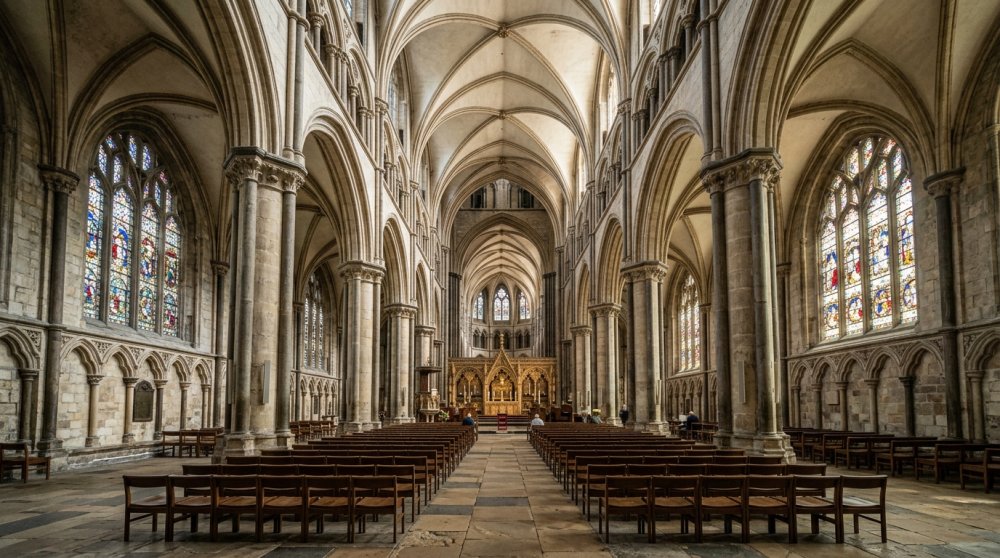
One of Christianity’s most sacred and historic sites has become the center of controversy after hosting a secular dance party. Canterbury Cathedral, the mother church of the worldwide Anglican Communion, allowed a silent disco featuring 1980s music to take place within its hallowed walls on August 15, prompting sharp criticism from Christian leaders and commentators who view the event as a profound act of disrespect.
The decision to transform the ancient cathedral into a dance venue has been met with widespread condemnation from those who believe such activities desecrate holy ground. For centuries, Canterbury Cathedral has stood as a beacon of Christian faith and tradition, serving as the seat of the Archbishop of Canterbury and a pilgrimage site of immense spiritual significance.
Christian commentators have not minced words in their response to the event. Many have described the silent disco as a “desecration” of sacred space, arguing that it represents a troubling trend of secularization within the Church of England and a departure from reverence for God’s house.
The controversy raises important questions about the proper use of church buildings and whether modern attempts to make religious spaces more “relevant” or “accessible” come at too high a cost. Critics argue that allowing secular entertainment in consecrated spaces undermines the very purpose these buildings were created to serve — the worship of Almighty God.
Canterbury Cathedral has witnessed pivotal moments in Christian history, including the martyrdom of Archbishop Thomas Becket in 1170. The building itself stands as a testament to centuries of faith, sacrifice, and devotion. For many believers, using such a space for dancing to secular music represents an unacceptable compromise with worldly culture.
This incident reflects broader concerns among traditional Christians about the direction of mainline denominations, particularly the Church of England. As attendance declines in many historic churches, some leaders have pursued unconventional approaches to attract visitors and generate revenue, sometimes at the expense of maintaining the sanctity and reverence these spaces deserve.
The silent disco controversy also highlights the tension between preserving Christian heritage and adapting to contemporary culture. While some church leaders argue that such events can introduce new audiences to historic Christian sites, critics maintain that the ends do not justify the means when it involves compromising the sacred character of God’s house.
For faithful Christians who hold traditional views on worship and reverence, the Canterbury Cathedral silent disco serves as a sobering reminder of the ongoing cultural battles facing the Church. The question remains whether institutions entrusted with preserving Christian tradition will stand firm in their mission or continue to accommodate secular influences in pursuit of popularity and financial sustainability.
Let us know what you think, please share your thoughts in the comments below.

Faith Facts
- Christian singer Cory Asbury removed a shirtless photo from social media after receiving criticism about modesty standards.
- Asbury defended fellow worship artist Forrest Frank, urging critics to “lay off my boy” amid similar scrutiny.
- The incident has sparked broader conversations within the Christian community about accountability, stumbling blocks, and grace in ministry.
Christian worship leader Cory Asbury has taken down a shirtless photograph of himself from social media after facing criticism from fellow believers who questioned whether the image upheld biblical standards of modesty. The decision comes amid growing discussions within the Christian music community about appropriate boundaries for public figures in ministry.
The “Reckless Love” singer, who has become a prominent voice in contemporary worship music, responded to the concerns by removing the controversial image. His actions demonstrate a willingness to listen to feedback from the Christian community, even as he navigates the tension between personal freedom and corporate responsibility.
In defending fellow worship artist Forrest Frank, who has faced similar scrutiny, Asbury urged critics to back off. His protective stance toward Frank has highlighted the complexity of holding Christian leaders accountable while extending grace and avoiding legalism.
The conversation surrounding the photo touches on biblical principles found in Romans 14:21, which instructs believers not to do anything that would cause a brother or sister to stumble. Many Christians who voiced concerns emphasized that public figures in ministry bear additional responsibility for how their actions might affect others spiritually.
For those defending the artists, the issue represents an example of cultural Christianity imposing extrabiblical standards on believers. They argue that while modesty is important, the definition of what constitutes immodesty can vary widely and should not be used to create legalistic rules that aren’t clearly outlined in Scripture.
The debate reflects broader tensions within American Christianity between maintaining traditional values and engaging contemporary culture. As Christian artists gain mainstream recognition and larger platforms, questions about appropriate conduct and representation become increasingly relevant to their witness.
Asbury’s decision to remove the photo, rather than dismiss the criticism outright, suggests a heart for unity and sensitivity to the concerns of other believers. His willingness to make adjustments while defending Frank demonstrates an attempt to balance personal conviction with community accountability.
The incident serves as a reminder that Christian leaders operate under heightened scrutiny and that their choices carry weight beyond personal preference. Whether in music ministry or other areas of public Christian witness, the call to be above reproach remains a biblical standard that requires ongoing discernment and humility.
Let us know what you think, please share your thoughts in the comments below.


-

 Self-Reliance1 year ago
Trump’s Bold Move Uncovers Massive Social Security Fraud
-

 Faith1 year ago
New Clues Emerge in Noah’s Ark Mystery
-

 News1 year ago
Governor Walz’s Rhetoric Sparks National Controversy
-

 News1 year ago
Mel Gibson’s ‘The Passion of the Christ’ Sequel Title Announced
-

 Family1 year ago
Texas Lawmaker Targets Furries in Schools
-

 Freedom1 year ago
Maine Lawmaker Challenges Sports Fairness Controversy
-

 Family1 year ago
Canada’s Controversial Policy Sparks Ethical Debate
-
Faith9 months ago
Congress Hears Pleas for Nigerian Christians