
News
Pakistan Province Takes Stand Against Child Marriage After Fierce Legislative Battle

Faith Facts
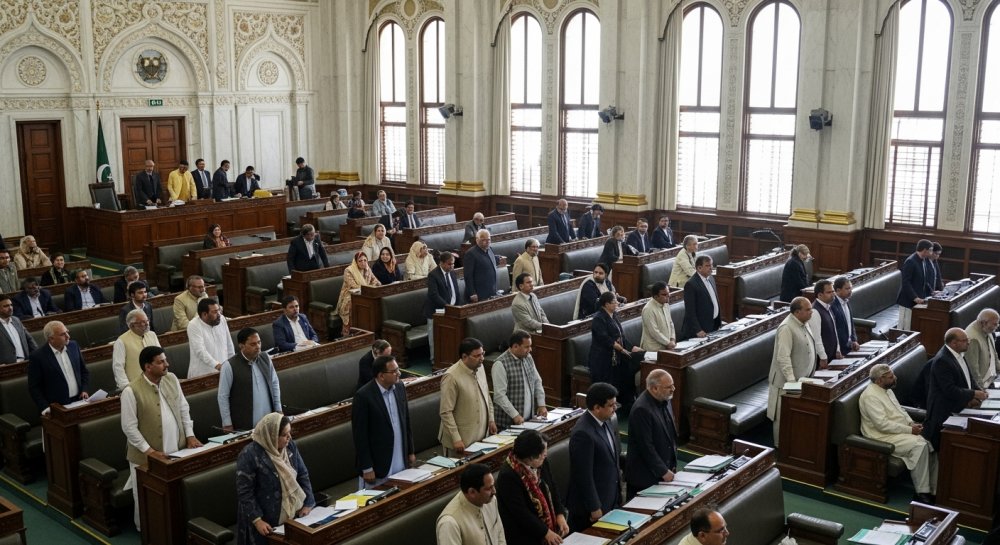
- Punjab Province Assembly in Pakistan passed a landmark bill Monday banning child marriage after heated debate between government and opposition lawmakers
- The new law sets the minimum marriage age at 18 years old for both boys and girls, with violators facing up to three months imprisonment and fines up to 50,000 rupees ($179)
- Human rights organizations have praised the legislation as a historic step forward for protecting children’s rights in Pakistan’s most populous province
In a significant victory for children’s rights advocates, Pakistan’s Punjab Province Assembly approved groundbreaking legislation Monday that prohibits marriage for anyone under 18 years of age. The passage came after intense parliamentary debate that highlighted the ongoing cultural and religious tensions surrounding traditional practices in the Muslim-majority nation.
The new law establishes 18 as the minimum age for marriage for both males and females throughout Punjab, Pakistan’s most populous province. Violators of the statute will face up to three months in prison along with fines reaching 50,000 rupees, approximately $179 in U.S. currency.
Human rights organizations have hailed the legislation as a watershed moment for child protection. International advocacy groups have long documented the harmful physical, emotional, and developmental consequences of child marriage, particularly for young girls who are often forced into unions before reaching physical or emotional maturity.
The parliamentary session revealed deep divisions over the issue. Opposition lawmakers raised concerns rooted in religious interpretation and cultural tradition, arguing that the measure could conflict with Islamic jurisprudence as understood by some scholars. Government supporters countered that protecting children from exploitation and ensuring their right to education and development aligns with Islamic principles of justice and compassion.
For Christian and conservative observers in the West, the debate illustrates the complex challenges facing reformers in Muslim-majority societies where traditional practices often collide with modern human rights standards. The family unit remains central to both Christian and Islamic worldviews, but the question of when individuals are mature enough to enter marriage continues to generate controversy across cultures.
Child marriage remains prevalent in many parts of Pakistan, particularly in rural areas where poverty, lack of education, and traditional tribal customs perpetuate the practice. Young brides frequently face serious health risks from early pregnancy, are forced to abandon their education, and often suffer domestic abuse within marriages they did not choose.
The Punjab legislation represents progress in a nation where religious freedom concerns have long troubled Western observers. Pakistan’s treatment of religious minorities, including Christians, has drawn international criticism, with reports of persecution, forced conversions, and discriminatory blasphemy laws that disproportionately target non-Muslims.
While this particular reform focuses on protecting children regardless of religious background, it signals potential willingness among some Pakistani lawmakers to prioritize human dignity and child welfare over rigid adherence to contested interpretations of religious law.
Advocacy organizations working on the ground in Pakistan acknowledge significant implementation challenges ahead. Enforcement will require training law enforcement officials, educating communities about the new legal standards, and providing support systems for families who might otherwise turn to child marriage due to economic desperation.
The success of this legislation may depend on whether religious leaders can be persuaded to support the reform publicly. When respected Islamic scholars endorse child protection measures as consistent with their faith’s core values, compliance rates typically improve dramatically within conservative communities.
For Americans who value both religious liberty and the protection of vulnerable children, this development offers cautious hope. It demonstrates that even in societies with vastly different religious compositions and cultural norms, the fundamental recognition of childhood as a protected stage of life can find legislative expression.
The passage in Punjab may also inspire similar efforts in other Pakistani provinces and neighboring countries where child marriage remains legally permissible and culturally normalized. Precedent-setting reforms often create momentum for broader change when advocates can point to successful implementation elsewhere.
As Christians committed to defending the innocent and upholding the sanctity of marriage as a covenant between mature, consenting adults, we should welcome measures that prevent the exploitation of children while respecting the religious and cultural contexts in which these battles are fought.
Let us know what you think, please share your thoughts in the comments below.

Faith Facts
- Isadora Borges, a veterinary medicine student, faces up to ten years in prison for two social media posts that prosecutors label as transphobia.
- Brazil’s federal prosecutors have filed a special appeal to reopen the case after earlier proceedings stalled.
- Christians worldwide are watching as governments increasingly criminalize biblical views on gender and sexuality.
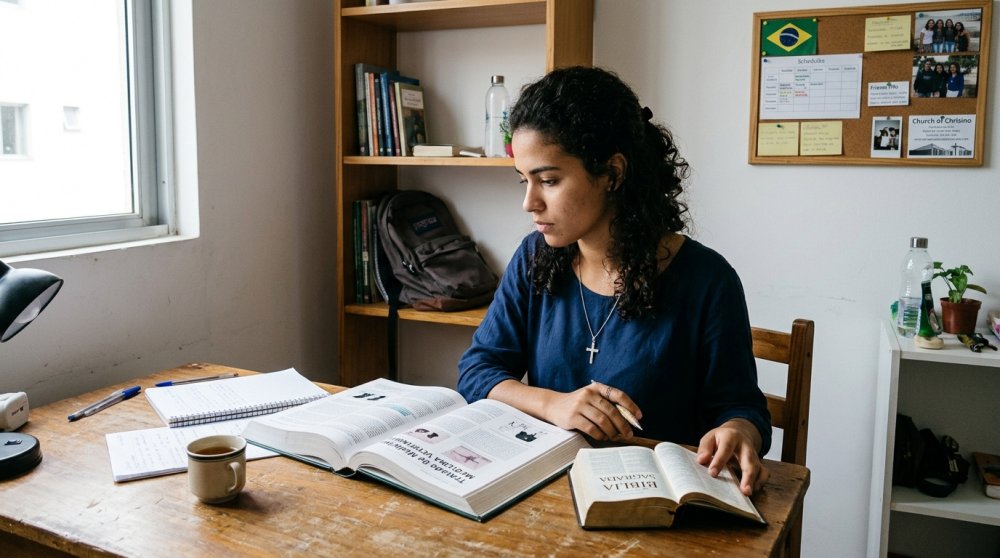
Brazil’s federal prosecutors have lodged a special appeal seeking to reopen the prosecution of Christian student Isadora Borges.
The young woman, who studies veterinary medicine, is accused of committing “transphobia” through two posts on X.
She could face up to ten years behind bars if convicted under the revived case.
Prosecutors argue the posts violate new speech laws protecting gender identity.
Supporters say the prosecution represents a direct assault on free speech and religious liberty.
“I posted my convictions rooted in Scripture,” Borges said in a statement released by her legal team.
“I will not apologize for believing what the Bible teaches about men and women.”
Legal observers note that Brazil’s courts have grown increasingly aggressive in enforcing gender-identity statutes against Christians.
Many fear the precedent could chill open discussion of traditional beliefs on marriage and human sexuality.
Advocates for religious freedom are urging Brazilian Christians to stand firm and pray for courage in the face of mounting legal pressure.
Let us know what you think, please share your thoughts in the comments below.
Faith Facts
- Two members of the South Main Church of Christ in Weatherford, Texas, died while serving on a mission trip in Zambia.
- Jim Mynaugh founded Divine Water, a ministry that has brought clean drinking water to thousands across Africa in the name of Christ.
- Both men were remembered by fellow believers as faithful servants who lived out the Gospel through practical love and sacrifice.
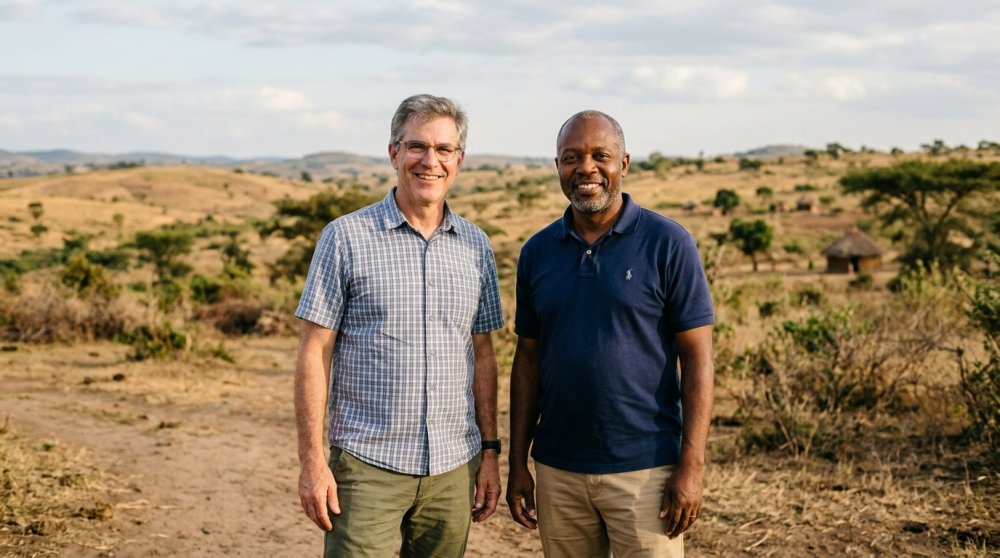
Two Texas men died in a head-on collision while carrying out Christian mission work in southern Africa. Richard Gill and Jim Mynaugh, both 67, were passengers in a Toyota Fortuner when it collided with a Hino Ranger on the Great North Road near Zimba, Zambia. Zambian police said the crash resulted from an improper overtaking maneuver.
The men were members of the South Main Church of Christ in Weatherford, west of Fort Worth. They were traveling to support water projects when tragedy struck on October 20.
“The accident occurred when the driver of the Hino Ranger attempted to overtake improperly while traveling uphill, resulting in a collision with the Toyota Fortuner,” police official Moono Namalongo stated.
Gill and Mynaugh died at the scene. The Toyota driver, Michael Namafente, and another passenger were injured along with the Hino’s driver and passengers. All were taken to a hospital in Livingstone.
Jim Mynaugh founded Divine Water, a Texas nonprofit that installs hand-pump wells in impoverished communities. The ministry partners with Churches of Christ organizations including Healing Hands International and Kibo Group to bring clean water and the message of Christ’s living water to people in need.
“Getting easy access to clean, safe drinking water simply changes lives,” Mynaugh wrote in a 2024 social media post showing villagers in Uganda celebrating a new well.
Mynaugh and Gill were brothers-in-law. Just days before the crash, Mynaugh had joined Kibo Group members at a conference in Rome to discuss sustainable development and sharing the Gospel through practical service.
“Less than a week ago, we were together in Rome, talking about our shared passion for walking alongside others and supporting sustainable, community-led development,” Kibo Group workers said. “Jim was a tireless advocate for ensuring that everyone has access to clean water and the opportunity to experience Christ’s living water.”
“Over the past 12-plus years, Jim helped bring clean water to thousands of people, leaving a lasting impact on countless lives and communities,” the statement continued. “Today, our hearts are with our friends at Divine Water and the Mynaugh and Gill families. We grieve alongside them and lift them up in prayer.”
In June, Mynaugh announced that the Rotary Club of Weatherford had funded two new wells in Zambia, with teams set to begin work in six villages the following month. Zambian Christian Obrain Masaka Muleya posted tributes online, urging prayer for the families and for continued ministry to the poor.
Let us know what you think, please share your thoughts in the comments below.
Faith Facts
- A Virginia church hosted a forum calling believers to vote according to Scripture on two proposed state constitutional amendments.
- The gathering focused on protecting unborn life and upholding traditional marriage as defined in the Bible.
- Leaders stressed that faithful citizenship requires applying biblical truth to public policy decisions.
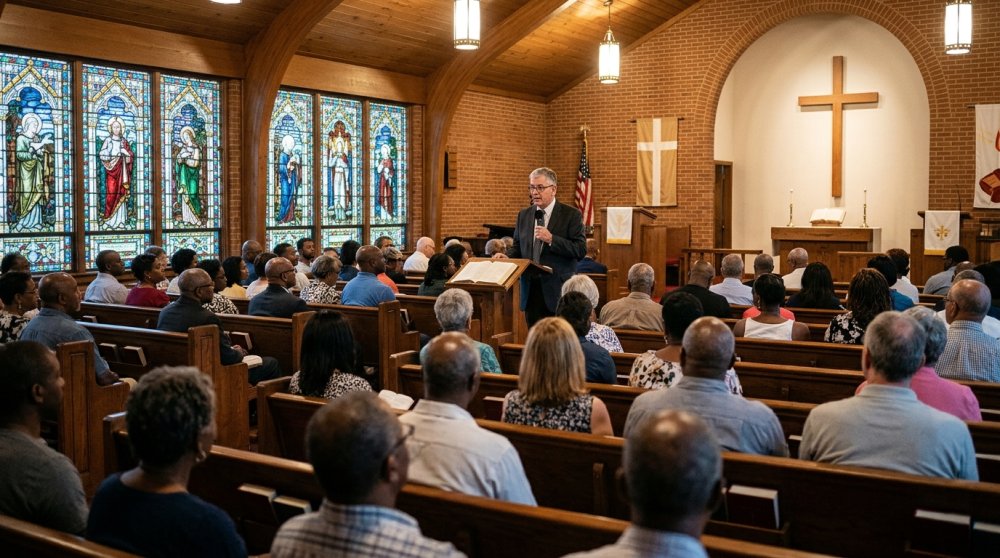
A Virginia church recently brought together believers to discuss two proposed state constitutional amendments that touch on deeply held convictions about life and marriage.
The forum highlighted the importance of voting in line with biblical principles rather than cultural trends.
“Vote your biblical values,” church leaders told attendees, emphasizing that Scripture offers clear guidance on both the sanctity of life and the definition of marriage.
The event comes as Virginia voters prepare to weigh in on amendments that would affect abortion policy and the legal status of same-sex marriage.
Speakers urged Christians to consider how their ballots reflect their commitment to the authority of God’s Word.
“We are called to be salt and light in every sphere of life, including the voting booth,” one pastor reminded the audience.
The church’s message aligns with a long-standing Christian conviction that government exists to uphold justice and protect the vulnerable.
By framing participation in the election as an act of discipleship, the forum encouraged believers to approach the ballot box with prayer and conviction.
Let us know what you think, please share your thoughts in the comments below.


-

 Self-Reliance2 years ago
Trump’s Bold Move Uncovers Massive Social Security Fraud
-

 Faith2 years ago
New Clues Emerge in Noah’s Ark Mystery
-

 News2 years ago
Governor Walz’s Rhetoric Sparks National Controversy
-

 News2 years ago
Mel Gibson’s ‘The Passion of the Christ’ Sequel Title Announced
-

 Family2 years ago
Texas Lawmaker Targets Furries in Schools
-

 Freedom2 years ago
Maine Lawmaker Challenges Sports Fairness Controversy
-

 Family1 year ago
Canada’s Controversial Policy Sparks Ethical Debate
-
Faith11 months ago
Congress Hears Pleas for Nigerian Christians