
Faith
Pakistan Court Delivers Landmark Decision Protecting Children from Marriage Abuse


Faith Facts
- A Lahore High Court ruling determined that marital relationships with girls under 18 constitute child abuse, regardless of alleged consent
- Christian leaders and attorneys have praised the decision as a critical step in protecting vulnerable children in Pakistan
- The ruling addresses the widespread issue of child marriage and exploitation affecting religious minorities in the region
Christian leaders and legal advocates across Pakistan are celebrating a groundbreaking court decision that strengthens protections for children against forced and underage marriage. The Lahore High Court’s ruling makes clear that any marital relationship involving a girl under the age of 18 can be prosecuted as child abuse, even when the minor claims to have consented.
The decision represents a significant victory for religious freedom and human rights in a nation where Christian and other minority communities have long faced exploitation through forced conversions and child marriages. Legal experts note that this ruling closes a dangerous loophole that predators have used to justify their actions by claiming minors willingly entered into these arrangements.
For Christian families in Pakistan, this ruling offers new hope for protecting their daughters from abduction, forced conversion, and child marriage—a pattern of abuse that has devastated countless families. The court’s decision recognizes what faith leaders have long maintained: children cannot legally or morally consent to marriage, regardless of the circumstances.
Attorneys working on religious freedom cases have praised the ruling as establishing crucial legal precedent. The decision affirms that the law must protect the most vulnerable members of society and that cultural or religious justifications cannot override a child’s fundamental rights and safety.
The ruling comes amid ongoing concerns about the treatment of religious minorities in Pakistan, where Christian communities have advocated for stronger legal protections against forced marriages and conversions. This court decision demonstrates that Pakistan’s judicial system can serve as a check against abuses that target children and religious minorities.
Faith-based organizations have called on Pakistani authorities to fully enforce this ruling and ensure that perpetrators face appropriate legal consequences. They emphasize that protecting children from exploitation is a universal value that transcends religious and cultural boundaries.
The decision also sends a powerful message internationally about the need to combat child marriage and protect children’s rights globally. Christian advocacy groups hope this ruling will inspire similar legal protections in other nations where child marriage remains prevalent.
Let us know what you think, please share your thoughts in the comments below.


Faith Facts
- Danica McKellar credits Candace Cameron Bure with leading her to Christ four years ago.
- McKellar now views her acting career through a faith-centered lens.
- She seeks roles that reflect her Christian values and convictions.
Actress Danica McKellar has opened up about the moment she found faith in Christ. She credits longtime friend and fellow former child star Candace Cameron Bure for guiding her on that journey four years ago.
McKellar shared that her new relationship with Jesus has transformed the way she sees her career and the projects she now chooses to pursue. Instead of simply chasing roles for fame or success, she is now more intentional about the stories she tells on screen.
“It’s been Jesus this whole time”
McKellar’s transformation reflects a deeper commitment to living out her faith both on and off the screen. She has expressed gratitude for the spiritual mentorship she received from Bure, whose own public witness as a believer has long been a steady presence in Hollywood.
The actress says her faith has redefined her purpose, helping her to focus on projects that align with her Christian convictions rather than simply accepting work based on popularity or financial gain.
Let us know what you think, please share your thoughts in the comments below.
Faith Facts
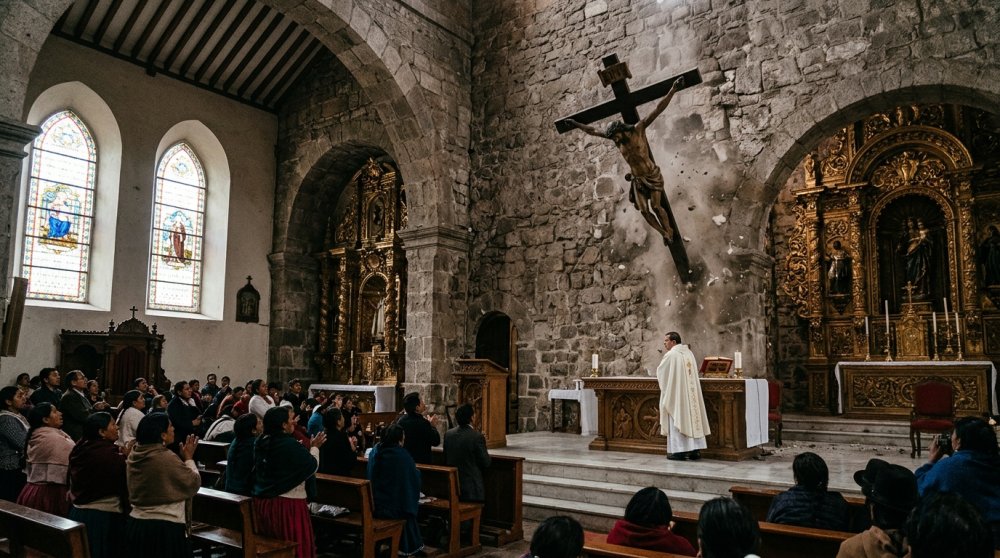
- A priest in Ecuador died during a church service when a large crucifix fell from the wall.
- Kenny Kinglesmith addresses unbelieving friends in an open letter about hope in Jesus amid suffering.
- Christian believers continue to place their trust in Christ even when tragedy strikes inside the sanctuary.
The sudden death of a priest while leading worship has shaken believers across Ecuador. Questions about suffering and divine purpose are rising again.
Kenny Kinglesmith has written an open letter to friends who do not believe. He explains why his hope in Jesus remains firm despite the pain.
“In the face of inexplicable suffering, I still choose to place my hope in Jesus.”
Many Christians are wrestling with how a loving God could allow such a loss inside His house. The event has prompted renewed reflection on the mystery of suffering.
Kinglesmith does not offer easy answers. Instead he points to the cross itself, where Christ endured the ultimate injustice yet brought redemption.
“I still choose to place my hope in Jesus.”
The tragedy has become a moment for believers to examine their own trust in God. It is also an opportunity to demonstrate compassion to those who question.
Kinglesmith urges Christians to live out their faith openly. He believes the witness of steadfast hope can speak louder than arguments.
“In the face of inexplicable suffering, I still choose to place my hope in Jesus.”
Let us know what you think, please share your thoughts in the comments below.
Faith Facts
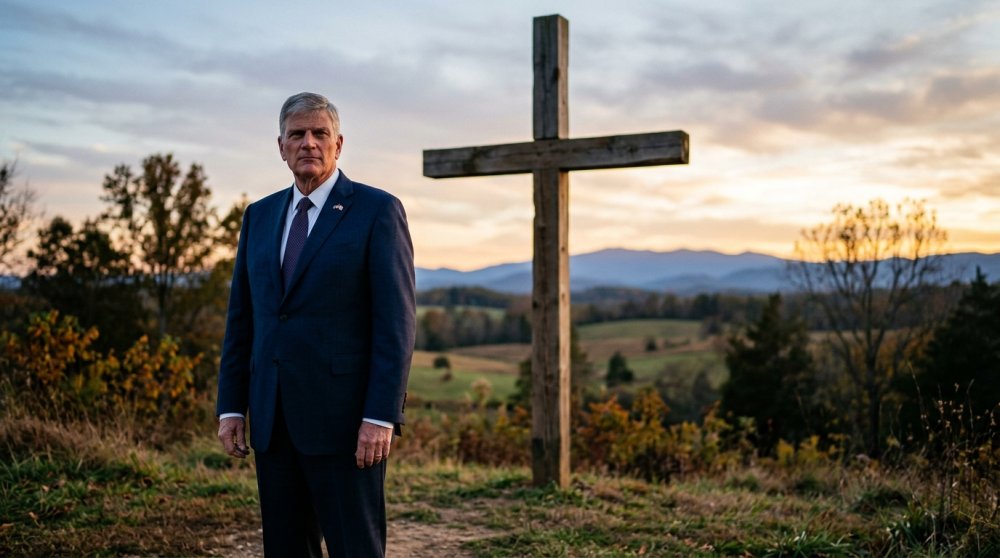
- Franklin Graham was raised in the shadow of his father Billy Graham, one of the most influential Christian leaders of the twentieth century.
- He has publicly stated that he never tried to become Billy Graham and instead sought to follow the distinct path God set before him.
- The younger Graham has carried the Gospel message across the globe through Samaritan’s Purse and the Billy Graham Evangelistic Association while maintaining a clear Christian conservative witness.
Franklin Graham recently opened up about the challenges of growing up in the household of the twentieth century’s most renowned evangelist. He explained that being the son of Billy Graham carried both a tremendous blessing and a heavy weight of expectations.
Despite the public scrutiny and inevitable comparisons, Graham made a deliberate choice early in life. He decided he would not attempt to replicate his father’s ministry or persona in any way.
“I never try to be Billy Graham,”
he said. This statement reflects the conviction that God equips each believer for a unique assignment rather than a copy of someone else’s.
Graham’s own ministry has grown into a powerful force for the Gospel through both the Billy Graham Evangelistic Association and the international relief work of Samaritan’s Purse. His approach has been marked by direct, unapologetic proclamation of biblical truth on issues ranging from religious liberty to the sanctity of life and traditional marriage.
“I never try to be Billy Graham,”
he reiterated, underscoring that his calling has always been to serve the Lord faithfully in the time and culture where God has placed him.
Today Franklin Graham continues to lead large-scale evangelistic events across the United States and around the world. He remains a steady voice for Christian values at a time when many pulpits have grown silent on cultural matters.
Let us know what you think, please share your thoughts in the comments below.


-

 Self-Reliance2 years ago
Trump’s Bold Move Uncovers Massive Social Security Fraud
-

 Faith2 years ago
New Clues Emerge in Noah’s Ark Mystery
-

 News2 years ago
Governor Walz’s Rhetoric Sparks National Controversy
-

 News2 years ago
Mel Gibson’s ‘The Passion of the Christ’ Sequel Title Announced
-

 Family2 years ago
Texas Lawmaker Targets Furries in Schools
-

 Freedom2 years ago
Maine Lawmaker Challenges Sports Fairness Controversy
-

 Family1 year ago
Canada’s Controversial Policy Sparks Ethical Debate
-
Faith11 months ago
Congress Hears Pleas for Nigerian Christians