
Faith
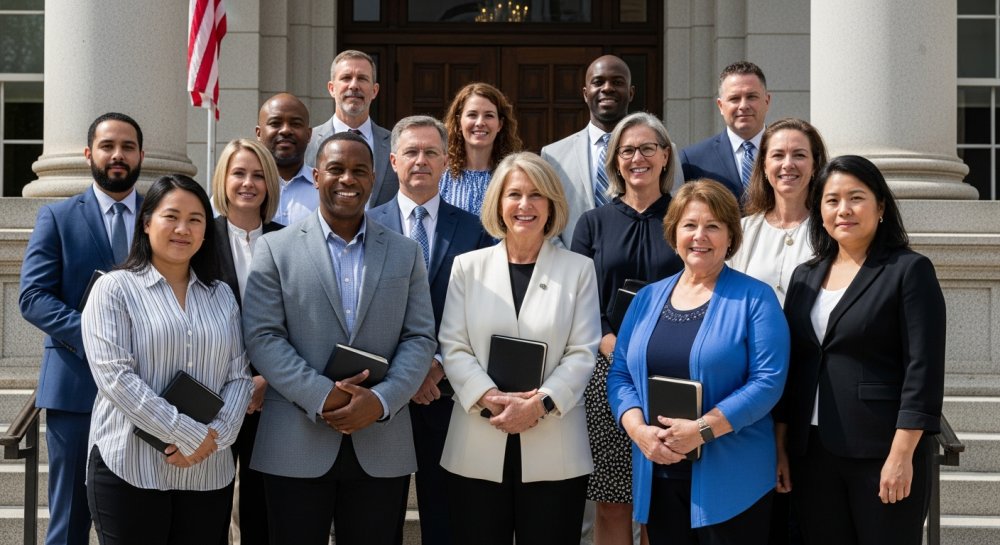
One Million Acts of Hope: Faith Leaders Launch Historic Week of Unity


Faith Facts
- Christian, Jewish, and Muslim communities are launching a coordinated week of solidarity aimed at achieving one million ‘acts of hope’ across the nation.
- The interfaith initiative brings together believers from America’s three Abrahamic faith traditions in a shared commitment to community service and compassion.
- Organizers are calling on houses of worship nationwide to participate through charitable works, prayer gatherings, and acts of kindness throughout the week.
In a powerful demonstration of shared values, Christians, Jews, and Muslims across America are uniting for an unprecedented week of solidarity. The ambitious initiative seeks to generate one million acts of hope as believers from different traditions work together to serve their communities and demonstrate the common ground found in faith.
The collaborative effort highlights the shared commitment to charity, compassion, and community service that exists across the Abrahamic faiths. From food drives to prayer vigils, from visiting the sick to serving the homeless, the week aims to show that people of faith can stand together for the common good while maintaining their distinct religious identities.
Faith leaders organizing the event emphasize that unity does not require uniformity. Christians participating in the initiative remain grounded in the Gospel message while recognizing opportunities to work alongside neighbors of different faiths on shared humanitarian goals. The initiative reflects a belief that demonstrating love through action remains a universal calling that transcends denominational boundaries.
Houses of worship across the country are being encouraged to register their participation and document their acts of service. The goal of one million acts represents an ambitious target designed to mobilize believers nationwide and create visible evidence of faith in action.
As the week unfolds, participating congregations will be sharing stories of how their communities are making a difference. From urban centers to rural towns, the coordinated effort demonstrates that Americans of faith remain committed to being a force for good in their neighborhoods and beyond.
The timing of this interfaith initiative comes at a moment when many Americans are seeking common ground and opportunities for unity. By focusing on concrete acts of service rather than theological debate, organizers hope to create space for cooperation while respecting the deeply held convictions of each tradition.
Let us know what you think, please share your thoughts in the comments below.

Faith Facts
- Christian leaders are calling on believers to actively stand and speak for Jesus in workplaces, schools, politics, and local communities
- The encouragement comes as many Christians face increasing cultural pressure to remain silent about their faith in public settings
- Faith leaders emphasize the importance of bold Christian witness across all spheres of American society
Christian leaders across the nation are issuing a clarion call for believers to stand firm in their faith and speak boldly about Jesus Christ in every area of public life. The message comes at a critical time when many Christians report feeling marginalized or pressured to keep their faith private.
The encouragement specifically addresses the need for Christian witness in workplaces, schools, political arenas, and local communities. Faith leaders are emphasizing that the gospel message should not be confined to church buildings on Sunday mornings but must permeate every aspect of American life.
As cultural pressures mount against traditional Christian values, this call to boldness represents a counter-cultural stand. Many believers have reported feeling increasingly uncomfortable expressing their faith in professional settings or educational institutions, where secular ideologies often dominate.
The exhortation to remain steadfast comes as Christians navigate an increasingly hostile cultural landscape. From workplace discrimination to educational policies that marginalize religious perspectives, believers face real challenges when living out their faith publicly.
Church leaders are reminding Christians that their faith is not meant to be a private matter but a transformative force in society. By standing for biblical principles in public forums, believers can serve as salt and light in a culture desperately in need of truth and moral clarity.
The call to action extends beyond passive faith to active engagement in shaping communities and institutions. Christians are being encouraged to run for school boards, participate in local government, speak up at workplace meetings, and refuse to compromise their convictions under pressure.
This movement recognizes that America’s founding principles were deeply rooted in Christian values and that the preservation of religious liberty requires vigilant, vocal participation from believers. When Christians retreat from public life, the vacuum is filled by ideologies antithetical to biblical truth.
Faith leaders emphasize that boldness does not mean aggression but rather courageous, loving witness to the truth of the gospel. Christians are called to speak with both grace and conviction, never compromising the message while always demonstrating Christ-like character.
The encouragement serves as a reminder that America’s moral and spiritual restoration depends on Christians who are willing to stand firm in their faith, regardless of cultural opposition or personal cost. The time for timid, privatized Christianity has passed.
Let us know what you think, please share your thoughts in the comments below.
Faith Facts
- Martin Luther’s 16th-century theological principles directly influenced America’s constitutional framework and Bill of Rights
- Luther’s concept of individual conscience before God became foundational to American religious liberty and free speech protections
- The Reformation’s emphasis on personal faith and limited church authority shaped America’s founders’ vision of limited government power
The connection between a 16th-century German monk and the freedoms Americans cherish today reveals a powerful truth about faith’s role in our nation’s founding. Martin Luther’s theological revolution didn’t just transform the church—it planted seeds that would eventually blossom into the American constitutional system.
When Luther nailed his 95 Theses to the church door in Wittenberg in 1517, he ignited more than a religious reformation. He established principles that would echo through centuries, ultimately shaping how America’s founders conceived of individual liberty, conscience, and the proper limits of governmental authority.
Luther’s central conviction—that individuals stand directly before God without institutional intermediaries—fundamentally challenged hierarchical power structures. This theological principle carried profound political implications that Reformation thinkers would develop over the following centuries.
The reformer’s insistence on conscience as the ultimate earthly authority under God’s Word became a cornerstone of Western liberty. When Luther declared at the Diet of Worms that his conscience was “captive to the Word of God” and that he could not recant unless convinced by Scripture and reason, he articulated a principle that would eventually underpin American religious freedom.
This Protestant emphasis on individual conscience directly influenced the First Amendment’s protection of religious liberty. The founders, many of whom came from Protestant backgrounds or were shaped by Reformation thinking, understood that true faith could not be coerced—a distinctly Lutheran insight.
The Reformation’s decentralization of religious authority also provided a model for political decentralization. Just as Luther challenged the concentration of spiritual power in Rome, America’s founders resisted the concentration of political power in any single institution or individual.
Luther’s doctrine of the “two kingdoms”—the spiritual and temporal realms—helped establish the intellectual foundation for separating church and state while maintaining both as necessary spheres under God’s sovereignty. This nuanced view allowed for religious influence on civic life without theocratic control, a balance the founders sought to maintain.
The Protestant emphasis on literacy and education, driven by Luther’s conviction that believers should read Scripture for themselves, created a culture of learning that proved essential for self-government. An educated, literate populace capable of reading and reasoning became the bedrock of republican liberty.
The Reformation’s legacy in American founding documents extends beyond abstract principles. Many of the founders explicitly acknowledged their debt to Protestant thought, understanding that their political experiment rested on moral and theological foundations laid centuries earlier.
This historical connection reminds us that American liberty wasn’t conjured from Enlightenment rationalism alone. It emerged from a Christian worldview that valued the individual soul’s worth before God, the limits of earthly authority, and the conscience accountable ultimately to divine rather than human law.
Understanding this heritage matters today as Americans debate the proper relationship between faith and freedom. The Bill of Rights didn’t emerge from a secular vacuum but from centuries of Christian theological development about human dignity, authority, and liberty under God.
Recovering this forgotten history strengthens our appreciation for the freedoms we enjoy. The rights enshrined in our Constitution reflect not merely political philosophy but theological convictions about humanity’s nature and calling—convictions that Luther helped articulate five centuries ago.
Let us know what you think, please share your thoughts in the comments below.
Faith Facts
- CyLife Church in Cypress, Texas is investing $22 million in a comprehensive campus expansion and renovation project
- The expansion includes new soccer fields designed to support an upcoming Christian sports league
- The former Southern Baptist congregation is expanding its ministry footprint to serve families and young people through faith-based athletics
A thriving Texas megachurch is making a significant investment in its future by launching an ambitious $22 million expansion that will transform its campus and create new opportunities for Christian community building. CyLife Church in Cypress, Texas, is spearheading the major renovation project that signals the congregation’s commitment to reaching families through innovative ministry approaches.
The former Southern Baptist church is taking a bold step forward by incorporating athletic facilities into its expansion plans. The new development will feature soccer fields specifically designed to support an upcoming Christian sports league, representing a growing trend among evangelical churches to engage young people and families through faith-based athletics.
This substantial financial commitment demonstrates the church’s vision for ministry that extends beyond traditional Sunday services. By creating spaces for Christian sports programming, CyLife Church is positioning itself to disciple young athletes while providing families with wholesome, values-centered recreational opportunities.
The $22 million investment reflects the church’s confidence in combining faith formation with physical activity and competition. Christian sports leagues have gained momentum across the country as churches recognize the powerful platform athletics provides for character development, mentorship, and gospel witness.
The expansion project represents more than just new buildings and fields — it embodies a strategic approach to ministry that meets families where they are. By offering Christian alternatives to secular youth sports programs, churches like CyLife are creating environments where biblical values and athletic excellence go hand in hand.
As American culture continues to shift away from traditional values, churches that invest in comprehensive family ministry are positioning themselves to make lasting kingdom impact. The integration of sports ministry with traditional church programming allows congregations to build deeper relationships with families and create multiple touchpoints throughout the week.
Let us know what you think, please share your thoughts in the comments below.


-

 Self-Reliance1 year ago
Trump’s Bold Move Uncovers Massive Social Security Fraud
-

 Faith1 year ago
New Clues Emerge in Noah’s Ark Mystery
-

 News1 year ago
Governor Walz’s Rhetoric Sparks National Controversy
-

 News1 year ago
Mel Gibson’s ‘The Passion of the Christ’ Sequel Title Announced
-

 Family1 year ago
Texas Lawmaker Targets Furries in Schools
-

 Freedom1 year ago
Maine Lawmaker Challenges Sports Fairness Controversy
-

 Family12 months ago
Canada’s Controversial Policy Sparks Ethical Debate
-
Faith6 months ago
Congress Hears Pleas for Nigerian Christians