
News
Nigerian Village Raid Claims Lives of at Least 20 Believers


Faith Facts
- At least 20 Christians were killed in a violent raid on a village in Nigeria’s Plateau state on Thursday night, April 9
- Area residents identified the attackers as armed militants from the Fulani ethnic group
- The attack represents another tragic chapter in ongoing violence against Christian communities in central Nigeria
Armed militants raided a village in central Nigeria’s Plateau state on Thursday night, April 9, killing at least 20 Christians in a brutal attack, according to local residents. The gunmen have been identified by witnesses as Fulani terrorists targeting the Christian community.
The assault on the village represents the latest incident in a pattern of violence that has plagued Christian communities throughout Nigeria’s Middle Belt region. Plateau state has been particularly affected by such attacks in recent years, with Christian farmers and villagers frequently targeted.
Nigeria remains one of the most dangerous countries in the world for Christians, with believers facing threats from multiple extremist groups. The violence has created a humanitarian crisis, displacing thousands of families and devastating entire communities.
Local residents reported that the attackers descended on the village under cover of darkness, opening fire on civilians. The death toll continues to be assessed as authorities work to secure the area and provide aid to survivors.
The persecution of Christians in Nigeria has drawn international concern from religious freedom advocates and human rights organizations. Many have called for stronger protection of vulnerable communities and accountability for those responsible for these attacks.
Christian leaders in Nigeria have repeatedly appealed for intervention and protection, emphasizing the urgent need for security measures to safeguard their congregations. The recurring nature of these attacks has placed immense strain on Christian communities trying to maintain their faith and way of life.
This tragedy serves as a sobering reminder of the courage required by our brothers and sisters in Christ who face daily threats simply for professing their faith. American Christians are called to remember these persecuted believers in prayer and to advocate for their protection.
Let us know what you think, please share your thoughts in the comments below.

Faith Facts
- Malcolm Guite is a poet, priest, and Cambridge University scholar who draws on Christian literary tradition to address cultural questions.
- Guite identifies a crisis of masculinity and imagination in contemporary society and points to classic Christian-influenced literature as a remedy.
- King Arthur, as portrayed in British legend, embodies the chivalric virtues of courage, service, and self-sacrifice that align with biblical manhood.
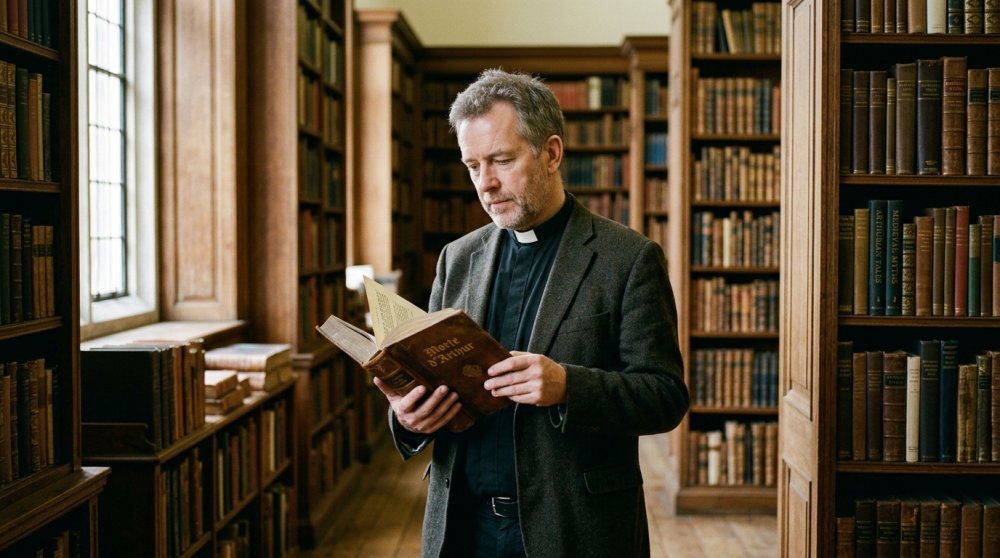
British poet, priest and Cambridge University scholar Malcolm Guite believes society is facing a crisis of masculinity and imagination, and he’s turning to one of literature’s oldest heroes to help address it: King Arthur.
Guite argues that the legendary king provides a compelling image of ordered strength and sacrificial leadership rooted in the Christian heritage of the West.
“King Arthur offers an antidote to toxic masculinity,” Guite stated in a recent interview.
The scholar notes that Arthur’s knights were trained not merely in combat but in courtesy, justice, and the defense of the weak, virtues he believes are needed again.
Guite connects the Arthurian ideal to the broader Christian story, suggesting that recovering a sense of noble purpose can counter both cultural confusion and moral decline.
“We need stories that teach boys and men how to wield strength in service of others rather than for domination,” he explained.
Let us know what you think, please share your thoughts in the comments below.
Faith Facts
- Pastor Adam Hamilton is running for the U.S. Senate as a Democrat in Kansas.
- Hamilton stated that Christians do not need to believe in the virgin birth of Jesus Christ.
- The virgin birth is a foundational doctrine affirmed in Scripture and upheld by the historic Christian church.
Former pastor and current Democrat Senate candidate Adam Hamilton is drawing criticism after a video interview surfaced in which he stated that belief in the virgin birth of Jesus is not required for Christians.
The remarks challenge the clear teaching of Scripture and the longstanding confessions of the Christian faith that affirm the miraculous conception of Christ by the Holy Spirit.
“Christians don’t have to believe in the virgin birth of Jesus,” Hamilton said during the interview.
Conservative believers across Kansas and the nation are expressing concern that a candidate who once served as a pastor would publicly question such a core biblical truth while seeking elected office.
Scripture is unambiguous on this matter, declaring in Isaiah 7:14 that “the virgin shall conceive and bear a son,” and in Matthew 1:23 that this prophecy was fulfilled in Mary.
Let us know what you think, please share your thoughts in the comments below.
Faith Facts
- The Virginia Supreme Court declined to halt a lawsuit brought by longtime members of McLean Bible Church over the 2021 elder election.
- Church leaders sought to dismiss the case, arguing that civil courts lack authority over internal church governance.
- The decision allows the plaintiffs to continue their legal challenge regarding transparency and adherence to church bylaws.
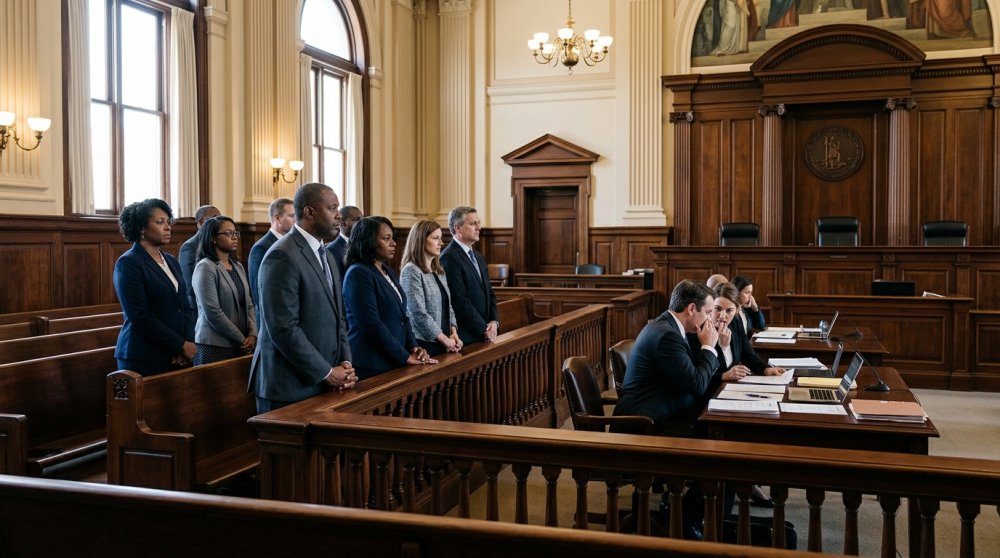
The Virginia Supreme Court has refused to end a lawsuit filed by longtime members of McLean Bible Church concerning the 2021 elder election and related governance issues.
The justices denied the church’s appeal, allowing the case to proceed in lower courts.
“We are disappointed that the Court declined to hear our appeal,” said a spokesperson for McLean Bible Church in a prepared statement. “We remain confident in our position and committed to defending the autonomy of local church governance.”
The lawsuit, brought by members who joined the congregation years earlier, questions whether the 2021 elder selection process followed the church’s own bylaws and whether proper notice and voting procedures were observed.
Legal observers note that Virginia courts have historically been reluctant to intervene in purely ecclesiastical matters, yet they will sometimes examine whether organizations have followed their own established rules.
“This ruling does not decide the merits of the case,” the court’s order stated. “It simply recognizes that the plaintiffs have stated a claim that may proceed under Virginia law.”
Church leaders maintain that the elder election was conducted lawfully and with appropriate congregational input.
Critics within the congregation argue that changes in leadership direction have shifted the church away from its historic doctrinal stance.
“Our concern has always been about fidelity to Scripture and to the church’s founding documents,” one plaintiff said in an earlier interview. “We simply want the process to be fair and transparent.”
The case now returns to the trial court, where both sides will continue to present arguments over governance and membership rights.
Let us know what you think, please share your thoughts in the comments below.


-

 Self-Reliance2 years ago
Trump’s Bold Move Uncovers Massive Social Security Fraud
-

 Faith2 years ago
New Clues Emerge in Noah’s Ark Mystery
-

 News2 years ago
Governor Walz’s Rhetoric Sparks National Controversy
-

 News2 years ago
Mel Gibson’s ‘The Passion of the Christ’ Sequel Title Announced
-

 Family2 years ago
Texas Lawmaker Targets Furries in Schools
-

 Freedom2 years ago
Maine Lawmaker Challenges Sports Fairness Controversy
-

 Family1 year ago
Canada’s Controversial Policy Sparks Ethical Debate
-
Faith11 months ago
Congress Hears Pleas for Nigerian Christians