
Faith
Nigerian Pastor Murdered After Ransom Paid

Faith Facts
- The Rev. James Audu Issa was kidnapped from his home in Ekati, Kwara state, and later found murdered despite a ransom being paid.
- Bandits first demanded 100 million naira but settled for 5 million, then cruelly asked for an additional sum before killing the pastor.
- Nigeria remains one of the world’s most dangerous places for Christians, with thousands killed for their faith each year.
The tragic killing of Rev. James Audu Issa is a heartbreaking reminder of the growing persecution facing Christians in Nigeria. Such violence reveals the tremendous challenges believers endure for standing firm in their faith.
“This harmless pastor has been cut down, one among many, leaving his wife, children, extended family, church and friends in agony,” said the Rev. Romanus Ebeneokodi.
Experts warn that radical groups are intentionally targeting Christians, seeking to eliminate the witness of the Church and seize Christian lands. As believers, we mourn with the suffering families and stand united in prayer for those who risk everything for the Gospel.
We must remain steadfast, encourage those under fire, and advocate for the freedom to worship without fear. Pray for Nigeria, and for courage among all who name Christ as Lord.



Faith Facts
- Church scandals often stem from failures in governance and leadership structure, not just moral lapses
- Proactive safeguards protect congregations, preserve ministry integrity, and honor biblical standards of accountability
- Implementing these five protections strengthens a church’s witness and shields it from preventable crises
Church scandals continue to make headlines across America, and the attention is warranted. But understanding the nature of these failures is essential for prevention. While some stem from moral collapse, many originate from inadequate leadership structures, poor governance, and a lack of biblical accountability.
The good news is that churches don’t have to wait for disaster to strike. There are concrete, actionable steps that can be implemented immediately to protect congregations, preserve the integrity of ministry, and uphold the high standards Scripture calls us to maintain.
These aren’t just administrative suggestions—they’re spiritual safeguards that reflect our commitment to stewarding God’s people well. Here are five critical protections every church should adopt before a crisis emerges.
1. Establish Clear Financial Accountability
Financial transparency isn’t optional—it’s biblical. Churches must implement robust financial controls including multiple signatories on accounts, regular external audits, and transparent reporting to congregation members. When money is handled with integrity and oversight, it removes both temptation and accusation.
2. Create Strong Leadership Accountability Structures
No pastor or church leader should operate without accountability. This means active elder boards or leadership teams with real authority, not rubber-stamp committees. Biblical eldership requires mutual submission, honest evaluation, and the courage to speak truth in love when concerns arise.
3. Implement Comprehensive Background Checks and Safety Policies
Protecting the vulnerable is a Gospel imperative. Every person working with children, youth, or vulnerable adults must undergo thorough background screening. Clear safety protocols, two-adult rules, and regular training create environments where abuse cannot take root.
4. Establish Clear Boundaries and Conduct Policies
Moral failures often begin with boundary violations that seem small at first. Churches need explicit policies governing counseling relationships, social media interactions, travel arrangements, and one-on-one meetings. These aren’t signs of distrust—they’re guardrails that protect everyone involved.
5. Develop Crisis Communication and Response Plans
Hope for the best, but prepare for difficulties. Churches need predetermined plans for how to respond when allegations arise, who speaks on behalf of the church, and how to care for victims while pursuing truth. Swift, compassionate, and transparent responses demonstrate Christian character in challenging moments.
The church is called to be a city on a hill, a light to the world. That light dims when preventable scandals damage our witness and harm God’s people. These safeguards aren’t about legalism or suspicion—they’re about wisdom, stewardship, and loving our neighbors well.
Implementing these protections communicates that we take seriously our responsibility to guard the flock. They demonstrate that we value integrity over convenience and people over institutional preservation. Most importantly, they reflect our commitment to honoring Christ in every dimension of church life.
The time to act is now, before crisis strikes. Church leaders who proactively implement these safeguards position their ministries to thrive with integrity, credibility, and spiritual health for generations to come.
Let us know what you think, please share your thoughts in the comments below.
Faith Facts
- New census data reveals fewer than half of adults in England and Wales are now in opposite-sex marriages, marking a historic decline in the institution
- Dr. Tony Rucinski calls for the Church to boldly defend and celebrate marriage amid cultural erosion of traditional family values
- The shift reflects broader societal abandonment of biblical principles that have anchored Western civilization for centuries
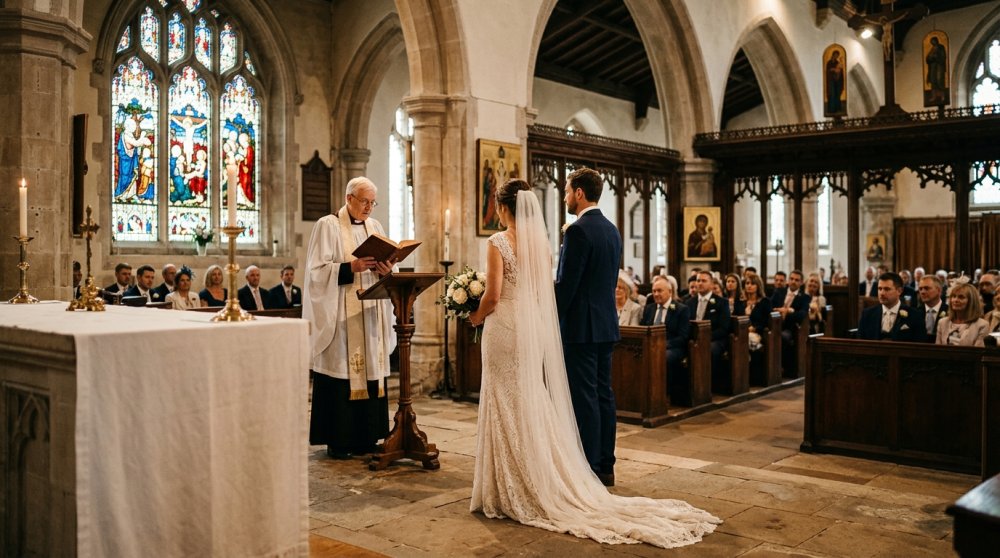
A troubling milestone has been reached across the Atlantic, one that should serve as a wake-up call for Christians everywhere. New census figures from England and Wales reveal that fewer than half of adults are now in opposite-sex marriages, signaling a dramatic retreat from an institution that has served as the bedrock of society for millennia.
Dr. Tony Rucinski is sounding the alarm, urging the Church to respond with courage and conviction. In a cultural moment when traditional values are increasingly dismissed or openly attacked, he argues that people of faith cannot afford to remain silent about God’s design for marriage and family.
The data represents more than mere statistics—it reflects a fundamental shift in how Western societies view commitment, family formation, and the raising of children. For generations, marriage between one man and one woman provided stability for communities, protected the vulnerable, and created the optimal environment for children to flourish.
Yet Britain’s trajectory away from marriage mirrors trends seen across much of Europe and, increasingly, in parts of America. Cohabitation without commitment has become normalized, divorce remains commonplace, and many young people have grown up without witnessing healthy marital relationships in their own homes.
Dr. Rucinski’s call for the Church to be “bolder in defending and celebrating marriage” speaks to a critical need. Too often, Christian leaders have adopted a defensive posture, afraid to articulate timeless truths about marriage for fear of cultural backlash. But silence in the face of society’s drift has only accelerated the decline.
The biblical model of marriage—a covenant relationship between one man and one woman, designed by God for companionship, mutual support, and the raising of godly children—remains as relevant today as it was when Scripture was written. This is not merely tradition for tradition’s sake; it reflects divine wisdom about human flourishing.
Churches must reclaim their prophetic voice on this issue. This means not only teaching biblical truth about marriage from the pulpit but also providing practical support for couples—premarital counseling, marriage enrichment programs, and mentoring relationships that help struggling marriages survive and thrive.
The consequences of marriage’s decline are already visible: increased poverty, particularly among single-parent households; emotional and behavioral problems among children who lack stable two-parent homes; and a loneliness epidemic affecting people across all age groups. Society pays a heavy price when it abandons God’s blueprint for family life.
For American Christians, Britain’s experience offers both warning and opportunity. The warning is clear: cultural transformation happens gradually, then suddenly. What seems unthinkable in one generation becomes accepted in the next. The opportunity lies in choosing a different path—recommitting to marriage, supporting families, and boldly proclaiming truth in love.
This is not about judgment or condemnation of those whose lives have not followed the traditional path. The Church must always extend grace and compassion to the divorced, the single parent, and those struggling in difficult relationships. But grace and truth must go together; we can offer unconditional love while still upholding God’s ideal.
The good news is that marriage, rightly understood and practiced, remains deeply appealing. Young people hunger for lasting commitment, even if they’ve rarely seen it modeled. Couples who invest in their marriages report greater happiness and life satisfaction than those who cohabit or divorce. Children raised by married parents consistently demonstrate better outcomes across virtually every measurable category.
What’s needed now is courage—courage for pastors to preach the whole counsel of God, courage for Christian couples to model faithful marriages before a watching world, and courage for the broader Church to invest resources in strengthening families rather than simply managing the fallout from family breakdown.
Britain may be giving up on marriage, but the Church cannot afford to follow suit. The stakes are too high, the consequences too severe, and the biblical mandate too clear. As Western culture continues its experiment with redefining or discarding marriage, Christians must stand firm, offering both truth and hope to a generation desperately in need of both.
Let us know what you think, please share your thoughts in the comments below.
Faith Facts
- California parents have petitioned the U.S. Supreme Court to overturn a state charter school policy that prohibits religious materials in homeschool curricula
- The policy affects families enrolled in California’s public charter schools who wish to integrate faith-based educational content into their children’s learning
- The case represents a critical test of religious freedom in education and parental rights to direct their children’s moral and spiritual instruction
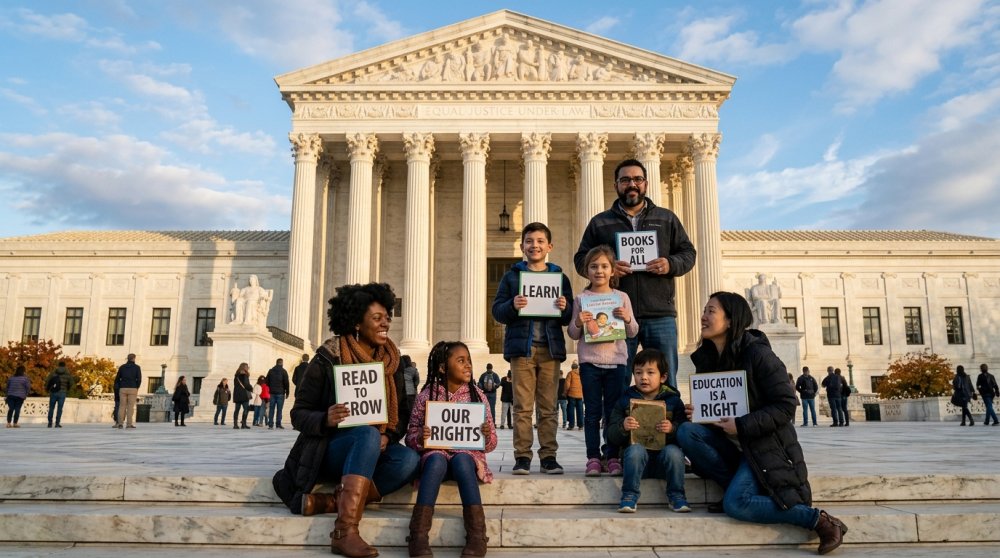
A coalition of parents is challenging what they see as government overreach into their ability to provide faith-centered education for their children. The families are asking the nation’s highest court to review a California charter school policy that bans religious materials from homeschool study programs.
The case strikes at the heart of two fundamental American values: religious liberty and parental authority over children’s education. These California families argue that the state has no constitutional basis to exclude faith-based content from educational programs, particularly when parents are directing their own children’s learning.
The policy at issue affects families who participate in California’s public charter school system while homeschooling their children. Under current rules, these families cannot include religious texts, biblical history, or faith-based curriculum materials in their state-approved educational plans, even when parents are the primary educators.
For Christian families, this prohibition creates an impossible choice between accessing public educational resources and honoring their deeply held conviction to raise children in the instruction of the Lord. The First Amendment was designed to prevent exactly this type of government interference with religious exercise.
California’s population includes millions of people of faith who believe education and spiritual formation are inseparable. These parents maintain that excluding religious content from their children’s education violates their constitutional rights to free exercise of religion and the fundamental liberty to direct their children’s upbringing.
The case represents the latest battleground in ongoing cultural conflicts over the role of faith in American public life. As secular ideology increasingly dominates government institutions, Christian families find themselves fighting to maintain space for their values and beliefs.
Charter schools were originally conceived as flexible alternatives within the public education system, offering families more choices and innovative approaches to learning. The irony is not lost on religious freedom advocates that these supposedly flexible institutions now enforce rigid exclusion of faith-based content.
The Supreme Court has recently shown increased willingness to protect religious liberty, particularly in education contexts. Recent decisions have affirmed that government cannot discriminate against religious institutions or exclude people of faith from generally available public benefits simply because of their religious character.
If the Supreme Court agrees to hear the case, it could establish important precedent about the boundaries between public education policy and parental rights to incorporate religious instruction. The outcome will likely affect homeschooling families nationwide, not just in California.
The Constitution does not require Americans to check their faith at the schoolhouse door—or at the door of their own homes when educating their children. These parents are standing firm in their conviction that the government has no authority to censor religious content from family-directed education.
Let us know what you think, please share your thoughts in the comments below.


-

 Self-Reliance1 year ago
Trump’s Bold Move Uncovers Massive Social Security Fraud
-

 Faith1 year ago
New Clues Emerge in Noah’s Ark Mystery
-

 News1 year ago
Governor Walz’s Rhetoric Sparks National Controversy
-

 News1 year ago
Mel Gibson’s ‘The Passion of the Christ’ Sequel Title Announced
-

 Family1 year ago
Texas Lawmaker Targets Furries in Schools
-

 Freedom1 year ago
Maine Lawmaker Challenges Sports Fairness Controversy
-

 Family1 year ago
Canada’s Controversial Policy Sparks Ethical Debate
-
Faith9 months ago
Congress Hears Pleas for Nigerian Christians