
Faith
Nigerian Christians Face Deadly Persecution

Faith Facts
- Boko Haram, Islamic State affiliates, and Fulani militant herders have carried out assaults on Christian communities in Nigeria.
- Efforts to hold the Nigerian government accountable include proposed U.S. legislation urging action against religious persecution.
- Advocacy groups and religious leaders highlight a pattern of targeted violence, with over 52,000 Christians killed and 20,000 churches attacked since 2009.
As believers around the world join in prayer for the persecuted church, Nigerian Christians continue to suffer brutal attacks at the hands of extremists. Government officials have pushed back against claims of genocide, even as pressure increases for accountability.
Servants of Christ are raising their voices to bring attention to the plight of innocent men, women, and children whose only crime is proclaiming the name of Jesus.
The Nigeria Religious Freedom Accountability Act was introduced by Senator Ted Cruz, calling for U.S. measures to address the hostile atmosphere for believers in Nigeria.
Additionally, a petition from leading religious liberty advocates urges the U.S. government to place Nigeria back on the “Country of Particular Concern” list due to ongoing religiously motivated violence.
“The Nigerian government is directly violating religious freedom by enforcing Islamic blasphemy laws that carry the death penalty and harsh prison sentences against citizens of various religions.”
“It also demonstrably tolerates relentless aggression uniquely against Christian farming families by militant Fulani Muslim herders, who appear intent on forcibly Islamizing the Middle Belt.”
Fulani militant herders present the gravest danger to Christian families in Nigeria’s central region according to these advocates, aiming to seize land and erase longstanding Christian communities.
Churches across the nation stand firm, even as attackers destroy homes and farmland, driving believers to seek refuge in makeshift camps with scarcely any government support.
Despite numerous warnings, government forces often fail to respond to the looming threat, leaving faithful families vulnerable and without protection.
“The biggest threat facing Nigeria’s Christians comes from Fulani Muslim herders.”
“With cries of ‘Allahu Akbar’ and wielding AK-47s, they invade peaceful Christian farming areas in Nigeria’s central region, massacring families, burning homes and harvests, and driving millions of Christians from their ancestral lands.”
The surrounding political climate frequently downplays the religious root of these assaults, attributing violence to resource disputes rather than acknowledging the clear targeting of followers of Christ.
In heartfelt testimony, Bishop Wilfred Anagbe described his people as a church under extermination by Islamist forces.
“The experience of Christians in Nigeria can be summed up as a church under Islamist extermination.”
Nigerian Christians need our faithful prayers, advocacy, and unwavering commitment to the principles of liberty, just as our Lord calls us to stand with the persecuted. May we never forget those suffering for their faith in Christ.



Faith Facts
- The Bible commands children to honor their father and mother (Exodus 20:12).
- Scripture warns against bitterness and urges reconciliation within families (Ephesians 4:31-32).
- God places high value on generational relationships and the passing down of faith (Psalm 78:4-7).
At a recent breakfast three friends shared the same heartbreak: grown children who had cut off all contact even with grandchildren. It is a growing trend and one the Bible speaks to directly.
Many counselors and social media voices frame cutting off parents as healthy boundaries or necessary self-care. The practice has gained traction especially among younger adults influenced by therapeutic language that often places personal feelings above family duty.
Yet Scripture consistently elevates the lifelong responsibility children have toward their parents. The fifth commandment does not expire when a person turns eighteen and the call to honor remains even when relationships are imperfect.
“Honor your father and your mother, that your days may be long in the land that the Lord your God is giving you.”
Christian counselors note that estrangement often stems from unresolved conflicts that could be addressed through repentance forgiveness and godly counsel rather than permanent separation. The pattern of total cutoff also deprives grandchildren of the generational wisdom and love Scripture expects families to pass on.
“Fathers shall not be put to death for their children nor shall children be put to death for their fathers. Each one shall die for his own sin.”
The trend reflects a broader cultural shift that elevates individual autonomy over covenantal family bonds. While abuse must never be minimized or excused the biblical model still calls believers to pursue peace and reconciliation wherever possible.
Let us know what you think, please share your thoughts in the comments below.
Faith Facts
- J.R.R. Tolkien was a devout Catholic whose faith shaped his storytelling in The Hobbit and The Lord of the Rings.
- C.S. Lewis, a close friend of Tolkien, was a prominent Christian writer whose works also reflect deep faith.
- Both authors are celebrated for weaving Christian values into their literary masterpieces.
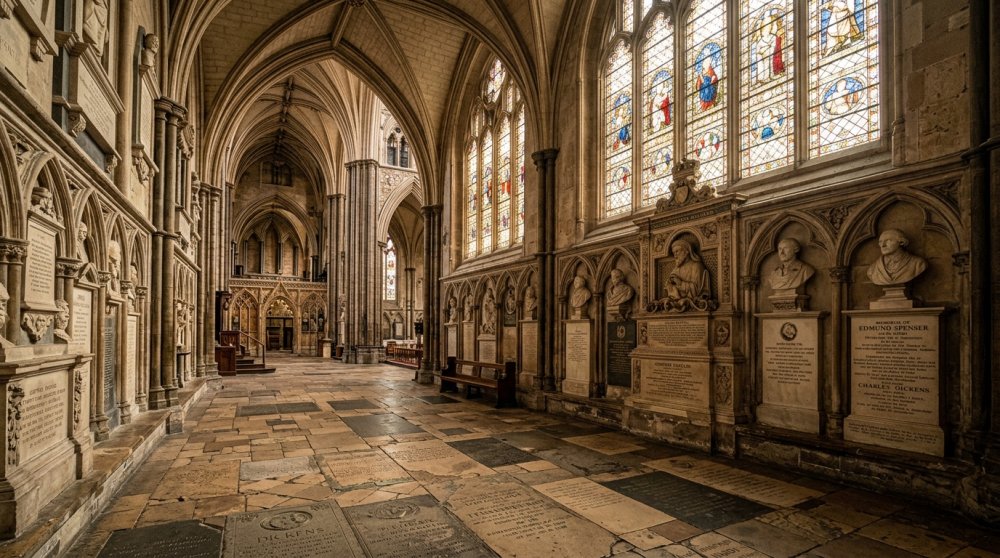
J.R.R. Tolkien, the devout Catholic author whose Christian beliefs helped shape The Hobbit and The Lord of the Rings, will be honored with a memorial in Westminster Abbey’s Poets’ Corner alongside his close friend and fellow Christian writer C.S. Lewis.
The decision to place Tolkien’s memorial in Poets’ Corner marks a fitting tribute to a man whose faith and imagination have touched millions of readers across generations.
“It is a joy to see Tolkien’s legacy recognized in such a historic and sacred place,”
“His stories continue to inspire readers with themes of courage, sacrifice, and redemption that echo the Gospel.”
Let us know what you think, please share your thoughts in the comments below.
Faith Facts
- Robin Rempel describes herself as an average person yet has witnessed God produce extraordinary fruit through her surrendered life.
- Scripture consistently shows the Lord using ordinary individuals to accomplish His purposes, as seen in the lives of Gideon, Esther, and the early disciples.
- Christian teaching affirms that genuine effectiveness flows not from personal strength but from humble dependence upon the Lord.
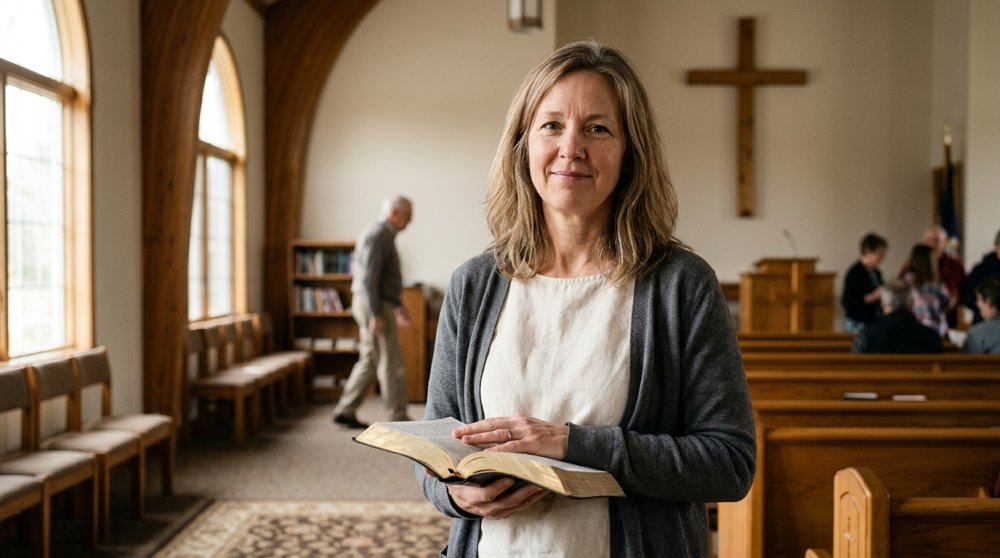
Often we think we must be extraordinary people for God to use us, but that is not true. Robin Rempel exemplifies this. She sees herself as quite an average person, yet with God’s help she has been part of an extraordinarily fruitful ministry.
This is her story.
Let us know what you think, please share your thoughts in the comments below.


-

 Self-Reliance1 year ago
Trump’s Bold Move Uncovers Massive Social Security Fraud
-

 Faith1 year ago
New Clues Emerge in Noah’s Ark Mystery
-

 News2 years ago
Governor Walz’s Rhetoric Sparks National Controversy
-

 News2 years ago
Mel Gibson’s ‘The Passion of the Christ’ Sequel Title Announced
-

 Family2 years ago
Texas Lawmaker Targets Furries in Schools
-

 Freedom2 years ago
Maine Lawmaker Challenges Sports Fairness Controversy
-

 Family1 year ago
Canada’s Controversial Policy Sparks Ethical Debate
-
Faith10 months ago
Congress Hears Pleas for Nigerian Christians