Connect with us

Faith

Nigeria Church Service Erupted in Violence — What Really Happened

Published

on

Faith Facts

  • A worship service at an Assemblies of God church in Ughelli, Delta state, Nigeria, was violently disrupted on Sunday, April 12, with tear gas deployment affecting a pastor and his wife.
  • The incident involved a physical altercation between church members and uniformed personnel during the service.
  • Both the Assemblies of God Nigeria and Royal Rangers Nigeria have launched internal investigations into the disturbance.

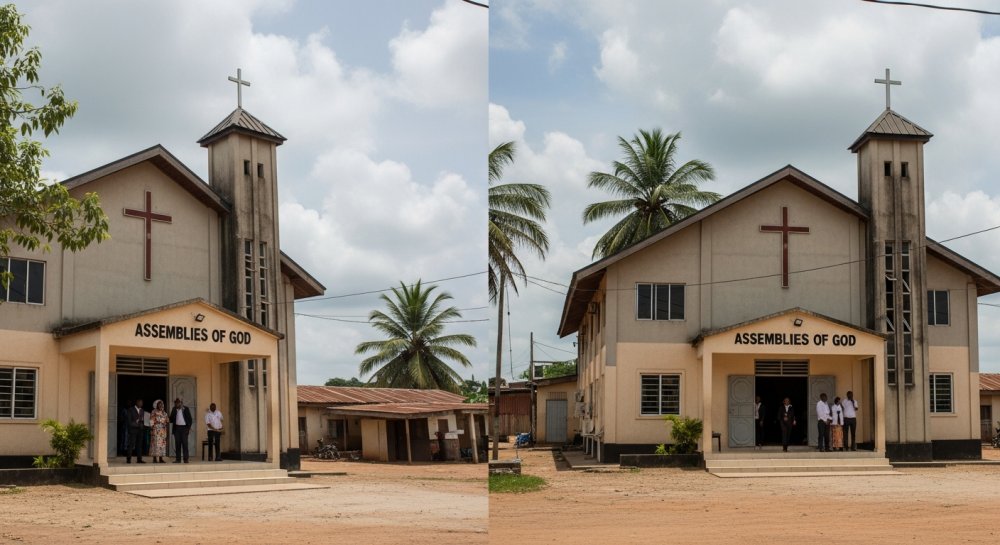
A peaceful Sunday worship service turned chaotic when violence erupted at an Assemblies of God congregation in Ughelli, Delta state, Nigeria. The shocking disruption on April 12 left a pastor and his wife suffering from tear gas exposure and has prompted serious questions about security and order within the church.

According to reports, the incident involved a violent confrontation between church members and uniformed personnel during the service. The use of tear gas inside a house of worship has raised significant concerns among both congregants and church leadership about what led to such an extreme escalation.

The Assemblies of God Nigeria has moved swiftly to address the matter, launching an internal investigation to determine the full circumstances surrounding the violent outbreak. Royal Rangers Nigeria, the church’s ministry focused on mentoring young men in Christian values and leadership, has also initiated its own inquiry into the incident.

The deployment of tear gas in a worship environment represents a serious breach of the sanctity that should characterize Christian gathering spaces. For a pastor and his wife to be directly affected by such measures during a service designed to honor God raises troubling questions about the circumstances that preceded the violence.

Church leadership now faces the critical task of uncovering what sparked the confrontation and ensuring that such disruptions do not occur in the future. The involvement of uniformed personnel suggests possible conflicts over authority, property, or church governance that reached a dangerous boiling point.

As investigations proceed, the incident serves as a sobering reminder of the importance of maintaining peace, order, and respect within Christian communities. The faithful deserve safe spaces to worship without fear of violence or intimidation.

The Assemblies of God denomination, known worldwide for its Pentecostal witness and commitment to the Great Commission, must now address this internal challenge with wisdom and transparency. How leadership responds will speak volumes about the church’s commitment to biblical standards of conflict resolution and shepherd care.

Let us know what you think, please share your thoughts in the comments below.

Continue Reading
Click to comment

Leave a Reply

Your email address will not be published. Required fields are marked *

Faith

Israel Plans Pride Festival at Biblical Site Where Divine Judgment Once Fell

Published

on

Faith Facts

  • Israel’s Foreign Ministry promoted a four-day LGBTQ+ festival planned for June near the Dead Sea, the traditional biblical location of Sodom and Gomorrah
  • Social media users and Christian commentators have expressed concern about holding such an event at a site associated with divine judgment in Scripture
  • The Dead Sea region is widely recognized as the location where God destroyed Sodom and Gomorrah for their wickedness, as recorded in Genesis 19

The official account of Israel on social media, operated by the Israeli Foreign Ministry, has announced plans for what it calls the “biggest LGBTQ+ festival ever in the Middle East.” The four-day pride event is scheduled for June at the Dead Sea.

The location has drawn immediate criticism from those who recognize its biblical significance. The Dead Sea is traditionally identified as the site where the ancient cities of Sodom and Gomorrah once stood before God destroyed them with fire and brimstone, as recorded in the book of Genesis.

Social media users quickly pointed out the troubling symbolism of hosting a celebration of practices condemned in Scripture at the very location where divine judgment fell upon similar behavior. Critics characterized the event as deliberately provocative and disrespectful to the biblical account.

“Mocking God,” wrote several commentators in response to the announcement, noting the spiritual significance of the chosen venue.

The Dead Sea region remains one of the most geologically unique areas on Earth, sitting at the lowest point on the planet’s surface. Biblical scholars and archaeologists have long identified this area as the location of the cities destroyed in Genesis 19 because of the wickedness of their inhabitants.

The decision to hold a major LGBTQ+ festival at this historic biblical site raises questions about respect for religious heritage and the deliberate choice of such a symbolically loaded location. For many Christians and people of faith worldwide, the Dead Sea represents a sobering reminder of God’s judgment against sin.

Israel has increasingly promoted itself as a destination for LGBTQ+ tourism in recent years, particularly emphasizing Tel Aviv’s status as a liberal enclave in the Middle East. However, this latest promotional effort has struck many believers as crossing a line by specifically choosing a location with such profound spiritual significance.

The announcement comes at a time when many Christians see increasing cultural pressure to accept or celebrate practices that conflict with biblical teaching. The festival’s promotion by an official government account adds an additional layer of concern for those who view such events as normalizing behavior that Scripture clearly condemns.

Let us know what you think, please share your thoughts in the comments below.

Continue Reading

Faith

The Silent Enabler: Why the Most Dangerous Person in Your Church May Not Be the Pastor

Published

on

Faith Facts

  • Church leadership accountability is a biblical mandate requiring both shepherds and overseers to guard sound doctrine
  • Silent complicity among elders and church leaders can enable spiritual abuse and theological drift
  • Scripture calls Christians to speak truth in love and hold leaders accountable to God’s Word

When we think about threats to the health of a local church, our minds often go immediately to the most visible leader—the person in the pulpit each Sunday. But a deeper, more insidious danger often lurks in the shadows: the leader who sees problems, knows the truth, yet chooses to remain silent.

In unhealthy church environments, the most dangerous individual may not be the pastor or teacher who has strayed from sound doctrine or engaged in harmful leadership practices. It may be the elder, board member, or influential leader who witnesses these issues and says nothing at all.

This silent complicity creates a vacuum where accountability should exist. Scripture is clear that church leadership is a shared responsibility, not a one-man show. Elders are called to shepherd the flock, protect against false teaching, and hold one another accountable to the standards of God’s Word.

When those entrusted with oversight choose silence over truth-telling, they become enablers of spiritual harm. Their inaction allows unhealthy patterns to continue unchecked, congregation members to remain vulnerable, and the testimony of the church to be compromised.

The Bible offers numerous examples of the importance of speaking up. From Nathan confronting King David to Paul publicly correcting Peter, we see that godly leadership sometimes requires uncomfortable conversations and courageous stands for truth.

Churches thrive when leaders embrace biblical accountability structures. This means elders who ask hard questions, board members who prioritize Scripture over personality, and congregation members who understand their responsibility to pray for and, when necessary, biblically address leadership concerns.

The fear of conflict, desire to maintain relationships, or concern about church reputation often drives leaders to silence. But these motivations, however understandable, pale in comparison to our ultimate accountability to Christ Himself, the true Head of the Church.

Healthy church culture requires leaders at every level who value truth more than comfort, who love their brothers and sisters enough to have difficult conversations, and who understand that silence in the face of error is not neutrality—it’s complicity.

For church members, this reality underscores the importance of knowing Scripture personally, praying for discernment, and understanding that godly leadership includes the willingness to speak truth in love when necessary. We must support leaders who demonstrate this courage and pray for those who struggle with it.

The solution isn’t a culture of constant criticism or suspicion within the body of Christ. Rather, it’s a commitment to the biblical model of mutual accountability, where leaders humbly submit to one another and to God’s Word, where questions are welcomed rather than silenced, and where the goal is always the health and holiness of the church.

As believers, we must remember that church leadership is a sacred trust, not a political game. Those who hold positions of spiritual oversight will give an account to God for how they stewarded that responsibility—including whether they spoke up when truth and love required it.

Let us know what you think, please share your thoughts in the comments below.
Continue Reading

Faith

American Christian Mission Prepares Rwanda for Continental Healthcare Transformation

Published

on

Faith Facts

  • A U.S.-based Christian mission organization is launching a major healthcare initiative in Rwanda designed to train thousands of African medical workers
  • The new hospital will serve as a hub for faith-based healthcare and medical training throughout the African continent
  • The project aims to expand access to quality medical care across underserved communities while integrating Christian values into healthcare delivery

A groundbreaking Christian healthcare initiative is taking shape in Rwanda, promising to transform medical training and access to care across the African continent. The ambitious project represents a significant commitment by American faith-based organizations to address healthcare challenges through a Christ-centered approach.

The new hospital facility will serve a dual purpose: providing quality medical care to local communities while establishing a comprehensive training center for thousands of African healthcare workers. This model reflects the Christian understanding that compassionate service and education work hand-in-hand to uplift communities and honor God’s command to heal the sick.

The initiative targets underserved populations who have long struggled with limited access to quality medical care. By establishing a permanent training hub on African soil, the mission organization demonstrates a commitment to sustainable, locally-led healthcare rather than temporary interventions.

This approach aligns with traditional Christian mission values that emphasize empowering communities to serve themselves while spreading the Gospel through acts of service. The integration of faith and medicine continues a centuries-old tradition of Christian healthcare that has established hospitals, medical schools, and clinics around the world.

Rwanda’s selection as the location for this continental hub reflects the nation’s stability and its government’s openness to partnerships that improve citizen welfare. The East African nation has become increasingly attractive to faith-based organizations seeking to make lasting impacts in the region.

The training component of the project addresses one of Africa’s most pressing challenges: the shortage of qualified medical professionals. By equipping local workers with advanced skills and Christian values of service, the initiative creates a multiplier effect that will extend quality care far beyond the hospital’s walls.

American Christians supporting this mission can take pride in their nation’s continued leadership in global humanitarian efforts rooted in faith. Such initiatives demonstrate that the most effective foreign engagement combines practical assistance with spiritual transformation, offering both physical healing and hope in Christ.

The project represents significant financial investment and long-term commitment from American donors who understand that true charity requires sustained engagement rather than short-term gestures. This model of faith-based healthcare delivery stands in contrast to secular approaches that often overlook the spiritual dimensions of healing and community transformation.

Let us know what you think, please share your thoughts in the comments below.
Continue Reading

Trending