
Faith
New Video Renews Debate Over ICE Shooting

Faith Facts
- Cellphone footage shows the moment ICE agents confronted Renee Nicole Good in Minneapolis.
- Federal officials claim the agent acted in self-defense after being struck by Good’s vehicle.
- The incident ignited protests and calls for investigation into ICE enforcement methods.
Newly released cellphone footage has brought fresh attention to the death of Renee Nicole Good, as debate continues over the actions of the ICE agent involved. The video, recorded from the agent’s perspective, captures the tense moments as Good blocked ICE vehicles and refused to comply with orders.
Witnesses and officials offer conflicting accounts of what led to the use of lethal force, with some calling it self-defense and others demanding accountability. Civil demonstrations and vigils have taken place, reflecting widespread sorrow and unrest in the Christian community.
“The reality is that his life was endangered and he fired in self defense.”
Both law enforcement leaders and city officials have voiced concerns, underscoring the importance of accountability and justice. In times of crisis, Christians are called to seek truth, extend compassion for all families involved, and uphold righteousness in our society.
Stay informed and pray for wisdom and peace as this investigation continues. For more details, read the original coverage below.


Faith Facts
- Finnish MP Päivi Räsänen filed an appeal to the European Court of Human Rights after being convicted for expressing Christian beliefs in a 2004 church booklet
- Räsänen, a former interior minister, was found guilty for quoting the Bible and affirming traditional Christian teaching on marriage and sexual ethics
- The case represents a growing threat to religious freedom across Europe as believers face legal penalties for expressing Biblical truth
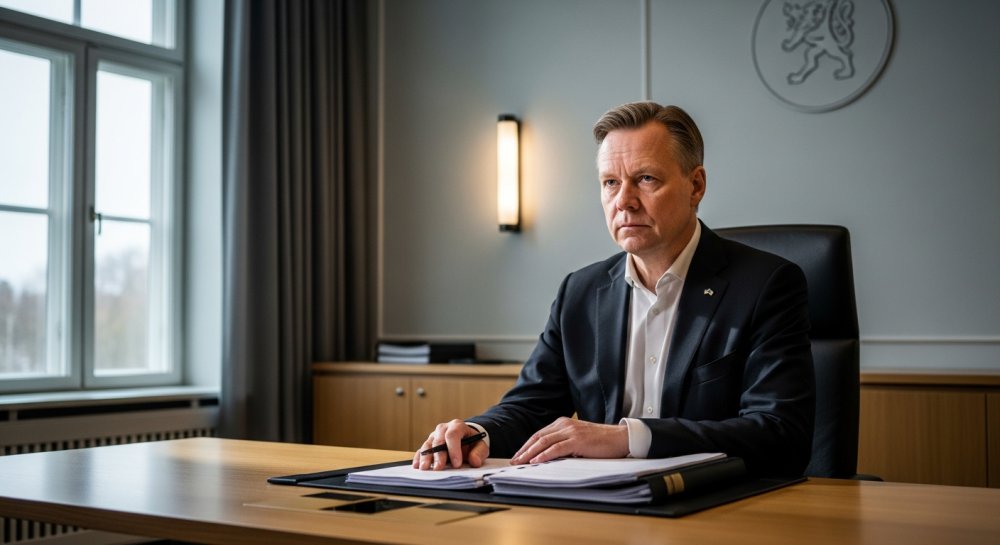
A Finnish member of parliament is taking her fight for religious freedom to Europe’s highest court after being convicted for simply expressing what the Bible teaches. Päivi Räsänen, who also served as Finland’s interior minister, filed an appeal to the European Court of Human Rights this week following her March conviction.
The charges stem from a 2004 church booklet in which Räsänen articulated traditional Christian beliefs about marriage and sexual ethics. For over two decades, these Biblical teachings were uncontroversial—until prosecutors decided to charge her with a crime for her faith.
Räsänen’s case has become a flashpoint in the global battle over religious liberty. Christians across Europe and America are watching closely as governments increasingly punish believers for refusing to abandon Biblical truth. What was once considered a fundamental human right—the freedom to believe and speak according to one’s faith—is now being treated as criminal behavior in nations that once championed liberty.
The former cabinet minister has faced years of legal persecution for her unwavering commitment to Scripture. Despite the personal and professional costs, she has refused to recant her Christian convictions. Her courage stands as a testimony to believers everywhere facing similar pressure to compromise their faith.
This appeal to the European Court of Human Rights represents what may be one of the most significant religious freedom cases in modern European history. The outcome will likely set precedent for how governments across the continent treat Christians who hold to Biblical teaching on marriage and sexuality.
American Christians should pay close attention to Räsänen’s case. The same forces seeking to silence her are active in the United States, working to criminalize Biblical truth and marginalize faithful believers. What happens in Finland today could come to America’s shores tomorrow if we fail to defend religious liberty vigilantly.
Räsänen’s steadfast defense of Scripture demonstrates the kind of courageous faith needed in this hour. She has chosen to stand on God’s Word regardless of the cost, trusting that truth will ultimately prevail over ideological tyranny. Her witness challenges all believers to consider what price they are willing to pay to remain faithful to Christ.
The European Court of Human Rights now faces a critical decision: Will it uphold the fundamental right to religious freedom, or will it endorse the persecution of Christians for their beliefs? The court’s ruling will reveal whether Europe still values the liberty upon which Western civilization was built.
Let us know what you think, please share your thoughts in the comments below.

Faith Facts
- Evangelical media may be failing to reach beyond its own community, raising concerns about effective witness in the public square
- Christian voices need both compelling content and strategic channels to influence the broader cultural conversation
- Faithful stewardship of communication platforms is essential for evangelicals to fulfill their prophetic calling in America
The question facing evangelical Christians today is not whether we have something to say, but whether anyone outside our own circles is actually listening. As believers committed to sharing truth in a culture increasingly hostile to biblical values, we must honestly assess our effectiveness in the public square.
The evangelical community has built robust media networks, publications, and platforms. Yet a troubling pattern has emerged: we may be speaking almost exclusively to ourselves. Our messages resonate within church walls and Christian households, but fail to penetrate the broader cultural conversation where hearts and minds are shaped.
This insular communication poses a serious problem for a faith community called to be salt and light. The prophetic voice that evangelicals are meant to bring to American society requires more than just sound content—it demands strategic channels and forums that actually reach beyond the choir.
From the outside looking in, how are evangelicals perceived? Are we seen as engaged citizens offering wisdom on the pressing issues of our time? Or have we become a closed community speaking our own language, disconnected from the national dialogue on family, freedom, and the future of our nation?
The challenge is clear: evangelicals must steward their communication platforms with greater intentionality. This means not only producing content grounded in biblical truth and traditional American values, but also ensuring that content reaches ears beyond our own community. The public presence of evangelical media must expand if we are to faithfully fulfill our calling.
As faithful Christians, we bear responsibility for how we engage the culture around us. The gospel message and the values it upholds—the sanctity of life, the importance of family, religious liberty, and human dignity—are too vital to remain confined within evangelical echo chambers.
Our communication must become a genuine public presence, one that speaks truth with clarity and conviction to all Americans, not just those who already share our beliefs. Only then can the evangelical voice fulfill its prophetic role in our nation’s ongoing story.
Let us know what you think, please share your thoughts in the comments below.
Faith Facts
- Pastor Elisha Kiire, 25, was killed in Uganda’s Butebo District just hours after participating in a Christian-Muslim public debate
- An imam who participated in the debate is among the prime suspects in the murder investigation
- Christians in Uganda face increasing violence and persecution, particularly when sharing their faith publicly
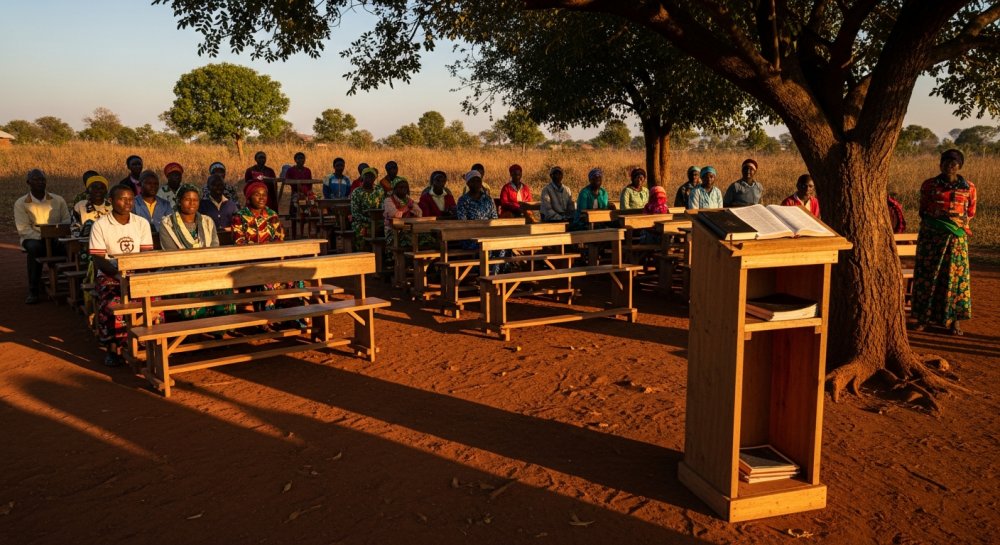
A young pastor’s commitment to defending the Christian faith cost him his life in eastern Uganda. Pastor Elisha Kiire, just 25 years old, was murdered hours after engaging in a public theological debate that drew a crowd in Butebo District.
The pastor served as a minister at New Restoration Church of Christ and was known for his willingness to engage in interfaith dialogue. His death serves as a stark reminder of the persecution Christians face in regions where sharing the Gospel can be a dangerous endeavor.
Local authorities have identified an imam who participated in the debate as one of the prime suspects in the killing. The swift timeline between the debate and the murder has raised serious concerns about religiously motivated violence in the region.
This tragic incident highlights the reality that many Christians around the world continue to face deadly consequences for their faith. While Americans enjoy religious freedom protected by the Constitution, believers in countries like Uganda regularly risk their lives simply for proclaiming biblical truth.
The young pastor’s death underscores the importance of supporting persecuted Christians globally through prayer and advocacy. His willingness to stand firm in his faith, even in the face of opposition, exemplifies the courage that has sustained the Church throughout history.
Religious tensions in Uganda have escalated in recent years as Christian evangelism has grown. Pastors and missionaries who openly share their faith often face threats, harassment, and violence from those opposed to the Gospel message.
The investigation into Pastor Kiire’s murder continues as local authorities work to bring those responsible to justice. The Christian community in Butebo District mourns the loss of a dedicated shepherd who paid the ultimate price for his commitment to Christ.
Let us know what you think, please share your thoughts in the comments below.


-

 Self-Reliance1 year ago
Trump’s Bold Move Uncovers Massive Social Security Fraud
-

 Faith1 year ago
New Clues Emerge in Noah’s Ark Mystery
-

 News1 year ago
Governor Walz’s Rhetoric Sparks National Controversy
-

 News1 year ago
Mel Gibson’s ‘The Passion of the Christ’ Sequel Title Announced
-

 Family1 year ago
Texas Lawmaker Targets Furries in Schools
-

 Freedom1 year ago
Maine Lawmaker Challenges Sports Fairness Controversy
-

 Family1 year ago
Canada’s Controversial Policy Sparks Ethical Debate
-
Faith8 months ago
Congress Hears Pleas for Nigerian Christians