
News
New Research Reveals Troubling Connection Between AI and Human Behavior


Faith Facts
- Researchers from multiple European universities warn that frequent AI interactions may cause people to adopt robot-like behaviors and thinking patterns
- The study proposes a framework showing how increasingly human-like AI could fundamentally alter human self-perception and behavior
- Findings raise important questions about how technology is reshaping humanity’s God-given identity and uniqueness
A groundbreaking study from researchers across the United Kingdom, Denmark, and Sweden is raising serious concerns about the impact of artificial intelligence on human behavior and identity. The research team has developed a new framework that examines how repeated exposure to increasingly sophisticated AI systems may be changing the way people think, act, and perceive themselves.
The findings come at a critical time when AI technologies are being rapidly integrated into daily life, from smartphones to customer service to education. For Christians who believe that humanity is uniquely created in God’s image, these developments present significant theological and ethical questions about preserving what makes us distinctly human.
According to the research, the more people interact with AI systems that mimic human qualities, the more they may unconsciously begin to mirror the mechanical, algorithmic patterns of the machines themselves. This phenomenon could have far-reaching implications for human relationships, creativity, and spiritual life.
The study suggests that as AI becomes more sophisticated in mimicking human conversation and behavior, users may gradually adopt more robotic patterns in their own interactions. This includes simplified communication styles, reduced emotional expression, and more predictable, formula-driven responses to complex situations that traditionally require wisdom, discernment, and compassion.
From a Christian perspective, this research underscores the importance of maintaining our God-given humanity in an increasingly technological world. Scripture teaches that humans are fearfully and wonderfully made, created with souls that reflect divine creativity, moral reasoning, and the capacity for authentic relationship with God and others.
The researchers emphasized that their framework is designed to help society better understand and potentially mitigate these effects before they become deeply embedded in human culture. The study calls for greater awareness of how technology shapes not just what we do, but who we are becoming.
Conservative voices have long warned about the dangers of allowing technology to redefine human nature and relationships. These findings provide empirical support for concerns that excessive reliance on artificial systems could erode the qualities that make human life meaningful, including spontaneity, authentic emotion, moral courage, and spiritual awareness.
As AI continues to advance and become more integrated into education, healthcare, and family life, families and communities of faith must remain vigilant about preserving genuine human interaction and biblical values. The research serves as a reminder that while technology can be a useful tool, it should never become a substitute for the irreplaceable value of human connection and God-ordained relationships.
Let us know what you think, please share your thoughts in the comments below.

Faith Facts
- Pastor Rob Ketterling addressed the Somali gang problem in Minnesota following a gang-related shooting at Eden Prairie High School’s homecoming game.
- The shooting on October 2 left two teenagers wounded outside Aerie Stadium, prompting calls for Christian involvement in addressing the crisis.
- Ketterling framed the issue as a case of ‘compassion without a standard’ in state settlement policies.
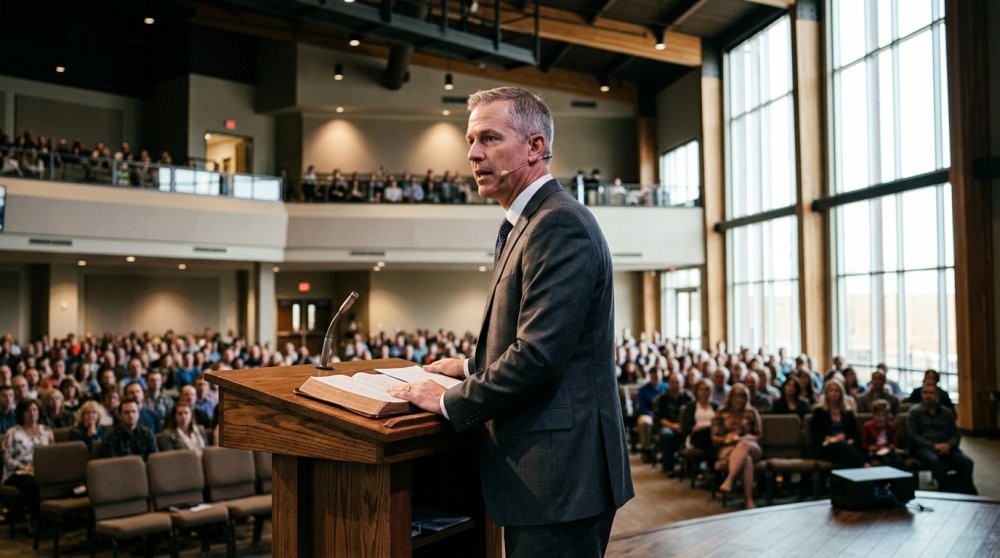
A day after a gang-related shooting disrupted Eden Prairie High School’s homecoming football game in Minnesota on Oct. 2, leaving two teenagers wounded in the parking lot outside Aerie Stadium, megachurch Pastor Rob Ketterling called on Christians to help fix the state’s “Somali gang problem,” which he later blamed on “compassion without a standard.”
“We have to have compassion, but we also have to have a standard,” Ketterling told his congregation. “When you have compassion without a standard, you get chaos.”
The pastor’s comments came amid growing concerns from Minnesota residents about rising gang activity linked to Somali communities in the state. Many families who settled in Minnesota under refugee programs have struggled with integration, leading to the formation of criminal networks that now threaten public safety in suburban areas.
“This is not about race,” Ketterling emphasized. “This is about culture, values, and the rule of law.”
Local law enforcement officials have reported an increase in violent incidents involving Somali gangs, particularly in the Twin Cities metropolitan area. The Eden Prairie shooting marks the latest in a string of public safety concerns that have prompted questions about the effectiveness of federal and state refugee resettlement policies.
“We welcome people who want to embrace American values and contribute to our communities,” Ketterling said. “But when policies prioritize numbers over proper vetting and assimilation standards, we endanger our own citizens.”
The pastor urged his congregation and fellow believers across Minnesota to pray for wisdom and to engage constructively in finding solutions that balance compassion with accountability. Many Christian leaders in the state have echoed similar concerns about the long-term impact of unchecked immigration policies on traditional American communities.
Let us know what you think, please share your thoughts in the comments below.

Faith Facts
- Human dignity flows from being made in the image of God, and every life deserves protection and justice.
- Scripture commands believers to defend the vulnerable and pursue righteousness in public life.
- Strong families and moral communities are essential safeguards against the evils that destroy lives.
Philadelphia police and FBI agents have uncovered human bones in the backyard of a residence once occupied by a man accused of producing pornography and linked to the disappearance of multiple women.
Search teams continue to comb the property for additional evidence connected to at least seven missing persons cases.
“We are treating this location as an active crime scene and will follow every lead,” a department spokesperson stated.
Neighbors expressed shock that such a site could exist in their community and called for swift justice.
“This kind of darkness has no place among families,” one longtime resident said.
City officials have pledged full cooperation with federal investigators as the probe expands.
Let us know what you think, please share your thoughts in the comments below.
Faith Facts
- White Evangelical Protestants remain the only religious group where a majority continues to approve of President Donald Trump.
- Support for President Trump among White Evangelicals has dropped 20 percentage points since earlier in his presidency.
- Most other religious groups in the United States now favor Democratic candidates in the upcoming midterm elections.
A new Pew Research Center survey reveals a clear divide among American faith communities ahead of the midterm elections. White Evangelical Protestants stand out as the sole religious group maintaining majority support for President Donald Trump.
The survey shows that while this core constituency continues to back Republican candidates, their enthusiasm has cooled compared to previous years. President Trump’s approval among White Evangelicals has declined by 20 points from its earlier peak.
Other religious demographics show a different pattern. Most non-evangelical groups lean toward Democratic candidates, creating a widening gap between traditional faith communities and the broader electorate.
“White Evangelical Protestants are the only religious group in which most approve of President Donald Trump,” the Pew survey finds.
The findings highlight how faith and politics continue to intersect in American elections. White Evangelicals remain a reliable voting bloc for conservative candidates despite the measurable decline in support.
Let us know what you think, please share your thoughts in the comments below.


-

 Self-Reliance2 years ago
Trump’s Bold Move Uncovers Massive Social Security Fraud
-

 Faith2 years ago
New Clues Emerge in Noah’s Ark Mystery
-

 News2 years ago
Governor Walz’s Rhetoric Sparks National Controversy
-

 News2 years ago
Mel Gibson’s ‘The Passion of the Christ’ Sequel Title Announced
-

 Family2 years ago
Texas Lawmaker Targets Furries in Schools
-

 Freedom2 years ago
Maine Lawmaker Challenges Sports Fairness Controversy
-

 Family1 year ago
Canada’s Controversial Policy Sparks Ethical Debate
-
Faith11 months ago
Congress Hears Pleas for Nigerian Christians